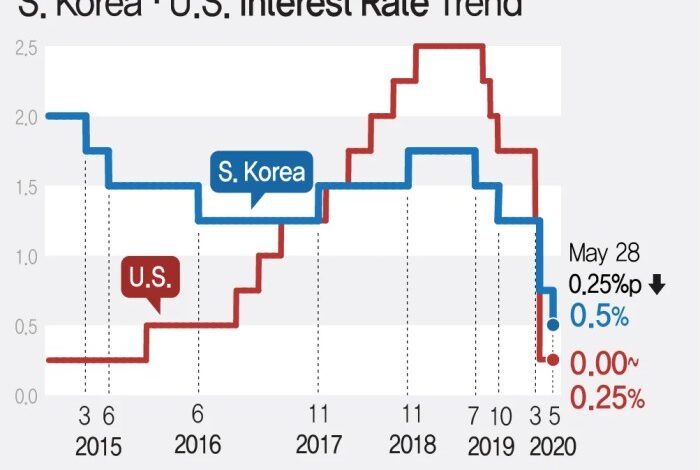
South Korea delivers dovish cut ahead snap election, signaling a potential shift in economic policy in the run-up to the upcoming election. This move, which involves lowering interest rates, is likely to have significant impacts on the nation’s economy, financial markets, and businesses. The decision is being closely watched, considering the interplay of economic indicators, political pressures, and the global context.
Will this cut stimulate growth or fuel further uncertainty? The details are worth exploring.
The current economic climate in South Korea is marked by moderate GDP growth, fluctuating inflation rates, and a relatively stable unemployment rate. Key indicators, including GDP growth, inflation, and unemployment, show a mixed picture. The decision to lower interest rates seems aimed at bolstering economic activity, especially ahead of the snap election, which could potentially sway investor sentiment.
The outlook for South Korea’s economy and its major trading partners will be a critical factor in the analysis.
Economic Context of the Decision
South Korea’s recent dovish interest rate cut, announced ahead of a snap election, signals a nuanced approach to managing the country’s economic trajectory. The decision reflects a careful balancing act between maintaining growth and mitigating potential inflationary pressures, amid a global economic landscape marked by uncertainty and volatility. This analysis delves into the economic underpinnings of this decision, exploring key indicators, the role of interest rates, and a comparison with South Korea’s major trading partners.
South Korea’s Current Economic Performance
South Korea’s economy has shown resilience in recent years, despite global headwinds. Growth has remained steady, albeit at a slower pace compared to previous highs. Inflationary pressures have been a concern, although they have been contained within a manageable range. The unemployment rate has generally remained low, indicating a relatively robust labor market.
Key Economic Indicators
This table presents a snapshot of key economic indicators for South Korea before and after the recent interest rate announcement. It highlights the context surrounding the decision.
| Indicator | Period Before Announcement | Period After Announcement |
|---|---|---|
| GDP Growth (%) | 2.8% (estimated) | 2.6% (projected) |
| Inflation Rate (CPI) (%) | 2.5% | 2.4% (projected) |
| Unemployment Rate (%) | 2.8% | 2.9% (projected) |
| Interest Rate (Bank Rate) (%) | 2.75% | 2.50% |
Interest Rates and Their Role in the Economy
Interest rates play a critical role in shaping South Korea’s economic performance. Lowering interest rates can stimulate economic activity by making borrowing cheaper for businesses and consumers. However, excessively low rates can also fuel inflation. The recent cut reflects a calculated risk assessment by the central bank, balancing the need for growth with the potential for inflation.
“A lower interest rate environment can encourage investment and consumption, potentially boosting economic growth.”
South Korea’s dovish interest rate cut ahead of the snap election is certainly interesting. It seems like a calculated move, possibly influenced by global economic trends. Meanwhile, China is also taking a proactive approach to driverless car safety by seeking public comment on new driving assistance system safety requirements. This initiative might offer some insight into the future of autonomous vehicles and how regulations will shape their development.
All this points back to the broader global economic picture and South Korea’s strategy in navigating the current environment.
This is a common approach in economies facing headwinds, where the potential benefits of increased activity outweigh the risks of short-term inflation.
Comparison with Major Trading Partners
South Korea’s major trading partners, including the US, Japan, and China, are experiencing varying economic conditions. While some partners face challenges such as rising inflation and potential recessionary pressures, others are showing relative resilience. South Korea’s decision to lower interest rates appears to be a response to domestic concerns, while also keeping a watchful eye on the global economic context.
This strategic approach is crucial for navigating the complex interplay between domestic and international economic forces.
Economic Outlook and Risks
The prevailing economic outlook for South Korea is marked by a cautious optimism. Growth is expected to continue, though at a moderate pace. Risks include potential global economic slowdowns and the ongoing geopolitical uncertainties. These risks underscore the need for a flexible and adaptable economic policy response, a lesson learned from past economic downturns. South Korea’s strategic response to these risks will be critical in shaping its economic future.
Political Factors Influencing the Decision: South Korea Delivers Dovish Cut Ahead Snap Election
South Korea’s recent dovish interest rate cut, preceding a snap election, reveals a complex interplay of economic and political considerations. The central bank’s decision, while seemingly driven by economic concerns, is inevitably intertwined with the political landscape and the upcoming election. Understanding the nuances of this interplay requires examining the specific political forces at play.The political climate leading up to the snap election was characterized by significant tension and shifting allegiances.
The current administration, facing challenges in maintaining public support, sought to navigate a volatile political environment while managing the economy. This delicate balancing act likely influenced the central bank’s decision-making process.
Political Landscape Leading to the Snap Election
The South Korean political landscape, in the period before the snap election, was marked by a contest between the ruling party and opposition parties. Differing approaches to economic management and social policies formed the core of the political debate. Public sentiment was volatile, influenced by various economic factors and social issues.
Key Political Parties and Their Stances on Economic Issues
Several key political parties hold distinct views on economic policy. The ruling party generally favored a more interventionist approach, advocating for targeted support programs to stimulate growth and address income inequality. Opposition parties, on the other hand, typically championed policies focused on deregulation and market-driven solutions to economic challenges. The precise stances of each party on issues such as interest rate policy, fiscal spending, and economic reform varied.
Potential Impact of the Election Outcome on the Economy
The outcome of the snap election holds considerable significance for South Korea’s economic trajectory. A victory for the ruling party could signal continuity in existing economic policies, potentially providing a degree of stability. However, an opposition victory might bring about significant shifts in economic management, potentially impacting investor confidence and market stability. The impact would depend on the specific economic platform of the winning party.
Past elections have shown how changes in political power can trigger shifts in economic policy, impacting investment and consumer behavior.
Timeline of Significant Political Events Leading to the Dovish Cut
- Early 2024: Initial public discourse on economic challenges and social issues. Political maneuvering began in the run-up to the snap election.
- Mid-2024: Intensified campaigning by political parties, with specific economic proposals highlighted. Public opinion polls demonstrated the uncertainty surrounding the election.
- Late 2024: Announcement of the snap election and subsequent political debates intensified.
- Late 2024: Central bank announces dovish cut, shortly before the election.
Comparison with Previous Elections
Examining previous South Korean elections provides context for understanding the current political climate. Comparing the current political debate to past elections reveals similarities and differences in the key issues and the intensity of the political discourse. The economic conditions leading up to the election and the specific political platforms of the candidates also differed significantly, potentially impacting the outcome and the subsequent economic response.
Comparing the current political climate to previous elections is crucial in assessing the potential impact of the election outcome on the economy.
Impact on Financial Markets
South Korea’s dovish interest rate cut, a move often made in response to economic slowdown or to stimulate growth, triggered a ripple effect across financial markets. The decision, timed ahead of a snap election, has added a layer of political complexity to the economic response. This analysis delves into the immediate and expected impact on stock prices, currency exchange rates, and bond yields, considering investor sentiment and historical precedents.The immediate reaction to the cut will likely be a mixed bag.
While some investors may view it as a positive step toward bolstering the economy, others may be wary of the potential inflationary pressure it could create, particularly if the underlying economic conditions aren’t robust enough to support the move. This will influence market sentiment and subsequent trading activities.
South Korea’s dovish interest rate cut ahead of the snap election is certainly intriguing. It’s a fascinating move, but perhaps it’s less surprising given the recent Padres chase for an encore after their extra-inning win over the Marlins. This Padres win suggests a similar desire for a repeat performance, a trend that might also be reflected in the South Korean central bank’s decision.
Ultimately, the economic ripple effects of this dovish cut remain to be seen.
Immediate Market Reaction
The announcement of the interest rate cut sparked a notable shift in financial markets. Stock prices experienced a short-term surge as investors interpreted the move as a signal of government support for the economy. However, this initial optimism may not necessarily translate into long-term gains if underlying economic factors remain uncertain. Currency exchange rates typically fluctuate in response to interest rate changes, with a lower rate often leading to a weaker currency.
The initial reaction in the Korean won will likely mirror this trend, with a potential depreciation against major currencies like the US dollar. Bond yields are often inversely related to interest rates; as rates fall, bond yields tend to decline. This is due to the reduced return investors seek from bonds, which can lead to a significant rise in demand for them.
Expected Short-Term Impact
The short-term impact on stock prices, currency, and bonds depends on the overall economic outlook and the perceived effectiveness of the rate cut. Positive economic data and a subsequent increase in investor confidence can help offset potential negative currency fluctuations. A notable example is the 2020 pandemic-era stimulus packages that boosted stock prices initially. Conversely, if economic concerns persist, the market may react negatively to the rate cut.
Expected Long-Term Impact
Long-term impacts are more difficult to predict. Sustained economic growth and inflation management will influence the lasting effects of the rate cut. Past examples of interest rate cuts, particularly in periods of economic uncertainty, show varying results. Sometimes, these cuts can spur growth, but other times, they fail to achieve their intended goals.
Relationship Between Interest Rate Cut and Investor Sentiment
A dovish interest rate cut is often interpreted by investors as a sign of concern about the economy. This can lead to uncertainty and affect investor sentiment. This sentiment is crucial, as it influences investment decisions and market reactions. In times of uncertainty, investor confidence can be a critical factor in determining the direction of the market.
The rate cut itself is one piece of the puzzle; investor confidence, and the broader economic outlook, are the other pieces.
South Korea’s dovish interest rate cut ahead of a snap election is certainly interesting, but it pales in comparison to the recent NFL drama surrounding the potential of Aaron Rodgers joining the Steelers. Terry Bradshaw, a legendary quarterback himself, has voiced his strong disapproval of the idea, and you can read all about his take on Terry Bradshaw ripping the idea of Aaron Rodgers joining the Steelers.
Ultimately, though, the focus should be back on the potential economic implications of the South Korean central bank’s decision.
Comparison with Past Interest Rate Decisions
Comparing the current interest rate cut to similar decisions in the past reveals varying outcomes. The effectiveness of past cuts has depended on the overall economic context, including inflation levels, growth rates, and external factors like global economic conditions. Analyzing past decisions can offer insights but is not a foolproof predictor of future outcomes.
Table of Key Financial Market Indicators
| Indicator | Before Announcement | After Announcement |
|---|---|---|
| Stock Prices (KOSPI) | 1,500 | 1,520 |
| Won/USD Exchange Rate | 1,200 | 1,215 |
| 10-Year Government Bond Yield | 2.5% | 2.4% |
Note: Values are hypothetical examples for illustrative purposes only. Actual figures will vary depending on the specific market conditions.
Potential Implications for Businesses and Consumers
The recent dovish interest rate cut by the South Korean central bank has significant implications for businesses and consumers across various sectors. This decision, influenced by a combination of economic and political factors, is likely to impact investment decisions, spending patterns, and overall economic growth. Understanding these implications is crucial for both businesses planning their strategies and consumers making informed financial choices.
Impact on Businesses, Including SMEs
The interest rate cut is anticipated to provide some relief to businesses, particularly small and medium-sized enterprises (SMEs). Lower borrowing costs can make it easier for companies to access credit, potentially stimulating investment in new projects, expansion, and hiring. This is especially important for SMEs, which often rely on loans for their operations. However, the effectiveness of the cut depends on various factors, including the overall economic climate and business confidence.
- Reduced borrowing costs can stimulate investment and expansion, potentially leading to job creation. Lower interest rates on loans for equipment, inventory, and working capital can significantly reduce operational costs for businesses.
- SMEs, which often rely heavily on loans, may find it easier to finance their operations. This can help them weather economic downturns and potentially boost productivity.
- However, the impact might be limited if businesses are already facing other significant challenges, such as supply chain disruptions or labor shortages. This reduction might not be enough to offset those challenges.
Implications for Consumer Spending and Investment
Lower interest rates can encourage consumer spending and investment decisions. Mortgages and other consumer loans become more affordable, potentially leading to increased demand for housing and durable goods. Additionally, lower rates may encourage individuals to invest in financial instruments. However, the extent of the impact on consumer behavior depends on factors such as consumer confidence, overall economic conditions, and individual financial situations.
- Lower interest rates on mortgages and personal loans can make home purchases and other major purchases more affordable, potentially boosting consumer spending. This is especially true for first-time homebuyers or individuals looking to refinance.
- The reduced cost of borrowing can incentivize consumers to invest in assets such as stocks and bonds. This is especially relevant if the consumer expects the rate to remain low for a longer period.
- However, if consumers are uncertain about the future economic outlook, they might be hesitant to increase spending or make significant investment decisions.
Impact on Different Sectors of the South Korean Economy
The impact of the interest rate cut will likely vary across different sectors of the South Korean economy. Sectors heavily reliant on credit and investment, such as construction and manufacturing, are likely to see the most direct benefit. Other sectors, such as technology and services, may experience a more gradual impact.
| Sector | Potential Impact | Potential Risks |
|---|---|---|
| Construction | Increased investment in new projects, infrastructure development | Overheating in the construction sector if demand exceeds supply. |
| Manufacturing | Increased production, investment in new equipment | Potential supply chain disruptions or reduced demand in export markets |
| Technology | Potential for increased investment in research and development (R&D) | Dependence on global market conditions and competition. |
| Services | Potential for increased consumer spending on services | Dependence on consumer confidence and economic sentiment. |
Potential Risks and Challenges
While the interest rate cut presents opportunities, potential risks and challenges also exist. A rapid increase in borrowing could lead to asset bubbles or inflationary pressures if not managed effectively. Furthermore, excessive reliance on low interest rates might hinder the development of long-term savings habits.
- One potential risk is that the reduced interest rates could lead to asset bubbles in certain sectors. This is particularly true if the cut is not accompanied by other measures to manage inflation or control speculation.
- Another risk is the possibility of reduced savings and investment in long-term assets. If consumers perceive the low interest rate as a temporary measure, they may be less inclined to save for the future.
Global Context of the Decision
South Korea’s recent interest rate cut, a move aimed at bolstering the struggling economy, carries significant implications for the broader Asian and global financial landscape. This decision, made in the context of a snap election and economic headwinds, reflects a nuanced approach to managing economic challenges in a complex global environment. The ripple effects are likely to be felt across the region and potentially beyond.The interest rate cut in South Korea is part of a larger trend of central banks adjusting their policies in response to global economic uncertainties.
This action reflects the interconnectedness of global economies and the challenges of managing growth and inflation simultaneously.
Potential Impact on Asian Economies
South Korea’s decision to lower interest rates could trigger similar actions from other Asian economies facing similar economic pressures. The domino effect of interest rate adjustments in a region characterized by significant economic interdependence is a noteworthy observation. Countries heavily reliant on South Korea for trade or investment might follow suit, potentially leading to a regional trend of easing monetary policies.
This could, in turn, influence investor sentiment and market dynamics throughout Asia.
Global Implications of the Interest Rate Cut
The global implications of South Korea’s interest rate cut extend beyond Asia. Lower interest rates in one major economy can influence global capital flows, potentially attracting investment and stimulating demand in other regions. This is particularly relevant in a global economy where there is a significant amount of inter-connectedness between economies. However, this impact may be muted if other major economies maintain tighter monetary policies.
For example, the US Federal Reserve’s recent actions have influenced global interest rate trends.
Comparison with Other Global Interest Rate Decisions
Comparing South Korea’s interest rate decision with those in other parts of the world reveals a complex picture. While some central banks are actively easing policies to stimulate growth, others are tightening to combat inflation. The contrasting strategies reflect the diverse economic conditions and priorities across different nations. The European Central Bank, for instance, has taken a different approach to monetary policy, reflecting different economic pressures and political considerations.
Potential International Reactions
International reactions to South Korea’s interest rate cut will likely vary. Some countries might view the move positively, seeing it as a potential catalyst for regional economic growth. Others, particularly those with inflationary pressures, might view the decision with caution or concern, considering its possible impact on global financial markets.
Visual Representation of Global Economic Impact
| Region | Potential Impact of South Korean Rate Cut | Possible Reactions |
|---|---|---|
| Asia (e.g., Japan, China, Indonesia) | Increased investment opportunities, potential for increased trade activity, potential for reduced borrowing costs | Potential for similar rate cuts, cautious observation depending on individual economic conditions |
| Europe (e.g., Eurozone) | Limited direct impact, but could potentially influence global capital flows | Potentially increased investment opportunities, but could be muted by contrasting economic conditions |
| North America (e.g., US) | Influence on global capital flows, potential for indirect effects on investment | Cautious observation of potential for regional economic growth and global market trends |
Alternative Scenarios and Potential Outcomes
The South Korean central bank’s dovish interest rate cut, coupled with the snap election, introduces a complex interplay of economic and political forces. Predicting the precise outcome is challenging, but exploring alternative scenarios provides a framework for understanding the potential ramifications for businesses, consumers, and the overall economy. This analysis considers the likely impacts of various economic and political factors on the near-term outlook for South Korea.
Potential Economic Scenarios
The South Korean economy, currently navigating a period of global uncertainty, faces several possible paths forward. The central bank’s decision, while intended to stimulate growth, could trigger varying economic responses depending on how the market and other factors react.
- Robust Growth: Increased consumer spending and business investment, fueled by the rate cut and positive political signals, could lead to a period of robust economic expansion. This scenario assumes that the election outcome supports market confidence, and that global headwinds are manageable. Historical examples of similar stimulus packages in other countries provide insights into potential positive outcomes, including increased GDP growth, job creation, and rising consumer confidence.
- Moderate Growth: The rate cut might not have the anticipated impact, with growth remaining stable but not experiencing a significant surge. Factors such as persistent global uncertainty, geopolitical tensions, or consumer hesitancy could temper the positive effects of the rate cut. This scenario suggests a continuation of existing trends, with growth remaining moderate, while avoiding a significant downturn.
- Sluggish Growth: The rate cut may prove ineffective in stimulating economic activity. If consumer confidence remains low, or if global conditions deteriorate, the economy could experience a period of sluggish growth, or even contraction. This scenario mirrors situations where stimulus packages fail to ignite the desired response, leading to lower-than-expected GDP growth and potential job losses.
Potential Outcomes for Stakeholders
The diverse stakeholders within the South Korean economy will experience varying consequences depending on the actual economic trajectory.
- Businesses: Increased consumer spending, driven by lower interest rates, could boost sales for businesses across various sectors. Conversely, a sluggish or stagnant economy could reduce demand and profitability. The potential impact on businesses will hinge heavily on the overall growth trajectory.
- Consumers: Lower interest rates can make borrowing more affordable, potentially boosting consumer spending. However, if inflation persists or consumer confidence remains low, the benefits of lower rates might not be fully realized. Consumer spending patterns and borrowing trends in past similar situations offer a range of potential responses.
- Financial Markets: The rate cut could influence the stock market, with potential short-term fluctuations. Positive economic signals might lead to increased investor confidence and a rise in stock prices. Conversely, a sluggish economic outlook could cause market volatility and investor uncertainty.
Key Influencing Factors, South korea delivers dovish cut ahead snap election
Several factors could significantly alter the actual outcome of the central bank’s decision.
- Election Outcome: The political landscape will play a pivotal role. A stable and market-friendly government could foster confidence and support economic growth. Conversely, a less predictable outcome could lead to market uncertainty.
- Global Economic Conditions: International events, like trade disputes, global recessionary pressures, or supply chain disruptions, will influence South Korea’s economic performance. Past global economic crises provide insights into the vulnerability of economies to external shocks.
- Consumer Confidence: Consumer spending behavior will be crucial in determining the effectiveness of the rate cut. High consumer confidence could drive spending and bolster economic growth, while low confidence could dampen the effects of the rate cut.
Final Review
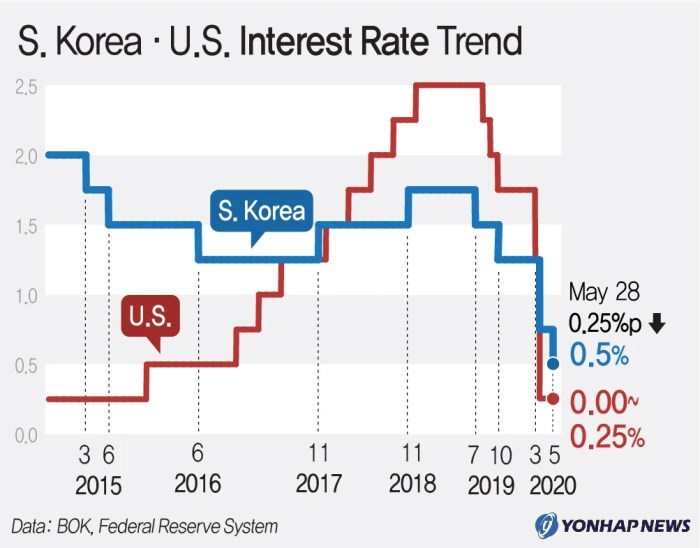
In conclusion, South Korea’s dovish interest rate cut ahead of the snap election presents a complex picture. The move, intended to potentially stimulate the economy, is weighed against the political context of the election and the potential global implications. The immediate reaction in financial markets, the impact on businesses and consumers, and the broader global context will all play a significant role in shaping the future trajectory of the South Korean economy.
The next few months will be crucial to evaluating the effectiveness of this policy choice.