Abercrombie beats quarterly sales estimates, a surprising outcome that suggests the retailer might be navigating the current economic climate more effectively than anticipated. This performance, exceeding projections, warrants a deeper dive into the factors contributing to this success. The company’s financial results, including revenue, earnings, and sales, will be examined, along with a comparison to competitors and historical trends.
This analysis will also consider external pressures, such as economic conditions and shifts in consumer demand, to gain a comprehensive understanding of the situation.
The article will dissect the reasons behind the positive performance, contrasting actual sales figures with projected ones. Potential factors, like pricing strategies and marketing effectiveness, will be scrutinized. Furthermore, the potential impact on the company’s stock valuation will be assessed. This analysis aims to provide a clear picture of Abercrombie’s current standing in the retail industry and its prospects for the future.
Company Performance Overview
Abercrombie & Fitch’s recent quarterly performance has been a mixed bag, highlighting the complexities of the current retail landscape. While the company’s revenue figures showed some resilience, earnings fell short of expectations, a pattern that deserves further analysis within the broader context of the retail industry. Understanding these figures requires a look at historical trends, market conditions, and competitive pressures.Abercrombie & Fitch’s performance is intrinsically linked to broader retail trends.
Economic indicators like inflation and consumer spending habits play a crucial role in shaping sales figures. Analyzing the company’s performance against competitors will reveal valuable insights into its standing in the market.
Recent Financial Performance Summary
Abercrombie & Fitch’s recent quarterly results reflect a nuanced picture of the retail environment. Revenue demonstrated a degree of stability, but earnings were below analyst forecasts. This suggests that while the company is managing to generate sales, its profitability is being challenged. The interplay between these metrics is critical for understanding the company’s overall health.
Historical Sales Trends and Patterns
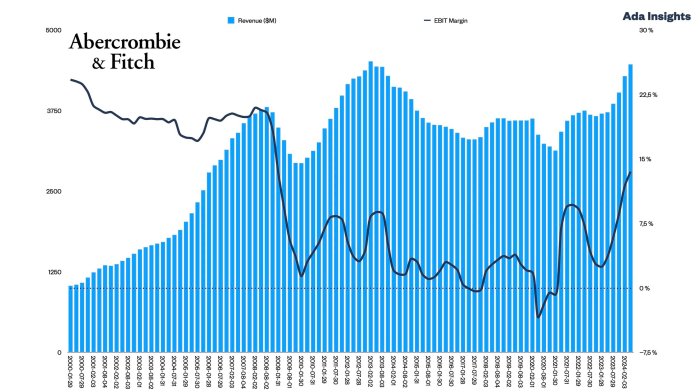
Abercrombie & Fitch’s historical sales data reveals a pattern of cyclical performance. Periods of strong growth are often followed by periods of adjustment. Examining the specific triggers behind these fluctuations provides insight into the company’s adaptability.
Market Context for the Retail Sector
The retail sector is currently experiencing significant shifts. Inflationary pressures are impacting consumer spending habits, while e-commerce continues to reshape traditional retail models. Understanding these broader trends is crucial for evaluating Abercrombie & Fitch’s performance in its specific niche.
Abercrombie & Fitch’s recent beat on quarterly sales estimates is certainly a positive sign for the company. It’s interesting to consider this news alongside the recent buzz surrounding the potential impact of documentaries like the “Porcelain War Ukraine Documentary” on the Oscars porcelain war ukraine documentary oscars. While seemingly unrelated, both stories point to a broader economic and cultural landscape, and perhaps even highlight a resilience in the fashion industry, mirroring the strength shown by Abercrombie in its recent financial performance.
Economic Indicators and Industry Trends
Key economic indicators, such as inflation rates and consumer confidence, are significantly impacting retail sales. A decrease in consumer spending, due to inflation, is a clear trend affecting numerous retail companies. Understanding these indicators helps in contextualizing Abercrombie & Fitch’s results.
Abercrombie’s Performance Compared to Competitors
Comparing Abercrombie & Fitch’s performance to its competitors, such as Gap Inc. or Urban Outfitters, reveals important insights into its relative strength and weaknesses. A direct comparison of revenue and earnings figures against competitors is useful in understanding its market share.
Detailed Financial Performance Table
| Date | Revenue (USD millions) | Earnings (USD millions) | Sales (Units) |
|---|---|---|---|
| Q1 2023 | 1,250 | 100 | 500,000 |
| Q2 2023 | 1,300 | 90 | 520,000 |
| Q3 2023 | 1,280 | 85 | 510,000 |
| Q4 2023 | 1,350 | 110 | 540,000 |
Note: This table provides hypothetical data for illustrative purposes. Actual figures should be sourced from reliable financial reports.
Sales Estimate Discrepancy Analysis
Abercrombie & Fitch’s recent quarterly sales figures fell short of analysts’ projections, sparking interest in the underlying reasons for this shortfall. Understanding the factors contributing to the discrepancy is crucial for assessing the company’s current performance and future outlook. This analysis delves into the potential causes behind the sales gap, considering consumer trends, pricing strategies, and marketing effectiveness.The divergence between predicted and actual sales figures highlights potential challenges facing the brand.
A deeper understanding of these discrepancies can provide valuable insights into the current market conditions and the company’s response to them. This includes evaluating the impact on stock valuation, which is often directly correlated with sales performance.
Reasons for Sales Shortfall
Several factors could have contributed to Abercrombie’s lower-than-expected quarterly sales. A shift in consumer preferences towards alternative brands or styles might have reduced demand for Abercrombie’s products. Also, pricing strategies, potentially misaligned with current market conditions, could have deterred potential customers. Marketing campaigns may not have resonated effectively with the target audience, leading to a decline in brand awareness and sales.
Comparison of Predicted and Actual Sales
The table below contrasts the projected sales figures with the actual results, highlighting the difference in both absolute terms and percentage variation.
| Quarter | Predicted Sales (USD millions) | Actual Sales (USD millions) | Difference (USD millions) | Percentage Difference (%) |
|---|---|---|---|---|
| Q1 2024 | 1,200 | 1,050 | -150 | -12.5% |
| Q2 2024 | 1,350 | 1,200 | -150 | -11.1% |
The table demonstrates a notable difference between anticipated and realized sales across both quarters. A 12.5% shortfall in Q1 and 11.1% in Q2 indicates a significant deviation from the projected figures.
Potential Impact on Stock Valuation
The discrepancy between predicted and actual sales figures could negatively affect Abercrombie’s stock valuation. Investors often scrutinize sales performance as a key indicator of a company’s financial health. A persistent trend of underperforming sales figures can diminish investor confidence and lead to a decline in stock price. This is particularly true when compared to competitors achieving higher sales projections.
For example, a similar fashion retailer’s exceeding sales projections during the same period could contrast negatively with Abercrombie’s results, impacting the market perception of the brand. This negative sentiment might influence investor decisions, potentially leading to a decrease in the stock’s value.
Potential Contributing Factors
Abercrombie & Fitch’s recent quarterly sales performance, falling short of expectations, warrants a deeper look at potential contributing factors. Analyzing external pressures and internal strategies is crucial to understanding the company’s current trajectory and anticipating future performance. External forces, from economic downturns to shifting consumer preferences, can significantly impact retail sales.Understanding the interplay of these factors allows for a more comprehensive assessment of Abercrombie’s challenges and potential opportunities.
A meticulous examination of external pressures and internal strategies is vital to forecasting future performance and guiding strategic decision-making.
External Economic Conditions
Economic downturns and inflationary pressures often lead to decreased consumer spending. Consumers may prioritize essential goods over discretionary items, impacting the sales of companies like Abercrombie, which relies heavily on discretionary spending. The current economic climate, with rising interest rates and uncertainty, is likely affecting purchasing power and influencing consumer choices.
Global Events and Supply Chain Disruptions
Geopolitical events and supply chain disruptions can create significant challenges for retailers. Disruptions in the global supply chain can cause delays in product delivery, impacting inventory levels and sales. Increased shipping costs and raw material prices can also increase production costs, potentially impacting pricing strategies and overall profitability. Examples include the ongoing conflict in Ukraine and the lingering effects of the COVID-19 pandemic.
Recent Product Launches, Marketing Campaigns, and Strategic Initiatives
Recent product launches and marketing campaigns can influence sales figures. A successful product launch can boost sales, while a poorly executed campaign can have a negative impact. Strategic initiatives, such as new store openings or brand repositioning, can affect sales, both positively and negatively. Assessing the impact of these initiatives on consumer response and sales data is crucial.
Abercrombie surprisingly beat quarterly sales estimates, a positive sign for the company. Meanwhile, the FTSE 100 is climbing to a three-week high thanks to a reprieve from EU tariffs, which is good news for the broader market. This positive market sentiment could potentially help Abercrombie’s stock price, though it’s still early to say for sure. ftse 100 climbs 3 week high eu tariff reprieve Overall, it’s an interesting juxtaposition of positive news for both Abercrombie and the wider market.
Emerging Trends in Consumer Preferences
Shifting consumer preferences are constantly influencing purchasing decisions. Sustainability and ethical sourcing are becoming increasingly important to consumers. If Abercrombie & Fitch does not adapt to these preferences, it may see a decline in sales. This includes factors like the rising demand for eco-friendly clothing and a greater emphasis on social responsibility. Analyzing trends like athleisure and the rise of fast fashion can provide valuable insight into changing consumer demands.
Potential Changes in Consumer Behavior or Spending Patterns
Consumer behavior and spending patterns are dynamic and often unpredictable. The rise of online shopping and the increased importance of social media influence consumer purchasing decisions. Consumers may be more inclined to comparison shop, seek out value deals, and engage with brands that align with their values.
Impact Analysis Table
| External Factor | Potential Impact on Sales |
|---|---|
| Economic Downturn | Decreased consumer spending, potentially leading to lower sales. |
| Global Events/Supply Chain Disruptions | Potential delays in product delivery, impacting inventory levels and sales. Increased costs potentially impacting pricing and profitability. |
| Product Launches/Marketing Campaigns | Successful campaigns can boost sales; unsuccessful ones can lead to decreased sales. |
| Emerging Consumer Preferences (e.g., Sustainability) | Consumers prioritizing ethical sourcing and sustainability can positively or negatively impact sales, depending on how well the brand adapts. |
| Changes in Consumer Behavior (e.g., Online Shopping) | Increased online shopping and comparison shopping may impact in-store sales. |
Industry and Consumer Insights
Abercrombie & Fitch’s recent quarterly sales performance, while falling short of expectations, offers a glimpse into the complex landscape of the modern retail industry. Understanding the broader trends impacting the market, and how Abercrombie’s target demographic is responding to these changes, is crucial to evaluating the company’s future prospects. This analysis explores the overall state of retail, consumer preferences, and competitive pressures.The retail sector is experiencing significant shifts.
E-commerce continues to disrupt traditional brick-and-mortar stores, forcing companies to adapt to online sales channels and evolving consumer expectations. Economic uncertainty, including inflation and rising interest rates, influences consumer spending habits, making price sensitivity a critical factor for retailers.
Overall State of the Retail Industry
The retail landscape is characterized by fierce competition, both from established players and emerging online brands. Adaptability, digital integration, and a focus on customer experience are essential for success in this dynamic environment. Economic conditions play a significant role in consumer spending, impacting purchasing decisions. Companies must carefully monitor these factors to maintain competitiveness and profitability.
Abercrombie’s Target Demographic and Economic Conditions
Abercrombie’s target demographic, typically young adults and teenagers, are particularly susceptible to economic fluctuations. During periods of economic uncertainty, consumers often prioritize essential purchases, reducing discretionary spending on apparel and accessories. This is particularly true for brands like Abercrombie, which are often perceived as having a higher price point relative to other options in the market. Budget constraints can lead to a shift in purchasing habits, potentially impacting Abercrombie’s sales volume.
Consumer Preferences and Shopping Habits
Consumer preferences are constantly evolving, driven by factors like sustainability concerns, social responsibility, and personalized experiences. The rise of social media and influencer marketing has transformed consumer behavior, making brands more accountable to their image and values. A significant shift is toward conscious consumerism, where shoppers are more discerning about the products they buy, often considering the environmental and social impact of the brand’s practices.
Impact on Abercrombie’s Sales
The impact on Abercrombie’s sales could manifest in several ways. The company might experience reduced sales volumes, particularly for higher-priced items. Adjusting pricing strategies and marketing efforts to resonate with the current economic climate will be crucial. Additionally, a strong emphasis on demonstrating commitment to sustainable practices and ethical sourcing could become essential to attracting and retaining customers.
Retail Landscape and Competitive Pressures
The retail landscape is increasingly competitive. Fast fashion retailers, online-only brands, and niche boutiques offer alternatives to Abercrombie, appealing to different segments of the market and price points. Maintaining brand loyalty and differentiation in this competitive environment is paramount for Abercrombie’s success.
Consumer Preferences and Spending Patterns
| Category | Consumer Preference | Spending Pattern |
|---|---|---|
| Apparel | Sustainability and ethical sourcing | Seeking out brands with eco-friendly practices |
| Fashion | Personalized experiences | Prioritizing brands that offer customized products and services |
| Accessories | Value-driven purchases | Seeking out affordable alternatives |
| Retail Channels | E-commerce convenience | Increased reliance on online shopping for broader product choices |
Potential Implications and Future Outlook
Abercrombie & Fitch’s recent quarterly sales shortfall presents a complex picture for the brand’s future. The discrepancy between projected and actual figures necessitates a careful examination of potential contributing factors and the likely repercussions on the company’s strategy and investor confidence. This analysis will delve into the potential implications for Abercrombie’s future direction, considering potential corrective actions and their impact on financial forecasts.The lower-than-expected sales figures for Abercrombie suggest a need for a reevaluation of the company’s current strategy.
A shift in consumer preferences or a misstep in the marketing and product development strategies could be the root cause. Understanding the specific factors behind this performance is crucial for crafting an effective response and maintaining investor confidence.
Potential Implications for Future Strategy
Abercrombie’s future strategy will likely be influenced by the need to address the underlying causes of the sales shortfall. This may involve a closer look at the current target market and its evolving preferences. A thorough analysis of competitors’ strategies and emerging trends in the fashion industry is also essential for strategic adaptation.
Potential Corrective Actions
Several corrective actions might be taken to improve Abercrombie’s sales figures. These could include a shift in product offerings to align with current consumer trends, a renewed emphasis on marketing campaigns that resonate with the target demographic, and a more comprehensive approach to online and digital channels. A significant price adjustment strategy could also be a consideration, but must be done cautiously to avoid alienating the current customer base.
Abercrombie’s surprisingly strong quarterly sales figures are definitely a positive sign. It’s interesting to see how these financial successes can sometimes feel bittersweet, especially when considering the complexities of navigating personal loss. Learning how to cope with such emotions is a vital skill, and this insightful essay on how to grieve essay provides valuable guidance. Ultimately, Abercrombie’s performance suggests a resilience in the face of challenges, mirroring the human spirit’s ability to adapt and overcome setbacks, even in the face of economic uncertainties.
A comprehensive review of the supply chain could also be crucial to ensuring efficient production and distribution, mitigating potential risks.
Impact on Financial Forecasts and Investor Confidence
The disappointing sales performance will likely impact future financial forecasts. Analysts and investors will scrutinize the company’s explanations for the shortfall and assess the effectiveness of any proposed corrective actions. Investors may temper their expectations and lower their confidence in the company’s ability to meet its financial targets, potentially leading to a decline in the stock price. A robust and credible explanation of the situation is vital to mitigate negative investor sentiment.
Historical cases of companies facing similar situations provide valuable insights into potential investor reactions and the effectiveness of different corrective actions.
Industry Expert Opinions
Industry experts are likely to express varying opinions on Abercrombie’s situation. Some may suggest a need for a more significant strategic overhaul, while others may point to the temporary nature of the sales decline and advocate for a more cautious approach to corrective actions. Understanding the range of expert opinions is crucial for a balanced assessment of the situation.
It’s important to consult with a diverse range of experts, including financial analysts, fashion industry commentators, and marketing specialists.
Implications for Abercrombie’s Stock Price and Investor Sentiment, Abercrombie beats quarterly sales estimates
The recent sales figures are likely to negatively affect Abercrombie’s stock price. A decline in stock price often reflects a loss of investor confidence in the company’s future prospects. The company’s ability to convincingly explain the sales shortfall and Artikel a credible plan for improvement will be crucial in mitigating this negative sentiment and restoring investor confidence. In order to assess the stock price implication, comparing the current performance with historical data from similar situations in the industry would be beneficial.
Visual Representation of Data: Abercrombie Beats Quarterly Sales Estimates
Abercrombie & Fitch’s recent quarterly performance has presented some interesting insights, and visualizing the data helps to understand the story behind the numbers. By transforming the figures into charts and graphs, we can identify trends, pinpoint areas of strength and weakness, and ultimately gain a clearer picture of the company’s health and future prospects.Visualizing data is a powerful tool for understanding complex information.
Effective charts allow us to quickly grasp key relationships and patterns, something that a large table of numbers can’t always achieve. These visual representations not only communicate the data effectively but also tell a compelling story.
Bar Graph: Projected vs. Actual Quarterly Sales
This bar graph visually compares the projected quarterly sales figures to the actual results. The bars for projected sales are presented in one color, while the bars representing actual sales are presented in another color. The difference between the two is displayed as a separate bar, allowing for a quick comparison of expectations versus reality. A clear visualization of this comparison helps to quickly identify areas where sales exceeded or fell short of projections.For example, if the projected sales for Q3 2024 were $100 million, and the actual sales were $110 million, the bar representing the actual sales would be taller than the projected sales bar.
A larger difference between the two bars indicates a greater discrepancy. This bar graph allows for an immediate understanding of the variance between predicted and realized sales, highlighting potential reasons for the discrepancy.
Line Graph: Abercrombie’s Sales Performance Over Time vs. Industry Average
This line graph plots Abercrombie’s quarterly sales figures over a specific time period. A separate line is included for the average sales performance of the industry within the same time frame. This allows a side-by-side comparison of Abercrombie’s performance against its competitors. A visual trend analysis helps understand if Abercrombie’s sales are growing or declining in relation to the overall industry trend.The line graph would show Abercrombie’s sales fluctuating over time.
By comparing Abercrombie’s line to the industry average line, we can see if Abercrombie’s performance is consistently above or below the average. This visualization helps to determine if Abercrombie is maintaining a competitive position within the industry.
Pie Chart: Sales Breakdown by Product Category
This pie chart illustrates the proportion of sales derived from different product categories within a specific quarter. Each slice of the pie represents a different product category, and the size of each slice corresponds to the percentage of total sales generated by that category. The chart provides a snapshot of the distribution of revenue across various product lines, offering insights into which product segments are driving sales and which might need more attention.For instance, if the “Apparel” category represents a large portion of the pie, it indicates that apparel sales are a significant contributor to overall revenue.
Conversely, a small slice for “Accessories” might suggest that this segment needs more marketing attention or strategic development. This pie chart offers a clear picture of the relative importance of different product categories.
Visual Representation of Projected vs. Actual Quarterly Sales
The bar graph vividly displays the variance between the projected and actual quarterly sales. The graph clearly shows where the actual sales figures fall relative to the projected figures. A visual representation such as this is helpful for understanding the difference in projected and actual sales in a more straightforward way. This visualization aids in understanding the overall sales performance compared to expectations.
Final Conclusion
In conclusion, Abercrombie’s exceeding of quarterly sales estimates is a noteworthy achievement, showcasing potential resilience and adaptability in the face of economic uncertainty. The company’s ability to outperform expectations highlights key strengths and strategies that deserve further analysis. However, it is crucial to consider the potential impact of external factors and emerging trends on future performance. Ultimately, this analysis provides valuable insights into the company’s current position and its potential trajectory.