Palestinians Wary Us Backed Aid Group Begins Operations Gaza
Palestinians Wary as US-Backed Aid Group Begins Operations in Gaza
The arrival of the American Near East Refugee Aid (ANERA) in Gaza, marking its formal commencement of operations following a period of intricate planning and logistical preparation, has been met with a complex mixture of cautious hope and deeply entrenched skepticism among the Palestinian population. ANERA, a long-standing humanitarian organization with a history of delivering aid across the Middle East, is now focusing its efforts on the besieged Gaza Strip, a territory grappling with an unparalleled humanitarian crisis exacerbated by years of blockade, recurring conflicts, and internal political divisions. While the organization emphasizes its commitment to providing essential services and fostering long-term development, its US backing inevitably casts a long shadow, fueling apprehension rooted in decades of geopolitical realities and the perception of American foreign policy in the region. The intricate web of political sensitivities, the pervasive distrust of external intervention, and the specific context of Gaza’s isolation are all critical factors shaping Palestinian reception of this new aid initiative. Understanding this reception necessitates a granular examination of the historical grievances, the current socio-economic conditions, and the nuanced political landscape within Gaza.
The history of foreign aid to the Palestinian territories is a deeply contentious one, marked by accusations of politicization, ineffectiveness, and even complicity in perpetuating the conflict. For many Palestinians, particularly those in Gaza who have borne the brunt of Israeli military operations and the suffocating economic blockade, aid has often been perceived as a tool to manage, rather than resolve, their plight. The United States, as Israel’s principal ally, has historically been viewed with suspicion, its humanitarian initiatives often viewed through the lens of its broader geopolitical agenda. ANERA, by virtue of its US affiliation, inherits this historical baggage. The very act of receiving aid from a US-backed entity can be interpreted by some as a tacit endorsement of policies that have, in their view, contributed to the ongoing suffering. This perception is not monolithic; there are certainly segments of the population who are pragmatic and desperate for any form of assistance, regardless of its origin. However, the dominant narrative, particularly in Gaza, often emphasizes self-reliance and resistance, and foreign aid, especially from a perceived antagonist, can be viewed as undermining these principles. The organization’s task, therefore, is not merely logistical but profoundly psychological and political, requiring it to navigate deeply ingrained narratives of distrust and demonstrate a tangible commitment to the well-being of Palestinians that transcends political affiliations.
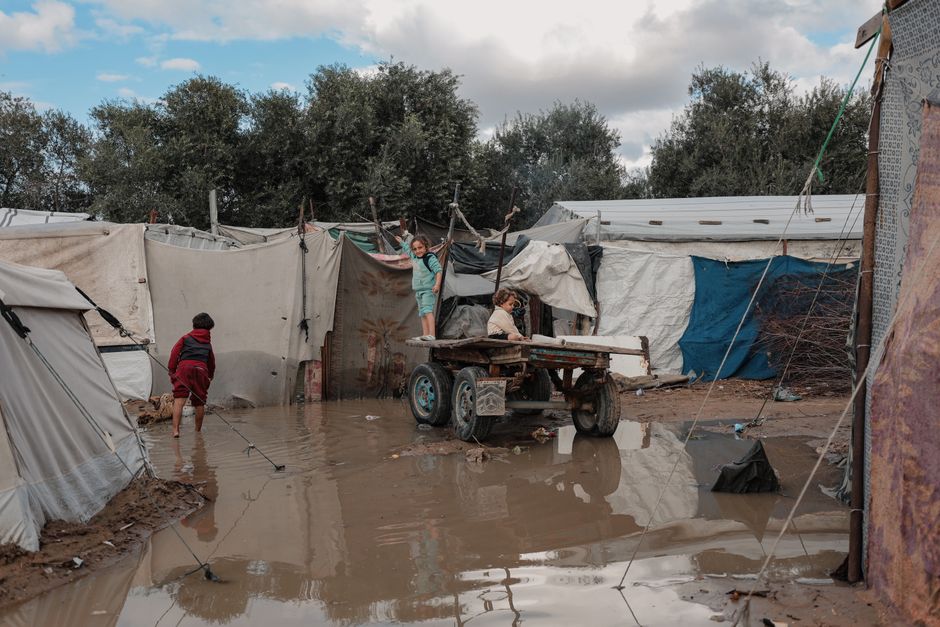
The current humanitarian situation in Gaza presents ANERA with an almost overwhelming challenge. The territory, home to over two million people, is characterized by widespread poverty, chronic unemployment, severe water and sanitation crises, and a fragile healthcare system teetering on the brink of collapse. The relentless Israeli blockade, imposed following Hamas’s takeover of the territory in 2007, has severely restricted the movement of people and goods, stifling economic development and exacerbating dependency on international aid. Recurring military escalations, most recently in May 2021, have further devastated infrastructure and displaced thousands. In this context, any organization offering assistance is scrutinized for its capacity to deliver meaningful and sustainable impact. ANERA’s stated objectives, which typically include providing food security, improving access to clean water and sanitation, supporting education and vocational training, and enhancing healthcare services, are precisely the areas where Gaza is most critically in need. However, the question remains whether these interventions can truly address the root causes of the crisis or merely offer temporary relief, ultimately reinforcing the status quo. The efficacy of ANERA’s operations will be measured not only by the quantity of aid distributed but by its ability to foster genuine self-sufficiency and resilience among the Gazan population, a notoriously difficult undertaking under the prevailing political and economic conditions.
The operational framework of ANERA’s engagement in Gaza is crucial to understanding the wary reception. The organization operates within a complex bureaucratic and security environment, requiring coordination with various actors, including Palestinian authorities, international bodies, and potentially, though indirectly, Israeli authorities through established channels for humanitarian access. The perception of ANERA’s operational methods will be significantly influenced by how these interactions are perceived by the Gazan populace. Transparency in resource allocation, the recruitment of local staff and management, and the extent to which local needs and priorities genuinely shape program design are all vital considerations. If the perception is that ANERA is a top-down organization dictated by external agendas, its effectiveness and acceptance will be severely limited. Conversely, if it can demonstrate a genuine commitment to community-led development and empower local voices in decision-making processes, it may begin to chip away at the ingrained skepticism. The emphasis on "US-backed" is a significant differentiator, as it immediately brings to the forefront questions about accountability, funding sources, and the potential for the organization to be perceived as an instrument of US foreign policy, even if unintentionally. This necessitates a proactive and consistent effort by ANERA to clearly articulate its humanitarian mandate and operational independence from overt political influence.
Furthermore, the internal political dynamics within Gaza play a significant role. The division between Hamas, which governs the territory, and the Palestinian Authority in the West Bank, has created a complex governance landscape. Any foreign aid organization must navigate these divisions carefully, ensuring that its assistance does not inadvertently exacerbate existing tensions or become a pawn in intra-Palestinian power struggles. The perception of impartiality is paramount. If ANERA is seen as favoring one faction over another, or if its operations are perceived as being influenced by political considerations related to the broader Israeli-Palestinian conflict, its ability to gain trust and deliver aid effectively will be severely compromised. The very act of operating in Gaza, a territory effectively controlled by a group designated as a terrorist organization by the United States, inherently raises questions about the implications of this partnership for both ANERA and the US government. While humanitarian organizations often operate under the principle of humanitarian access regardless of political context, the US government’s designation of Hamas complicates this. ANERA’s ability to maintain its humanitarian focus and avoid being perceived as legitimizing or supporting a designated entity will be a constant balancing act, and its success or failure in this regard will be closely monitored by all stakeholders.
The long-term sustainability of ANERA’s interventions is another critical aspect influencing Palestinian sentiment. Short-term relief, while necessary, is often viewed as a temporary Band-Aid on a systemic wound. Gazans are acutely aware of the cyclical nature of their crisis, and they seek solutions that build lasting capacity and reduce dependency. Therefore, ANERA’s engagement will be judged on its ability to implement programs that foster economic self-sufficiency, strengthen local institutions, and promote human capital development. This might include investing in vocational training programs that equip individuals with in-demand skills, supporting small and medium-sized enterprises, or investing in renewable energy projects to alleviate energy poverty. The "US-backed" label becomes particularly relevant here. If the aid is perceived as merely propping up an unsustainable system or serving to maintain a certain level of "stability" without addressing the underlying political causes of the blockade and conflict, its long-term impact will be questioned, and the initial wariness may solidify into outright opposition. The challenge for ANERA is to demonstrate that its commitment extends beyond the immediate crisis and encompasses a genuine effort to empower Gazans to rebuild their lives and economies in a sustainable manner.
The communication strategy employed by ANERA will be equally crucial in shaping Palestinian perceptions. Open and transparent communication about their goals, funding, and operational procedures is essential. This includes actively engaging with local communities, listening to their concerns, and incorporating their feedback into program design and implementation. The use of local languages, accessible communication channels, and culturally sensitive messaging will be vital. Crucially, ANERA must be prepared to address the inevitable criticisms and concerns head-on, providing clear and honest responses. A failure to do so will create a vacuum that can be filled by misinformation and further fuel suspicion. The narrative surrounding ANERA’s entry into Gaza must be carefully managed, ensuring that it emphasizes humanitarian principles and genuine commitment to the well-being of the Gazan people, rather than being perceived as a political maneuver or a strategic tool of US foreign policy. The organization must work to build trust through action, demonstrating tangible improvements in the lives of the people it serves, and proving that its intentions are genuinely humanitarian, irrespective of its funding origins. The success of ANERA in Gaza will ultimately hinge on its ability to navigate these multifaceted challenges and build bridges of trust in an environment marked by deep-seated skepticism and immense humanitarian need.
