Moss and Freud Biopic Explores the Intersection of High Art and Supermodel Iconography in the Early 2000s

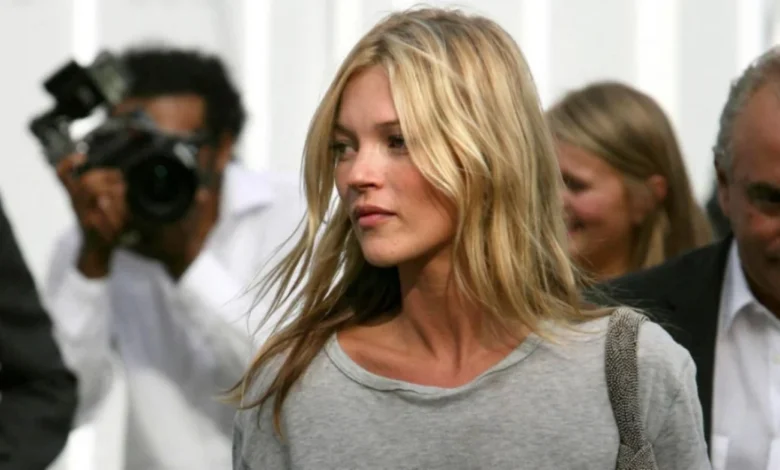
The upcoming cinematic release of Moss & Freud marks a significant moment in the intersection of contemporary art history and fashion lore, dramatizing the unlikely but profound relationship between the British supermodel Kate Moss and the legendary realist painter Lucian Freud. Set against the backdrop of London in the early 2000s, the film delves into a period of mutual transformation for two of Britain’s most enigmatic cultural figures. At the time of their meeting, Moss was navigating the pinnacle of her global fame while transitioning into a new chapter of motherhood, while Freud, the grandson of the founder of psychoanalysis, was in the twilight of a storied career that had redefined figurative painting in the 20th century.
The narrative focuses on the nine-month period in 2002 during which Moss, then pregnant with her daughter Lila Grace, sat for Freud in his Holland Park studio. This collaboration resulted in the celebrated work "Naked Portrait 2002," a piece that challenged the polished aesthetics of the fashion industry by capturing Moss in a raw, vulnerable, and intensely human state. The film, which has already generated significant buzz following its presentation at the London Film Festival, is scheduled for a wide theatrical release in the United Kingdom on May 29, 2026, with international distribution to follow.
The Genesis of a Cultural Collision
The relationship between Kate Moss and Lucian Freud did not begin in a gallery or a runway show, but rather through a public expression of mutual admiration. In an interview with British Vogue, Moss famously remarked that one of her remaining ambitions was to be painted by Freud. The artist, known for his reclusive nature and selective choice of subjects, reportedly heard of the request and invited Moss to his studio.
This meeting occurred at a pivotal juncture for Moss. Known as "The Waif" or "La Brindille," she had spent the 1990s as the face of the "heroin chic" aesthetic, a period defined by her collaborations with Calvin Klein and Corinne Day. By 2002, however, she was seeking to transcend the ephemeral nature of the fashion industry. Freud, conversely, was 80 years old and remained a titan of the art world, famous for his "naked portraits" that eschewed traditional notions of beauty in favor of a visceral, often unsettling realism.
The sittings were notoriously grueling. Freud was famous for requiring his subjects to remain still for hundreds of hours over several months. For Moss, used to the rapid-fire pace of fashion photography where a campaign could be shot in hours, the slow, methodical pace of Freud’s impasto technique represented a radical shift in discipline. The film explores this friction, illustrating how the model’s patience and the painter’s obsession forged a bond that went beyond the canvas.
Production Details and Creative Leadership
The film is written and directed by James Lucas, an Academy Award winner recognized for his short film The Phone Call. Lucas’s involvement was a key factor in securing the cooperation of Kate Moss herself, who serves as an executive producer on the project through her production company. Moss has publicly stated that after seeing Lucas’s previous work, she felt confident that he could handle the emotional nuances of her story with the necessary sensitivity and depth.
The production is a collaboration between GFC Gallery and the Kate Moss Agency, ensuring a high degree of authenticity in its depiction of the fashion world and the specific atmosphere of London’s art scene in the early millennium. By having Moss directly involved in the creative process, the film aims to provide an "insider" perspective on a period of her life that was frequently the subject of tabloid speculation but rarely understood from her own point of view.
Casting the Icons: Ellie Bamber and Derek Jacobi
One of the most discussed aspects of the production is the casting of the two leads. Ellie Bamber, the 29-year-old British actress known for her roles in Nocturnal Animals and Willow, takes on the daunting task of portraying Kate Moss. While some critics and fans have noted that Bamber does not share an exact physical resemblance with the supermodel, Moss’s personal endorsement of the casting suggests that Bamber captured the "spirit" and "energy" of the era. Bamber’s previous experience in fashion-adjacent projects, including work with Tom Ford, provided her with a foundational understanding of the industry’s pressures.
Opposite Bamber is Sir Derek Jacobi, one of the most respected actors of his generation. Jacobi, known for his Shakespearean pedigree and roles in Gladiator and The King’s Speech, portrays Lucian Freud. His casting brings a necessary gravitas to the role of the painter, capturing Freud’s intellectual intensity and his uncompromising approach to art. The chemistry between the two actors is central to the film’s narrative, as it mirrors the evolving dynamic between a young woman at the height of her physical influence and an old man contemplating his artistic legacy.
Chronology of the Moss-Freud Relationship
The timeline of the events depicted in the film and their subsequent impact on the art market provides essential context for the movie’s narrative:
- Early 2002: Kate Moss expresses her desire to be painted by Lucian Freud in a magazine interview. Freud responds by inviting her to his studio.
- 2002 (Nine-Month Period): Moss sits for Freud three nights a week, from 7:00 PM to 2:00 AM, while pregnant with her daughter. During this time, Freud also tattoos two swallows on Moss’s lower back.
- September 2002: Lila Grace Moss-Hack is born. Shortly after, Moss and her then-partner Jefferson Hack (played in the film by Will Tudor) begin to drift apart.
- 2005: The finished painting, "Naked Portrait 2002," is put up for auction at Christie’s in London. It sells for £3.9 million (approximately $7.2 million at the time), a record for a portrait of a contemporary celebrity.
- 2011: Lucian Freud passes away at the age of 88, leaving behind a legacy as one of the greatest figurative painters of the 20th century.
- 2023-2024: Production on Moss & Freud begins, with filming taking place in London to capture the authentic locations frequented by the duo.
- May 2026: The scheduled theatrical release of the biopic.
Artistic Significance and Market Impact
The painting at the center of the film, "Naked Portrait 2002," is considered a landmark in contemporary art. Unlike the airbrushed images of Moss that appeared in Harper’s Bazaar or Vogue, Freud’s portrait depicted her with a heavy, sculptural quality. It captured the physical changes of pregnancy and the exhaustion of her lifestyle, grounding the "supermodel" myth in biological reality.
The financial data surrounding Freud’s work underscores the high stakes of this collaboration. At the time of the sale in 2005, the £3.9 million price tag was a testament to the combined cultural capital of the artist and the subject. In the years since, Freud’s market value has only increased, with his works regularly fetching tens of millions of dollars at major auction houses like Sotheby’s and Christie’s. The film arrives at a time when there is a renewed market interest in "Indie Sleaze" and Y2K aesthetics, positioning the movie to capitalize on both art-house prestige and mainstream nostalgia.
Supporting Cast and Historical Accuracy
The film also populates its world with the real-life figures who surrounded Moss and Freud during the early 2000s. Jasmine Blackborow portrays Bella Freud, Lucian’s daughter and a successful fashion designer in her own right, who acted as a bridge between the two worlds. Will Tudor plays Jefferson Hack, the co-founder of Dazed & Confused and the father of Moss’s child. The inclusion of these characters allows the film to explore the personal tensions Moss faced as she balanced her professional obligations with her impending motherhood and the breakdown of her relationship.
The production design has reportedly gone to great lengths to recreate Freud’s studio, which was known for its paint-splattered walls and austere environment. This attention to detail serves to highlight the contrast between the glamour of Moss’s public life and the gritty, demanding reality of Freud’s creative process.
Broader Implications for the Fashion Biopic Genre
Moss & Freud represents a growing trend of "prestige" biopics centered on fashion icons that prioritize psychological depth over mere chronological storytelling. Following in the footsteps of films like Jackie or series like The New Look, this project seeks to deconstruct the "it-girl" persona. By focusing on a single, transformative episode rather than a "cradle-to-grave" biography, the film offers a more concentrated analysis of how celebrity is constructed and how art can strip that construction away.
Furthermore, the film highlights the lasting impact of the "Cool Britannia" era. The early 2000s in London was a time of immense cultural output, where the lines between music, fashion, and fine art were increasingly blurred. The collaboration between a supermodel and a Freud is perhaps the ultimate symbol of that era’s obsession with iconicity.
As the May 2026 release date approaches, the film is expected to be a major contender during the festival circuit, particularly in categories related to acting and production design. For Kate Moss, the project serves as a definitive statement on her own legacy—not just as a face on a billboard, but as a woman who commanded the attention of the art world’s most discerning eye. For the audience, Moss & Freud promises a rare glimpse into the private sanctum of two individuals who, despite their differences in age and medium, shared a common commitment to the power of the image.
Related posts: