BYD Workforce Reduction Signals Strategic Shift Toward Industrial Automation Amid Global EV Price War

The global automotive landscape was recently jolted by figures emerging from BYD’s latest financial disclosures, revealing that the Chinese electric vehicle giant reduced its total workforce by nearly 100,000 employees over a twelve-month period. According to the company’s 2025 annual report published on its investor portal, the total headcount dropped from 968,900 to 869,600, marking a significant 10.25% reduction in personnel. This contraction comes at a paradoxical time for the Shenzhen-based manufacturer, which continues to report record-breaking sales volumes, aggressive international expansion, and a tightening grip on the global electrified vehicle market. The data suggests that while BYD is growing in influence and output, it is simultaneously undergoing a radical internal transformation aimed at lean operations and high-efficiency manufacturing.
This workforce adjustment does not appear to be a traditional "mass layoff" born of financial distress or declining demand. Instead, industry analysts and the data itself point toward a calculated rationalization of resources. In the context of the modern automotive industry, particularly within the hyper-competitive Chinese market, the reduction is being interpreted as a byproduct of internal restructuring, substantial gains in manufacturing productivity, and an aggressive pivot toward factory automation. For BYD, the goal is no longer just to be the largest producer of New Energy Vehicles (NEVs), but to be the most efficient, ensuring that its profit margins can withstand the brutal price wars that have come to define the sector.
The Context of the Great EV Price War
To understand why a company at the height of its power would shed over 10% of its workforce, one must look at the economic environment of the Chinese automotive sector. Since early 2023, a relentless price war has ravaged the industry, initiated largely by Tesla’s aggressive discounting and met with equal fervor by domestic players like BYD, Geely, and emerging tech-centric brands like Xiaomi. In this environment, the "first-mover advantage" of electrification has evolved into a "survival of the leanest."
BYD has been a primary protagonist in this conflict. By leveraging its vertical integration—manufacturing its own batteries, semiconductors, and software—the company has been able to undercut traditional Western automakers and even many of its domestic rivals. However, maintaining this price leadership requires constant downward pressure on operational costs. The reduction of nearly 100,000 positions suggests that BYD is moving away from the labor-intensive assembly models that characterized its early growth phases and is instead embracing a "machine-of-war" industrial strategy where human labor is increasingly replaced by robotic precision and AI-driven logistics.
A Chronology of Rapid Expansion and Consolidation
The journey of BYD from a mobile phone battery manufacturer to a global automotive titan provides the necessary background for this current phase of consolidation. Founded in 1995, the company entered the automotive space in 2003. By 2022, it had made the historic decision to cease production of internal combustion engine (ICE) vehicles entirely, focusing solely on plug-in hybrids and battery-electric vehicles.
In 2023 and 2024, BYD’s growth was exponential. The company successfully challenged Tesla for the title of the world’s top EV seller in various quarters and began a massive export offensive, sending its "Seal," "Dolphin," and "Atto 3" models to Europe, Southeast Asia, and South America. However, as the workforce approached the one-million mark in late 2024, the complexities of managing such a massive human infrastructure began to weigh against the need for agility. The 2025 report serves as a definitive marker of the end of the "expansion at all costs" era and the beginning of the "optimization" era. This timeline shows that BYD is reacting to the market’s maturity with remarkable speed, adjusting its internal structure before any potential stagnation can take root.
Analyzing the Drivers of Rationalization
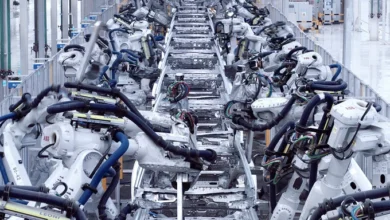
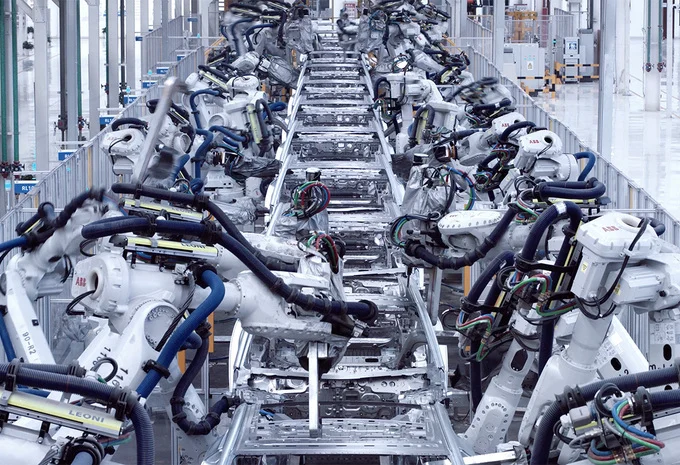
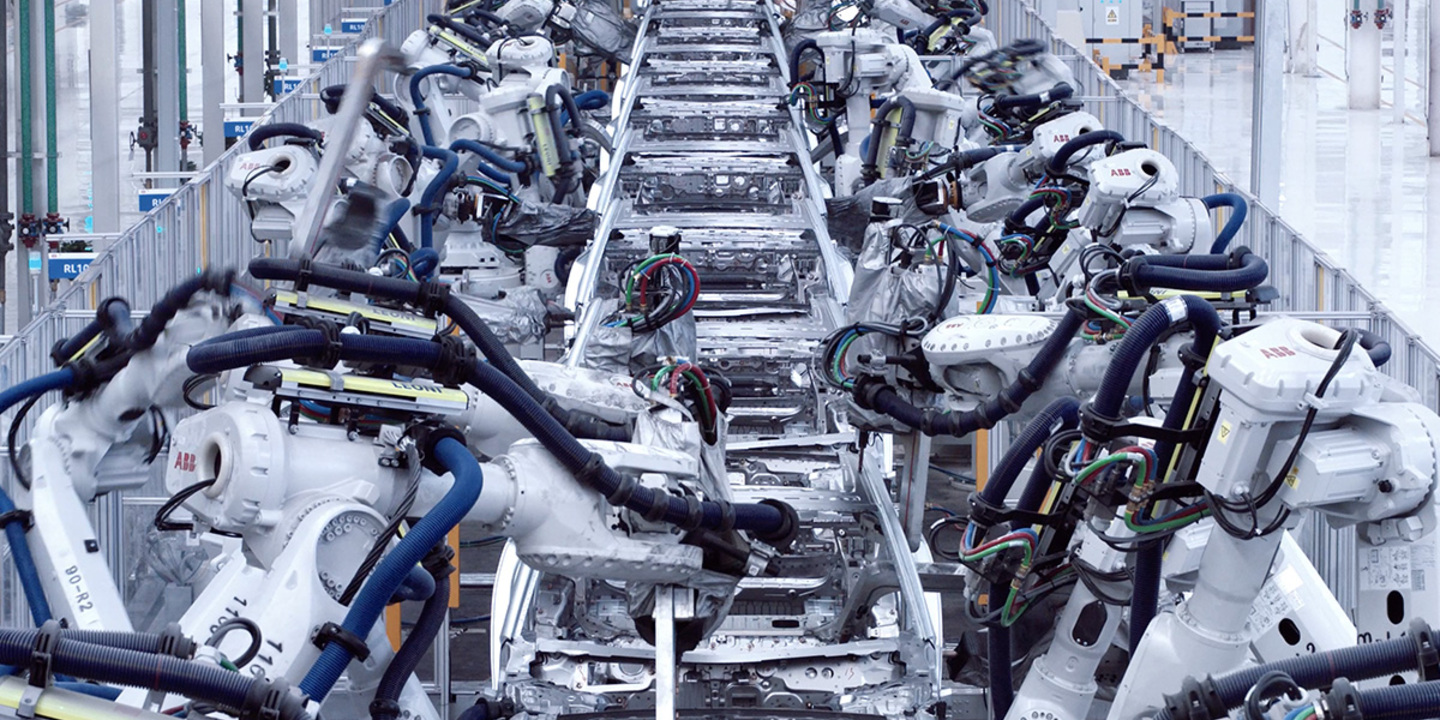
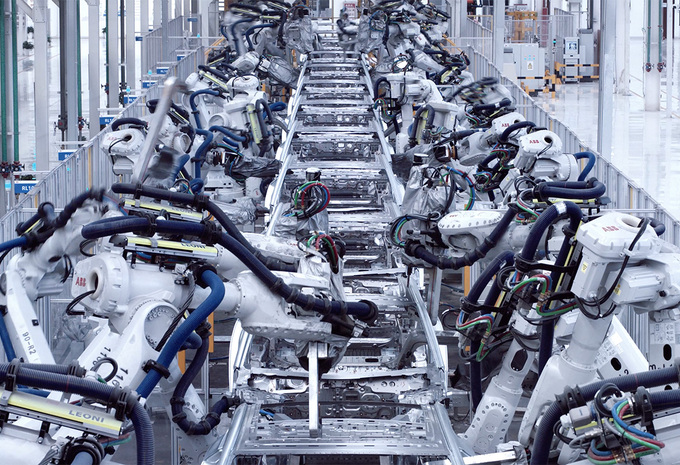
The 99,300-person decrease in staff is a multifaceted phenomenon. First and foremost is the role of automation. China is currently the world’s largest market for industrial robots, and BYD has been at the forefront of integrating "Industry 4.0" technologies into its production lines. Modern EV manufacturing requires fewer moving parts than traditional ICE vehicles, naturally lending itself to automated assembly. By automating repetitive tasks in battery cell production and chassis welding, BYD can maintain or even increase output while reducing the headcount required on the factory floor.
Secondly, internal restructuring has likely played a role. As BYD has grown, it has acquired various subsidiaries and expanded into diverse sectors, including electronics and rail transit. The 2025 data suggests a move toward centralizing corporate functions and eliminating redundancies that were created during the company’s frantic hiring sprees of the early 2020s. This "trimming of the fat" is essential for a company that intends to compete on the global stage, where labor costs in new markets (such as its upcoming plants in Hungary and Brazil) will be vastly different from those in mainland China.
Official Stance and Market Reaction
While BYD has not issued a singular, dramatic press release titled "100,000 Jobs Cut," the narrative presented to investors is one of discipline. The company’s messaging emphasizes "cost-leadership" and "technological innovation." From an investor perspective, these figures are often viewed positively. In the high-stakes world of automotive equities, a reduction in headcount during a period of rising revenue is seen as a sign of increasing "revenue per employee," a key metric for long-term profitability.
Market analysts suggest that BYD is preparing for a future where the Chinese domestic market reaches saturation. To maintain its trajectory, the company must ensure its "export machine" is as lean as possible. By reducing the domestic workforce, BYD is effectively lowering its break-even point, allowing it to remain profitable even if it has to lower prices further to capture market share in price-sensitive regions like Latin America or to offset the impact of potential tariffs in the European Union and the United States.
The Technological Advantage and Industrial Efficiency
The true information hidden within these labor statistics is the shift in how EVs are built. The transition to electric mobility was once marketed as a way to create millions of new industrial jobs. However, the reality of the "selection natural" (natural selection) mentioned in the original report is that the electric transition actually demands a more streamlined, tech-heavy workforce.
BYD’s "Blade Battery" technology and its "e-Platform 3.0" are designed for ease of manufacturing. These innovations allow for modular assembly, where large sections of the car are integrated into single units. This "gigacasting" approach, pioneered by Tesla and adopted by BYD, significantly reduces the number of individual parts and, consequently, the number of workers needed to assemble them. The reduction in staff is therefore a direct reflection of BYD’s technological success; the more advanced the vehicle design, the less human intervention is required to build it.
Broader Implications for the Global Automotive Industry
The news of BYD’s workforce reduction sends a clear message to traditional automakers in Europe and North America: the competition is not just about who has the best battery, but who has the most efficient factory. As companies like Volkswagen, Stellantis, and Ford struggle with high labor costs and the complex transition from ICE to EV production, BYD is demonstrating that it is willing to make the hard choices necessary to remain an industrial "war machine."
Furthermore, this development highlights the growing divide between traditional manufacturing and the future of mobility. The 10.25% drop in staff at BYD serves as a warning that the "electric era" will be characterized by intense industrial consolidation. Those who cannot automate or rationalize their costs will likely be absorbed or driven out of the market. BYD’s strategy shows that it intends to be a survivor, using its massive scale not as a cushion, but as a lever to force even greater efficiencies.

Conclusion: The Future of Lean Manufacturing
As BYD continues to expand its global footprint, the reduction of nearly 100,000 jobs in a single year will be remembered as a pivotal moment in the company’s history. It marks the transition from a high-growth startup phase to a mature, dominant industrial power. The message from Shenzhen is unmistakable: expansion will continue, and volumes will rise, but the era of bloated workforces is over. In the relentless world of the global EV price war, there is no room for "superfluous fat."
For the global automotive industry, BYD’s 2025 annual report is a blueprint for the future. It illustrates a world where industrial dominance is measured not by the number of people on the payroll, but by the efficiency of the algorithms and robots that drive the assembly line. As the "natural selection" of the EV market continues, BYD has positioned itself as the apex predator—lean, fast, and technologically uncompromising. The disappearance of 100,000 roles is not a sign of a company in retreat, but rather the sound of a giant sharpening its blade for the next phase of global competition.
Related posts: