Navigating the Evolution of Driving License Procedures in Belgium: A Comprehensive Analysis of Regional Regulations and Administrative Mandates

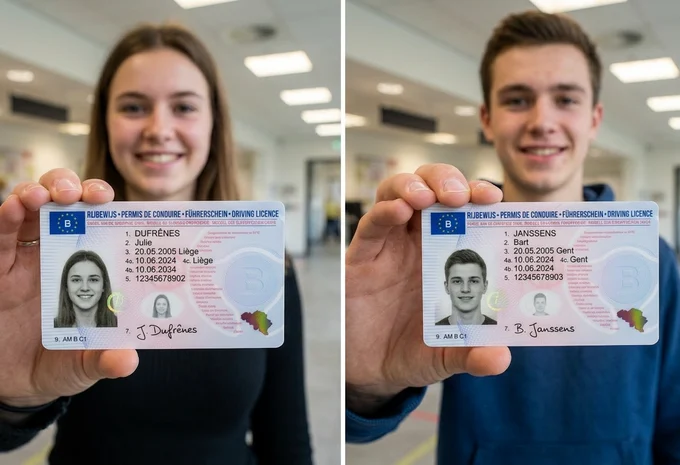
The landscape of obtaining a Category B driving license in Belgium has undergone a profound transformation following the regionalization of road safety competencies. What was once a unified federal process has diverged into three distinct sets of regulations governed by Flanders, Wallonia, and the Brussels-Capital Region. This decentralization has introduced a layer of complexity for candidate drivers, necessitating a precise understanding of the specific geographic requirements and the overarching legal framework that remains in place. As of April 2024, these changes reflect a broader push toward localized governance, digital modernization, and enhanced road safety standards, even as the nation grapples with the long-delayed implementation of a points-based license system.
The Impact of Regionalization on Examination Procedures
The shift of authority from the federal level to the regions has created a regulatory environment where the location of a candidate’s residence or training can dictate the specific rules they must follow. One of the most critical administrative constraints currently in place is the prohibition against "region-hopping" for examinations. Under current Belgian law, a candidate is forbidden from taking their theoretical examination in one region, such as Brussels, and subsequently attempting their practical examination in another, such as Flanders. This measure was implemented to prevent candidates from seeking out regions perceived to have "easier" passing standards, thereby ensuring a level of regional consistency in driver training.
For existing license holders, regionalization also brings administrative reminders regarding the validity of physical documents. While the legal right to drive remains national, the physical license itself is subject to European standards. Authorities have issued warnings that licenses issued before 1989—the classic pink paper documents—may cause significant legal hurdles when traveling abroad. Although these documents are technically valid within Belgium until 2033, international car rental agencies and foreign police forces often demand more modern, legible identification.
The Theoretical Foundation: Rigor and Requirements
The journey toward a Category B license begins at the age of 17, the minimum age at which a candidate may sit for the theoretical examination. The exam is designed to test not only knowledge of road signs but also the candidate’s understanding of complex traffic dynamics. To pass, a candidate must achieve a minimum score of 41 out of 50 points. However, the scoring system is weighted heavily against dangerous behavior. While a standard error results in the loss of a single point, a "severe infraction"—defined as a third- or fourth-degree violation, such as ignoring a red light or exceeding the speed limit—results in a five-point deduction. Consequently, a candidate who commits two severe infractions fails the exam immediately, regardless of their performance on the remaining questions.
Exams must be conducted in the official language of the region in which the test center is located. This linguistic requirement underscores the importance of regional administrative adherence. Following a successful theoretical exam, the candidate enters a critical phase of practical training, which can take several forms depending on their budget and preferred learning pace.
Chronology of the Driving License Process: From Theory to Probation
The path to full licensure follows a strict chronological sequence designed to ensure gradual skill acquisition:
- Theoretical Success (Age 17+): Candidates pass the theory exam and receive a certificate valid for three years.
- Training Phase: Candidates choose between professional driving schools or a "free guide" model (usually a parent or relative).
- Risk Perception Test: A mandatory digital assessment that evaluates the candidate’s ability to identify potential hazards on the road.
- First Aid Training (Brussels Only): Candidates in the capital must complete a mandatory course provided by the Red Cross.
- Provisional License Issuance: Depending on the training path, a provisional license is issued for either 18 or 36 months.
- Practical Examination (Age 18+): A comprehensive road test in an official examination center.
- Probationary Year: Once the license is obtained, the driver enters a one-year "test period" where any major infraction can lead to severe penalties or the revocation of the license.
Divergent Training Models and Financial Implications
Candidates in Belgium face a choice between the "free model" and professional instruction. The professional route, while significantly more expensive—often reaching costs upwards of €2,000—offers the advantage of dual-control vehicles and certified instructors. This path is often faster, as it allows candidates to apply for an 18-month provisional license that permits driving without a guide after 20 hours of instruction.
Conversely, the "free model" relies on a designated guide who has held a license for at least eight years and has not been stripped of their driving rights in the preceding three years. While more affordable, this method requires a 36-month provisional license and a longer mandatory practice period. Recent data suggests a trend toward "hybrid learning," where candidates take a limited number of professional hours to master the basics before continuing their practice with a guide.
Digitalization and the Beldrive Initiative
In a significant move toward administrative efficiency, the Belgian government launched the "Beldrive" application in late 2022. This digital platform allows candidates to apply for their 18-month provisional license online, eliminating the need for an initial trip to the town hall. While currently limited to specific license types, the federal government intends to expand Beldrive to cover all license applications and renewals. This digital shift is part of a broader European effort to modernize civil registries and reduce the bureaucratic burden on young citizens.
Medical Fitness and the Role of CARA
A critical but often overlooked aspect of Belgian driving law is the mandatory declaration of health. Every candidate must sign a "declaration on honor" stating they do not suffer from physical or mental conditions that would impair their ability to drive. Fraudulent declarations can lead to criminal prosecution, including fines and imprisonment. For individuals with disabilities or chronic illnesses, the Center for Driving Ability and Vehicle Adaptation (CARA), managed by the Vias Institute, provides specialized evaluations. CARA determines if a driver requires vehicle modifications or if their medical condition allows for safe operation on public roads.
The Risk Perception Test and Regional Specifics
Before attempting the practical exam, all candidates must pass a Risk Perception Test. This computer-based assessment uses video sequences to test a driver’s situational awareness. In Brussels, the requirements are even more stringent. Since November 2018, the Brussels-Capital Region has mandated a first-aid training course for all new drivers. This initiative, conducted in partnership with the Red Cross, includes an online theoretical module followed by a three-hour practical session. The policy aims to empower drivers to act as first responders in the event of road accidents, potentially saving lives during the "golden hour" following a collision.
The Practical Examination and Post-Failure Mandates
The practical exam is the final hurdle, requiring a clean, roadworthy vehicle with at least three seats. Candidates are advised to book their slots at least six weeks in advance due to high demand at examination centers. The cost of the exam is standardized by regional tariffs, but the consequences of failure are uniform across the country. If a candidate fails the practical exam twice, they are legally mandated to undergo at least six hours of professional instruction at an accredited driving school before being allowed a third attempt. This rule also applies to those whose provisional licenses have expired.
The Transition from Paper to Plastic: The 2033 Deadline
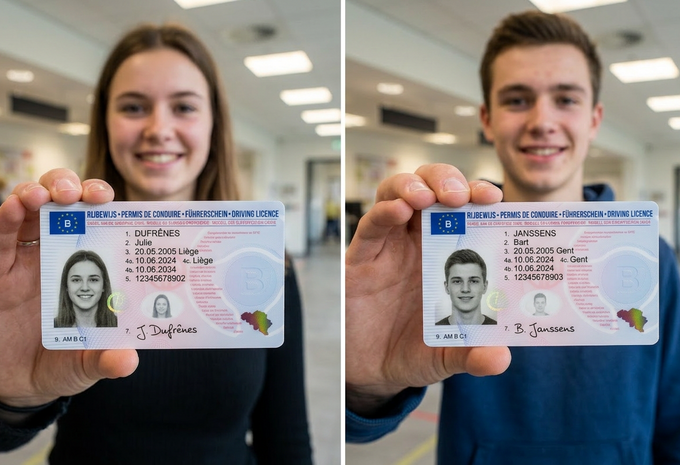
Belgium is currently in a transitional phase regarding the physical document of the driving license. The traditional pink paper licenses, which lacked an expiration date, are being phased out in favor of the bank-card format. These modern licenses are valid for 10 years, ensuring that the photograph and personal data remain current.
While the old paper licenses remain legally valid within Belgian borders for the time being, the European Union has set a hard deadline of 2033 for their total replacement. Drivers are encouraged to proactively update their documents, particularly if the photograph no longer resembles the holder or if the document is damaged. The cost for a new digital license typically ranges between €20 and €35, depending on municipal fees. Furthermore, for those driving outside the European Economic Area, an International Driving Permit (valid for three years) remains a necessity.
The Stalled Points-Based License System
Despite years of legislative debate, Belgium remains one of the few European nations without a points-based driving license. While the legal framework for such a system was largely finalized by 2024, the necessary executive decrees have not been signed, leaving the project in a state of political limbo. Proponents argue that a points system would provide a more effective deterrent against recidivism, while opponents cite concerns over administrative complexity and the potential for social inequality in how fines and point deductions are applied.
Analysis of Implications for Road Safety and Mobility
The regionalization of the driving license process in Belgium reflects a dual reality: the need for localized safety initiatives and the challenge of administrative fragmentation. While the Brussels first-aid requirement and the Flanders risk perception test represent positive steps toward better-prepared drivers, the inability to cross regional lines for exams adds a layer of rigidity to the system.
The move toward digitalization via Beldrive and the mandatory phase-out of paper licenses by 2033 signal a commitment to modernization. However, the absence of a points-based system remains a significant gap in Belgium’s road safety strategy compared to its neighbors, France and Germany. As the nation moves toward the 2033 deadline, the focus will likely shift toward further harmonizing these regional differences while maintaining the rigorous standards required to ensure safety on Belgium’s increasingly congested roadways. For the candidate driver, the message is clear: success requires not only technical skill behind the wheel but also a meticulous navigation of the regional bureaucracy that now defines the Belgian driving experience.
Related posts: