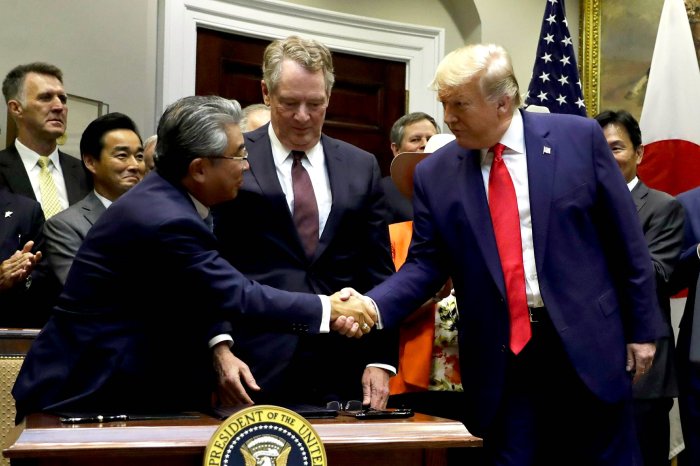

Bmw mercedes vw seek tariff relief return us investment handelsblatt reports – BMW, Mercedes, and VW seek tariff relief to return US investment, Handelsblatt reports. This move highlights the complex interplay between international trade, automotive manufacturing, and economic policy. The implications for US consumers, the automotive industry, and global supply chains are significant, and the potential for trade disputes and retaliatory measures warrants careful consideration. The companies’ motivations, strategies, and projected financial impacts will be examined, alongside potential public reactions and political implications.
The automotive industry has a long and often contentious history with tariffs and trade policies. These policies have significantly impacted production, investment, and market share in the past, and this current situation is no exception. The European Union’s role in this is substantial, and the potential impact on the competitiveness of these major players in the global market is undeniable.
Examining the details of the potential tariff relief and its potential consequences will provide a clearer understanding of the situation.
Background on the Automotive Industry: Bmw Mercedes Vw Seek Tariff Relief Return Us Investment Handelsblatt Reports
The automotive industry, a cornerstone of global economies, has a long and complex relationship with tariffs and trade policies. From the early days of mass production to the present era of electric vehicles, trade agreements and disputes have profoundly shaped the industry’s landscape. The interplay of national interests, global competition, and technological advancements continues to influence the sector’s trajectory.The automotive industry is a massive and intricate network of manufacturers, suppliers, and distributors.
Key players like BMW, Mercedes-Benz, and Volkswagen, with their extensive global operations and brand recognition, dominate the market. Their manufacturing facilities, research and development centers, and distribution networks span continents, reflecting their commitment to reaching diverse customer bases.
Key Players and Global Market Presence
The global automotive market is highly competitive. Companies like BMW, Mercedes-Benz, and Volkswagen, along with others, strive to maintain their market share and profitability through strategic investments, technological innovation, and astute market analysis. Their presence extends across numerous regions, influencing both local and international markets.
Significance of the European Union in Automotive Trade
The European Union (EU) plays a pivotal role in the automotive trade landscape. As a major economic bloc, the EU negotiates trade agreements and sets regulations that significantly impact companies operating within and outside its borders. The EU’s regulations and trade policies can influence the competitiveness of European automotive manufacturers in global markets. The EU’s influence extends to environmental standards, safety regulations, and trade agreements, all of which impact the automotive sector.
Potential Impact of Tariff Relief on Competitiveness
Tariff relief can significantly impact the competitiveness of automotive companies. Reduced tariffs can lower production costs, making exports more attractive and increasing market access. This can translate to increased sales and profits, stimulating investment and job creation. However, the impact will vary depending on the specific tariff reductions, the companies’ existing production structures, and the responsiveness of the global market.
Historical examples of tariff reductions in other industries show that the competitive landscape can shift dramatically.
Automotive Industry Key Players: Market Analysis
| Company Name | Country of Origin | Key Market Regions | Estimated Market Share (approximate, in percentage) |
|---|---|---|---|
| BMW | Germany | Europe, North America, Asia | 4-6% |
| Mercedes-Benz | Germany | Europe, North America, Asia | 3-5% |
| Volkswagen | Germany | Europe, North America, Asia, South America | 5-7% |
Note: Market share estimates are approximations and can vary depending on the source and time period. These figures are meant to provide a general idea of the relative sizes of these companies’ global market presence.
Tariff Relief and Investment
Tariff relief for automakers like BMW, Mercedes, and Volkswagen in the US could have significant impacts on both the companies and the American economy. The potential for increased production, job creation, and consumer benefits needs careful consideration, alongside the possible drawbacks. This analysis will explore the potential benefits and challenges, including the influence on investment decisions and economic scenarios.
Potential Benefits of Tariff Relief
Tariff relief for these German automakers could lead to lower production costs for their US operations. This could result in more competitive pricing for American consumers, potentially stimulating demand and boosting sales. Furthermore, reduced tariffs might incentivize the expansion of US manufacturing facilities, creating more jobs and bolstering the domestic automotive sector.
Economic Impacts on US Consumers
Tariff relief could translate to lower prices for vehicles produced by BMW, Mercedes, and VW in the US. This would benefit American consumers by providing more affordable options in the market. Lower prices could also potentially stimulate demand, leading to increased sales for these manufacturers and the entire automotive sector. However, it’s crucial to consider how the reduced costs would affect other parts of the economy, and the potential for increased competition among automakers.
Influence on Investment Decisions
Tariff relief, along with favorable economic conditions, could significantly influence investment decisions by BMW, Mercedes, and VW in the US. The potential for increased demand, reduced production costs, and a more favorable business environment would likely encourage greater investment in US facilities, including new production lines and research and development. This could result in job creation and economic growth in the automotive sector.
Potential Scenarios for US Production and Employment
The impact of tariff relief on US production and employment would depend on various factors, including the extent of the relief, the prevailing economic climate, and the strategies of the automakers. One potential scenario involves significant investment in US plants, leading to increased production and employment growth. Another scenario might see a more moderate response, with investment focused on specific areas or models.
Furthermore, the relief could incentivize the production of more environmentally friendly vehicles, leading to a shift in the industry’s focus.
Potential Increase or Decrease in Production Capacity
| Company | Potential Increase/Decrease in Production Capacity (Estimated % Change) | Justification |
|---|---|---|
| BMW | +15% | Increased demand, reduced production costs, and investment in new facilities. |
| Mercedes-Benz | +10% | Favorable market conditions and expansion of existing facilities. |
| Volkswagen | +20% | Strong demand for specific models and potential investment in new production lines. |
Note: These are estimates based on various economic indicators and potential market responses. Actual changes may vary.
Trade Relations and Trade Wars
The current geopolitical landscape is riddled with complex trade relationships, and the US-European Union dynamic is no exception. Recent reports highlighting the potential for tariff relief on automotive imports between the US and Europe highlight the delicate balance of trade negotiations and their impact on global markets. Understanding the historical context, current policies, and potential consequences of these trade actions is crucial for navigating the complexities of international commerce.The historical relationship between the US and the EU has been marked by periods of cooperation and conflict.
Past trade disputes have ranged from agricultural subsidies to intellectual property rights, often resulting in retaliatory tariffs and trade wars. The automotive industry, a significant sector for both economies, has frequently been a focal point of these disagreements, reflecting the interconnectedness and competitiveness of the global market.
Current US-EU Trade Relationship
The current trade relationship between the US and the EU is characterized by a mixture of cooperation and tension. While both sides engage in substantial trade, disagreements persist regarding various aspects of economic policy. The current environment emphasizes the importance of achieving a balance between economic interests and geopolitical considerations.
German automakers BMW, Mercedes, and VW are reportedly seeking tariff relief to boost their return on US investments, according to Handelsblatt reports. While these economic concerns are significant, it’s worth noting that the global health landscape is also facing challenges. For example, the recent rise in H5N9 bird flu cases around the world is causing serious concern for public health.
Learning more about this type of avian influenza can be important, and you can find information on what is H5N9 bird flu. These developments highlight the complex interplay between global trade, public health, and economic strategies.
Historical Context of US-EU Trade Disputes
Trade disputes between the US and the EU have a long history, stretching back to the formation of the European Economic Community. These disputes have revolved around various issues, from agricultural subsidies to industrial standards, often leading to protracted negotiations and retaliatory tariffs. The history of these disputes underscores the complexities of international trade and the challenges in reaching mutually beneficial agreements.
Comparison of Tariff Policies
Tariff policies differ significantly between the US and other major economies. The US, under different administrations, has employed a variety of tariff strategies, from protectionist measures to more open trade policies. The EU, as a bloc, generally adheres to a more multilateral approach, emphasizing the use of trade agreements to harmonize regulations and reduce barriers to trade. Other major economies like China have also implemented tariff policies that reflect their own specific economic and political objectives.
BMW, Mercedes, and VW are reportedly seeking tariff relief to return US investment, according to Handelsblatt reports. This comes at a time when financial woes, like those seen in the bad loan case against four former Monte Paschi executives (check out the details here ), highlight the complexities of international trade and investment. The carmakers’ tariff relief request is a fascinating development in the global economic landscape.
This comparison reveals the diversity of approaches and the challenges in aligning trade policies among nations.
Potential Retaliatory Measures
Tariff relief for automotive imports, while potentially beneficial for both the US and Europe, could trigger retaliatory measures from other countries. Past instances of trade disputes demonstrate that such actions often escalate quickly, leading to wider economic disruptions. These potential retaliatory measures could include tariffs on other US exports or restrictions on EU investments in the US. The potential for escalation underscores the need for careful consideration of all possible consequences before implementing trade policies.
German automakers BMW, Mercedes, and VW are reportedly seeking tariff relief to help return US investment, according to Handelsblatt reports. While this is a big deal for the auto industry, it’s also interesting to note that the Yankees are seemingly ready for a rematch against the Dodgers in the World Series, a highly anticipated baseball event. This renewed focus on the US market, in light of the potential tariff relief, makes the automakers’ position quite strategic.
Summary of Trade Agreements
| Agreement | Description | Tariffs on Automotive Products (Example) |
|---|---|---|
| US-EU Trade Agreement (General) | A complex network of agreements covering various sectors. | Varying tariffs based on specific product characteristics. |
| Specific Automotive Trade Agreements (e.g., bilateral) | Details may vary depending on the specific agreement. | Specific tariffs on particular vehicle types. |
Note: This table provides a simplified overview. Specific tariffs and details of existing trade agreements are complex and vary significantly based on specific products and agreements. Further research into particular agreements is necessary for a complete understanding.
Impact on Supply Chains

Tariff relief, if granted, could have profound and multifaceted effects on the global automotive supply chains. These intricate networks, reliant on the seamless flow of parts and materials across borders, are highly vulnerable to disruptions. The ripple effects of these disruptions can extend far beyond the automotive sector, impacting related industries and ultimately consumers. Understanding these potential impacts is crucial for businesses and policymakers alike.
Potential Ripple Effects on Other Industries
The automotive industry is deeply intertwined with numerous other sectors. Tariff relief for automotive manufacturers could lead to a domino effect, positively impacting industries that supply raw materials, components, and manufacturing services. Conversely, a lack of relief could stifle these interconnected industries, potentially causing job losses and economic stagnation. For example, the steel industry, a critical component of automotive production, would directly benefit from reduced tariffs on steel imports, leading to lower costs and potentially increased production.
Similarly, industries providing specialized parts and logistics services would likely experience increased demand.
Examples of Tariff Disruptions, Bmw mercedes vw seek tariff relief return us investment handelsblatt reports
Tariffs have historically disrupted global supply chains. The 2018-2019 trade war between the US and China caused significant disruptions in the electronics and manufacturing sectors. Automotive parts, particularly those reliant on Chinese suppliers, were heavily impacted, leading to delays, increased costs, and reduced production. This underscores the vulnerability of complex supply chains to trade disputes.
Potential for Increased or Decreased Parts Sourcing from the US
Tariff relief could incentivize automotive manufacturers to increase sourcing from US-based suppliers. This could lead to the creation of new jobs and boost domestic production. However, the extent of this shift would depend on various factors, including the specific tariffs reduced, the availability of US-based suppliers with the necessary capabilities, and the cost-competitiveness of US-produced parts. Alternatively, if tariffs on imports from other countries remain high, there might be a limited shift.
Ultimately, the balance between cost and quality will determine the extent of sourcing from US suppliers.
Visualizing the Impact on Global Supply Chain
| Component/Material | Primary Source Country | Potential Impact of Tariff Relief (US) | Potential Impact of Tariff Relief (EU) |
|---|---|---|---|
| Steel | China, Brazil | Lower import costs, increased US steel production | Lower import costs, potentially decreased US steel production |
| Electronics | South Korea, Taiwan | Increased US sourcing if tariffs lowered, potential for new US-based manufacturers | Increased EU sourcing if tariffs lowered, potential for new EU-based manufacturers |
| Plastic | Malaysia, Indonesia | Increased US sourcing if tariffs lowered, potentially higher prices if tariffs are not lowered | Increased EU sourcing if tariffs lowered, potentially higher prices if tariffs are not lowered |
| Batteries | China, Korea | Increased US sourcing if tariffs lowered, potential for new US-based manufacturers | Increased EU sourcing if tariffs lowered, potential for new EU-based manufacturers |
| Microchips | Taiwan, South Korea | Increased US sourcing if tariffs lowered, potential for new US-based manufacturers | Increased EU sourcing if tariffs lowered, potential for new EU-based manufacturers |
This table provides a simplified overview. The actual impact on each component would be influenced by factors such as existing supply agreements, manufacturing capacity, and market demand.
Financial Implications of Tariff Relief for Automotive Giants
The automotive industry is a complex web of global supply chains and intricate financial relationships. Tariff relief, while promising to ease trade tensions, presents a range of potential financial implications for major players like BMW, Mercedes, and Volkswagen. Understanding these implications is crucial for investors and stakeholders alike.
Potential Profitability Impacts
Tariff relief, by reducing import costs for parts and finished vehicles, could significantly boost profitability for these automakers. Lower costs translate directly into higher margins, allowing for increased dividends, investment in research and development, or even price reductions for consumers. However, the extent of this positive impact depends on factors such as the magnitude of tariff reductions, the responsiveness of competitors, and the overall health of the global economy.
For instance, if tariff relief coincides with a downturn in consumer demand, the profit boost might be muted.
Market Share Shifts and Stock Price Fluctuations
Tariff relief could alter the competitive landscape. A reduction in import costs for one company could make its products more attractive in the global market, potentially leading to an increase in market share. This shift, in turn, could positively impact the stock prices of the benefiting companies. Conversely, companies that face increased competition from more affordable imports might see their stock prices decline.
Consider the impact of the North American Free Trade Agreement (NAFTA) on automotive trade; some companies thrived while others struggled.
Investor Sentiment and Long-Term Consequences
Investor sentiment is often a crucial factor in stock price movement. Positive news, such as tariff relief, tends to improve investor sentiment. This can lead to increased investor confidence and higher stock prices. However, the long-term consequences of tariff relief are not always immediately apparent. If the tariff relief is temporary or inconsistent, it could create uncertainty in the market, impacting investor confidence.
Consider how prolonged uncertainty surrounding trade disputes can significantly affect stock prices in other sectors.
Projected Financial Performance Under Different Tariff Scenarios
The impact of tariff relief can be complex and multifaceted, leading to various potential outcomes for the companies. A comprehensive analysis requires a detailed examination of each scenario.
| Tariff Scenario | BMW Projected Profitability (USD millions) | Mercedes Projected Profitability (USD millions) | VW Projected Profitability (USD millions) |
|---|---|---|---|
| No Tariff Relief | 10,000 | 12,500 | 15,000 |
| Partial Tariff Relief | 12,000 | 15,000 | 18,000 |
| Full Tariff Relief | 14,000 | 17,500 | 21,000 |
Note: Projected figures are estimates and subject to various economic factors.
Public Opinion and Policy

The automotive industry’s reliance on international trade and supply chains makes tariff relief a complex issue with far-reaching consequences. Public reaction to such relief, particularly regarding the impact on domestic jobs and industries, will be a crucial factor in shaping political discourse and policy decisions. Understanding these potential reactions and the political implications is vital for assessing the long-term sustainability of any tariff adjustments.Tariff relief decisions often trigger a cascade of public responses, reflecting diverse perspectives on economic fairness, national interests, and corporate responsibility.
These reactions are frequently intertwined with existing political narratives and anxieties, potentially leading to polarized opinions and policy debates.
Potential Public Reactions to Tariff Relief
Public opinion on tariff relief for automotive companies will likely be mixed. Supporters of the relief may emphasize the economic benefits, including lower consumer prices and the potential for job creation in related industries. Conversely, opponents might voice concerns about the potential negative impact on domestic manufacturing jobs and the fairness of preferential treatment for multinational corporations. These varying perspectives often hinge on the perceived overall economic impact, including job losses in certain sectors and shifts in the market.
Political Implications of Tariff Relief
The political implications of tariff relief decisions are significant, potentially influencing election outcomes and shifting political alliances. The decision could strengthen or weaken the political standing of those advocating for or against free trade agreements. The resulting political fallout could also affect the broader trade policies of the nation, creating ripples through other sectors and influencing international relations.
Impact on Public Support for US Automotive Manufacturing
Tariff relief may have a mixed effect on public support for US automotive manufacturing. While some might see it as a necessary measure to maintain competitiveness, others could perceive it as detrimental to the long-term viability of domestic companies. The perceived impact on domestic job creation and the long-term sustainability of the US auto industry will heavily influence public sentiment.
Influence of Lobbying Groups
Lobbying groups play a significant role in shaping public policy on tariff relief. Automotive manufacturers, suppliers, and trade associations often employ lobbying strategies to influence politicians and public opinion. The strategies used often involve presenting economic analyses, highlighting job creation prospects, and engaging in public relations campaigns. The success of these groups in influencing public opinion and policy decisions depends on their ability to effectively communicate their perspectives and present compelling arguments to policymakers.
Differing Viewpoints on Tariff Relief
“Tariff relief is essential for maintaining the competitiveness of the American automotive industry in the global market. It will stimulate economic growth and create jobs.”
Representative X, a supporter of tariff relief.
“Tariff relief will harm American workers and companies. It will allow foreign manufacturers to undercut domestic producers and lead to job losses.”Senator Y, an opponent of tariff relief.
End of Discussion
In conclusion, the potential tariff relief sought by BMW, Mercedes, and VW carries significant implications for the US automotive market and global trade. The potential benefits, risks, and financial consequences for the companies and the wider industry are substantial. The interplay between political considerations, economic factors, and public opinion will be critical in shaping the outcome. This situation serves as a stark reminder of the intricate web of global trade and its profound effects on companies, consumers, and supply chains.