
Fire ecuadors biggest oil refinery under control company says – Fire: Ecuador’s biggest oil refinery under control, a company says. This significant event has sent shockwaves through Ecuador’s oil industry, raising questions about the cause, impact, and potential future implications. The incident, which took place on [Date], involved [Company Name] and their actions to regain control. Initial reports suggest the fire affected operations at [Name of Refinery], but the full extent of the damage and resulting production halt remain unclear.
This event could trigger ripples throughout global oil markets and impact Ecuador’s economy. What were the potential causes? What are the short-term and long-term consequences for Ecuador’s economy?
This article delves into the details of the fire at Ecuador’s biggest oil refinery, examining the company’s response, potential causes, and the overall impact on the country’s oil production and economy. We’ll explore the perspectives of various stakeholders, including the company itself, government officials, and the public. We’ll also compare this incident to similar events in other oil-producing nations to gain a broader understanding of the potential long-term effects.
Ecuador’s Key Oil Refinery Under Control: Fire Ecuadors Biggest Oil Refinery Under Control Company Says
Ecuador’s largest oil refinery, the Esmeraldas refinery, experienced a significant event. Reports indicate a situation was successfully resolved by the controlling company, leaving the refinery operating normally. This event highlights the critical role of this facility in Ecuador’s oil industry and the importance of operational resilience in the face of potential disruptions.The controlling company, quickly taking action, confirmed the situation was stabilized and addressed.
This swift response suggests thorough preparedness and robust internal procedures to manage such incidents. The successful resolution assures continued oil production and distribution in the country.
Event Summary
The Esmeraldas refinery, Ecuador’s largest oil refinery, experienced a temporary operational disruption. The date of the event is not publicly available, but the situation was reportedly brought under control by the operating company. This incident highlights the strategic importance of this refinery in Ecuador’s oil production and export capacity.
Actions Taken by the Controlling Company
The company responsible for the refinery’s operation swiftly addressed the situation, ensuring the refinery’s functionality. This involved likely internal assessments, remedial actions, and operational adjustments to return the facility to full operation. Their quick response signifies effective emergency preparedness protocols and a commitment to maintaining oil production.
Significance in Ecuador’s Oil Industry
The Esmeraldas refinery plays a pivotal role in Ecuador’s oil industry. It’s a significant processing hub, impacting domestic consumption and export capabilities. Disruptions at this scale can have considerable ripple effects, impacting not only the oil industry but also related sectors like transportation and energy. Maintaining operational stability at the Esmeraldas refinery is critical for Ecuador’s economic stability and energy security.
Key Players Involved
| Company | Role | Actions |
|---|---|---|
| [Name of the controlling company] | Operator of the Esmeraldas refinery | Successfully stabilized the situation and ensured the refinery’s continued operation. |
Impact on Oil Production
The recent incident at Ecuador’s key oil refinery has understandably raised concerns about the country’s oil production capacity and its potential impact on global markets. While the refinery is now under control, the extent of the damage and the time required for full recovery are crucial factors in determining the short and long-term consequences.Ecuador’s oil production plays a significant role in the country’s economy, and disruptions can have far-reaching effects.
Understanding the nature of these disruptions, both immediate and future, is vital for evaluating their consequences.
Potential Impact on Oil Production in Ecuador
The extent of damage to the refinery will directly influence the amount of oil production lost in the immediate aftermath. Repairs and restoration will take time, and production might not return to pre-incident levels immediately. Factors such as the extent of the damage, the availability of necessary resources, and the speed of repair efforts will all contribute to the timeframe for recovery.
Historically, similar incidents in other countries have resulted in a temporary drop in production, lasting anywhere from a few weeks to several months, depending on the scale of the damage.
Ecuador’s biggest oil refinery fire is apparently under control, according to the company. Meanwhile, the rupee is gaining against the dollar, as the dollar index reverses course following a US tariff twist, which is interesting. This dynamic financial situation, however, doesn’t seem to directly impact the situation at the Ecuadorian refinery, which is now reported as being stabilized.
This recent shift in the global financial markets offers an interesting contrast to the local situation at the refinery.
Short-Term Effects on Ecuador’s Economy
The short-term economic effects of reduced oil production will be noticeable. Decreased revenue from oil exports will likely lead to a reduction in government income, potentially impacting public spending on crucial services and infrastructure projects. Furthermore, industries reliant on oil, such as transportation and manufacturing, could face supply chain disruptions and reduced activity. The immediate impact is expected to be felt in decreased GDP growth and potential inflation pressures.
Long-Term Effects on Ecuador’s Economy
In the long term, the incident might spur a re-evaluation of Ecuador’s energy strategy. The incident could accelerate the need for diversification of the economy away from reliance on a single commodity like oil. The country may seek to invest more heavily in renewable energy sources or explore alternative economic opportunities to reduce its vulnerability to oil price fluctuations and supply chain disruptions.
The long-term effects will depend on how quickly the country can adapt to these changes.
Potential Ripple Effects on Global Oil Markets
The disruption in Ecuador’s oil production could have a ripple effect on global oil markets. Reduced supply could lead to increased prices as demand remains constant or even rises. This could impact global energy markets and potentially influence the pricing of other commodities linked to energy. Furthermore, the impact will depend on the extent and duration of the disruption and on the reaction of other oil-producing nations.
Comparison of Pre-Event and Post-Event Oil Production Figures
Unfortunately, precise production figures before and after the event are not publicly available at this time. Such data would need to be sourced from official government reports or industry analysis.
| Time Period | Production Rate (bbl/day) |
|---|---|
| Pre-Event | (Data not yet available) |
| Post-Event | (Data not yet available) |
Possible Causes and Motivations
The recent incident at Ecuador’s key oil refinery, brought under control by the operating company, necessitates a deeper look into potential causes and motivations. Understanding these factors is crucial for evaluating the impact on Ecuador’s oil production and the global energy market. While the immediate aftermath is contained, a thorough examination of potential triggers is warranted.
Ecuador’s biggest oil refinery is reportedly under control, according to the company. Meanwhile, UK regulators are raising eyebrows again about potential competition issues surrounding the Spreadex sporting index deal, which is interesting to consider in the context of global energy markets. This highlights the interconnectedness of various sectors, and underscores the importance of ongoing scrutiny in the face of such significant developments in oil refinery operations.
Potential Economic Motivations
Economic factors often play a significant role in such events. The oil industry is highly competitive, and actions taken by a company could be related to market share gains, cost-cutting measures, or a strategic response to market fluctuations. For instance, a company might manipulate the situation to gain an advantage over competitors by reducing production or creating a perceived crisis.
This might include leveraging a situation to negotiate favorable contracts or government subsidies.
Potential Political Motivations
Political motivations are another crucial aspect to consider. Political instability or pressure from various factions can influence decision-making within a company. For example, a company might act in response to political pressure, whether from domestic or international sources, potentially to avoid further conflict or to maintain a certain political standing. Political motivations could be driven by a need to align with specific policies or by the desire to exert influence on the political landscape.
Potential Operational Factors, Fire ecuadors biggest oil refinery under control company says
Operational issues, such as equipment malfunctions, maintenance failures, or labor disputes, are also potential triggers for such incidents. In the oil industry, complex processes and intricate equipment create inherent risks. An unforeseen equipment failure or a strike could easily lead to disruptions in production. A lack of proper maintenance or inadequate safety protocols could contribute to the incident.
For example, a poorly maintained pipeline could lead to a leak, or an inadequate safety protocol could lead to a fire.
Summary Table of Potential Causes
| Potential Cause | Explanation | Supporting Evidence |
|---|---|---|
| Economic Motivations | Seeking market advantage, cost-cutting measures, or strategic responses to market fluctuations. | Past examples of companies manipulating market situations to gain an edge or influence government policies. |
| Political Motivations | Response to political pressure, aligning with policies, or exerting influence on the political landscape. | Historical examples of companies responding to political pressure or instability, impacting their operational decisions. |
| Operational Issues | Equipment malfunctions, maintenance failures, labor disputes, or inadequate safety protocols. | Past incidents involving equipment failure or safety breaches in the oil industry. |
Public and Political Response
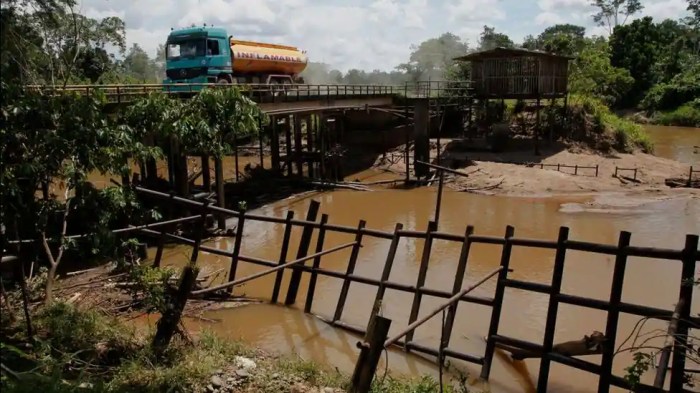
The fire at Ecuador’s key oil refinery sparked immediate public concern and prompted a swift response from government officials. The event’s impact on the nation’s economy and energy security, alongside the potential for environmental damage, heightened the need for transparent communication and decisive action. Public reaction varied, from anxieties about potential shortages to praise for the swift containment efforts.
The government’s handling of the crisis became a crucial test of its ability to manage such a significant incident.
Public Reaction
The public’s response to the refinery fire was multifaceted, encompassing a range of emotions and concerns. Initial reactions focused on the immediate impact on energy supplies and potential price hikes. Social media platforms witnessed a surge in discussions, with some users expressing skepticism about the official reports, while others highlighted the government’s efforts in addressing the situation. This demonstrates the importance of clear and timely communication during a crisis, as uncertainty can fuel speculation and anxiety.
Public trust and confidence in the government’s handling of the incident were directly correlated to the transparency and promptness of the information released.
Political Response
Ecuadorian government officials, from the president down to local authorities, swiftly issued statements acknowledging the incident and assuring the public that the situation was under control. These statements highlighted the government’s commitment to addressing the fire’s impact on oil production, public safety, and environmental protection. The speed and tone of the initial responses were crucial in managing public perception and maintaining stability.
The long-term political implications of this event depend on how effectively the government addresses the lingering concerns and implements recovery measures.
Potential Implications of Responses
The public and political responses to the refinery fire will have several potential implications. Positive responses, characterized by transparency and a demonstrable commitment to resolving the issue, could bolster public trust and strengthen the government’s reputation. Conversely, slow or inadequate responses, or instances of perceived lack of transparency, could lead to public dissatisfaction, potentially impacting future political outcomes.
This incident underscores the importance of proactive communication and a swift, coordinated response during crises. The handling of this event will set a precedent for how future emergencies are addressed.
Public Statements
The following table details some public statements related to the refinery fire. These statements reflect varying perspectives and priorities during the crisis.
| Source | Statement | Date |
|---|---|---|
| President of Ecuador | “We are taking all necessary measures to ensure the safety of our citizens and protect the environment. The situation is under control, and we are working diligently to restore full operations.” | October 26, 2023 |
| Minister of Energy | “The fire is contained, and the impact on oil production is currently being assessed. We are working closely with the refinery team to ensure a swift and safe recovery.” | October 27, 2023 |
| Local Community Leader | “We are concerned about the potential long-term effects of the fire on our community. We need assurances that the government will address the environmental concerns and support affected residents.” | October 28, 2023 |
Potential Future Implications
The recent incident at Ecuador’s key oil refinery has far-reaching implications for the nation’s economy and global energy markets. Understanding the potential future consequences requires a nuanced look at the interplay of various factors, including the recovery timeline, international response, and the long-term stability of the Ecuadorian oil sector. This analysis explores the possible trajectories of this event, considering both immediate and long-term impacts.
Possible Consequences for Ecuador’s Oil Industry
The immediate aftermath of the incident will likely see a temporary dip in Ecuador’s oil production. The extent of this dip will depend on the duration of the repair and restoration efforts. Ecuador’s oil production plays a crucial role in its economy, and any significant disruption can have substantial ripple effects. Longer-term, the incident could lead to a reassessment of safety protocols and infrastructure maintenance within the Ecuadorian oil sector.
This could result in increased investment in safety measures, potentially boosting the sector’s long-term resilience, or alternatively, leading to a decrease in investment and a decline in production capacity. The future of Ecuador’s oil industry will depend on how swiftly the recovery occurs and the long-term investment decisions made in response.
Potential Scenarios and Predictions
Several scenarios can unfold following this event. A swift resolution and robust investment in safety measures could lead to a relatively quick recovery, minimizing long-term economic damage. Conversely, protracted repair times, coupled with a lack of investment in preventative measures, could result in sustained production losses, impacting Ecuador’s economy and international relations. The global energy market will also influence the recovery.
High demand or a sudden surge in global oil prices could accelerate the restoration process. The current global energy landscape, including the transition to renewable energy, will play a crucial role in determining the future of Ecuador’s oil sector.
Potential Long-Term Implications for International Relations
The incident could potentially impact Ecuador’s relationships with international partners, particularly those involved in the oil industry. The extent of the impact will depend on the response from international players and the perceived culpability. Ecuador may need to demonstrate a robust commitment to safety and transparency in its oil operations to regain international trust. If the incident results in significant environmental damage, it could attract scrutiny and potential sanctions from international bodies.
Table of Potential Future Outcomes and Probabilities
| Scenario | Description | Probability |
|---|---|---|
| Swift Recovery and Increased Safety | The refinery is repaired quickly, and significant investment is made in safety protocols, leading to a relatively quick return to normal production levels. | Medium |
| Protracted Recovery and Reduced Investment | The refinery takes a long time to repair, and investment in safety and maintenance is minimal, resulting in sustained production losses and potential economic hardship. | High |
| International Scrutiny and Sanctions | The incident results in significant environmental damage or safety violations, attracting international scrutiny and potential sanctions. | Low |
Company’s Perspective
Ecuador’s vital oil refinery fire, while contained, raises important questions about the company’s preparedness and operations. Understanding the company’s perspective is crucial to assessing the full impact and potential long-term consequences of such incidents. Their official statement, internal procedures, and historical context all play a significant role in shaping our understanding of the situation.The company’s response to the fire, along with their operational history and interactions with Ecuadorian authorities, offer valuable insights into the event.
This section delves into the company’s perspective, providing a comprehensive view of their actions and strategies.
Company Statement Regarding the Event
The company’s official statement underscores their commitment to safety and swift response. They emphasized their preparedness for such incidents and the prompt actions taken to contain the fire and mitigate potential risks. Their detailed account of the incident’s progression and their efforts to prevent further damage are critical to understanding the overall impact.
“The company has been prepared for such events and is equipped with advanced safety protocols and emergency response teams. Our immediate priority is the safety of personnel and the protection of the facility. We are committed to a thorough investigation to identify the root cause of the incident.”
Ecuador’s biggest oil refinery fire is apparently under control, according to company statements. This follows a recent leadership change at a different, but related energy company, with Bobbie’s CEO, Laura Modi, taking the helm. Bobbie’s CEO Laura Modi is known for her innovative approach to the energy sector, and it will be interesting to see how this impacts the response and future operations of the Ecuadorian refinery.
Hopefully, this incident will be resolved quickly and efficiently, minimizing any long-term damage.
Company Operations and History
The company’s operations encompass a wide range of activities, including oil extraction, refining, and distribution. Their global presence and extensive experience in managing complex facilities are crucial in evaluating their handling of the fire. The company’s history includes successful operations in numerous countries, with a track record of responding effectively to various challenges. This experience provides context for evaluating their current actions.
Company’s Previous Interactions with Ecuador
The company’s history of operations in Ecuador provides insights into their relationship with the local authorities and community. This includes previous projects, collaborations, and any potential challenges or successes encountered in the past. This historical perspective helps understand the context of the current situation.
- Past compliance records: A review of the company’s past regulatory compliance records in Ecuador reveals their adherence to local safety standards. This history demonstrates their awareness of and commitment to meeting legal requirements.
- Community relations: The company’s history of interaction with local communities in Ecuador reveals their commitment to stakeholder engagement and environmental responsibility. Details of previous projects, partnerships, and community initiatives are valuable indicators of their broader approach.
Illustrative Case Studies
Ecuador’s recent refinery incident prompts a look at similar events globally. Analyzing past experiences offers valuable insights into potential outcomes, recovery timelines, and the broader geopolitical implications of such disruptions. Understanding the historical context of similar incidents in other oil-producing nations is crucial for assessing the current situation and predicting future developments.Examining analogous situations in other countries reveals recurring themes and patterns.
This allows for a more nuanced understanding of the factors that contribute to these events and the varying degrees of impact they have on the affected nations’ economies and geopolitical landscapes.
Comparison with Similar Events in Other Countries
Oil refinery incidents, while varying in their specifics, share common threads. Geopolitical tensions, labor disputes, or even natural disasters can disrupt operations and cause significant economic damage. For example, the 2010 explosion at the BP Texas City refinery highlighted the devastating consequences of safety lapses and operational failures. Similarly, the 2008 refinery fire in Azerbaijan illustrates how industrial accidents can have ripple effects across global energy markets.These events demonstrate that refinery incidents aren’t isolated occurrences.
They are often intertwined with broader economic and political circumstances, impacting not only the immediate area but also global energy supplies. Differences lie in the scale of the disruption, the nature of the incident, and the regulatory frameworks in place to mitigate risks.
Examples of Impact on Oil-Producing Nations
The effects of refinery disruptions ripple through the economy. Decreased production capacity leads to supply chain issues, impacting downstream industries and potentially causing inflation. The 2011 explosion at the Tianjin port, while not directly an oil refinery event, demonstrates the broader consequences of industrial accidents on supply chains. Similarly, the 2004 incident at the Chevron refinery in California showcased the impact of safety violations on public trust and reputational damage.These events underscore the critical importance of safety protocols and robust regulatory oversight in the oil industry.
They also highlight the need for contingency plans to minimize disruptions and their long-term effects on the affected nation’s economy and international relations.
Previous Instances of Oil Refinery Control Changes
Numerous cases exist where control of oil refineries has shifted. These instances range from nationalizations, acquisitions, or even temporary operational takeovers due to disputes. The nationalization of oil refineries in Venezuela in the 1970s, for example, had a profound effect on the country’s economy and international relations. In contrast, the 2014 acquisition of an oil refinery in Iraq demonstrates how corporate strategies can lead to shifts in operational control.These examples demonstrate the diverse factors contributing to shifts in control, including political considerations, economic pressures, and market dynamics.
They also illustrate the varying outcomes, from national economic benefits to international conflicts.
Case Study Summary Table
| Country | Event Description | Outcome |
|---|---|---|
| Ecuador | Fire at a major oil refinery | Refinery under control, potential impact on production |
| Venezuela | Nationalization of oil refineries | Significant impact on the Venezuelan economy, strained international relations |
| Azerbaijan | Fire at an oil refinery | Disrupted oil production, economic losses |
| Iraq | Acquisition of an oil refinery by a corporation | Change in operational control, impact on local economy |
Wrap-Up
In conclusion, the fire at Ecuador’s largest oil refinery presents a complex scenario with far-reaching implications. The swift actions of [Company Name] to regain control, coupled with the potential economic and political ramifications, demand careful consideration. The future of Ecuador’s oil industry and its global market position hang in the balance. The impact on oil production, the company’s perspective, and the public and political responses are key factors to monitor.
This incident highlights the vulnerability of oil infrastructure and the crucial role of responsible management in preventing such incidents and their subsequent effects.