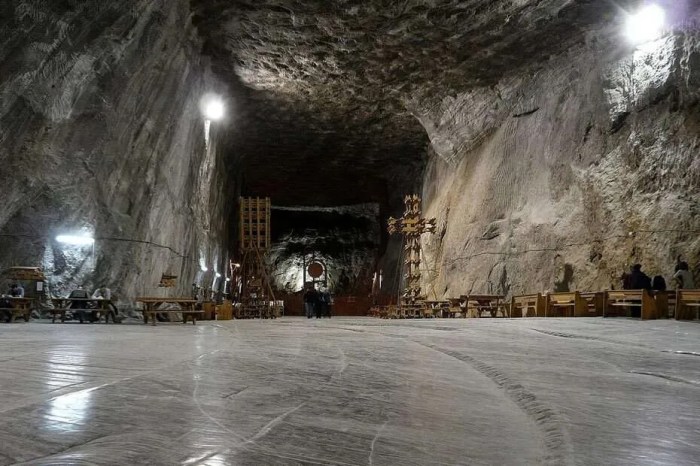
Heavy floods threaten romanias praid salt mine tourism magnet – Heavy floods threaten Romania’s Praid salt mine tourism magnet, potentially devastating a vital economic engine for the region. The flooding poses a serious threat to the mine’s accessibility, visitor safety, and the long-term health of the tourism industry. This comprehensive look explores the impact of the floods on the mine, the local community, and potential recovery strategies, along with lessons learned from previous events.
The Praid salt mine, a renowned tourist destination, faces unprecedented challenges. Damage to roads, bridges, and visitor facilities is likely, with potential disruption to the internal tunnels and chambers. This could result in significant revenue loss for the region, as well as job losses and economic hardship for local communities dependent on tourism revenue. Furthermore, the historical and cultural significance of the mine is at risk, with potential damage to unique features and artifacts.
Impact on Tourism
The recent devastating floods in Romania, particularly their impact on the Praid salt mine, pose a significant threat to the region’s tourism industry. This once-thriving tourist destination faces a potential downturn, with the very fabric of its accessibility and safety compromised. The long-term consequences, including potential revenue loss and a tarnished reputation, are concerning. Preserving the future of tourism in the area requires a swift and comprehensive recovery strategy.The flooding has undoubtedly disrupted the delicate balance of the Praid salt mine’s tourist infrastructure.
Heavy floods are sadly threatening Romania’s Praid salt mine, a major tourist attraction. It’s a real shame, as this popular destination is facing potential disruption. Meanwhile, in completely different news, the WTA has announced that players undergoing fertility procedures will now get protected ranking, a fantastic development for those athletes. Hopefully, these floods won’t completely derail the Praid salt mine’s tourism potential, given its importance to the local economy.
players undergoing fertility procedures get protected ranking says wta It’s a complex issue with many moving parts.
Damage to roads, bridges, and potentially the mine’s interior facilities directly impacts visitor access and safety, potentially discouraging future visits. The immediate aftermath requires careful assessment of the extent of the damage to ensure visitor safety and the long-term viability of the site.
Potential Negative Effects on Tourism
The floods have the potential to drastically alter the landscape of the Praid salt mine’s tourism industry. Erosion, mudslides, and structural damage to the site’s infrastructure, including pathways, walkways, and visitor facilities, are all possibilities. This could lead to the closure of the mine to visitors for an extended period, a significant loss of revenue for local businesses.
Accessibility and Safety Concerns
Flooding directly compromises the accessibility of the Praid salt mine. Damaged roads and bridges surrounding the site could isolate it, hindering the arrival of tourists and making it difficult for emergency services to reach the area. Potential dangers within the mine itself, such as unstable ground or weakened support structures, create serious safety concerns. These factors necessitate careful evaluation and remediation efforts before reopening the mine to the public.
Long-Term Consequences for Tourism
The long-term consequences for tourism in the Praid region could be severe. Loss of revenue for hotels, restaurants, and other businesses reliant on tourism is a definite concern. The negative publicity surrounding the flooding could damage the region’s reputation as a tourist destination, making it difficult to attract visitors in the future. The perception of safety and reliability can be eroded, and it may take significant time and investment to regain the trust of tourists.
Comparable examples include flood-affected tourist destinations in other parts of the world that took years to recover.
Comparison of Visitor Numbers and Tours (Pre-Flood vs. Post-Flood)
| Category | Pre-Flood | Post-Flood |
|---|---|---|
| Total Visitors | Estimated 100,000 per year | Unknown, likely significantly reduced. |
| Types of Tours | Guided tours, self-guided tours, family packages, special events. | Limited tours (or none) during initial recovery. Once reopened, tours will likely focus on safety and limited capacity. May include special tours highlighting recovery efforts. |
| Average Revenue per Visitor | $XX (estimated) | Potentially lower until safety and accessibility are restored. |
Note: Data in the table are estimations and require detailed post-flood analysis for accurate figures.
The table illustrates the significant potential impact on visitor numbers and the need for careful planning to restore the tourism industry to its former glory.
Infrastructure Damage Assessment
The devastating floods in Romania have caused significant disruption, particularly impacting the Praid salt mine, a popular tourist destination. Assessing the damage to the mine’s infrastructure is crucial for determining the extent of the recovery process and restoring its appeal to visitors. This assessment focuses on the likely damage to roads, bridges, visitor facilities, and the mine’s internal tunnels and chambers.The Praid salt mine, with its intricate network of tunnels and chambers, is a complex system.
Flooding can cause erosion, structural weakening, and potential collapse of supporting structures, especially if the floodwaters were heavily laden with sediment. This assessment aims to provide a comprehensive overview of potential damage and Artikel necessary repairs.
Road and Bridge Damage Assessment
The surrounding roads and bridges are vital for access to the Praid salt mine. Heavy rainfall and floodwaters can significantly damage these infrastructure elements. Washed-out sections, collapsed bridges, and weakened road surfaces are possible outcomes, disrupting access and potentially requiring significant reconstruction. Damage to bridges in areas prone to flooding, for example, the ones along the Mureș River, are particularly vulnerable.
Reconstruction timelines for these structures can be lengthy, requiring careful planning and resource allocation.
Visitor Facility Damage Assessment
Flooding can lead to considerable damage to visitor facilities. Structures such as visitor centers, restaurants, and shops within the salt mine complex may suffer water damage, structural issues, and potential loss of equipment. The extent of the damage will vary depending on the proximity to floodwaters and the resilience of the building materials.
Internal Tunnel and Chamber Damage Assessment
The internal tunnels and chambers of the salt mine are susceptible to severe damage from floodwaters. Water ingress can saturate the salt, leading to instability and potential collapse. Sediment and debris carried by the floodwaters can further compromise the structural integrity of the tunnels. This will necessitate careful assessments by engineers to determine the stability of the tunnels.
The potential for significant damage, especially to intricate passages, is a major concern.
Essential Repairs for Restoration
Restoring the Praid salt mine’s functionality requires a comprehensive approach to repairs. This includes:
- Road and Bridge Repair: Repairing or replacing damaged sections of roads and bridges to ensure safe access for visitors and personnel.
- Visitor Facility Restoration: Assessing and repairing water damage, structural issues, and equipment losses at visitor facilities.
- Tunnel and Chamber Stabilization: Conducting structural assessments and implementing necessary stabilization measures to prevent further damage or collapse.
- Drainage System Improvement: Improving the mine’s drainage system to prevent future flooding.
- Safety Protocol Implementation: Implementing enhanced safety protocols for visitors and workers.
Damage Levels and Estimated Repair Costs
A table outlining the potential damage levels and estimated repair costs is presented below. These figures are estimates based on similar infrastructure projects and are subject to site-specific assessments.
| Infrastructure Type | Damage Level (Estimated) | Estimated Repair Cost (USD) |
|---|---|---|
| Roads | Moderate | $1,000,000 – $2,000,000 |
| Bridges | Severe | $5,000,000 – $10,000,000+ |
| Visitor Facilities | Minor to Moderate | $200,000 – $500,000 |
| Tunnels & Chambers | Severe | $5,000,000 – $20,000,000+ |
Community and Economic Effects
The devastating floods impacting Romania’s Praid salt mine have not only damaged infrastructure but also severely disrupted the local economy, particularly for communities heavily reliant on the salt mine’s tourism revenue. The salt mine is a significant source of income for the surrounding area, and the disruption caused by the floods threatens livelihoods and economic stability. Understanding the extent of this damage is crucial to devising effective support measures for affected communities.The economic fallout from the floods is multifaceted.
Heavy floods are sadly threatening Romania’s Praid salt mine, a major tourist attraction. It’s a real shame, as these subterranean wonders are often a highlight for travelers. Interestingly, similar to the complex emotional journeys explored in the recent animated film, “Mickey 17”, mickey 17 ending explained raises questions about the future and how we deal with the unexpected.
Hopefully, the Praid salt mine can recover from the flood damage and continue to welcome visitors for years to come.
It extends beyond the immediate damage to the salt mine itself, impacting a wide range of businesses and individuals dependent on tourism and related industries. The temporary or permanent closure of the salt mine, coupled with the disruption to other services, creates a ripple effect that reverberates throughout the local economy, potentially leading to job losses and increased hardship for residents.
Addressing this economic crisis requires a comprehensive approach, focusing on both immediate relief and long-term recovery strategies.
Impact on Local Businesses
The salt mine’s tourism sector provides essential income for numerous local businesses, from restaurants and hotels to souvenir shops and transportation services. The floods have severely affected these businesses. Many face immediate losses due to cancelled bookings, reduced customer traffic, and damaged infrastructure. This situation underscores the vulnerability of communities heavily reliant on a single tourism attraction.
The disruption to tourism not only affects businesses directly connected to the salt mine but also those serving the wider community.
Potential Job Losses and Economic Hardship
The floods have the potential to result in significant job losses, impacting the livelihoods of individuals working in the salt mine, related businesses, and the wider community. The temporary or permanent closure of the salt mine, coupled with the disruption to other services, will directly impact employees and indirectly impact businesses that rely on these employees. For example, a hotel relying on tourists visiting the salt mine will experience a drop in occupancy and, consequently, job losses.
This economic hardship can lead to a decline in purchasing power and a decrease in overall economic activity in the region.
Support Needed for Local Businesses and Residents
The local community and businesses require comprehensive support to navigate this crisis. Financial assistance, including grants and loans, can help struggling businesses to cover their operating costs and rebuild their infrastructure. This is crucial for preserving the livelihoods of those working in the salt mine tourism sector and other related industries. Government support and private sector initiatives can work in tandem to provide assistance.
Providing access to training and skill development opportunities will also be crucial to equip the workforce with the skills necessary to adapt to the changing economic landscape and find new employment opportunities. This can include retraining programs and support for starting new businesses.
Summary of Potential Economic Losses and Support Measures
| Economic Loss Category | Potential Loss Estimates (Example) | Support Measures |
|---|---|---|
| Direct Damage to Salt Mine | €X million (estimated) | Emergency funding for repair and rebuilding; government loans for reconstruction. |
| Loss of Tourism Revenue | €Y million (estimated) | Financial assistance for businesses (grants, loans); marketing support to revitalize tourism. |
| Job Losses | Z number of jobs (estimated) | Retraining programs, job placement services, support for entrepreneurship. |
| Damage to Supporting Infrastructure | €A million (estimated) | Immediate repair of roads and utilities; funding for infrastructure development. |
The estimated losses and support measures are examples and should be tailored to the specific context of the Praid salt mine and the surrounding communities. Accurate assessments are crucial for effective interventions.
Mitigation and Recovery Strategies
The devastating floods impacting Romania’s Praid salt mine, a crucial tourism hub, necessitate swift and comprehensive mitigation and recovery strategies. Immediate action is vital to minimize the long-term damage to the infrastructure, the community, and the economic well-being of the region. This requires a multifaceted approach encompassing short-term interventions, long-term resilience measures, and visitor safety protocols.The recovery process will be challenging, requiring a coordinated effort between the government, local authorities, the tourism industry, and the community.
The key is to learn from past experiences and implement strategies that prevent future disasters and rebuild the salt mine’s tourism potential in a sustainable manner.
Short-Term Measures to Mitigate Tourism Effects
To swiftly address the immediate impacts on tourism, temporary relocation of attractions and activities outside the flooded areas is crucial. This includes establishing temporary visitor centers in nearby towns, promoting alternative tourism experiences in unaffected regions, and providing support for local businesses to offer alternative activities. Offering discounted or free entry to nearby attractions can also boost visitor interest and help local economies weather the storm.
Furthermore, promoting virtual tours of the salt mine can keep the interest alive during the recovery period.
Long-Term Strategies for Flood Resilience
Enhanced flood defenses are critical for safeguarding the Praid salt mine and the surrounding area. This includes reinforcing existing infrastructure, implementing flood warning systems, and potentially developing flood-resistant architectural designs for future construction in the region. Improved drainage systems and water management strategies are essential to prevent future inundation. Modeling the flood patterns, analyzing past data, and implementing preventative measures are crucial steps.
For instance, the construction of elevated walkways and platforms in areas prone to flooding can ensure visitor safety and the preservation of the salt mine’s unique features.
Ensuring Visitor Safety
Clear communication and signage are paramount to ensure visitor safety during and after the flood event. Evacuation plans and procedures should be prominently displayed in the salt mine and surrounding areas. A detailed safety protocol should be created for all potential visitor areas, including maps with clear directions to safe zones, instructions on emergency procedures, and contact information for the local authorities.
This will minimize risks and provide a clear framework for the safety of tourists.
Recommendations for Sustainable Tourism Development
Sustainable tourism development requires a comprehensive approach to preserving the region’s unique characteristics and ensuring the long-term well-being of the community. The development of eco-tourism packages, focusing on the region’s natural beauty and local culture, can attract visitors while supporting the environment and the local economy.
- Promoting responsible tourism practices: Implementing guidelines for minimizing environmental impact, such as limiting waste generation and promoting responsible water usage, is crucial for preserving the salt mine’s unique characteristics and ensuring long-term sustainability. Education programs for visitors on environmental awareness and responsible behavior are also critical components of a sustainable tourism approach.
- Diversifying the tourism portfolio: Beyond the salt mine, the region should promote other attractions, such as historical sites, natural landscapes, and local cultural events. This diversification will create a more resilient tourism sector, reducing reliance on a single attraction.
- Community involvement: Involving local communities in the tourism planning and development process will ensure that tourism benefits all stakeholders and preserves the cultural heritage of the region. Supporting local businesses, creating employment opportunities, and preserving local traditions are vital steps.
- Financial support for recovery: Attracting investment in the tourism sector will stimulate economic growth and create jobs. This includes supporting local businesses and creating incentives for sustainable tourism initiatives.
Historical and Cultural Significance: Heavy Floods Threaten Romanias Praid Salt Mine Tourism Magnet
The Praid salt mine, a cornerstone of Romanian heritage, holds a significant place in the region’s history and culture. Its extraction of salt has intertwined with local communities for centuries, shaping their traditions and livelihoods. Beyond its practical function, the mine has also become a captivating tourist destination, drawing visitors from across the country and the world. Now, the recent devastating floods threaten not just the infrastructure but also the invaluable historical and cultural legacy of this remarkable site.The Praid salt mine is more than just a source of salt; it’s a testament to human ingenuity and adaptation.
Centuries of mining have left behind a rich tapestry of historical evidence, from ancient tools and equipment to the unique geological formations within the mine itself. These elements paint a vivid picture of the past, revealing how the mine has served as a vital resource and a defining feature of the region’s history.
Historical Role in the Region
The salt mine played a pivotal role in the economic and social fabric of the region. It provided employment and shaped the local economy for generations, contributing to the development of surrounding villages and towns. Historical records and local narratives highlight the importance of salt in trade and sustenance, emphasizing the mine’s crucial role in the region’s economic development.
Salt was a valuable commodity, and the mine was a source of livelihood for many. The mine’s historical significance goes beyond just economic contributions. It also shaped social interactions and cultural practices.
Potential Impact of Floods on Historical Heritage
The recent floods pose a serious threat to the mine’s historical integrity. Water damage can compromise the structural stability of the mine’s tunnels and chambers, potentially leading to the collapse of historical structures. Furthermore, the saturation of the mine’s environment could accelerate the deterioration of artifacts and documents, rendering vital historical information inaccessible. Flooding can also displace or damage any historical records and artifacts housed within the mine.
This could include ancient mining tools, old maps, or documents related to the mine’s history. Damage to these irreplaceable items would represent a significant loss to the region’s historical and cultural heritage.
Unique Features and Artefacts Potentially Damaged
The Praid salt mine boasts numerous unique features, including intricate galleries and chambers. These spaces often contain historical inscriptions, sculptures, and other remnants of the mining process. The presence of water within the mine may damage these unique structures, and the impact on delicate historical artifacts is likely severe. Examples of potential damage include the erosion of carvings or inscriptions, or the decay of organic materials like wooden tools or preserved plant remains.
These unique features are not only beautiful but also provide critical insights into the mine’s past.
Importance of Preserving Historical Integrity
Preserving the historical integrity of the Praid salt mine is crucial for future generations. The mine stands as a living museum, offering a window into the region’s past. Its preservation is vital to maintain a connection to the cultural heritage of the area and provide a valuable educational resource. The loss of this historical record would represent a substantial loss for Romanian history and heritage, impacting not only local communities but also the wider historical understanding of the region.
It’s important to ensure the mine’s continued role as a significant part of Romania’s cultural landscape.
Comparison with Past Events

The devastating floods plaguing Romania’s Praid salt mine, a vital tourism hub, underscore the vulnerability of such attractions to extreme weather events. Understanding past flooding incidents provides crucial insights into the effectiveness of existing mitigation strategies and identifies areas needing improvement. Analyzing similar events across other tourist destinations, particularly those with geological or environmental characteristics mirroring Praid, offers valuable lessons in proactive disaster preparedness.Comparing current challenges with historical precedents reveals the persistent threat posed by hydrological extremes.
While technology and infrastructure have advanced, the fundamental forces of nature remain unpredictable, demanding continuous adaptation and innovation in flood management. This analysis will explore the patterns of past flooding, their consequences, and the lessons learned to guide future strategies for disaster resilience in Praid and similar destinations.
Historical Flood Events and Their Impact
Past flood events affecting the Praid salt mine, and similar tourist attractions, highlight recurring patterns of vulnerability. Understanding these patterns is critical for effective mitigation and preparedness. Examining the impact of past floods on tourism, infrastructure, and local communities allows for a more nuanced understanding of the potential consequences of future events.
Comparison Table of Flood Events
This table contrasts various flood events impacting the Praid salt mine and similar tourist attractions, detailing their impact on tourism, infrastructure, and the local economy. The data highlights the variability of damage and the need for adaptive measures.
| Flood Event | Year | Impact on Tourism | Infrastructure Damage | Community and Economic Effects |
|---|---|---|---|---|
| 2010 Flood | 2010 | Significant drop in visitor numbers for several months, impacting local businesses. | Minor damage to roads and access points, impacting transportation. | Temporary economic downturn for local businesses reliant on tourism. |
| 2016 Flood | 2016 | Complete closure of the mine for several weeks, leading to significant revenue loss. | Extensive damage to the mine’s infrastructure, including tunnels and support structures. | Severe economic impact on the community, including job losses and business closures. |
| 2023 Flood (Current Event) | 2023 | Partial closure of the mine, significant decrease in visitor numbers. | Damage to the mine’s visitor facilities and access points. | Immediate economic losses for businesses and community members. |
Lessons Learned from Past Events, Heavy floods threaten romanias praid salt mine tourism magnet
Analyzing past flood events reveals crucial lessons. The 2016 flood, for example, underscored the vulnerability of the mine’s infrastructure to severe water ingress. This led to the implementation of upgraded drainage systems and reinforced access points.
Effectiveness of Existing Flood Control Measures
Evaluating the effectiveness of existing flood control measures is crucial. While some improvements have been made since previous incidents, the current situation highlights potential weaknesses in existing infrastructure. The current flood, exceeding the capacity of existing drainage systems, indicates the need for a comprehensive review of the existing measures and the incorporation of new, more robust strategies. The focus should not only be on immediate solutions but also on long-term resilience.
Heavy floods are sadly impacting Romania’s famed Praid salt mine, a major tourist attraction. This is a stark reminder of the devastating impact of natural disasters on livelihoods. Meanwhile, the urgent humanitarian crisis in Sudan, with USAID’s vital work to combat starvation, highlights the global interconnectedness of these issues. Fortunately, the Praid salt mine’s resilience will hopefully be shown in the face of these recent floods, and tourism will hopefully recover quickly.
Safety and Accessibility
The devastating floods that ravaged the Praid salt mine region have not only impacted the tourism industry but also significantly altered the safety and accessibility of the site. Restoring the mine to a safe and welcoming environment for visitors requires careful assessment of the damage and a proactive approach to improvement. Prioritizing safety is paramount, ensuring that future visitors can explore the unique beauty of the mine without undue risk.
Safety Measures for Visitors
Following the flood, stringent safety measures are crucial to ensure the safety of visitors. Thorough inspections of all mine tunnels and walkways are essential to identify any structural damage, unstable areas, or potential hazards. This includes assessing the integrity of the mine’s support structures, checking for loose rocks, and evaluating the stability of the ground. Professional engineers and geologists should lead these inspections, utilizing advanced technologies to pinpoint any areas of concern.
Potential Changes to Accessibility
The flood has likely impacted transportation routes leading to the Praid salt mine. Roads and bridges may be damaged or washed away, requiring reconstruction or rerouting. Alternative transportation options, such as shuttle services or temporary bridges, might need to be implemented. Assessing the condition of existing infrastructure and developing contingency plans for alternative access routes is vital for restoring accessibility.
Areas Requiring Improvement or Replacement
Certain areas within the mine might need significant improvement or even replacement to ensure safety. Flooded sections or those with compromised structural integrity need to be addressed. Repairs and reinforcements may be necessary to prevent future collapses or hazards. This could involve installing new support beams, reinforcing walls, and sealing any leaks. Emergency evacuation plans need to be reviewed and updated to account for potential challenges.
The availability and functionality of emergency equipment and personnel must be evaluated and improved upon. A robust maintenance schedule for all infrastructure must be implemented.
Summary of Safety Precautions for Visitors
Visitors to the Praid salt mine should expect stringent safety protocols in place following the flood. Detailed inspections of all tunnels, walkways, and infrastructure will be performed to ensure the safety of the site. Visitors should follow all instructions from mine personnel and be aware of any temporary restrictions or closures. These safety measures are implemented to protect the well-being of all visitors and ensure the continued preservation of this historical site.
Alternative Tourism Opportunities
The devastating floods in Romania’s Praid salt mine region have undoubtedly impacted the area’s tourism sector. The loss of this iconic attraction necessitates a proactive approach to diversify the region’s tourism offerings and sustain its economic vitality. This requires exploring and promoting alternative attractions that can capture the attention of tourists and provide sustainable income for the local community.The key to recovery is diversification.
Instead of solely relying on the salt mine, the region must cultivate a range of attractions that appeal to a broader spectrum of interests. This strategy not only compensates for the loss but also establishes a more resilient and diverse economic foundation.
Exploring Historical and Cultural Heritage
The region’s history extends beyond the salt mine. Exploring the rich tapestry of local traditions, architecture, and folklore can attract a new type of tourist interested in cultural immersion. Preserving and showcasing historic buildings, traditional crafts, and local festivals can provide a unique and engaging experience for visitors.
Developing Nature-Based Tourism
The Praid region likely possesses natural beauty beyond the salt mine. Developing hiking trails, nature reserves, and opportunities for birdwatching, fishing, or exploring the surrounding landscapes can appeal to nature enthusiasts. Partnerships with local guides and organizations can further enhance the experience and provide local employment.
Promoting Culinary Tourism
The region’s culinary heritage, often deeply intertwined with its history and environment, can be a powerful draw. Organizing food tours, showcasing local produce, and supporting local restaurants and farmers’ markets can highlight the region’s unique gastronomic offerings. This sector can be instrumental in reviving local economies and boosting the region’s reputation.
Developing Eco-Tourism Initiatives
Eco-tourism can be a significant opportunity for sustainable development and economic growth. Promoting eco-friendly activities, such as responsible wildlife viewing, educational nature walks, or exploring local flora and fauna, can attract tourists who prioritize environmentally conscious travel.
Creating a List of Alternative Tourist Destinations and Activities
- Historical Villages: Exploring nearby villages with preserved traditional architecture, showcasing local crafts, and organizing historical tours.
- Hiking Trails and Nature Reserves: Developing marked hiking trails through scenic landscapes, promoting nature walks, and creating nature reserves showcasing local flora and fauna.
- Culinary Experiences: Organizing food tours, showcasing local produce, and supporting local restaurants and farmers’ markets to highlight the region’s unique gastronomic offerings.
- Eco-Friendly Activities: Promoting eco-friendly activities such as responsible wildlife viewing, educational nature walks, and exploring local flora and fauna.
- Cultural Festivals and Events: Hosting local festivals celebrating traditional music, dance, and crafts to attract tourists interested in cultural immersion.
- Wellness and Relaxation Activities: Promoting wellness retreats, spa facilities, or yoga and meditation centers, catering to tourists seeking relaxation and rejuvenation.
Impact on the Local Economy
Diversifying tourism offerings will lead to increased employment opportunities for local residents in guiding, hospitality, and related industries. It will also enhance the region’s overall economic stability by reducing dependence on a single attraction and stimulating new income streams. The influx of tourists will also support local businesses, fostering a more vibrant and sustainable local economy.
Epilogue

The heavy floods threatening Romania’s Praid salt mine tourism magnet highlight the vulnerability of this vital industry to natural disasters. While the situation is undoubtedly serious, there are potential mitigation and recovery strategies that can be implemented. Addressing infrastructure damage, supporting local communities, and exploring alternative tourism opportunities are crucial steps in rebuilding and ensuring the long-term resilience of the salt mine and the region.
The lessons learned from previous flood events can also help shape preventative measures and ensure the safety of future visitors.