
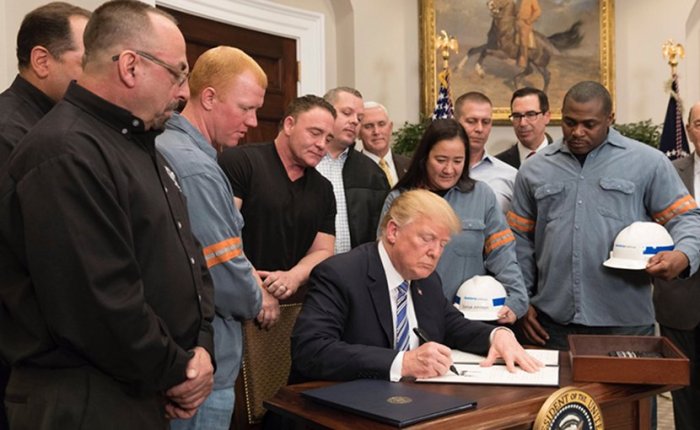
Lutnick downplays impact tariff court ruling us eu talks, suggesting the recent ruling won’t significantly hinder ongoing trade negotiations between the US and EU. This stance, however, contrasts with concerns from other stakeholders, who anticipate a potential escalation of the dispute. The ruling, specifically regarding certain tariffs on products from both sides, is the focal point of this discussion.
The history of the dispute, involving various products and sectors, forms the backdrop to this analysis.
The US-EU tariff dispute has a long history, marked by several key events and retaliatory actions. Different products and sectors have been affected, and a detailed comparison of the tariff policies of both sides is crucial for understanding the current context. The dispute impacts not only specific industries but also global trade practices, potentially influencing international trade organizations and regulations.
Background of the Tariff Dispute: Lutnick Downplays Impact Tariff Court Ruling Us Eu Talks
The ongoing US-EU tariff dispute, while perhaps downplayed by some, remains a significant point of contention in international trade. This complex issue has roots in differing trade policies and accusations of unfair practices. Understanding the historical context, specific actions, and impacted sectors is crucial for grasping the implications of this ongoing negotiation.
History of the Dispute
The US-EU tariff dispute has evolved over several years, marked by escalating actions and counter-actions. Initially, concerns were raised about specific trade practices, leading to the imposition of tariffs on certain goods. These retaliatory measures have resulted in a cycle of trade restrictions, impacting various sectors and supply chains.
Key Events and Actions
- 2018: The United States initiated tariffs on various European goods, citing concerns about unfair subsidies and trade practices. This marked a significant escalation of the trade tensions.
- 2019-2023: The EU responded with reciprocal tariffs on American products, aiming to counter the effects of the US actions. This back-and-forth exchange has significantly impacted businesses and consumers in both regions.
- Ongoing Negotiations: Attempts at resolving the dispute through negotiations have been ongoing, with periods of progress and setbacks. The recent court rulings and potential new rounds of talks underscore the complexities of reaching a mutually agreeable resolution.
Specific Products and Sectors Affected
The tariff dispute has affected a wide range of products and sectors. From agricultural products like cheese and wine to manufactured goods like steel and aluminum, industries across both the US and EU have felt the impact. The effects are not uniform, with some sectors experiencing greater disruption than others.
Comparison of US and EU Tariff Policies
| Characteristic | US Policy | EU Policy |
|---|---|---|
| General Approach | Often characterized by protectionist tendencies, aiming to shield domestic industries from foreign competition. | Generally advocates for free trade but with safeguards to address unfair trade practices. |
| Specific Measures | Imposition of tariffs on a wide range of goods, often targeting specific sectors considered to be unfairly subsidized or dumping products. | Use of tariffs as a last resort, often coupled with trade negotiations and dispute resolution mechanisms. Emphasis on safeguarding domestic producers from unfair practices. |
| Dispute Resolution | Often emphasizes unilateral actions in response to perceived unfair trade practices. | Favors multilateral solutions and dispute resolution through international bodies like the WTO. |
Lutnick’s Stance on the Ruling
Lutnick, a vocal critic of the tariffs, is likely to downplay the impact of the recent tariff court ruling on the ongoing US-EU trade negotiations. His perspective is deeply rooted in a belief that the tariffs imposed have been disproportionately harmful to American businesses and consumers, and the court ruling, while potentially offering some redress, is unlikely to significantly alter this fundamental dynamic.Lutnick’s position likely stems from his strong political alignment and his stated goals of protecting American businesses and workers from what he perceives as unfair trade practices by foreign entities.
He likely sees the ruling as a necessary step but not a sufficient one to address the core issues of the trade dispute. This is further supported by his historical opposition to the tariffs, arguing that they have imposed undue burdens on the economy and created significant uncertainty.
Lutnick’s Reasoning
Lutnick’s reasoning likely centers on the assertion that the tariff court ruling, while potentially favorable in some specific instances, fails to address the broader economic damage caused by the tariffs. He may argue that the ruling does not account for the overall impact on American businesses, job creation, and consumer prices. He might also point to the complexities of the global supply chain and the potential for unintended consequences of the ruling.
Comparison to Other Stakeholders
Comparing Lutnick’s perspective to other stakeholders reveals a stark contrast. While some industry groups may welcome the ruling as a positive development, potentially alleviating certain burdens, Lutnick’s focus is on the overarching negative effects of the tariffs. The perspective of European Union representatives would likely be diametrically opposed, emphasizing the unfairness of the initial tariffs and the necessity of a fair resolution.
Lutnick’s downplaying of the tariff court ruling’s impact on US-EU talks is interesting, but the escalating tensions in the region, like the recent attack in Pahalgam during the India-Pakistan crisis here , are undoubtedly a bigger concern. While the trade dispute is important, these geopolitical issues could easily overshadow any progress in the negotiations. Ultimately, Lutnick’s assessment might be too narrow-focused, given the wider global context.
American businesses directly affected by the tariffs may have a nuanced view, depending on their specific situation and the impact of the ruling on their operations.
Potential Implications on US-EU Talks
Lutnick’s views could significantly influence the trajectory of the US-EU trade talks. His stance might lead to increased resistance to any concessions from the US side, potentially hindering progress towards a mutually beneficial agreement. He could argue that the ruling underscores the need for a more aggressive negotiating position, demanding stronger concessions from the EU in exchange for any potential rollback of tariffs.
A more conciliatory approach might be seen as a sign of weakness.
Potential Arguments to Support His Position
Lutnick might employ several arguments to support his position, including:
- Highlighting instances where the tariffs have negatively impacted American businesses, citing specific case studies or industry reports.
- Emphasizing the complexities of the global supply chain and the unintended consequences of the ruling on American consumers.
- Arguing that the ruling does not fully address the root causes of the trade dispute and the need for a more comprehensive resolution that protects American interests.
- Comparing the financial impact of the ruling to the financial losses incurred by American businesses due to the initial tariffs.
Impact on US-EU Trade Relations
The recent tariff court ruling has undeniably cast a shadow over the already delicate US-EU trade relationship. This ruling, while seemingly focused on a specific dispute, has far-reaching implications that could reshape the landscape of future trade negotiations between the two economic giants. The potential for escalation and the search for alternative solutions are critical considerations for maintaining a stable trading environment.
Potential Impact on Future Trade Negotiations
The ruling, potentially altering the established norms and expectations in international trade, could significantly impact future negotiations. The precedent set by this specific case might lead to heightened skepticism and mistrust between the parties. This could result in a more adversarial approach during future negotiations, making compromise and agreement more difficult to achieve. Furthermore, businesses on both sides might adopt more cautious strategies, potentially impacting investment flows and overall economic activity.
Potential for Escalation of the Dispute
The risk of escalation exists due to the potential for retaliatory measures. The EU could respond to the ruling with its own trade restrictions, leading to a cycle of tit-for-tat actions. This could quickly escalate into a broader trade war, impacting industries across both continents. Such a scenario would likely have severe consequences for consumers, businesses, and the overall global economy.
Previous trade disputes have demonstrated how quickly such conflicts can escalate.
Potential for Alternative Solutions to Resolve the Conflict
Several alternative solutions could help mitigate the conflict and restore a more cooperative trade relationship. Mediation by a neutral third party could provide a platform for constructive dialogue and facilitate a mutually acceptable resolution. Negotiating a revised agreement or a new framework to address the underlying concerns of the dispute could be another approach. Ultimately, a willingness to compromise and find common ground is crucial for a positive resolution.
Examples of similar trade disputes in the past offer valuable lessons.
Examples of Similar Trade Disputes and Their Resolutions
Numerous trade disputes have occurred throughout history. Some have been resolved through negotiation and compromise, while others have escalated into protracted trade wars. The 2001-2005 US-EU steel trade dispute provides a useful example of a dispute where both sides ultimately reached a settlement. It involved significant trade restrictions and the establishment of a joint committee to address ongoing issues.
Analyzing these past cases can provide valuable insights for resolving the current dispute.
Comparison to Previous Trade Agreements
The current situation necessitates a careful comparison to existing trade agreements. Existing agreements, such as the WTO rules and previous bilateral trade agreements, might offer guidance on potential solutions. Examining how these agreements have been interpreted and implemented in the past can provide a framework for understanding the current challenges and possible avenues for resolving the conflict. Furthermore, a detailed analysis of past precedents can help anticipate potential challenges and avoid similar pitfalls.
Impact on Specific Industries

The tariff dispute’s reverberations extend far beyond abstract economic models. Real businesses, workers, and entire industries face the brunt of the consequences. Understanding the specific impacts on various sectors is crucial for comprehending the human cost of trade conflicts. From agriculture to manufacturing, the effects are tangible and multifaceted.
Industries Most Affected
The industries most exposed to the tariff dispute’s repercussions are those heavily reliant on cross-border trade. This includes, but is not limited to, agricultural producers, manufacturers, and exporters of goods that are traded between the US and EU. The complexity of global supply chains makes pinpointing the precise impact on each sector challenging, but the interconnectedness of these industries is undeniable.
Impact on Businesses
The imposition of tariffs creates a significant economic burden for businesses involved in international trade. Increased costs associated with tariffs directly translate into higher production costs, reduced profitability, and potential pricing pressures on consumers. Businesses may need to absorb these increased costs, potentially leading to reduced investments, decreased hiring, or even business closures. Companies operating with global supply chains are especially vulnerable.
Potential for Job Losses or Economic Hardship
The potential for job losses and economic hardship is a direct consequence of the tariff dispute. Reduced demand for imported goods due to tariffs can impact manufacturers and retailers reliant on these imports. The impact on employment is most evident in industries heavily involved in international trade. Workers in manufacturing, agriculture, and transportation sectors are especially vulnerable to job losses.
Mitigation Strategies for Businesses
Businesses can adopt several strategies to mitigate the impact of tariffs. These include diversifying supply chains, exploring alternative markets, and investing in technologies that enhance efficiency and reduce production costs. Companies can also seek government support or engage in advocacy efforts to influence trade policies. Seeking alternative suppliers is a common tactic. Some companies have established new supply chains in countries less affected by tariffs.
Lutnick’s downplaying of the tariff court ruling’s impact on US-EU talks is interesting, but perhaps a look at Senegal’s strategy to boost tax collection and reduce reliance on external funding, as detailed in this article ( senegal aims raise tax collection cut reliance external funding ), offers a different perspective. It highlights how nations are actively seeking sustainable solutions, which could potentially influence the trajectory of the ongoing US-EU negotiations.
Ultimately, Lutnick’s position on the ruling might be more nuanced than it seems at first glance.
Long-Term Consequences on Specific Industries
The long-term consequences of the tariff dispute could reshape industries and their global competitiveness. Businesses may need to restructure their operations, adapt to new market realities, and potentially relocate some production facilities. The long-term impacts are significant and depend on the duration and intensity of the trade dispute. Examples include the re-routing of supply chains and the relocation of factories to avoid tariffs.
Ultimately, businesses need to be flexible and adaptable to remain competitive in a changing global landscape.
Potential Implications for Global Trade
The recent tariff dispute between the US and EU, particularly the court ruling and Lutnick’s response, casts a significant shadow over global trade practices. This dispute, far from being a localized issue, has the potential to spark a domino effect across international trade, impacting various industries and nations. Understanding the potential ripple effects is crucial for anticipating the long-term consequences.The US-EU tariff dispute, if left unresolved, could create a precedent for other countries to employ protectionist measures.
This escalation in trade disputes could undermine the existing global trading system, potentially leading to a significant reduction in international trade volumes.
Potential for Protectionist Measures by Other Countries
The escalating trade tensions between the US and EU can serve as a catalyst for other countries to adopt similar protectionist policies. This trend could stem from a perceived need for national self-reliance, concerns about unfair trade practices, or geopolitical considerations. Countries might seek to shield their domestic industries from foreign competition, potentially leading to retaliatory tariffs and trade restrictions.
The EU’s response to the US tariffs and the subsequent court ruling could be seen as a model for other nations, potentially leading to a broader global trend of protectionism.
Ripple Effects across Global Supply Chains
Trade disputes can disrupt global supply chains in several ways. The uncertainty surrounding tariffs and trade restrictions can increase the costs and complexity of international trade. Businesses might face difficulties in sourcing materials and components from different countries, potentially leading to delays, higher prices, and reduced production. Disruptions to supply chains can have widespread effects, impacting consumers and businesses worldwide.
For example, a sudden increase in tariffs on raw materials could increase production costs, leading to higher consumer prices for finished goods.
Examples of Similar Disputes and Broader Economic Effects, Lutnick downplays impact tariff court ruling us eu talks
Several historical trade disputes have demonstrated the potential for broader economic effects. The 1930 Smoot-Hawley Tariff Act, a US protectionist trade policy, is a prime example of how trade wars can negatively impact global trade. The resulting trade restrictions and retaliatory tariffs contributed to the deepening of the Great Depression. Similarly, the 2001-2003 US-EU steel trade dispute saw retaliatory tariffs and trade restrictions, leading to disruption in the global steel industry.
These historical examples highlight the potential for a trade dispute to escalate and have significant repercussions for global economic stability.
Potential Impacts on International Trade Organizations and Regulations
The current dispute raises concerns about the future of international trade organizations and regulations. The dispute may challenge the effectiveness of dispute resolution mechanisms within the WTO, potentially weakening its ability to mediate trade disputes. If nations prioritize unilateral actions over multilateral cooperation, it could lead to a decline in adherence to international trade rules and regulations, ultimately undermining the global trading system.
Such a development could result in greater uncertainty and instability in the global economy. The WTO’s role in mediating trade disputes and promoting free trade could be significantly diminished if countries prioritize protectionist measures.
Potential for Future Negotiations
The US-EU tariff dispute, stemming from the recent court ruling, presents a complex landscape for future negotiations. Both sides have significant economic interests at stake, and finding common ground will require careful consideration of each other’s concerns. Successful negotiation hinges on a willingness to compromise and a clear understanding of the potential impacts of various outcomes.
Possible Negotiation Scenarios
The future of US-EU trade relations hinges on several potential negotiation scenarios. One scenario involves the US potentially seeking concessions from the EU on specific regulations or practices that triggered the tariffs. Another scenario involves the EU counter-arguing and demanding concessions from the US regarding its own trade practices. A third possibility encompasses a more collaborative approach, with both sides finding common ground to resolve the dispute through mutual concessions.
These scenarios reflect the dynamic nature of international trade negotiations and the varying levels of cooperation between the two parties.
Potential Concessions
Both the US and EU might be willing to make concessions to reach a mutually agreeable resolution. The US could potentially reduce or eliminate tariffs on certain EU products, particularly those from sectors facing significant challenges due to the dispute. The EU, in turn, might consider adjusting regulations or modifying practices that triggered the initial dispute, potentially leading to a reduction in the severity of the tariffs.
The specifics of any concessions would depend heavily on the details of the negotiations and the level of compromise each side is willing to make.
Negotiation Outcomes and Impact
A successful negotiation could lead to a resolution of the current dispute and a restoration of trade relations between the US and EU. This could benefit both economies, potentially increasing trade volumes and fostering stronger partnerships. Unsuccessful negotiations could lead to a continuation of the tariff dispute, potentially harming businesses on both sides and affecting global trade patterns. This scenario could potentially lead to retaliatory tariffs by either side.
Lutnick’s comments about the tariff court ruling’s impact on US-EU talks seem pretty muted, but it’s worth checking out the broader global market implications. For a comprehensive look at how today’s financial activity is shaping up, check out global markets wrapup 1. It seems like the overall market reaction to the ruling isn’t as dramatic as some had predicted, aligning with Lutnick’s assessment.
The impact of each outcome would depend on the specific concessions made and the extent of the disruption to trade flows.
| Negotiation Outcome | Impact |
|---|---|
| Successful Resolution | Increased trade volumes, stronger US-EU partnership, positive impact on specific industries. |
| Continued Dispute | Potential harm to businesses, increased costs for consumers, potential global trade disruptions. |
| Compromise with Adjustments | Reduced tariffs on certain products, modifications to regulations, possible temporary relief for affected industries. |
Alternative Approaches for Resolving the Dispute
Alternative approaches for resolving the dispute could include mediation by a neutral third party, such as the World Trade Organization (WTO). This could help facilitate communication and finding common ground between the two sides. Another potential approach is exploring alternative dispute resolution mechanisms, such as arbitration. The selection of an appropriate alternative approach would depend on the specifics of the dispute and the willingness of both sides to engage in such processes.
Potential for Compromise and Resolution
The potential for compromise and resolution in the US-EU tariff dispute hinges on the willingness of both sides to find common ground. Previous trade disputes between nations have shown that compromises can be reached through careful negotiation and understanding each other’s positions. The complexity of the current dispute requires significant effort from both sides, but the potential benefits of a resolution are substantial.
Lutnick’s Role in Future Negotiations

Lutnick’s potential influence on the future trajectory of US-EU trade talks is significant, and his views will likely shape the dynamics of these negotiations. His outspoken stance, while seemingly focused on specific industry concerns, could have far-reaching consequences for the overall agreement. Understanding his potential role, therefore, is crucial to anticipating the challenges and opportunities that lie ahead.His participation, or lack thereof, in the formal negotiation process could heavily impact the tone and substance of discussions.
His ability to mobilize public opinion and exert pressure on policymakers will be a key factor in determining the success or failure of any proposed trade deal.
Potential Influence on Negotiation Outcomes
Lutnick’s perspective, deeply rooted in protectionist principles, could lead to demands for substantial concessions from the European Union. His focus on safeguarding specific industries, like steel or agriculture, might result in a more contentious negotiation process. This could potentially lead to a less comprehensive agreement, prioritizing specific sectoral interests over broader economic benefits. The impact could range from delaying progress to completely derailing the talks, depending on the degree of support he receives from the US government.
Examples of Similar Figures’ Impact
Several figures throughout history have wielded significant influence on international trade negotiations. For example, during the 1980s, various industry groups, lobbying for protectionist measures, had a considerable impact on US trade policy, influencing the negotiation of trade agreements and causing delays in some cases. These examples demonstrate that individuals or groups with strong advocacy positions can significantly impact the outcome of international trade negotiations.
Strategies to Address Lutnick’s Concerns
To mitigate potential obstacles caused by Lutnick’s position, other parties might employ several strategies. A crucial approach could be to highlight the broader economic benefits of a trade deal, emphasizing how reduced trade barriers can lead to increased exports for US industries, lower consumer prices, and job creation. This could be done through detailed analysis and public outreach, showcasing the positive impact of the trade agreement on the economy as a whole.
Alternatively, addressing specific concerns about unfair trade practices or market access restrictions, within the framework of existing international agreements, might also be beneficial.
Potential Counterarguments to Lutnick’s Position
A crucial counterargument to Lutnick’s protectionist stance is that trade liberalization, while occasionally causing short-term disruptions in certain sectors, often fosters long-term economic growth and prosperity. By providing access to larger markets and promoting competition, trade agreements can boost innovation, efficiency, and consumer choice. Moreover, international trade fosters interdependency, making it less likely that countries will engage in harmful trade wars.
Highlighting the historical correlation between free trade and economic growth can effectively challenge Lutnick’s assertions.
Closure
In conclusion, Lutnick’s perspective on the tariff court ruling and its implications for US-EU talks presents a nuanced view of the situation. While downplaying the immediate impact, the potential for escalation and alternative resolutions remains significant. The discussion highlights the complex interplay between specific industries, global trade, and the future of negotiations between the US and EU. Ultimately, the long-term consequences for global trade and specific sectors remain uncertain, requiring further analysis and monitoring of future developments.