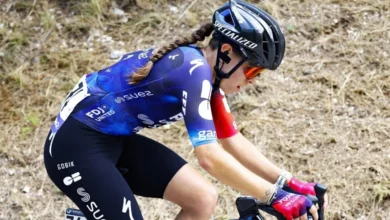
Silke Smulders is set to make her highly anticipated return to the professional cycling peloton this weekend at the prestigious Amstel Gold Race. The Liv AlUla Jayco rider sustained a fractured vertebra during the Tour of Valencia just two months ago, a severe injury that threatened to derail her season. However, following a period of intensive rehabilitation and recovery, Smulders has received medical clearance to compete.
"I don’t feel one hundred percent yet, but I am incredibly happy to be back with the team," Smulders stated in a press release. "I see these races as a significant bonus after everything I’ve been through." Her return to racing, particularly at one of the most iconic Dutch classics, marks a significant milestone in her personal journey and a testament to her resilience.
The Road to Recovery: A Two-Month Ordeal
The past two months have been a challenging period for the rider from North Brabant, Netherlands. The fall during the Tour of Valencia, which led to her fractured vertebra, brought with it a wave of uncertainty about the extent of her injury and the timeline for recovery.
"In the beginning, it was very frightening due to all the uncertainty," Smulders recounted. "We didn’t know exactly what my recovery would look like. We took it step by step, focusing on staying as mobile as possible while respecting the severity of the injury." This cautious and methodical approach was crucial in preventing further damage and laying the groundwork for her eventual return.
The support system around Smulders played a pivotal role in her rehabilitation. Her team, Liv AlUla Jayco, and her physical therapists provided unwavering assistance. "My team and my physios helped me tremendously, and I tried to listen carefully to my body," she explained. The mental fortitude required to navigate such a setback cannot be overstated. "It has been very tough, and only I know how far I have had to come."
Despite her successful recovery and readiness to race, Smulders acknowledged that she is still not entirely at her peak physical condition. "I still don’t feel completely like myself," she admitted. However, the opportunity to compete in a race of the caliber of the Amstel Gold Race on home soil is a powerful motivator. "I am very happy that I am allowed to start in the most beautiful race of the year on home roads."
Amstel Gold Race: A Fitting Stage for a Comeback
The Amstel Gold Race, a UCI Women’s WorldTour event, is renowned for its challenging course, characterized by its numerous short, punchy climbs, often referred to as "bergen" in Dutch. The race is a highlight of the spring classics calendar and attracts the world’s best female cyclists. For Smulders, returning to this demanding race, particularly with its familiar Dutch terrain, holds special significance.
The Amstel Gold Race, often called "the Cauberg race" due to the iconic climb that has historically featured prominently in its finale, is a race of attrition. Its rolling hills and cobbled sections test the endurance, tactical nous, and climbing ability of the riders. For a rider like Smulders, who has shown promise in various disciplines, including general classification and climbing, this race offers a unique platform to test her rediscovered form.
Smulders’ participation in the Amstel Gold Race is more than just a return to competition; it’s a symbolic reclaiming of her passion and a demonstration of her indomitable spirit. The race, scheduled for Sunday, April 19, 2026, will be her first outing since her injury in February 2026.

Team Strategy and Smulders’ Role
While Smulders admits she is not at her absolute best, she believes her presence can still be a significant asset to the Liv AlUla Jayco team. "There is a question mark behind my name regarding my current form, but I think my motivation and my knowledge of the course can be of great value to the team," she stated.
Her understanding of the intricate local roads, having grown up and trained in the Limburg region where the race is held, could prove invaluable for her teammates. In a race where tactical positioning and precise execution are paramount, Smulders’ ability to offer insights and support could be crucial.
"I am just going to enjoy being here and race freely," she concluded, emphasizing a mindset focused on performance and enjoyment rather than solely on results. This relaxed approach, born from her arduous recovery, might allow her to perform beyond expectations, unburdened by the pressure of immediate victory.
Supporting Data and Context
Silke Smulders, born on April 1, 2001, is a 25-year-old Dutch cyclist. She rides for the Liv AlUla Jayco team, a UCI Women’s WorldTeam. Her current UCI rankings, as of April 17, 2026, show her as a strong all-rounder with ratings in various categories, including GC (General Classification) at 729.84 and Hill at 722.32. Her overall rating is 648.53, placing her 303rd in the world. While these rankings reflect her potential, her recent injury undoubtedly impacts her immediate competitive capacity.
The fracture of a vertebra is a serious injury in cycling, often requiring a significant recovery period. The severity of the fracture, the specific vertebra involved, and the individual’s healing process all contribute to the rehabilitation timeline. A fractured vertebra can lead to pain, mobility issues, and the risk of further injury if not properly managed. Smulders’ recovery process, therefore, has been a meticulous journey of physical therapy and gradual reintegration into training.
The Amstel Gold Race has a rich history in professional cycling. While the men’s race dates back to 1966, the women’s edition has gained prominence in recent years, now holding UCI Women’s WorldTour status. This elevation signifies the growing importance and competitiveness of women’s professional cycling. The race typically covers a distance of around 160 kilometers, featuring over 30 climbs, demanding immense physical and mental resilience from the participants.
Broader Implications and Analysis
Silke Smulders’ return to racing is a positive development for women’s cycling, highlighting the increasing depth and talent within the sport. Her resilience in overcoming a serious injury serves as an inspiration to other athletes facing similar challenges. The Liv AlUla Jayco team will benefit from her experience and local knowledge, even if she is not in peak form. Her participation could also energize her teammates and contribute to a stronger team performance.
The timing of her return, coinciding with the Amstel Gold Race, is strategic. It allows her to ease back into competition on a course that is familiar and less demanding than some of the Grand Tours. It also provides an opportunity for her to gauge her current physical capabilities in a high-stakes environment without the immense pressure of being the primary contender.
The recovery and return of athletes from severe injuries are often closely watched by the sporting community. They underscore the importance of robust medical support, dedicated training staff, and the athlete’s own unwavering determination. Smulders’ journey is a compelling narrative of overcoming adversity, and her presence in the peloton this weekend will undoubtedly be a moment of shared triumph for her, her team, and her fans.
The Amstel Gold Race, with its iconic climbs and passionate crowds, offers a fitting backdrop for Smulders’ comeback. It is a race that embodies the spirit of cycling – perseverance, strength, and the pursuit of excellence. As she rolls out on Sunday, Silke Smulders will not only be competing for her team but also for every individual who has faced and overcome significant personal challenges. Her return is a powerful reminder that the human spirit, when coupled with dedication and support, can triumph over even the most daunting obstacles. The cycling world eagerly awaits to see what she can achieve in her return to the saddle.