Brabantse Pijl Podium Surprise: Young Attackers Showcase Potential Amidst Elite Field Absence

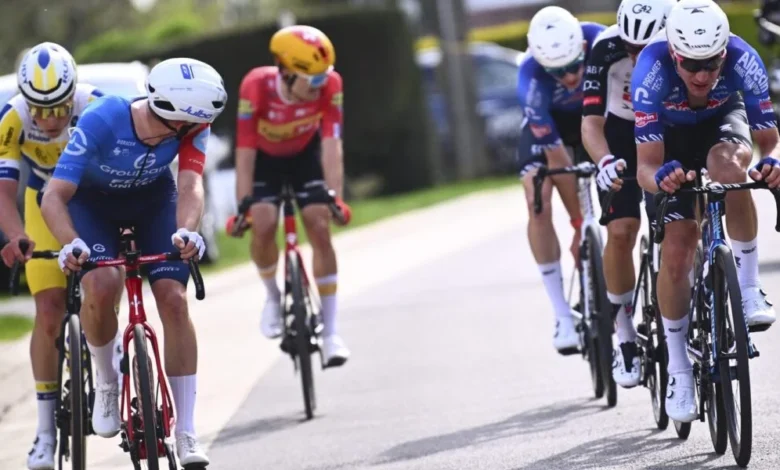
Friday, April 17, 2026, 18:34 – The Brabantse Pijl, a prestigious 1.Pro level one-day classic, concluded on Friday, April 17, 2026, with a remarkably surprising podium. While the race, held on a challenging hilly course, showcased the attacking prowess and potential of emerging talents like Ramses Debruyne (23) and Milan Lanhove (22), the ultimate victory and podium places were ultimately claimed by riders who conserved energy for a late surge, highlighting the evolving dynamics of modern professional cycling. The absence of several of the sport’s biggest stars, a point of contention for some, inadvertently opened a valuable window for these younger riders to demonstrate their capabilities on a significant international stage, broadcast live in prime time.
The Evolving Landscape of Professional Cycling: Opportunities in the Absence of Superstars
The contemporary era of professional cycling is often characterized by the seemingly insurmountable dominance of a select group of riders, often referred to as "aliens." Figures like Tadej Pogačar, Mathieu van der Poel, and Wout van Aert have redefined the sport with their aggressive, relentless racing styles, frequently making it difficult for any other rider or group to make a lasting impact in the decisive final kilometers of major races. This concentration of power means that the peloton often shrinks considerably in the latter stages of races, with only a handful of riders able to maintain contact with the leading contenders.
The Brabantse Pijl, traditionally a key stepping stone in the Ardennes Classics campaign, found itself without the presence of many of these top-tier cyclists this year. While this absence drew some criticism, it also presented a unique opportunity. The live television coverage provided a platform for a broader spectrum of riders to not only participate but also to actively shape the narrative of the race.
Milan Lanhove, a rider for Flanders-Baloise, articulated this shift in dynamic. "Everyone thinks there’s something to gain," he commented to our microphones. "Not that it’s suddenly easy without those big names. But it’s a different kind of racing. Once those big guys get going, they just keep pushing and pushing. Now, it often falls silent earlier, and that’s when riders like me can do something."
This sentiment underscores a crucial aspect of professional cycling strategy: the ability to capitalize on opportune moments. In races dominated by a few individuals, the tactical game often becomes one of reacting to their moves. When those figures are absent, the tactical landscape transforms, allowing for more proactive and experimental racing from the wider field.
Attacking Flair and Emerging Talent: Debruyne and Lanhove’s Brabantse Pijl Campaign
The race route, featuring iconic cobbled sections like the Moskesstraat, provided a testing ground for the riders. It was on these challenging stretches that Lanhove made a significant impression, finding himself in an elite group of approximately eight riders. This breakaway also included notable riders such as Tibor Del Grosso, Benoît Cosnefroy, and Romain Grégoire.
Ramses Debruyne, also a participant in this leading group, expressed his surprise and satisfaction at his own performance. "That I could ride with someone like Grégoire was beyond my own expectations," he admitted with a smile. "But I had come out of the Tour of the Basque Country in good form, and that often allows you to do good things here. Last year it was often close, but now I’m succeeding against riders in top form."
The youthful courage displayed by Debruyne and Lanhove was a recurring theme. Lanhove emphasized the importance of a fearless approach in such races. "I knew I didn’t have to be afraid of the riders starting here," he stated. "The top 5 in the world aren’t here, but I know I can do something behind them. It was a bit of a grind and a bit of a battle, but I felt good and I might have even had a sprint left in my legs."
Their willingness to commit to the early breakaway, despite the inherent risks, showcased a burgeoning confidence and a desire to test themselves against a competitive field. This proactive approach is often what distinguishes promising young riders from those who merely participate.
The Race Dynamics: From Breakaway to Sprint Finish
Despite the strong showing from the early attackers, the nature of one-day classics often leads to a dramatic shift in fortunes in the closing kilometers. The collective efforts of numerous teams in the peloton, keen to set up their sprinters or punchers for the win, gradually eroded the advantage of the breakaway. As the finish line loomed, the gap, which had offered a tangible hope for the leaders, began to melt away like snow in the sun.
This scenario ultimately paved the way for fresher, more explosive riders to emerge and contest the victory. Anders Foldager, who ultimately claimed the win, and Quinten Hermans, who finished second, represented this new wave of contenders who had strategically conserved their energy.
Hermans offered his perspective on the race dynamics from the perspective of the chasers. "Without Wout and Remco [Evenepoel], we thought the leaders would lack horsepower," he explained. "Moreover, in the finale, they often start looking at each other. Then you can easily make up half a minute." This observation highlights a common tactical pitfall for breakaways: internal competition and a lack of unified effort can be as detrimental as the chasing peloton.
Hermans himself had to adapt his usual racing style. "Normally, I like to ride along [with breaks]," he confessed. "But I felt I had to be very careful today. The sprint I rode, I could have delivered on one of the climbs. But that wasn’t the intention. We were going to gamble. And by being economical, we could go far. Second place is good, but my ambitions reach further than this."
The Broader Impact: A Platform for Future Stars
For riders like Lanhove and Debruyne, the Brabantse Pijl served as more than just another race; it was a significant opportunity to gain exposure and validate their progress. For the broader cycling audience, it was an introduction to these talented young men who had dared to animate the race.
Lanhove, a second-year professional from Halle, spoke of a significant boost in his self-confidence. "I can build on this," he stated. "I hope to be able to expand my capabilities in these kinds of races in the future. On Sunday is the Amstel Gold Race, that region suits me. So, I want to show myself there again." His ambition to perform at the highest level in upcoming races, particularly those with similar terrain, is a testament to the positive impact of his performance.
Debruyne, also a second-year professional, riding for Mathieu van der Poel’s Alpecin-Deceuninck team (formerly Alpecin-Premier Tech), adopted a more measured tone. "Here, we were with a young group, so you can ride for yourself," he explained. "In the big classics, you’re with a more experienced group, so you have to learn and work. And also, in the Flèche Wallonne, Paul Seixas will be back. I raced against him last week and I quickly knew where I stood. With Pogacar in the mix, it’s a different story. To prove myself, this was the best chance."
His acknowledgment of the different dynamics in larger, more established races, and the formidable presence of riders like Pogacar, speaks to a realistic understanding of the challenges ahead. However, his success in the Brabantse Pijl provides concrete evidence of his potential, offering a valuable stepping stone in his development.
Statistical and Performance Context
The Brabantse Pijl, established in 1960, has a rich history of being a crucial indicator of form for the Ardennes Classics. Its varied profile, typically featuring a mix of short, punchy climbs and at times, cobbled sectors, demands a versatile rider capable of both explosive power and sustained effort. The race distance, usually around 200 kilometers, further tests a rider’s endurance.
While specific data for the 2026 edition is still emerging, historical performance trends at the Brabantse Pijl often see winners emerge from groups that have either successfully attacked late or have managed their energy reserves effectively for a reduced bunch sprint. The average speed of the race, typically in the high 40s km/h, indicates the demanding nature of the parcours.
The inclusion of younger riders in the decisive stages, as seen with Debruyne and Lanhove, is not entirely unprecedented but signifies a growing trend of talent development and the increasing competitiveness of riders from Continental and ProTeam level squads. These teams, often operating with smaller budgets, rely on strategic racing and individual rider development to make an impact on the WorldTour calendar.
Broader Implications for the Cycling Calendar and Rider Development
The Brabantse Pijl, by its positioning in the calendar, serves as a vital barometer of form leading into the Amstel Gold Race, La Flèche Wallonne, and Liège-Bastogne-Liège. The performances of riders like Foldager and Hermans suggest strong current form, making them riders to watch in the upcoming classics.
For Debruyne and Lanhove, their displays of aggression and resilience in the Brabantse Pijl offer valuable lessons. They have proven their ability to compete and influence races even in the shadow of more established stars. This experience will undoubtedly bolster their confidence and provide crucial data for their teams regarding their strengths and weaknesses. The opportunity to attack and be visible in a televised race is invaluable for their burgeoning careers, potentially attracting future sponsorship and support.
The narrative of the 2026 Brabantse Pijl underscores a fundamental truth in professional cycling: while the "aliens" may dominate headlines, the sport is continually replenished by a wave of ambitious young talent eager to seize opportunities. The absence of some, while lamented by purists, can inadvertently create the very conditions necessary for these future stars to emerge, capture attention, and begin carving out their own legacies in the peloton. The challenge for them now is to translate this promising showing into consistent top-level results in the demanding races that lie ahead.