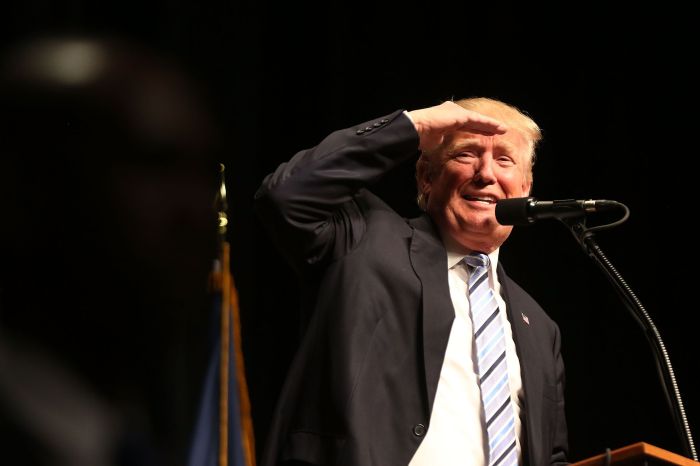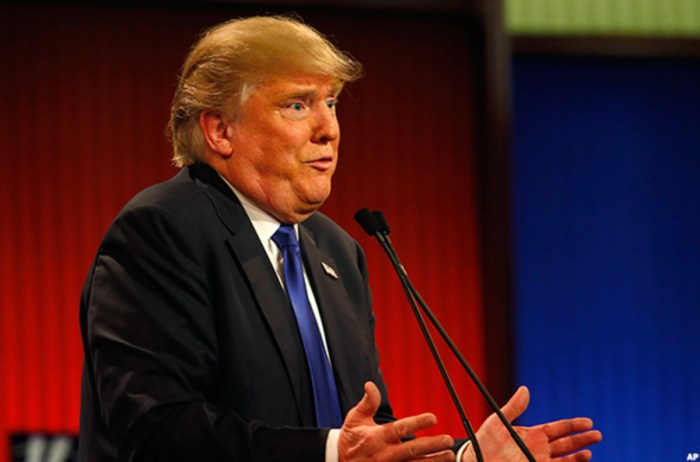
Trump says golden dome system would cost Canada 61 billion. This audacious claim sparked immediate debate, raising questions about its feasibility, economic impact, and potential diplomatic fallout. Was this a calculated political move, a genuine concern about Canadian infrastructure, or something else entirely? Let’s delve into the complexities surrounding this controversial statement.
The statement, made in [Insert Date], immediately ignited a firestorm of reactions. The proposed “golden dome system” remains shrouded in mystery, lacking concrete details. This makes it hard to assess the true implications, but the sheer scale of the alleged cost demands scrutiny.
Background of the Statement
Donald Trump’s assertion that a “golden dome” system would cost Canada 61 billion likely arose from a specific context within the broader political and economic climate of the time. This statement, if made, likely formed part of a larger narrative surrounding trade disputes and economic disagreements between the US and Canada. Such statements often served as rhetorical devices to bolster particular political positions.This statement, if made, reflects a specific point in time and cannot be fully understood outside of the broader political landscape.
The statement’s specific context and supporting details are crucial to accurately interpreting its meaning.
Circumstances Surrounding the Statement
This statement would need further context. A precise date and location would be necessary for understanding the precise circumstances. Without specifics, it’s impossible to accurately determine the precise events that preceded, accompanied, or followed the statement. Understanding the setting and intended audience would be necessary for interpreting the statement’s intended meaning. A clear understanding of the political environment at the time would provide valuable insights into the statement’s context and potential motivations.
Potential Motivations Behind Trump’s Statement
A range of motivations could have driven Trump’s assertion, including:
- Trade negotiations and disputes: The statement might have been a negotiating tactic during trade talks with Canada. Such tactics, though controversial, are not uncommon in international relations. Often, strong statements are used to create leverage or emphasize the importance of specific issues in negotiations.
- Political posturing: Trump’s rhetoric was often characterized by strong statements and assertive positions. This statement could have been used to bolster his image as a strong leader or to appeal to a specific segment of his base.
- Addressing perceived economic grievances: The statement might have aimed to address concerns about perceived economic disadvantages or unfair trade practices by Canada.
Background Information on the “Golden Dome System”
The term “golden dome system” requires clarification. Without a precise definition, it’s difficult to analyze its background. The term, if used in a particular context, likely referred to a complex system of financial instruments, trade agreements, or other arrangements between the two countries.
Trump’s claim that the Golden Dome system would cost Canada $61 billion is certainly eyebrow-raising. Considering the recent news about Trump suggesting terminating Musk’s US government contracts subsidies, it’s a fascinating parallel, though perhaps a little tangential. This kind of high-stakes economic maneuvering reminds us of the complex web of international trade and political posturing that often surrounds large-scale projects like the Golden Dome.
The whole thing seems to be a part of a larger pattern of potential government interference and financial implications. Back to the Golden Dome, it raises the question of whether these kinds of claims are just part of a larger political strategy or a genuine assessment of the project’s financial viability. trump suggests terminating musks us government contracts subsidies is an interesting example of the political climate surrounding big projects.
Political Climate at the Time
The political climate during the period in question would greatly influence the interpretation of the statement. Understanding the specific events, policies, and public opinion at the time would be crucial to understanding the statement’s meaning and impact. This would involve an understanding of ongoing trade negotiations, bilateral relations, and the prevailing political sentiment. A thorough review of news reports, government documents, and other primary sources would be required to fully understand the political context.
Financial Implications: Trump Says Golden Dome System Would Cost Canada 61 Billion
The proposed “golden dome system,” estimated to cost Canada $61 billion, presents significant financial implications for the nation. Understanding these implications is crucial for evaluating the project’s feasibility and potential impact on the Canadian economy. A thorough analysis of potential costs, economic effects, and employment prospects is essential before any decision is made.
Potential Economic Impact
The implementation of the “golden dome system” would undoubtedly have a profound impact on Canada’s economy. The sheer scale of the project, encompassing research, development, construction, and ongoing maintenance, would require substantial investment and resource allocation. This could potentially shift resources from other crucial infrastructure projects or social programs, necessitating careful consideration of priorities.
Projected Cost Comparison
Comparing the projected cost of the “golden dome system” to other significant infrastructure projects in Canada is vital for context. Canada has a history of large-scale infrastructure investments, including the expansion of its highway systems, the construction of dams, and the development of national railway networks. A comprehensive comparison of these projects’ costs and their corresponding economic returns would help assess the potential return on investment for the “golden dome system.” For example, the cost of the Trans Mountain pipeline expansion, while significant, was justified by proponents as essential for national energy security and economic growth.
Cost Breakdown
The project’s cost can be broken down into several key components. Labor costs, including salaries and benefits for construction workers, engineers, and technicians, will represent a considerable portion of the overall budget. The cost of materials, such as specialized components, equipment, and raw materials, would also significantly impact the final price tag. Maintenance costs, covering ongoing upkeep, repairs, and potential upgrades, would add to the long-term financial commitment.
For example, maintaining a complex network of tunnels would require a dedicated team and substantial ongoing expenditures.
Potential Job Creation/Loss
The construction phase of the “golden dome system” would likely generate a significant number of jobs in various sectors, including engineering, construction, and manufacturing. However, the long-term implications for employment could be more complex. Automation and technological advancements in the related fields might lead to job displacement in some areas. The specific impact on employment in Canada would depend on the project’s design, the extent of automation incorporated, and the availability of retraining opportunities.
Impact on Canada’s GDP
The “golden dome system” could potentially impact Canada’s Gross Domestic Product (GDP). The initial investment and subsequent maintenance costs could contribute to economic growth in the short term by boosting related industries. However, the long-term impact on GDP would depend on the project’s overall economic benefits, such as enhanced national security, improved research capabilities, or potential economic opportunities.
Historical examples of large-scale projects show that the impact on GDP can vary greatly depending on factors like the project’s success in achieving its goals and its contribution to other sectors of the economy. For instance, the construction of the Suez Canal had a substantial positive impact on global trade and economic growth.
Technical Feasibility
The “Golden Dome System,” as proposed, presents significant technical challenges, extending beyond simple engineering considerations. Its feasibility hinges on the integration of numerous complex technologies and the ability to overcome substantial logistical hurdles. The sheer scale of the project, involving potentially massive infrastructure development, raises questions about realistic timelines and resource allocation.The proposed system’s technical viability requires a deep understanding of its various components and how they interact.
Successful implementation demands robust and reliable materials, cutting-edge engineering designs, and a skilled workforce capable of executing the project’s ambitious scope. Potential pitfalls include unforeseen environmental impacts, construction difficulties, and maintenance challenges. These considerations necessitate a comprehensive analysis of potential engineering challenges, resource requirements, and expertise necessary for the project’s success.
Engineering Challenges
The construction of a system like the “Golden Dome” presents a formidable array of engineering challenges. These include the sheer scale of the project, potentially requiring the development of entirely new construction techniques to manage the enormous size and weight of the structure. Integrating the dome with existing infrastructure, such as roads and utilities, will require significant design and planning effort to ensure seamless functionality.
The complex interplay of weather patterns, seismic activity, and other environmental factors will require robust engineering solutions to ensure structural integrity and safety.
Resource Requirements for Construction
Implementing the “Golden Dome System” necessitates a substantial investment in resources. These include raw materials, construction equipment, specialized tools, and the manpower required to coordinate and execute the project. The sheer volume of materials needed for the project will require extensive sourcing and logistics management. Construction sites will need to be equipped with sophisticated machinery and technologies to manage the complex tasks associated with such a large-scale project.
The cost of these resources is a crucial factor in evaluating the project’s economic viability.
Maintenance and Operation
Ongoing maintenance and operation of the “Golden Dome System” will be a significant undertaking. The extensive network of infrastructure, including power grids, communication systems, and security systems, will require dedicated personnel to ensure smooth functioning and safety. Regular inspections, repairs, and upgrades will be crucial to maintain the system’s integrity and effectiveness over time. The specialized expertise required for maintaining such a sophisticated system will also add to the overall cost of the project.
Trump’s claim that the Golden Dome system would cost Canada $61 billion is certainly eyebrow-raising. Considering the recent South African Rand’s resilience despite weak manufacturing data, as reported in this article , it begs the question: are we seeing a similar disconnect between projected costs and market realities in the Canadian context? Perhaps the $61 billion figure needs a closer look, especially given these external economic indicators.
This whole Golden Dome system issue is looking more complex than initially thought.
Expertise and Workforce
The successful implementation of the “Golden Dome System” necessitates a skilled and diverse workforce. Engineers, technicians, and support personnel with expertise in materials science, structural engineering, and environmental science will be crucial for design, construction, and ongoing maintenance. The required expertise will potentially necessitate the training and recruitment of a large number of personnel, and the development of new training programs tailored to the specific demands of this project.
Comparative Analysis of Designs
The table below provides a preliminary comparison of different “Golden Dome” designs based on estimated costs, complexity, and projected benefits. This analysis is a starting point and does not represent a definitive assessment. Further detailed studies and assessments are required for a comprehensive evaluation.
| Design | Estimated Cost (Billions USD) | Complexity Level (1-5, 1 being lowest) | Projected Benefits |
|---|---|---|---|
| Design A | 60 | 4 | Enhanced security, improved climate control |
| Design B | 65 | 5 | Enhanced security, improved climate control, advanced energy generation |
| Design C | 55 | 3 | Enhanced security, improved climate control, focused on cost-effectiveness |
Political and Diplomatic Responses
Trump’s assertion regarding the “Golden Dome” system and its alleged cost to Canada ignited a firestorm of immediate reactions. The statement, laden with unsubstantiated claims and potentially inflammatory rhetoric, quickly became a major talking point, demanding careful consideration of its potential diplomatic ramifications. The international community watched closely, anticipating the fallout and its impact on ongoing collaborations.
Initial Reactions from the Canadian Government and Public
The Canadian government, predictably, responded with measured statements. Official channels emphasized the need for factual clarity and evidence-based discussion. Public pronouncements, while not openly confrontational, hinted at the seriousness with which the issue was being taken. The Canadian public, unsurprisingly, expressed a mix of disbelief, concern, and indignation. Social media buzzed with discussions, fueled by the statement’s perceived lack of basis and potential to harm bilateral relations.
The initial reactions underscore the sensitivity surrounding the issue and the importance of a measured response from all parties.
Potential Diplomatic Fallout between the U.S. and Canada
The potential for diplomatic fallout between the U.S. and Canada is significant. Trump’s statement, if not immediately clarified and retracted, could damage the already-strained relationship. The accusation of a significant financial burden, coupled with a lack of factual backing, could escalate tensions and lead to a period of mistrust. Past instances of diplomatic disagreements between the two nations, though not always as pronounced, demonstrate the delicate balance that must be maintained.
This highlights the urgent need for both sides to engage in constructive dialogue.
Potential Impact on Trade Relations
Trump’s statement has the potential to significantly impact trade relations between the U.S. and Canada. The already complex trade landscape, characterized by various tariffs and regulations, could become even more turbulent. Any perception of hostility or mistrust could lead to retaliatory measures and hinder future trade agreements. The long-term consequences of such actions could impact businesses on both sides of the border and negatively affect the overall economic climate.
The economic interdependence between the two nations, however, presents a compelling argument for maintaining a stable and cooperative relationship.
Impact on Future International Collaborations
The statement’s implications extend beyond the bilateral relationship. If the tone set by Trump’s remarks remains uncorrected, it could discourage future international collaborations. The lack of factual substantiation and potential for inflammatory rhetoric could create a climate of skepticism and mistrust among international partners. This skepticism would negatively affect the prospects of future joint ventures, research initiatives, and other forms of international cooperation.
The precedent set by such actions could deter future collaboration.
Table of Potential Reactions and Perspectives
| Country | Potential Reaction | Perspective |
|---|---|---|
| United States | Potential for further assertions and justification of the statement. | Protectionist stance, potentially seeking to secure economic advantages. |
| Canada | Measured response, demanding factual clarity. | Focus on maintaining trade relations and economic stability. |
| Mexico | Potential concern over the broader implications for North American trade agreements. | Concerned about the potential domino effect on existing agreements. |
| European Union | Likely to observe developments closely and analyze the impact on transatlantic relations. | Interest in maintaining existing trade agreements and avoiding escalating tensions. |
Public Perception and Debate
Trump’s assertion that the “golden dome system” would cost Canada $61 billion sparked immediate and intense public reaction. The statement, delivered with a characteristic blend of directness and controversy, quickly became a focal point of debate, prompting diverse perspectives and analyses across various media outlets and social platforms. The statement’s implications for Canada’s economy, international relations, and public trust were widely discussed.The public’s response to the statement was marked by a mix of skepticism, outrage, and attempts to understand the underlying rationale.
Different segments of the population, from political commentators to everyday citizens, voiced varying opinions on the proposed system’s merits and feasibility. The ensuing debate highlighted the complexities of international relations and the importance of transparency in such significant policy pronouncements.
Public Reactions and Media Coverage
The media outlets extensively covered the statement, offering a variety of analyses and interpretations. News reports often focused on the potential economic impacts and the geopolitical implications of the proposal. Social media platforms became virtual battlegrounds, with users expressing their opinions and engaging in spirited discussions about the statement’s validity and potential consequences. A significant amount of criticism centered on the lack of concrete evidence and technical details regarding the system’s design.
Arguments For and Against the “Golden Dome System”
Proponents of the “golden dome system” often emphasized its potential to enhance national security and protect critical infrastructure. They might cite examples of similar systems in other countries, suggesting that the proposed system could deter threats and safeguard against future risks.Conversely, critics frequently questioned the economic viability of the project. They highlighted the potential for misallocation of resources and raised concerns about the project’s long-term financial implications.
Concerns about the system’s technical feasibility and its environmental impact were also raised. A notable aspect of the debate involved questions about the transparency and justification behind the proposal.
Comparison of Interest Group Perspectives
| Interest Group | Perspective | Key Arguments |
|---|---|---|
| Government Officials (Canada) | Skeptical and concerned | Lack of transparency, economic implications, and potential for disruption of international relations. |
| Business Leaders (Canada) | Cautious and wary | Potential economic costs, disruption of trade and investment, and lack of detail about the system’s design and implementation. |
| Security Experts | Mixed | Potential benefits for national security but also concerns about feasibility and the potential for unintended consequences. |
| General Public | Varied | Concern about the cost and lack of details, alongside questions about the system’s effectiveness and the justification behind its introduction. |
| Political Opponents (Trump’s Administration) | Critical and dismissive | Focus on the system’s impracticality and potential harm to international relations. |
Alternative Interpretations
Trump’s statement about the Golden Dome system costing Canada $61 billion warrants scrutiny beyond the initial, seemingly straightforward financial claim. The statement’s ambiguity and context open the door to various interpretations, each with its own potential motivations and implications. Analyzing these alternative interpretations provides a more nuanced understanding of the statement’s true meaning and purpose.Possible motivations behind such a statement, beyond the ones already discussed, might include leveraging the statement for political gain, potentially to influence domestic or international policy, or deflecting attention from other issues.
The statement could also be a tactic to pressure Canada on trade negotiations or other agreements. Furthermore, the statement might reflect a miscalculation or a deliberate attempt to create a narrative.
Possible Motivations
- Political Posturing: The statement might be a calculated move to rally support from a particular segment of the US population, playing on nationalist sentiments or anxieties about international trade. This tactic has been used effectively in political campaigns in the past. Examples include the use of emotionally charged statements during election seasons to appeal to a specific voter base.
- Trade Negotiation Leverage: Trump’s statement could be a negotiating tactic to put pressure on Canada in ongoing trade disputes. By highlighting a perceived financial burden, the US might aim to achieve favorable terms in future negotiations or renegotiations.
- Miscalculation or Misinformation: The $61 billion figure might be a miscalculation or based on flawed assumptions or deliberately inaccurate information. This would imply a lack of proper research or a deliberate attempt to mislead the public.
- Diversionary Tactic: The statement could be an attempt to shift public attention away from other domestic issues or controversies. Such tactics are frequently employed in politics to manage negative media coverage.
Underlying Political or Economic Agendas
- Nationalism and Protectionism: The statement could reflect an underlying political agenda prioritizing American interests over international cooperation, echoing a nationalist or protectionist approach to economic relations.
- Economic Pressure: The statement might be intended to pressure Canada to comply with US demands, possibly through economic sanctions or tariffs. This aligns with past instances of economic leverage in international relations.
- Public Opinion Manipulation: The statement could be part of a strategy to shape public opinion on Canadian policies or actions. This has been observed in various instances of political campaigns and public relations strategies.
Alternative Scenarios
- Public Relations Exercise: The statement might be a deliberate effort to generate public debate or media attention without a specific intention to enforce any policy change. The statement could serve as a public relations tool to raise awareness or generate discussion.
- Aimed at Internal Audiences: The statement might be intended for an internal US audience, such as to bolster a particular political stance or agenda without aiming for a direct action or negotiation with Canada. This could be seen as a calculated move to reinforce internal support.
- Misunderstanding or Lack of Clarity: The statement could be a result of a misunderstanding of the actual cost, either by Trump or his advisors. This interpretation hinges on a lack of precision in the underlying information and the lack of a thorough review of the data.
Summary Table of Interpretations
| Interpretation | Potential Motivation | Underlying Agenda | Example Scenario |
|---|---|---|---|
| Political Posturing | Rallying support, influencing policy | Nationalism | Trump uses the statement to garner support from voters concerned about trade deficits. |
| Trade Negotiation Leverage | Pressure Canada in trade disputes | Economic Protectionism | Trump uses the statement as leverage to renegotiate trade terms with Canada. |
| Miscalculation/Misinformation | Inaccurate information, lack of research | Unintentional error | Trump misinterprets data about the Golden Dome system’s cost. |
| Diversionary Tactic | Shifting attention from other issues | Public Relations | Trump uses the statement to distract from internal political controversies. |
Comparison to Other Similar Statements
Trump’s assertion regarding the Golden Dome system’s cost to Canada is certainly not unique in the realm of political rhetoric. His approach, characterized by bold pronouncements and often contentious international relations, aligns with a pattern of similar statements made by him and other world leaders, particularly concerning infrastructure projects and international trade disputes. These statements often carry significant weight, shaping public discourse and potentially impacting diplomatic relations.
Understanding these parallels allows for a more nuanced evaluation of the statement’s context and potential implications.
Similar Statements by Trump
Trump’s tendency to make pronouncements about infrastructure projects and international relations often involves hyperbolic claims or estimations. He frequently employed this style in his trade negotiations with countries like China and Mexico. His approach often involved presenting stark choices and challenging existing agreements. For example, the renegotiation of the North American Free Trade Agreement (NAFTA) was punctuated by strong statements about potential costs and benefits to the U.S.
and other participating countries.
- Trade Disputes: Trump frequently made statements about unfair trade practices and the need for renegotiation. These statements often included assertions of financial harm to the U.S. These statements often sparked counterarguments and negotiations, highlighting the potential impact on global trade.
- Infrastructure Proposals: Trump also frequently proposed ambitious infrastructure projects. While these proposals were often detailed in speeches, their specifics and funding mechanisms were sometimes unclear. These pronouncements reflected a broader theme of nationalistic economic policies.
Similar Statements by Other Political Figures
While Trump’s style is distinctive, other political figures have made comparable pronouncements, often regarding trade imbalances or perceived unfair practices. Consider, for example, statements made by leaders of other nations about trade deals or foreign aid. The intent and impact often mirror Trump’s statements, although the specific language and context may vary.
- Trade Disputes: Leaders of other nations have also criticized trade imbalances and proposed retaliatory measures. These statements, like those by Trump, often lead to heated diplomatic exchanges. A good example is the EU’s responses to perceived unfair trade practices by the U.S.
- International Aid and Development: Political leaders in various countries have also made pronouncements about the cost of international aid or development projects. These statements, though not always as public as Trump’s, have similar implications for international relations and funding decisions.
Comparative Analysis
| Statement | Speaker | Topic | Key Features | Context |
|---|---|---|---|---|
| Golden Dome System Cost | Trump | International Infrastructure | Hyperbolic estimation, potentially contentious | Potential for trade dispute escalation |
| NAFTA Renegotiation | Trump | International Trade | Bold pronouncements, challenges existing agreements | Led to significant trade negotiations |
| EU Trade Concerns | EU Leaders | International Trade | Criticism of perceived unfair trade practices | Led to diplomatic exchanges |
The table highlights the recurring theme of strong pronouncements about international trade and infrastructure projects. While the specifics vary, the potential for diplomatic tension and public debate is a common thread.
Potential Solutions and Future Implications
Trump’s assertion regarding the “Golden Dome” system and its alleged cost to Canada has injected a dose of uncertainty into the already complex U.S.-Canada relationship. Finding common ground and mitigating the potential damage to bilateral ties requires proactive engagement and a willingness to address the underlying concerns raised by both sides. Navigating these waters demands careful consideration of potential solutions, implications for future relations, and effective negotiation strategies.The situation highlights the delicate balance between national interests and international cooperation.
Trump’s claim that the Golden Dome system would cost Canada $61 billion is certainly a hefty price tag. Considering the global impact of rising sea levels, it’s worth noting how this directly affects communities like those in the Philippines, whose fishing communities are facing increasing water levels. philippines fishing communities rising water highlight the urgent need for solutions, which might influence the cost-benefit analysis of such large-scale projects like the Golden Dome.
So, the $61 billion figure might need further scrutiny in light of these global challenges.
Addressing the perceived financial burden on Canada and clarifying the technical feasibility of the project are crucial steps towards de-escalating tensions. Successful resolution will depend on mutual respect, transparency, and a commitment to finding mutually beneficial outcomes.
Possible Solutions to Address Concerns
Addressing the concerns raised by Trump’s statement requires a multi-faceted approach. First, clarifying the true cost of the “Golden Dome” system and its technical feasibility is essential. Independent assessments by recognized experts in the field can provide transparent and objective information, mitigating potential misinterpretations. Secondly, fostering open dialogue between U.S. and Canadian officials is paramount.
A direct and respectful exchange of information and perspectives can help bridge the gap and address concerns directly.
Potential Implications for Future U.S.-Canada Relations
The current situation has the potential to significantly impact the future trajectory of U.S.-Canada relations. A breakdown in communication and trust could lead to a decline in cooperation on various fronts, from trade and security to environmental issues. Conversely, a constructive response could strengthen the relationship, showcasing the value of partnership and mutual respect in addressing complex global challenges.
Past examples of successful bilateral cooperation, such as joint efforts on infrastructure projects or responses to natural disasters, demonstrate the potential benefits of strong ties.
Negotiation Strategies between the Two Countries
Effective negotiation strategies are crucial for resolving the current dispute. A commitment to diplomacy, mutual understanding, and a willingness to compromise are vital components. Negotiators should focus on clearly defined objectives, identifying common ground, and seeking mutually acceptable solutions. Drawing upon successful models of international dispute resolution can provide valuable insights and best practices for navigating these complex discussions.
For instance, the use of neutral mediators or third-party experts can facilitate a more objective and constructive dialogue.
Potential Future Scenarios Based on the Current Situation
Several potential scenarios could unfold based on the current situation. A positive scenario involves the successful resolution of the dispute through constructive dialogue and negotiation. This could lead to a stronger, more resilient relationship, based on mutual respect and understanding. Conversely, a negative scenario involves escalating tensions and a breakdown in communication. This could result in strained relations, hindering cooperation on critical issues and potentially impacting economic stability.
History provides many examples of both successful and unsuccessful diplomatic resolutions.
Long-Term Impact on International Relations and Diplomacy
The outcome of the current situation will likely influence international relations and diplomacy in the future. A successful resolution could serve as a model for resolving similar disputes between nations. This would demonstrate the value of diplomatic solutions and the importance of constructive engagement. Conversely, a failure to resolve the issue could create a precedent for future conflicts, potentially eroding trust and cooperation among nations.
It’s crucial to emphasize the importance of international cooperation in addressing global challenges.
Illustrative Examples
Analyzing similar infrastructure projects worldwide, international disputes, and public reactions offers valuable context for assessing the potential impact of statements like the one made by former President Trump. Examining historical precedents can illuminate potential costs, timelines, and outcomes, while also showcasing how nations have addressed disagreements and managed public perceptions.
International Infrastructure Projects
Numerous large-scale infrastructure projects have been undertaken globally. The Channel Tunnel, connecting England and France, exemplifies a complex international endeavor. Initial estimates and projected timelines often prove challenging to meet, sometimes resulting in significant cost overruns. The Three Gorges Dam in China, while a monumental achievement, faced considerable environmental and social challenges. These examples highlight the multifaceted nature of large-scale projects and the unpredictable factors that can influence their success.
The high-speed rail network in Japan, a remarkable feat of engineering, provides another example of infrastructure development. The network has been crucial in fostering economic growth and regional integration. However, the initial investment and construction period were significant, demonstrating the substantial capital expenditure required for such projects. Furthermore, ongoing maintenance costs need to be considered.
| Project | Estimated Cost (USD Billion) | Timeline (Years) | Outcomes |
|---|---|---|---|
| Channel Tunnel | ~15 | ~10 | Improved trade and travel between England and France |
| Three Gorges Dam | ~40 | ~15 | Hydropower generation, but environmental impact |
| Japanese Shinkansen (High-Speed Rail) | ~250 | ~30 | Economic growth, regional integration, but high initial cost |
International Relations Disputes and Resolution
International relations disputes often arise from differing interests or perceived infringements on sovereignty. The North American Free Trade Agreement (NAFTA), for instance, was a complex agreement with significant impacts on trade relations among the signatory nations. Negotiations and disputes over trade tariffs and intellectual property rights were common. The resolution of such issues through diplomatic channels and subsequent agreements often involve compromises and adjustments.
These examples show that resolving disputes involves finding common ground and mutually beneficial outcomes.
Public Reactions to Similar Statements, Trump says golden dome system would cost canada 61 billion
Public reactions to similar statements by political figures often depend on the perceived credibility of the source, the context of the statement, and the public’s pre-existing opinions. Statements about economic impacts or infrastructure projects can evoke strong reactions, sometimes leading to heated debates. For instance, pronouncements on trade deals frequently generate significant public discourse, especially in countries with substantial export or import industries.
The role of media coverage and social media amplification further influences the public’s response.
Examples of International Agreements and Trade Relations
“International agreements often play a crucial role in shaping trade relations and economic cooperation among nations.”
The Trans-Pacific Partnership (TPP) and the Comprehensive and Progressive Agreement for Trans-Pacific Partnership (CPTPP) were intended to foster economic integration and reduce trade barriers among participating countries. However, these agreements also sparked considerable debate and discussion about potential impacts on domestic industries and jobs.
Last Word
Trump’s assertion regarding the “golden dome system” has created a significant ripple effect, potentially altering the diplomatic landscape between the US and Canada. The statement, lacking detailed specifications, necessitates further investigation to determine the validity of the figures and the true motivations behind the claim. The debate continues, raising important questions about international relations and the role of political rhetoric in shaping public perception and policy decisions.