With US halts new student visa interviews it weighs social media vetting politico, the immigration landscape is undergoing a significant shift. The recent suspension of student visa interviews raises questions about the future of international education in the US. This policy change, driven by the desire to incorporate social media vetting into the application process, promises a new era of scrutiny, but also sparks concerns about data privacy and fairness.
What does this mean for international students and universities? How will this affect research collaborations and the global exchange of knowledge?
This article delves into the intricacies of this policy shift, examining the background, potential impacts, and ethical considerations. We’ll explore the reasoning behind the policy adjustments, examine the social media vetting procedures, and analyze the potential consequences for international students, educational institutions, and the broader political landscape. The potential legal and regulatory ramifications, along with alternative approaches and future trends, will also be discussed.
Background on US Student Visa Policy Changes
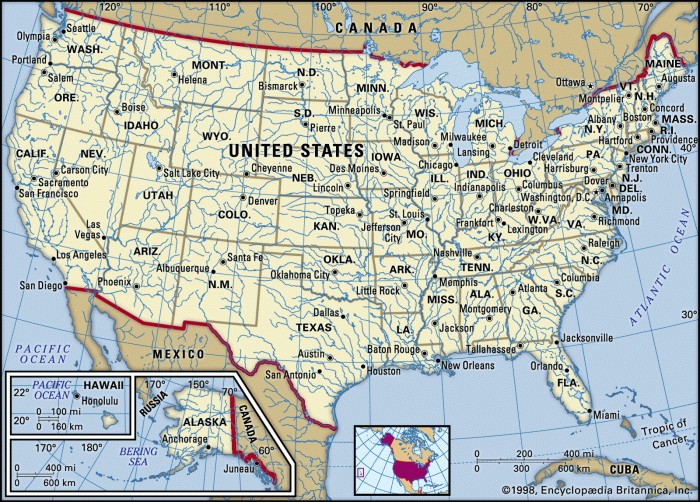
The US student visa system, a cornerstone of international education, has undergone significant shifts in recent years. These adjustments, often driven by evolving global circumstances and domestic priorities, impact international students seeking to pursue higher education in the United States. Understanding these changes is crucial for prospective students and educational institutions alike.The US student visa process, while historically relatively straightforward, has become increasingly complex.
This complexity is amplified by a series of policy changes, some of which have led to delays and heightened scrutiny in recent years. These adjustments have implications for both students and the institutions they hope to attend.
Historical Overview of US Student Visa Policies
The US has a long history of welcoming international students, but the policies governing their entry have evolved significantly over time. Early policies were generally more permissive, reflecting a broader focus on international exchange and the benefits of attracting foreign talent. Subsequent iterations have incorporated various factors, including national security concerns and economic considerations, which have resulted in adjustments to the visa application process.
Recent Changes in the Application Process
The recent years have witnessed a noticeable shift in the application process. This includes increased emphasis on demonstrating financial stability, rigorous scrutiny of academic records, and enhanced background checks. These changes aim to better ensure the eligibility of applicants and maintain the integrity of the student visa program.
Details about the Current Interview Suspension, Us halts new student visa interviews it weighs social media vetting politico
Currently, US student visa interviews for certain categories of applicants are suspended. This suspension affects specific groups, likely those deemed as high-risk or with a higher likelihood of needing further investigation. The decision to halt interviews is part of a broader strategy to streamline the process and potentially reduce wait times for eligible applicants.
Reasoning Behind the Policy Adjustments
The justifications for these policy adjustments are multifaceted. Security concerns, the need to maintain the integrity of the student visa program, and an aim to better manage the influx of applicants are among the cited reasons. These adjustments aim to create a more secure and efficient system for issuing student visas.
Key Stakeholders Impacted by These Changes
The policy adjustments affect a broad range of stakeholders. International students, prospective students, educational institutions, and government agencies all have vested interests in the US student visa program. The impacts vary depending on the specific category of applicant and the nature of the policy changes.
Social Media Vetting Procedures: Us Halts New Student Visa Interviews It Weighs Social Media Vetting Politico
Social media has become an integral part of modern life, with individuals often sharing personal information and perspectives online. This digital footprint has implications for various sectors, including the application process for student visas. The US government’s increasing use of social media vetting in these processes raises significant questions about the fairness, accuracy, and potential biases embedded within such systems.
Understanding the nuances of this new approach is crucial for both applicants and policymakers alike.The shift towards incorporating social media data in visa assessments reflects a broader trend of utilizing readily available digital information for background checks. While proponents argue that social media vetting can enhance the security and efficiency of the application process, concerns remain about the potential for misuse and the ethical implications of such practices.
Social Media Platforms Considered for Vetting
Social media platforms offer a wealth of information, but not all platforms are equally relevant for vetting purposes. The selection of platforms and the specific data points considered should be carefully scrutinized to ensure impartiality and prevent biases.
| Platform | Data Points Assessed | Example Criteria |
|---|---|---|
| Public posts, friend lists, groups joined, check-ins, photos | Engagement in controversial groups, hate speech, extremist views, patterns of behavior indicative of potential risks | |
| Tweets, retweets, followers, following, engagement | Engagement with accounts promoting violence or extremism, controversial tweets, patterns of interaction, potential links to problematic groups | |
| Public posts, stories, tagged locations, interactions | Content promoting violence or extremism, associations with problematic individuals or groups, patterns of activity | |
| YouTube | Uploaded videos, comments, channel information, subscriber counts | Content promoting violence or extremism, discussions of sensitive topics, links to individuals or groups of concern |
| TikTok | Videos, comments, interactions, follower count | Content promoting violence or extremism, trends related to problematic ideologies, potential connections with accounts of concern |
Potential Benefits of Social Media Vetting
Social media vetting can potentially identify red flags in an applicant’s online presence that might indicate a higher risk of future problems. It could help uncover inconsistencies between stated intentions and observed online behaviors, offering a broader picture of an applicant’s character.
Potential Drawbacks and Ethical Concerns
The use of social media data in visa applications raises significant ethical concerns. There’s a risk of misinterpreting nuanced online interactions or drawing inaccurate conclusions based on incomplete or misinterpreted information. Preconceived notions or biases in the assessment process could lead to unfair or discriminatory outcomes.
Comparison with Traditional Interview Methods
Traditional visa interview methods, relying on personal interactions and documented evidence, provide a more nuanced and detailed understanding of the applicant. However, social media vetting can uncover information that might not emerge during a standard interview, potentially revealing hidden aspects of an applicant’s character.
Pros and Cons of Traditional and Social Media-Based Vetting
| Vetting Method | Pros | Cons |
|---|---|---|
| Traditional Interview | Provides nuanced understanding of the applicant, allows for clarification of information, and offers an opportunity for a more personal interaction. | Can be time-consuming, might not fully uncover all relevant information, and can be susceptible to biases during the interview process. |
| Social Media Vetting | Can identify potential risks and red flags quickly and efficiently, potentially uncovering hidden information, and can provide a wider range of data. | Risk of misinterpreting information, potential for bias, and may not fully capture the applicant’s character or motivations. |
Impact on International Students and Educational Institutions
The recent changes in US student visa policies, incorporating social media vetting, are poised to significantly impact both international students and the educational institutions they attend. These adjustments introduce a new layer of scrutiny, demanding careful consideration of their implications. Understanding these effects is crucial for navigating the evolving landscape of international education in the United States.The enhanced vetting process, while intended to address security concerns, introduces complexities for international students seeking to study in the US.
Universities, too, face new challenges in managing student applications and maintaining a diverse student body. The economic ripple effects, from reduced enrollment to altered research collaborations, warrant detailed examination.
Potential Effects on International Student Enrollment
The introduction of social media vetting as a component of student visa applications is likely to influence the number of international students choosing to study in the US. Students might face increased delays in obtaining visas, potentially leading to decreased applications. This apprehension could discourage prospective students from pursuing their education in the US. Existing students might also experience anxiety and uncertainty about the future of their studies.
Moreover, the increased scrutiny may deter some highly qualified students from applying to US universities, potentially impacting the diversity of the student body.
Expected Impact on US Educational Institutions
US universities stand to experience shifts in their student demographics as a result of the policy changes. Reduced international student enrollment could negatively affect their revenue streams, impacting the funding available for scholarships, research initiatives, and other essential university operations. Furthermore, the loss of international students could diminish the diversity of perspectives and cultural experiences within the university community.
This could have a cascading effect on the quality of research, as international students often bring valuable insights and innovative ideas to collaborative projects.
Economic Implications for Students and Universities
International students contribute significantly to the US economy. They spend money on tuition, accommodation, books, and everyday expenses, stimulating local businesses and boosting the overall economy. Reduced enrollment could translate into a decline in this economic activity. Conversely, US universities also face economic implications. The decrease in international student enrollment directly impacts tuition revenue, affecting the university’s financial stability and ability to invest in resources and facilities.
This, in turn, could have an effect on the university’s ability to attract and retain faculty.
Potential Impact on Research Collaborations
Research collaborations between US institutions and international researchers are expected to be impacted by these policy changes. The vetting process could create obstacles to collaborations, potentially hindering the exchange of knowledge and ideas. International researchers might be hesitant to participate in projects if they face lengthy and complicated visa procedures. This could lead to a reduction in joint research efforts, impacting the progress of scientific discoveries and innovation.
Possible Scenarios and Impacts on International Students
| Scenario | Impact on International Students |
|---|---|
| Increased Visa Processing Times | Potential for delays in starting studies, financial strain due to increased living expenses while awaiting visa approval. |
| Decreased Student Applications | Reduced diversity of student body, potentially affecting the quality and scope of research and academic discussions. |
| Increased Scrutiny and Rejection Rates | Deterrence for students to apply to US universities; potentially leading to a loss of qualified international students. |
| Reduced Access to Financial Aid | Increased difficulty for students to access scholarships and grants, negatively impacting their ability to afford education. |
| Difficulties in Research Collaborations | Hesitancy from international researchers to participate in US-based projects, impacting the exchange of knowledge and progress of scientific discoveries. |
Potential Legal and Regulatory Ramifications
The recent shift in US student visa policy, incorporating social media vetting, introduces a complex web of potential legal challenges. International students and educational institutions now face scrutiny in a new digital landscape, raising concerns about due process, data privacy, and the potential for discriminatory practices. Navigating these evolving regulations is crucial for both applicants and institutions.The regulatory framework surrounding student visa applications is intricate and multifaceted.
The US halting new student visa interviews while considering social media vetting is a fascinating development. This raises questions about the future of international student recruitment, and the role of technology in immigration policy. Interestingly, this type of scrutiny echoes similar issues in other areas like patent disputes, where the International Trade Commission (ITC) provides a unique forum for resolving complex cases.
This is particularly appealing for companies facing cross-border patent challenges. why international trade commission is such an appealing forum patent disputes Ultimately, the US’s approach to vetting new student visas could significantly impact global education and the flow of international talent.
It encompasses a range of laws, regulations, and policies, from the Immigration and Nationality Act to specific Department of State guidelines. The addition of social media vetting introduces a new layer of complexity, demanding careful consideration of both legal and ethical implications.
Potential Legal Challenges to the New Policy
The new policy introduces several potential avenues for legal challenge. These challenges may arise from the perceived lack of transparency in the vetting process, concerns about the accuracy and reliability of social media data, and the potential for bias in automated systems. Furthermore, applicants may challenge the policy’s impact on their fundamental rights. Existing legal precedents and case studies in similar contexts can inform potential strategies for challenging the policy.
Regulatory Framework Surrounding Student Visa Applications
The regulatory framework surrounding student visa applications is substantial and encompasses various interconnected elements. The Immigration and Nationality Act (INA) provides the foundational framework for student visa eligibility, defining criteria for admission and outlining the rights and responsibilities of both applicants and the US government. Specific regulations issued by the Department of State (DOS) further detail procedures and requirements for applying for and maintaining a student visa.
The legal framework is not static; it evolves as societal needs and technological advancements necessitate adjustments.
Potential Legal Precedents and Case Studies
Examining past legal precedents and case studies in areas like data privacy and due process can offer valuable insights. Cases involving government access to personal data, particularly in the context of national security, may serve as precedents for legal challenges to the new social media vetting policy. Analyzing the impact of these precedents on similar policies in other jurisdictions is essential to anticipate the potential trajectory of legal challenges.
For instance, cases involving the misuse of personal information by governmental entities could set precedents for legal arguments concerning data privacy.
The US halting new student visa interviews while considering social media vetting, as reported by Politico, is interesting. It makes me think about the similar challenges facing Germany’s retiring Mittelstand owners, who are struggling to find successors to their businesses. This raises questions about how to balance national security concerns with the need for skilled immigration and the potential for future economic disruption.
Ultimately, the US’s approach to student visas will likely have broader implications, mirroring the need for thoughtful solutions in other areas, like the German Mittelstand succession crisis, that affect the global economy. germanys retiring mittelstand owners struggle find successors. The social media vetting aspect, in particular, could be a key factor in determining who gets visas, and that could have huge impacts.
Potential Legal Challenges Concerning Data Privacy
Data privacy concerns are paramount in the context of social media vetting. The collection and use of personal data from social media platforms must comply with existing data protection laws, such as the Health Insurance Portability and Accountability Act (HIPAA) and the Children’s Online Privacy Protection Act (COPPA), depending on the nature of the information collected. Applicants have the right to challenge the collection and use of their data if it violates established legal norms.
Potential legal challenges may center on the lack of specific safeguards for data security, confidentiality, and appropriate use.
Possible Avenues for Recourse for Affected Applicants
Affected applicants have various avenues for recourse. These may include filing administrative appeals with the relevant US government agencies, pursuing legal action in federal courts, or initiating diplomatic channels through their home countries. The specifics of each avenue will depend on the nature of the legal challenge and the specific facts of each case. Understanding the potential legal implications of these choices is essential for effective advocacy.
Alternative Approaches and Future Trends
The recent emphasis on social media vetting in US student visa interviews has sparked debate about its efficacy and potential drawbacks. Alternative vetting methods offer a pathway to a more balanced and efficient system, addressing concerns about fairness and undue burden on applicants. This exploration delves into potential alternatives, future trends, and solutions to mitigate concerns.
Alternative Vetting Methods
The current system relies heavily on social media analysis, raising concerns about privacy and potential bias. Alternative vetting methods are crucial to mitigating these concerns. These methods should prioritize a more holistic approach, evaluating a wider range of factors beyond social media.
- Enhanced Biographical Verification:
- Direct Communication with Educational Institutions:
- Comprehensive Background Checks (Beyond Social Media):
Rigorous verification of academic transcripts, financial statements, and detailed biographical information can be a more comprehensive approach than social media analysis alone. This method ensures a more nuanced understanding of an applicant’s background and academic history, leading to a more accurate assessment of their intentions.
Direct communication with the prospective educational institution can provide insights into an applicant’s suitability and intentions. Letters of recommendation, course Artikels, and detailed discussions with professors can offer a clearer understanding of the applicant’s academic goals and commitment to the program.
A more comprehensive background check that doesn’t solely rely on social media data, focusing on verifiable information from official records, is necessary. This can involve verifying criminal records, academic history, and financial stability through official channels.
Potential Future Trends in Visa Application Processes
The visa application process is likely to undergo significant transformations in the coming years. These changes will be driven by technological advancements and the need for more efficient and secure systems.
- Integration of AI and Machine Learning:
- Biometric Authentication and Verification:
- Increased Use of Online Platforms and Digital Records:
AI and machine learning algorithms can potentially streamline the application process by automating data analysis, identifying potential red flags, and assisting in making informed decisions. These technologies can also aid in personalized assessments based on vast datasets.
Implementing more advanced biometric authentication methods can enhance security and reduce fraud. This includes fingerprint or facial recognition technologies that offer a secure and reliable means of verification.
A fully digital application process, utilizing online platforms and readily accessible digital records, will likely become more commonplace. This could include integrated systems for verifying educational credentials, financial status, and other relevant documents.
Potential Solutions to Mitigate Concerns
Addressing concerns about fairness and undue burden is essential. Solutions need to focus on transparency and a balance between security and due process.
- Establishing Clear Guidelines for Social Media Vetting:
- Transparency and Due Process:
- Developing a Multi-Layered Approach:
Implementing clear guidelines and ethical standards for social media vetting is essential. This involves limiting the scope of social media analysis to avoid bias and ensure that only verifiable and relevant information is considered. Stricter guidelines about privacy protection and responsible data usage are critical.
Applicants should have access to the criteria used for evaluation and be provided with an opportunity to address any concerns or inaccuracies. This fosters transparency and promotes a fair process, thereby minimizing potential bias.
A robust system should incorporate multiple layers of vetting, including biographical verification, institutional recommendations, and official documentation. This layered approach can offer a more holistic and comprehensive assessment of the applicant’s intentions and suitability.
Innovative Solutions for Streamlining the Student Visa Process
Innovative solutions are vital to reduce processing times and improve the overall applicant experience.
- Utilizing a Centralized Database:
- Employing Pre-Approval Processes for High-Risk Students:
- Developing a Standardized Application Platform:
A centralized database for all relevant information, accessible by authorized institutions and government agencies, can streamline the process. This ensures a shared repository for verifying academic credentials and financial status, significantly reducing redundancy and paperwork.
The US halting new student visa interviews while considering social media vetting is definitely a hot topic right now, Politico reports. Meanwhile, a much less significant, but still noteworthy, story is that Giants WR Malik Nabers’ toe injury is thankfully nothing serious. This update is a welcome relief for the team, and hopefully, it won’t affect the team’s overall performance.
This whole social media vetting thing for student visas though, raises some interesting questions about privacy and potential bias in the process, which is something we should probably be talking more about.
A pre-approval process for applicants from high-risk countries or those with unique circumstances can be beneficial. This can involve a faster track for approved students, focusing on verification of specific requirements and potential issues.
A standardized application platform that incorporates multiple verification methods in a user-friendly interface will greatly enhance the process. This will streamline data collection, improve efficiency, and allow for real-time updates.
Enhancing System Security Without Compromising Due Process
Strengthening security measures while upholding due process is crucial. This requires a careful balancing act.
- Robust Fraud Detection Mechanisms:
- Regular Audits and Assessments:
Implementing sophisticated fraud detection mechanisms to identify and prevent fraudulent activities is essential. This should incorporate advanced algorithms and analysis of historical data to identify suspicious patterns.
Implementing regular audits and assessments of the system is crucial for identifying potential vulnerabilities and improving processes. This ensures the integrity and effectiveness of the system.
Public Opinion and Political Context
Public opinion on the new US student visa interview policy changes is a complex mix of concerns and perspectives. While some segments of the public may support the policy as a measure to enhance national security, others express apprehension about its potential negative impacts on international students and the US education system. Political considerations are deeply intertwined with this issue, shaping the debate and influencing the final outcome.This policy shift reflects broader anxieties surrounding immigration and national security, which are often leveraged during political campaigns.
The policy is a microcosm of the larger debate about immigration policy in the US, highlighting competing priorities and the challenges in balancing security concerns with the economic and social benefits of international students.
Public Sentiment on the Policy
Public sentiment on the new policy varies widely. Some argue that increased scrutiny of visa applicants is a necessary precaution, citing potential security risks. Others contend that the policy is overly burdensome and could discourage talented international students from pursuing education in the US. Concerns about the impact on educational institutions and the overall economy are also prevalent.
Public opinion polls, while not always conclusive, consistently show a divergence of views on this issue, reflecting the multifaceted nature of the debate.
Political Considerations Impacting the Decision
The decision to implement the new policy was likely influenced by several political factors. Potential political gain from appearing tough on immigration is a significant consideration. The policy may also be part of a broader effort to address concerns about national security and border control. Political expediency and the need to respond to public pressure also likely played a role.
Furthermore, the policy might be seen as a way to appease certain segments of the electorate, while simultaneously appealing to concerns regarding national security.
Positions of Political Factions
Different political factions hold varied perspectives on the new policy. Conservatives may favor stricter immigration policies, emphasizing national security concerns. Liberals, conversely, might express greater concern about the potential negative impacts on education and the economy, advocating for policies that promote inclusivity and opportunity. Moderate viewpoints may seek a balance between security concerns and the benefits of international students.
Potential Long-Term Political Implications
The long-term political implications of this policy change are uncertain. It could strengthen or weaken the political positions of certain factions, depending on how the public perceives the policy’s outcomes. The policy’s success in achieving its stated objectives, such as enhanced security measures, will significantly influence its long-term political reception. A policy that effectively addresses national security concerns while minimizing negative impacts on international students could gain widespread political support.
Conversely, negative consequences could result in political backlash and calls for policy revisions.
Policy’s Place within Broader Immigration Policy
The new policy change on student visa interviews is a piece of a larger, evolving immigration policy. It fits into a broader context of tightening immigration regulations and increased security measures at the borders. This policy is one of many adjustments within the immigration framework, and its impact will be felt throughout the entire system. Understanding the policy within its larger context is critical to evaluating its implications.
Epilogue
The US halting new student visa interviews and embracing social media vetting presents a complex dilemma. While aiming for enhanced security, the policy raises critical questions about data privacy, due process, and the future of international education. The potential impact on international students, universities, and research collaborations is substantial. This shift necessitates careful consideration of alternative vetting methods, legal frameworks, and potential solutions to address the concerns raised.
The discussion continues on how this policy fits into the broader immigration landscape and the potential long-term political implications.