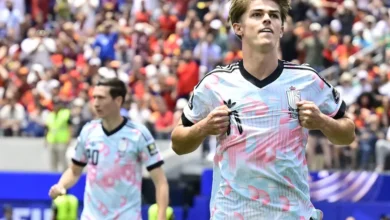
Rafiki Saïd: Standard Liège Manager Vincent Euvrard Weighs Options for Key Attacker Amidst Form Slump

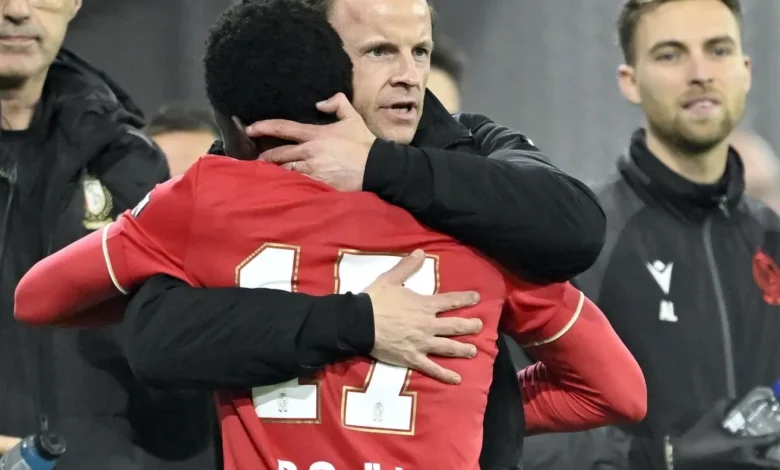
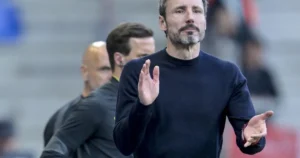
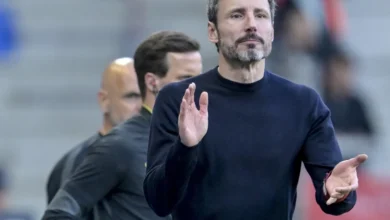
Standard Liège manager Vincent Euvrard is facing a critical decision regarding the starting lineup for Saturday’s crucial European Play-Off match against Charleroi. At the heart of this dilemma is the form of attacker Rafiki Saïd, a player who has been described as a "X-factor" for the club but is currently experiencing a significant dip in performance. Euvrard addressed the Comorian international’s situation extensively during a press conference on Thursday, revealing the tactical considerations and the underlying faith he holds in the player’s potential.
The upcoming fixture holds particular significance for Les Rouches. Having suffered a 2-0 defeat at the hands of Charleroi at the Mambourg stadium back in January, Standard will be looking to exact revenge. This third matchday of the Europe Play-Offs presents an opportunity to not only secure vital points but also to exorcise the memory of that earlier loss. Euvrard hinted at the possibility of making several changes to the squad that was defeated by Westerlo in their previous outing, and Saïd’s current form has undoubtedly placed him under scrutiny.
Saïd’s Current Form: A Statistical Overview
While Saïd’s defensive contributions are not the immediate focus of Euvrard’s deliberations, his offensive output has been a point of concern. In recent weeks, the winger has struggled to replicate his earlier season impact, failing to register goals or assists. This dry spell has led to questions about his guaranteed place in the starting eleven. Euvrard acknowledged this trend, stating, "It’s been a few weeks since he’s been decisive via an assist or a goal. In the last two matches, he created strong moments, but he missed them."
To contextualize Saïd’s current performance, it’s important to look at his broader contribution this season. Throughout the 2023-2024 Belgian Pro League campaign, Saïd has been a notable presence for Standard. His ability to break lines and provide moments of individual brilliance has been a hallmark of his play. However, the manager’s comments highlight a concerning pattern of missed opportunities, a critical factor in close-fought matches. Statistics from football analytics platforms, such as expected goals (xG) and key passes, would likely show a dip in Saïd’s efficiency in these recent encounters, despite potentially still being in positions to influence the game.
Euvrard’s Tactical Dilemma: Bench or Belief?
Euvrard outlined the two primary strategic avenues he is considering for Saïd. The first is to bench the player, a move intended to break a negative momentum. "Either you put him on the bench to cut off the bad momentum, or you let him continue," Euvrard explained. This approach recognizes the psychological impact of a slump and the potential benefits of a temporary respite.
The alternative is to persist with Saïd, a strategy rooted in the belief that his creative capacity will eventually lead to a breakthrough. "Because when you continue to create things as he does, you are never far from scoring," the manager asserted. This perspective emphasizes Saïd’s inherent talent and his proven ability to generate chances, even if the end product has been lacking. Euvrard’s statement, "When you continue to create things like he does, you are never far from scoring," is a testament to his understanding of attacking football, where sustained pressure and chance creation often precede goals.
Historical Impact and Undoubted Potential
Euvrard’s decision-making is also informed by Saïd’s past contributions to Standard’s success. The manager reminded reporters of the player’s crucial role throughout the season. "Let’s not forget what he is capable of. He must keep confidence in his qualities, because he has been very important for us this season and he has sometimes scored goals on his own, like against Antwerp after 16 seconds of play." This specific mention of the early goal against Antwerp serves as a powerful reminder of Saïd’s match-winning potential and his ability to seize critical moments. Such instances are vital for a player experiencing a confidence deficit.
The reference to the goal against Royal Antwerp on September 17, 2023, which occurred just 16 seconds into the match, is a potent illustration of Saïd’s explosive capability. This quickfire strike not only secured three points for Standard in a challenging fixture but also highlighted his ability to deliver under pressure and change the course of a game in an instant. This historical context is a crucial element in Euvrard’s assessment, as it suggests that Saïd’s current form might be a temporary aberration rather than a permanent decline.
"Nobody is Indispensable": A Pragmatic Approach to Squad Management
Despite Saïd’s proven track record, Euvrard adopted a pragmatic stance on his player’s indispensability. The manager pointed to the team’s recent success in matches where Saïd did not start. "On the other hand, we have won three of the four matches he did not start. This means that nobody is indispensable," he stated. This observation underscores a broader team philosophy at Standard: collective strength and the ability of any player to step up when called upon.
Euvrard’s analysis of the team’s performance without Saïd in the starting lineup provides valuable insight into the club’s tactical flexibility. The statistic that Standard secured victory in three out of four games Saïd missed from the outset suggests that the team possesses sufficient depth and tactical acumen to perform effectively even without their key attacker. This data point challenges the notion of over-reliance on individual players and reinforces the manager’s belief in the collective effort.
The manager continued to elaborate on the selection process, emphasizing the need to identify the eleven players best positioned to secure victory. "We must ask ourselves how we are going to win the next match and who are the eleven players most capable of starting. Knowing that the players on the bench can be the most important for winning the match in the last half hour." This statement highlights Euvrard’s forward-thinking approach, recognizing the significant impact that substitutes can have, particularly in the latter stages of a game. This demonstrates a well-rounded view of squad management, where the starting eleven is just one piece of the puzzle.
The Challenge of Consistency: "A Player of Breakaway, of Madness"
Euvrard also delved into the specific nature of Saïd’s playing style, identifying it as a potential source of his inconsistency. The winger is described as a "player of breakaway, of madness," a profile that often leads to spectacular highs but also unpredictable lows. "I don’t know if there is a problem in his head. But I think we must not forget that he cannot score or be decisive in every match. He is a player of breakaway, of madness too, and with these players, you often see top matches and less good ones."
This characterization suggests that Saïd’s game is inherently volatile. His explosive bursts and daring runs, while thrilling and effective at times, can also lead to moments of misjudgment or a lack of sustained engagement. This is a common trait among creative forwards who rely on instinct and flair. Euvrard’s acknowledgment of this dichotomy is crucial for managing expectations and understanding the player’s fluctuating impact.
A Look at Saïd’s Past to Inform the Future
To further address the issue of consistency, Euvrard drew upon Saïd’s history at French club Troyes. "At Troyes, he scored nine goals per season for three seasons, with four or five assists each time. Being decisive between 10 and 15 times over three seasons, while playing between 2000 and 2500 minutes, is not bad. Somewhere, he has consistency, but the difference between his best and his worst match is still too great."
This data from Saïd’s time at Troyes provides a concrete measure of his past performance. Scoring between 10 and 15 goals and assists per season over a three-year period, while playing a significant number of minutes, indicates a level of reliability and offensive contribution that Euvrard clearly values. However, the manager’s observation that "the difference between his best and his worst match is still too great" points to the core challenge: elevating his baseline performance and reducing the variance in his output. This analysis suggests that Saïd’s current struggles are not a reflection of a lack of underlying talent, but rather a challenge in consistently translating that talent into impactful performances week after week.
The Mental Aspect: Focus and Mindset
Beyond the tactical and statistical considerations, Euvrard touched upon the mental aspect of Saïd’s game. While the player might not always outwardly project unwavering commitment, Euvrard believes his desire is present. "He might not always give the impression that he wants to, but if you ask him, he will say he always wants to. It’s a question of focus, of mindset and of having the capacity to do the right things every time, and he lacks that from time to time," the manager concluded.
This diagnosis points towards an internal battle for Saïd, one that involves maintaining concentration and consistently making the correct decisions on the pitch. The ability to perform at a high level requires not just physical prowess and technical skill, but also a strong mental fortitude. Euvrard’s comments suggest that Saïd’s challenge lies in consistently accessing this mental strength, particularly during periods of pressure or when facing less prestigious opposition.
The Path Forward: A Decision Pending
Vincent Euvrard’s comprehensive analysis of Rafiki Saïd’s situation leaves the door open for multiple outcomes. While he did not definitively rule out a spell on the bench for the Comorian international, the manager also made it clear that he has not lost faith in the player’s abilities. The decision on Saturday will ultimately be guided by what Euvrard believes is best for the team’s immediate objective: securing a victory against Charleroi. The manager’s measured approach, acknowledging both Saïd’s strengths and weaknesses, underscores the complex nature of team management and the delicate balance between fostering individual talent and achieving collective success. The coming days will reveal whether Saïd will be given the chance to reignite his form from the outset or if a period of reflection from the sidelines is deemed necessary to break his current impasse.