Volkswagen Completes Compact Electric Lineup with the Global Debut of the ID. Cross Crossover SUV

The unveiling of the Volkswagen ID. Cross marks a pivotal milestone for the Wolfsburg-based automaker, effectively completing its strategic roadmap for the compact electric vehicle segment. Positioned as the rugged, more versatile sibling to the previously announced ID. Polo, the ID. Cross is designed to bridge the gap between urban hatchbacks and larger family SUVs, offering a blend of utilitarian design and zero-emission efficiency. With a price point approximately 3,000 euros higher than its hatchback counterpart, the ID. Cross justifies its premium through enhanced interior volume, increased ground clearance, and a suite of high-tier technological features, all while utilizing the proven mechanical architecture shared across the Volkswagen Group’s entry-level electric portfolio.
The Strategic Expansion of the MEB+ Platform
The ID. Cross is built upon the MEB+ platform, an evolution of the original Modular Electric Drive Matrix that underpinned the ID.3 and ID.4. This updated architecture is specifically engineered for smaller footprints while maximizing internal space through the use of highly integrated battery modules and compact electric motors. By finalizing the ID. Cross, Volkswagen now offers a comprehensive lineup of B-segment electric vehicles that includes the ID. Polo (hatchback), the Cupra Raval (performance-oriented), and the Skoda Epiq (value-driven utility).

While the ID. Polo serves as the spiritual and electric successor to the traditional Polo hatchback, the ID. Cross is aimed squarely at the "crossover" demographic—a market segment that has dominated European sales for the last decade. Measuring 4.15 meters in length, 1.79 meters in width, and 1.58 meters in height, the ID. Cross provides a commanding driving position and an aesthetic that mimics the popular T-Cross, yet it provides significantly more interior room due to the absence of a transmission tunnel and internal combustion engine components.
Engineering a Compact Powerhouse: Performance and Efficiency
The ID. Cross does not compromise on technical specifications despite its compact dimensions. Volkswagen has confirmed three distinct power levels to cater to varying consumer needs. The entry-level variant features an 85 kW (116 hp) motor, followed by a mid-tier 99 kW (135 hp) version. For enthusiasts or those requiring more robust highway performance, a top-tier 155 kW (211 hp) motor is available, providing the ID. Cross with acceleration figures that rival traditional hot-hatches.
Battery technology remains a cornerstone of the ID. Cross’s appeal. Consumers can choose between a 37 kWh battery pack, optimized for city commuting and weight reduction, or a larger 52 kWh pack designed for longer journeys. Under the WLTP (Worldwide Harmonized Light Vehicles Test Procedure) cycle, the 52 kWh version achieves a theoretical range of up to 427 kilometers. This range is particularly competitive in the B-SUV segment, placing the ID. Cross ahead of several key rivals in terms of efficiency-to-size ratio.

Charging infrastructure compatibility has also been prioritized. The vehicle supports DC fast charging at rates ranging from 90 kW to 105 kW, depending on the battery size. This allows for a 10% to 80% charge in approximately 23 to 24 minutes. For home charging, the onboard AC charger supports standard Wallbox speeds, ensuring that the vehicle can be fully replenished overnight.
Interior Innovation and the Return of Ergonomics
One of the most significant aspects of the ID. Cross’s interior design is Volkswagen’s response to consumer feedback regarding previous ID. models. Following the trend set by the ID. Polo and the refreshed ID.3 Neo, the ID. Cross features a cabin that balances digital sophistication with physical usability. While large, high-resolution displays dominate the dashboard for infotainment and driver data, Volkswagen has reintroduced physical buttons on the steering wheel and central console. This shift marks a departure from the touch-capacitive sliders that were criticized in earlier models for being difficult to use while driving.
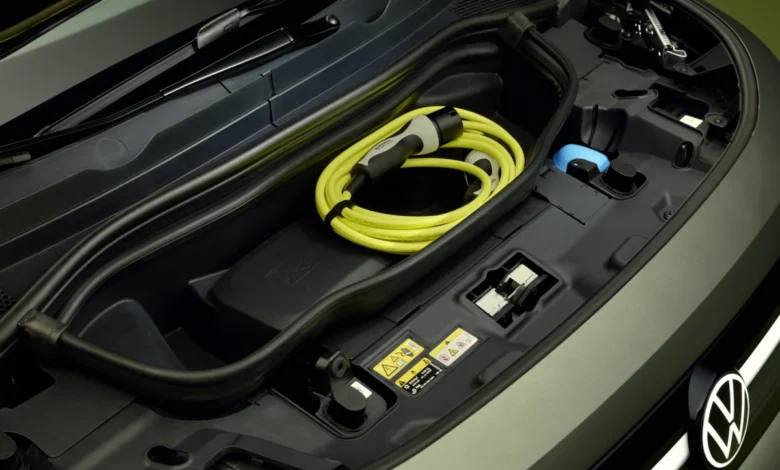
The practical advantages of the ID. Cross are evident in its cargo capacity. The vehicle boasts a 475-liter boot, which is notably 20 liters larger than its internal combustion engine counterpart, the VW T-Cross. In a move to maximize utility, Volkswagen has also included a 25-liter "frunk" (front trunk) specifically designed to house charging cables, preventing them from taking up valuable space in the rear or becoming soiled by luggage. Furthermore, the ID. Cross is rated for a towing capacity of up to 1,200 kilograms, a rare feat for a vehicle in this size class, making it a viable option for small trailers or bike racks.

Advanced Technology and Driver Assistance
Volkswagen is positioning the ID. Cross as a tech-forward leader in the compact segment. The vehicle incorporates "Travel Assist," a semi-autonomous driving system that combines adaptive cruise control with lane-keeping assistance to reduce driver fatigue on highways. Additionally, the ID. Cross is equipped with 360-degree camera systems and an advanced autonomous parking feature that can be operated remotely via a smartphone.
These features, typically reserved for premium D-segment vehicles or luxury SUVs, represent Volkswagen’s "democratization of technology" strategy. By offering high-level ADAS (Advanced Driver Assistance Systems) in a vehicle with a sub-30,000 euro starting price, the company aims to capture a younger, tech-savvy demographic while retaining older customers who value safety and ease of use.
Market Positioning and Pricing Strategy
The commercial rollout of the ID. Cross has already commenced in Germany, with other European markets expected to follow shortly. The pricing structure is designed to be tiered, ensuring accessibility while offering premium upgrades.

- The Trend Trim (Base Model): Expected to launch later with the 37 kWh battery, this version has a projected starting price of 27,995 euros. This places it in direct competition with the Renault 4 E-Tech and the Stellantis-group compact SUVs (such as the Jeep Avenger EV and Fiat 600e).
- The Life and Style Trims: These are the initial launch models, featuring the larger 52 kWh battery and higher equipment levels. Prices for these variants start at 36,525 euros (including VAT).
While Belgian pricing has yet to be finalized, industry analysts expect it to mirror the German structure closely, perhaps with slight adjustments based on local taxation and EV incentives. The 3,000-euro premium over the ID. Polo is seen by market experts as a calculated move to capitalize on the higher margins typically associated with the SUV body style.
Chronology of the ID. Compact Family Development
The journey to the ID. Cross began in 2021 with the debut of the ID. Life concept at the Munich Motor Show. While the concept’s boxy, minimalist design received mixed reviews, it established the groundwork for a front-wheel-drive MEB platform. By 2023, Volkswagen pivoted the design language toward the "ID. 2all" concept, which promised a more "timeless" and "approachable" look.
In early 2024, the group confirmed that its Spanish production facilities in Martorell and Pamplona would become the hub for these compact electric vehicles. The timeline for the ID. Cross has been accelerated to meet the rising demand for affordable EVs in Europe, particularly as Chinese manufacturers begin to increase their market share in the region.

Broader Impact and Industry Implications
The launch of the ID. Cross is more than just a new model release; it is a critical component of Volkswagen’s "Accelerate" strategy. As the European Union moves toward a 2035 ban on new internal combustion engine sales, the success of vehicles like the ID. Cross will determine if legacy automakers can maintain their volume leadership in a post-fossil-fuel era.
Industry analysts suggest that the ID. Cross will likely become the brand’s top-selling electric vehicle in Europe within its first two years of full production. Its balance of range, price, and SUV utility addresses the primary barriers to EV adoption for middle-income households. Furthermore, the shared development costs with Skoda and Cupra allow Volkswagen to achieve economies of scale that are difficult for smaller manufacturers to replicate.
By offering a vehicle that provides the practicality of a T-Cross with the future-proof technology of the ID. family, Volkswagen has positioned the ID. Cross as a cornerstone of the modern European automotive landscape. The completion of this compact family ensures that the brand has a presence in every major segment, from the entry-level urban commuter to the high-end ID.7 sedan, solidifying its commitment to a fully electrified future.
Related posts: