MG Expands Electric Portfolio with MG4 EV Urban and Seven-Seater S9 PHEV to Target European Mass Market

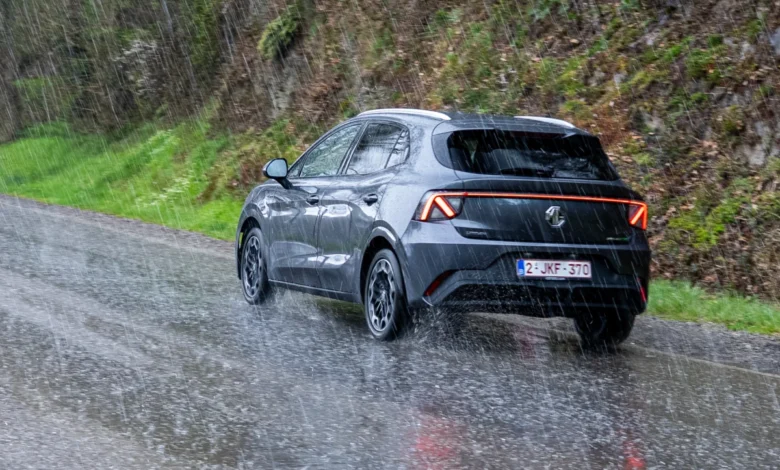
Since its re-entry into the European automotive landscape under the stewardship of SAIC Motor, MG has carved out a formidable reputation for delivering high-specification electric vehicles at price points that significantly undercut established legacy manufacturers. The MG4 hatchback has already established itself as a cornerstone of the brand’s success, particularly within the competitive fleet and corporate leasing sectors. Building upon this momentum, the Chinese-British manufacturer is now diversifying its lineup with the introduction of the MG4 EV Urban. While the nomenclature suggests a vehicle optimized primarily for the tight confines of metropolitan centers, a comprehensive evaluation through the undulating terrain surrounding Namur, Belgium, reveals a vehicle with capabilities that extend far beyond the city limits.

This strategic expansion comes at a pivotal moment for the European automotive industry. As the initial wave of early adopters of electric vehicles (EVs) transitions toward the mass market, the industry’s focus has shifted from high-performance flagship models to more pragmatic, affordable solutions. MG is positioning the MG4 EV Urban as a primary contender in this "democratization" of electric mobility. Despite sharing a nameplate with the standard MG4—which is itself slated for a mid-cycle facelift—the Urban variant represents a distinct engineering direction, utilizing a new architecture and a front-wheel-drive configuration tailored for accessibility and efficiency.
The E3 Architecture: A New Foundation for Compact Efficiency
Central to the MG4 EV Urban’s development is the adoption of the E3 platform. This modular blueprint was engineered specifically to maximize internal volume while maintaining a compact exterior footprint, a critical requirement for European B-segment and C-segment vehicles. By optimizing the arrangement of the battery cells and powertrain components, the E3 platform allows for a lower center of gravity and improved energy management compared to multi-energy platforms used by some competitors.

The vehicle is offered in two primary trim levels: Comfort and Premium. To cater to varying range requirements and budget constraints, MG provides two distinct battery capacities. The entry-level variant features a 43 kWh battery, while the higher-specification model utilizes a 54 kWh unit. According to WLTP testing cycles, these configurations provide a driving range of 325 kilometers, 405 kilometers, or 416 kilometers, depending on the specific trim and wheel size.
In a departure from the standard MG4, which utilizes a rear-wheel-drive layout to emphasize sporty handling characteristics, the MG4 EV Urban employs a front-mounted motor driving the front wheels. This shift is intentional; front-wheel drive is often perceived by the general public as providing more predictable handling in adverse weather conditions, such as rain or light snow, which are common in Northern and Central Europe. The motors produce either 149 hp (110 kW) or 160 hp (120 kW), outputs that are more than sufficient for both urban commuting and sustained motorway cruising.

Charging Infrastructure and Thermal Management
One of the most significant hurdles to EV adoption remains "range anxiety" and the perceived inconvenience of long charging times. MG has addressed this by ensuring the E3 platform supports high-speed DC charging. The MG4 EV Urban is capable of accepting a charge rate of up to 150 kW. This allows the 43 kWh battery to replenish from 10% to 80% in approximately 28 minutes, while the larger 54 kWh battery requires only 30 minutes for the same increment.
Furthermore, the vehicle’s thermal management system has been refined to maintain battery efficiency across a broader range of temperatures. This is particularly relevant for the European market, where winter temperatures can significantly impact EV performance. The inclusion of rapid charging as a standard feature, rather than an expensive option, reinforces MG’s strategy of providing "value-added" engineering.

Aesthetic Evolution: A "Cyberster" Influence
Visually, the MG4 EV Urban marks a departure from the sharp, aggressive lines that define the standard MG4. While the original design was lauded for its boldness, it was also polarizing. The Urban variant adopts a more fluid, organic design language that is arguably more aligned with contemporary European tastes. The surfaces are smoother, and the overall silhouette is less "edgy," aimed at appealing to a broader demographic, including families and older drivers.
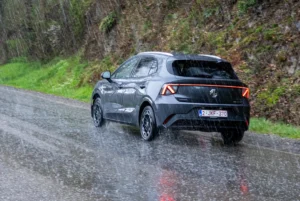
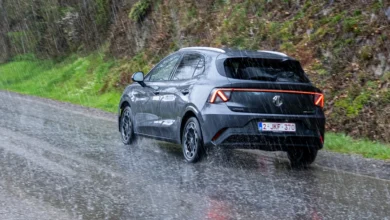
Despite the softer approach, the vehicle retains several signature MG design cues. The rear of the car features a subtle roof-mounted spoiler that aids aerodynamics. Most notably, the rear lighting signature draws direct inspiration from the MG Cyberster, the brand’s flagship electric roadster. The intricate LED patterns not only provide a high-tech appearance but also ensure a distinct visual identity on the road at night.

Interior Pragmatism and Cargo Versatility
The interior of the MG4 EV Urban reflects a philosophy of functional minimalism. Eschewing the over-complicated layouts found in some modern EVs, MG has opted for a pragmatic cabin that prioritizes ergonomics and ease of use. The materials used throughout the cabin feel robust and well-assembled, though the aesthetic remains decidedly somber with a heavy reliance on dark plastics and synthetic fabrics.
Technologically, the cabin is anchored by a 12.8-inch central touchscreen which handles infotainment, navigation, and vehicle settings. This is complemented by a 7-inch digital instrument cluster located directly in the driver’s line of sight. While the software interface is responsive, the long-term durability of the touch-sensitive controls and the overall interior plastics remains a point of observation for potential buyers.

Where the MG4 EV Urban truly excels is in its packaging. Despite a modest overall length of 4.40 meters and a wheelbase of 2.13 meters, the vehicle offers surprising interior volume. The cargo area is particularly impressive, providing a standard capacity of 577 liters. When the rear seats are folded down, this expands to 1,364 liters, making it one of the most versatile vehicles in its class. This level of utility challenges the notion that "urban" cars must be inherently cramped or impractical for weekend trips.
Driving Dynamics and Real-World Efficiency
During road testing in the Namur region, the MG4 EV Urban demonstrated a refined road manner. The steering has been calibrated with a slight weightiness that provides a sense of precision and stability, avoiding the overly light and "numb" feel that plagues many budget-conscious electric cars. This calibration allows the driver to navigate narrow city streets with confidence while maintaining a composed demeanor on high-speed bypasses.

A notable achievement during the test drive was the vehicle’s energy efficiency. In a mixed driving cycle encompassing city centers, rural roads, and highways, the MG4 EV Urban returned an average consumption of 15.6 kWh per 100 km. This figure is highly competitive and suggests that the official range figures are achievable in real-world conditions with sensible driving habits. However, one area identified for potential improvement is acoustic insulation; at higher speeds or on coarse road surfaces, road and wind noise become more prevalent in the cabin compared to more premium-priced rivals.
Market Positioning and the Semi-Solid State Future
The most compelling aspect of the MG4 EV Urban is its pricing structure. The entry-level 43 kWh model is positioned at €26,990 (including VAT), while the 54 kWh variants are priced at €30,990 and €32,990 respectively. For the fleet and professional market, MG has introduced a financial lease program starting at €299 per month. This pricing places MG in direct competition with upcoming "budget" EVs like the Citroën e-C3 and the Renault 5, while offering a larger vehicle with more standard equipment.

In a significant technological announcement, MG also confirmed that by the end of the year, the MG4 EV Urban will be among the first production vehicles to offer a semi-solid state battery option. This technology represents the "holy grail" of current EV development, promising higher energy density, improved safety, and faster charging cycles than traditional liquid-electrolyte lithium-ion batteries. The introduction of this technology in an affordable hatchback signifies SAIC’s intent to lead the market in technical innovation rather than just price.
MG S9 PHEV: The Seven-Seater Flagship
While the MG4 EV Urban targets the mass-market hatchback segment, MG is simultaneously addressing the needs of larger families with the MG S9 PHEV. Measuring nearly five meters in length, the S9 is the brand’s first seven-seater model utilizing plug-in hybrid technology.

The S9 is designed to offer a "lounge-like" experience, featuring a high level of standard equipment and advanced driver assistance systems. The dashboard is dominated by a dual-screen setup, featuring two 12.3-inch displays that provide a panoramic digital interface. Under the hood, the S9 pairs a 1.5-liter turbocharged gasoline engine with a substantial 24.7 kWh battery. This setup allows for an electric-only range of up to 100 kilometers, a figure that qualifies it for maximum tax benefits in several European jurisdictions and allows most daily commutes to be completed without using a drop of fuel.
On the road, the S9 prioritizes comfort over athleticism. Its significant mass and dimensions mean it is less agile than its smaller stablemates, but it excels as a long-distance cruiser. The transition between electric and gasoline power is handled smoothly by the onboard computer, though the engine can become audible under heavy acceleration when the battery is depleted.

Strategic Implications for the European Market
The dual launch of the MG4 EV Urban and the MG S9 PHEV illustrates MG’s "pincer movement" strategy in Europe. By attacking both the affordable entry-level segment and the large family SUV segment, MG is filling gaps left by European manufacturers who have struggled to balance production costs with competitive retail prices.
Industry analysts suggest that MG’s aggressive product rollout and technological integration (such as the semi-solid state batteries) are designed to solidify market share before potential trade barriers or increased competition from other Chinese OEMs like BYD or Xiaomi become more established. The success of these models will likely depend on MG’s ability to expand its service and dealership network to match its sales ambitions. For now, the MG4 EV Urban stands as a testament to how far the brand has come, offering a polished, efficient, and genuinely affordable gateway to electric motoring.
Related posts: