The highly anticipated summer transfer window is poised to see Belgian goalkeeper Mike Penders make a pivotal move to Chelsea, marking what is arguably the most significant challenge of his burgeoning career. The 20-year-old shot-stopper is set to join the London club, where he will face the immediate task of competing for the number one jersey against established Spanish international Robert Sánchez. This transition represents a substantial leap for Penders, who has been meticulously developing his game, drawing parallels with the trajectory of another prominent Belgian goalkeeper, Thibaut Courtois.
Belgian Prodigy’s Path to Stamford Bridge
In Belgium, a significant contingent of footballing minds believes Penders possesses the raw talent and mental fortitude to ascend to the elite echelon of world-class goalkeepers. His journey bears a striking resemblance to that of Thibaut Courtois, who also departed Genk at a young age to forge his career at Chelsea. Penders, a native of the Limburg region, has consistently impressed with his development, leading many to see him as the next Belgian talent to make a major impact in the Premier League.
The initial investment made by Chelsea in Penders was substantial, reportedly amounting to £17 million. This figure, at the time of his transfer, was considered remarkably high for a goalkeeper who had yet to make a senior competitive appearance for Genk. Gilbert Roex, a former goalkeeping coach at Genk, has openly acknowledged the surprise that this valuation generated within the club.
"Honestly, we thought it was an absolutely crazy sum for a goalkeeper who hadn’t played for the first team," Roex confessed in an interview with BBC Sport. "However, Chelsea had been monitoring him very closely for years. Just as they did with Courtois, they recognized his immense potential." This long-term scouting and belief in a player’s future capabilities underscore Chelsea’s strategic approach to talent acquisition, particularly in the goalkeeping department.
A Stellar Loan Spell and International Recognition
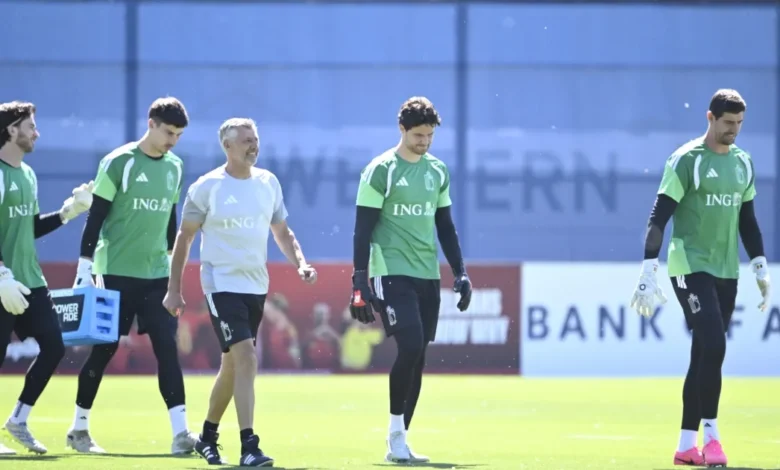
Penders’ most recent season saw him undertake a highly successful loan spell at RC Strasbourg in France. During his tenure with the Ligue 1 club, he firmly established himself as their undisputed starting goalkeeper, delivering a series of commanding performances that garnered widespread attention. These displays were instrumental in his call-up to the Belgian national team for the recent World Cup. This call-up allowed him to reunite with Thibaut Courtois, with whom he shared training sessions throughout the tournament, providing invaluable experience and insight.
Beyond his technical goalkeeping attributes, Penders has consistently been lauded for his exemplary personality and unwavering professionalism. These intangible qualities are widely regarded as crucial prerequisites for achieving and sustaining success at the highest levels of professional football. His maturity and dedication are seen as significant assets that will aid his adaptation to the intense environment of a top Premier League club.
Refining the Goalkeeping Arsenal: A Focus on Footwork
While Penders possesses a formidable array of skills, his game with his feet was once identified as a primary area for improvement. Roex recalls the early stages of Penders’ development at Genk, noting, "When Mike arrived at Genk at 13 years old, his technique with the ball at his feet was weak. He was very tall and struggled with coordination. However, I have rarely seen a player progress so spectacularly between the ages of 13 and 18."
This remarkable evolution, according to his former coach, is largely attributable to an exceptional mentality. "He worked incredibly hard every day and never felt the pressure. He reads the game exceptionally well and perfectly understands when he needs to come off his line or distribute the ball. This is what makes him so special." This combination of technical improvement driven by an unyielding work ethic and innate game intelligence paints a picture of a highly adaptable and driven athlete.
The Shadow of Courtois: A Benchmark for Success
Gilbert Roex, who played a role in the development of Thibaut Courtois at Genk, sees significant parallels between the two goalkeepers. "We have produced many good goalkeepers, including Koen Casteels, Nordin Jackers, and Martin Van der Voordt. But Mike, in my opinion, has the potential to reach the same level as Thibaut. His calmness transmits to the entire team, and for a goalkeeper, that is golden." This comparison, coming from someone who has nurtured elite talent, carries considerable weight and suggests a high ceiling for Penders’ career.
The tactical evolution of football has placed an increasing emphasis on goalkeepers being comfortable and effective with the ball at their feet, enabling them to initiate attacks and retain possession under pressure. Penders’ significant strides in this area, coupled with his natural shot-stopping abilities and commanding presence, position him as a modern goalkeeper well-suited to the demands of top-flight football. His ability to remain composed under duress and his intelligent decision-making are attributes that can significantly influence a team’s overall defensive structure and build-up play.
Chelsea’s Goalkeeping Strategy: A Competitive Landscape
Currently, Chelsea has placed its faith in Robert Sánchez as their primary goalkeeping option. Sánchez, who joined the club from Brighton & Hove Albion, brings Premier League experience and a solid reputation. However, the club’s investment in Penders signals a clear intention to foster internal competition and ensure a pipeline of talent for the future.
The arrival of Penders suggests a strategic long-term vision for Chelsea’s goalkeeping department. By acquiring him, the club has secured a young, highly-rated prospect who can be nurtured and developed within their system. The immediate challenge for Penders will be to demonstrate his readiness to challenge Sánchez for the starting role, a task that will require consistent performances in training and any opportunities he receives in matches.
The history of Chelsea Football Club is replete with examples of players who have thrived under intense competition. The club’s demanding environment often pushes players to new heights, and Penders’ reported mental fortitude and dedication will be put to the ultimate test. His progression will be closely monitored, not only by Chelsea’s coaching staff but also by the Belgian national team, which will be keen to see him continue his development.
Broader Implications for Belgian Football and Chelsea’s Future
Penders’ transfer to a club of Chelsea’s stature is a significant event for Belgian football. It reinforces the country’s reputation as a production line for world-class goalkeeping talent. His success could inspire a new generation of young Belgian keepers to pursue opportunities abroad and aim for the highest levels of the sport.
For Chelsea, the acquisition of Penders represents a calculated gamble on potential. If he can successfully integrate into the squad and eventually establish himself as a first-choice goalkeeper, it would represent a significant return on their investment and a testament to their scouting network. The club’s financial commitment, even at this early stage, underscores their belief in his long-term prospects.
The upcoming season at Stamford Bridge promises to be a compelling narrative, with Penders poised to challenge for a starting position. His journey from a promising youth prospect to a potential Premier League number one will be a closely watched storyline, filled with the anticipation of what this Belgian prodigy can achieve in one of the world’s most competitive football leagues. The pressure will undoubtedly be immense, but his previous development and Roex’s glowing endorsements suggest he is well-equipped to embrace this monumental challenge. His ability to seamlessly transition from a loan spell in France to the rigorous demands of English football will be a key indicator of his readiness for this next chapter. The integration into a new team, a new league, and a higher level of expectation will be a comprehensive test of his adaptability and resolve.