Club Brugge Star Hans Vanaken Declares His Team the Clear Title Favorites Ahead of Crucial Union SG Showdown

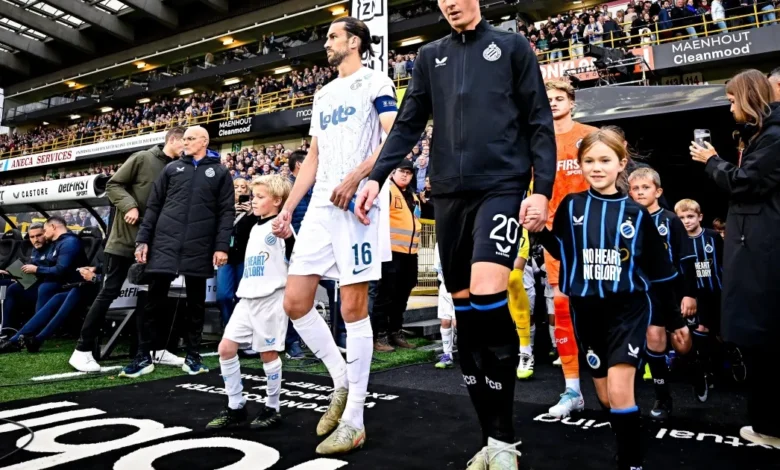
The Belgian First Division A is abuzz with anticipation as the top two contenders, Union Saint-Gilloise and Club Brugge, prepare for their inaugural clash in the Championship Play-Offs this Sunday. With the league standings tight after two rounds of intense competition, Union SG currently holds a slender one-point advantage over their rivals. However, speaking to DAZN, Club Brugge midfielder Hans Vanaken has boldly asserted his team’s superiority and their undeniable obligation to secure the league title, igniting pre-match rhetoric.
The Title Race Intensifies: Union SG’s Lead and Brugge’s Response
Union Saint-Gilloise has emerged as a surprise package in the Belgian top flight this season, consistently defying expectations. Their impressive run has seen them occupy the coveted top spot in the Championship Play-Offs, a testament to their cohesive unit and tactical astuteness. This current standing, however, is not a cause for complacency, especially with a direct confrontation against perennial powerhouses Club Brugge on the horizon. The one-point lead, while valuable, underscores the razor-thin margins separating these two clubs as they navigate the crucial final stretch of the season.
Club Brugge, a club with a storied history and a reputation for demanding silverware, finds itself in the unfamiliar position of playing catch-up. Despite their pedigree, they trail Union SG, a scenario that has clearly fueled Vanaken’s assertive pronouncements. The midfielder’s comments are not merely idle boasts; they represent a strategic attempt to shift the psychological pressure onto their opponents and to rally his own troops ahead of what is undeniably a pivotal fixture.
Vanaken’s Bold Assessment: Quality, Difference-Makers, and a Shift in Union’s Strategy
Hans Vanaken, a key figure for both Club Brugge and the Belgian national team, did not mince words when questioned about the perceived strengths of the two clubs. His core argument hinges on a perceived disparity in technical quality and the presence of players capable of decisive individual actions. "What does Union have that we don’t?" Vanaken posed rhetorically to DAZN. "We have better technical quality than Union and more players capable of making the difference," he stated with conviction. This assertion suggests a belief within the Brugge camp that their squad possesses a higher ceiling of individual brilliance, a factor they believe will ultimately prove decisive in the title race.
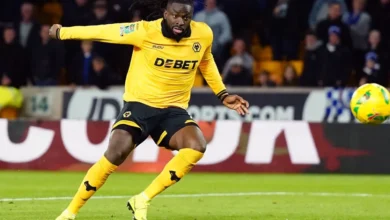
The Belgian international further elaborated on his assessment, drawing attention to Union SG’s reliance on star striker Victor Boniface. Boniface, who has enjoyed a stellar season, has been instrumental in Union’s offensive output and overall success. Vanaken’s observation that Union was "very dependent on Promise David [Boniface], the revelation of the season" highlights a potential vulnerability. The implication is that without Boniface’s consistent contributions, Union might struggle to adapt their attacking strategies, especially in the high-stakes environment of the play-offs. "Without him, they will have to find a different approach in the Play-Offs," Vanaken predicted, hinting at a tactical battle where Brugge might seek to exploit this perceived dependency.
The ‘Romantic’ Brugge vs. the ‘Pragmatic’ Union: A Tactical Divide?
While Vanaken is confident in his team’s technical prowess and their ability to overcome Union SG, he also identified a critical area where Club Brugge needs to improve: their on-field pragmatism. He candidly admitted that his team can be "too nice on the pitch." This self-criticism points to a potential stylistic clash between the two clubs. Vanaken described Club Brugge as "the romantic team that always seeks the footballing solution." This implies a preference for attractive, possession-based football, which, while admirable, can sometimes be susceptible to more direct and effective approaches.
In contrast, Vanaken characterized Union SG as being "more pragmatic in this regard." This suggests that Union, while perhaps not always playing the most aesthetically pleasing football, are more focused on achieving results through efficient and effective means. The presence of players within Union’s ranks who embody this pragmatic approach further solidifies Vanaken’s assessment of their tactical advantage in certain situations. This dichotomy between romanticism and pragmatism could be a defining narrative thread as the season unfolds, with the team that better balances flair with effectiveness likely to emerge victorious.
Historical Context and the Stakes of the Championship Play-Offs
The Belgian First Division A Championship Play-Offs are a unique and often dramatic format designed to create a thrilling conclusion to the domestic season. Introduced to enhance competitiveness and public interest, the system divides the league into play-off groups based on the regular season standings. The top teams compete for the league title, with points from the regular season often carried over, albeit halved, to create a tense and closely contested race.
This season, the stakes are particularly high. Union Saint-Gilloise, a club with a rich history but a long absence from the pinnacle of Belgian football, are on the cusp of a historic achievement. Their potential title win would be a fairy tale ending for a club that has undergone significant transformation in recent years. For Club Brugge, the pressure is different but equally intense. As a club accustomed to success and with a strong fan base, another season without the league title would be considered a significant underachievement. The rivalry between these two clubs, fueled by their current positions and contrasting philosophies, adds an extra layer of intensity to Sunday’s encounter.
Supporting Data and League Performance Metrics
To contextualize Vanaken’s claims, a look at some relevant data can be insightful. While precise technical quality metrics are complex and often debated, general performance indicators can offer a glimpse into team strengths.
- Goals Scored: Leading up to this fixture, both teams have demonstrated potent attacking capabilities. Union SG has often relied on a balanced attack, with multiple players contributing to their goal tally. Club Brugge, on the other hand, has historically possessed individuals capable of individual brilliance in front of goal. A deeper statistical analysis of shot conversion rates, key passes, and expected goals (xG) would provide a more granular understanding of their offensive efficiencies.
- Possession and Passing: Vanaken’s comments on "technical quality" might correlate with possession statistics and passing accuracy. While Union’s pragmatic approach might involve more direct play, Brugge’s "romantic" style could translate to higher possession figures and intricate passing networks. However, possession does not always equate to dominance or victory.
- Defensive Solidity: The ability to win the title is not solely dependent on offense. Defensive organization, tackles won, interceptions, and clean sheets are crucial metrics. The contrast between Union’s pragmatism and Brugge’s tactical approach could also manifest in their defensive strategies, with one potentially being more robust and the other more reliant on individual defensive efforts.
- Individual Impact: The "players capable of making the difference" Vanaken alluded to would likely be reflected in statistics such as dribbles completed, chances created, and decisive assists. Identifying these key individuals and their statistical output would support his argument about Brugge’s perceived edge.
Broader Implications and Potential Scenarios
The outcome of Sunday’s match and the subsequent Championship Play-Offs will have significant ramifications for both clubs and the Belgian football landscape.
- Union Saint-Gilloise’s Potential A league title for Union SG would be a monumental achievement, cementing their status as a major force in Belgian football and potentially inspiring other clubs to challenge the established order with innovative strategies and smart recruitment. It would also mark a significant shift in the traditional power dynamics of the league.
- Club Brugge’s Title Defense: For Club Brugge, securing the title would reaffirm their dominance and their ability to perform under pressure, silencing any doubts about their capacity to win crucial games. It would also maintain their position as a perennial contender and a benchmark for success in Belgian football.
- The "Pragmatism vs. Romanticism" Debate: The ongoing narrative of tactical approaches—Union’s pragmatism versus Brugge’s romanticism—could influence future coaching philosophies and player development strategies in Belgium. The success of either approach in this high-stakes scenario will be closely observed.
- Impact on European Qualification: Beyond the title, the final standings will determine qualification for lucrative European competitions like the UEFA Champions League and Europa League, impacting clubs’ financial resources and international prestige for the following season.
Official Responses and Media Reactions
While the primary source of the pre-match tension stems from Hans Vanaken’s statements, it is reasonable to infer that his words have been discussed within the Club Brugge hierarchy. Such public declarations from a senior player are often a reflection of the team’s mindset and a deliberate strategy to influence the psychological landscape of the competition.
From Union Saint-Gilloise’s perspective, Vanaken’s comments are likely to be met with a measured and focused response. Managerless in the interim period, the club’s coaching staff and players will likely emphasize their own strengths and their belief in their game plan. They will aim to use the perceived underdog status, amplified by Vanaken’s assertions, as motivation to prove their doubters wrong.
The Belgian media and football punditry are sure to dissect Vanaken’s remarks extensively, framing them as a key talking point leading up to the match. Expect analyses that delve into the statistical validity of his claims, tactical breakdowns of the potential differences between the two teams, and speculation about how this psychological warfare might play out on the pitch.
Conclusion: A Fixture Poised for Drama
Sunday’s encounter between Union Saint-Gilloise and Club Brugge is more than just a football match; it is a clash of narratives, philosophies, and aspirations. Hans Vanaken’s outspoken confidence has injected a potent dose of intrigue into an already high-stakes fixture. As the whistle blows at the Parc Duden, the question will not only be about which team possesses superior technical quality or tactical acumen, but also which side can best navigate the pressures of expectation, adapt to the challenges presented, and ultimately deliver the decisive blows required to claim supremacy in the Belgian First Division A. The battle lines have been drawn, and the stage is set for a captivating chapter in this season’s title race.