The landscape of obtaining a driving license in Belgium has undergone a profound transformation over the last decade, moving from a unified national system to a regionalized framework that reflects the country’s complex political structure. Since the regionalization of driving examinations, candidates must now navigate a labyrinth of differing procedures across Flanders, Wallonia, and the Brussels-Capital Region. This shift has introduced specific local requirements, such as mandatory first aid training in Brussels and varying "risk perception" tests, while simultaneously modernizing the administrative process through digital platforms like Beldrive. Furthermore, as the European Union moves toward a standardized credit card-style license, millions of Belgian drivers holding legacy paper documents face an impending deadline to update their credentials to avoid legal and logistical complications, particularly when traveling abroad.
The Foundation of Driver Eligibility: Health and Integrity
Before a candidate can even sit for a theoretical exam, the Belgian regulatory framework places a heavy emphasis on medical fitness and personal responsibility. It is strictly prohibited to attempt a driving examination if a candidate’s physical or mental health condition is incompatible with the safe operation of a motor vehicle. To enforce this, every applicant for a provisional driving license must sign a "declaration on honor." This document is not a mere formality; it is a legally binding statement of health. Providing false information on this declaration can lead to severe legal repercussions, including heavy fines and potential imprisonment if fraud is discovered following an accident or police check.
For individuals with disabilities or specific medical conditions that might impair their driving—such as epilepsy, severe diabetes, or cardiac issues—the process is more rigorous. These candidates are required to consult with a physician or the Center for Driving Ability and Vehicle Adaptation (CARA). CARA evaluates whether a driver can safely operate a vehicle, often recommending specific vehicle modifications (such as hand-controlled throttles or steering aids) that must be noted on the license. This emphasis on medical transparency is a cornerstone of Belgium’s road safety strategy, aiming to ensure that every driver behind the wheel is physically capable of handling the demands of modern traffic.
The Theoretical Examination: A Strict Threshold for Success
The journey toward a Category B license officially begins at age 17 with the theoretical exam. While the material can be mastered through self-study or formal classes at a driving school, the examination standards are high. Candidates must score at least 41 out of 50 points to pass. However, the scoring system is weighted to penalize dangerous ignorance: while a standard error results in the loss of one point, a "severe infraction" results in an immediate deduction of five points. Consequently, committing just two severe infractions—such as running a red light, ignoring a stop sign, or exceeding the speed limit—results in an automatic failure.
Crucially, the regionalization of the process has created a strict geographical boundary for testing. A candidate is legally prohibited from taking their theoretical exam in one region (for example, Brussels) and their practical exam in another (for example, Leuven in Flanders). This rule was implemented to prevent "exam shopping," where candidates might seek out regions perceived to have easier testing standards. The exams must be conducted in the official language or languages of the region: Dutch in Flanders, French or German in Wallonia, and French or Dutch in Brussels.
Training Pathways: The Balance of Cost and Competence
Once the theory is mastered, candidates face a choice between professional instruction and "free path" training (self-study with a guide). Professional driving schools offer the most structured environment, utilizing instructors trained to pedagogical standards and vehicles equipped with dual controls. However, this path is costly, with comprehensive packages often approaching €2,000.
The "free path" remains a popular, more affordable alternative, allowing a candidate to learn from a family member or friend. However, this method requires a high degree of trust and patience, as the vehicle usually lacks dual pedals, increasing the risk during early lessons. In recent years, a hybrid approach has emerged as the gold standard: beginning with basic professional instruction to learn vehicle control, followed by extensive practice via a provisional license to build experience.
Digital Modernization: The Rise of Beldrive
In a significant move toward e-government, the Belgian federal government launched the Beldrive application in October 2022. This platform allows candidates to apply for a provisional driving license (specifically the M18, which allows driving without a guide) online. This digital shift aims to reduce the administrative burden on municipal offices and streamline the transition from student to driver. While the platform currently focuses on specific license types, the long-term goal is to migrate all driving license applications to this digital ecosystem, reflecting a broader European trend toward paperless administration.
The Risk Perception Test and Regional Specifics
A relatively recent addition to the Belgian licensing process is the mandatory risk perception test. This computer-based assessment evaluates a candidate’s ability to identify potential hazards on the road in real-time. It must be successfully completed before a candidate can obtain certain provisional licenses or sit for the final practical exam.
The Brussels-Capital Region has taken safety requirements a step further. Since November 2018, all candidates in Brussels must complete a mandatory first aid course. Provided by the Red Cross, this training includes an individual theoretical module followed by a three-hour practical session. This initiative is based on the "Golden Hour" principle—the idea that immediate intervention by bystanders can significantly increase the survival rate of road accident victims.
The Practical Examination: Final Hurdles
To qualify for the practical exam, a candidate must be at least 18 years old and have completed the required practice period (which varies between 3 and 36 months depending on the provisional license type). The exam is conducted at an authorized center and involves both maneuvers and a drive on public roads.
There are several technical pitfalls candidates must avoid:
- Vehicle Requirements: The exam vehicle must have at least three seats and be in a clean, roadworthy condition.
- The Automatic Restriction: If a candidate takes the exam in a car with an automatic transmission, their license will be restricted to automatic vehicles only. To drive a manual car, they must retake the practical exam in a manual vehicle.
- Failure Consequences: If a candidate fails the practical exam twice, they are legally required to undergo at least six hours of professional instruction at a driving school before they can attempt the exam again.
Administrative Evolution: The 2033 Deadline for Paper Licenses
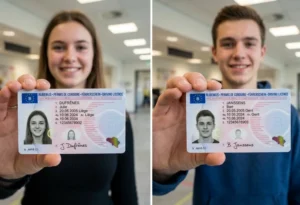
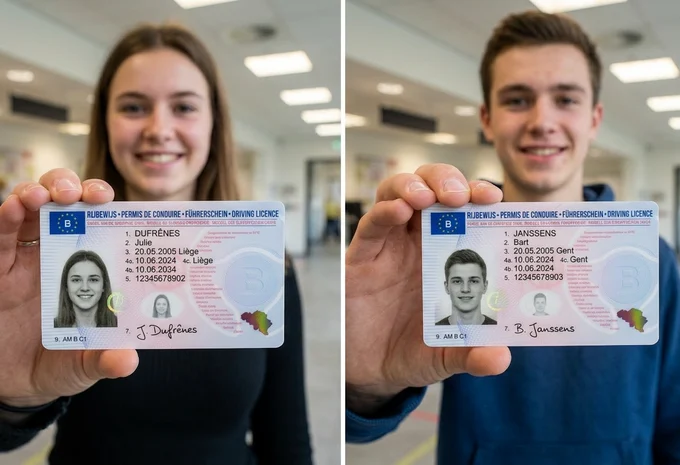
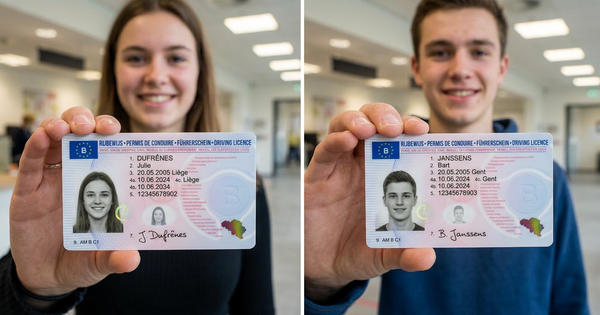
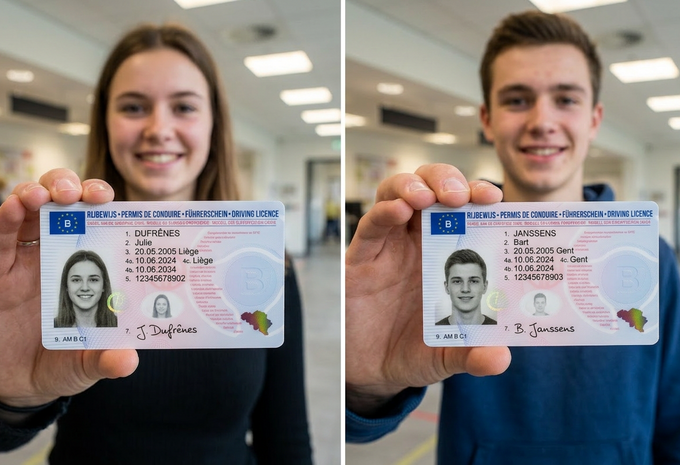
One of the most pressing issues for the broader Belgian driving public is the phasing out of the traditional "pink paper" licenses. While these documents were historically considered valid "for life," EU Directive 2006/126/EC has mandated a transition to a standardized, secure credit card format. In Belgium, all paper licenses must be replaced by 2033.
The newer plastic licenses have a 10-year administrative validity. This cycle ensures that the photograph on the document remains a current likeness of the holder and allows for the integration of updated security features to prevent forgery. While the paper license remains legally valid within Belgium for the time being, it is increasingly becoming a liability abroad. Many international car rental agencies and foreign police forces are unfamiliar with the three-part Belgian paper document, leading to disputes or denials of service. Drivers with damaged paper licenses or photos that no longer resemble them are strongly encouraged to proactively exchange them at their local municipality for a fee ranging from €20 to €35.
The Missing "Points License" and Future Outlook
Despite years of political debate and the creation of a legal framework, Belgium remains one of the few European countries without a "points-based" driving license. While the legislation for such a system exists, the necessary executive orders to implement it have been stalled for years. Proponents argue that a points system would provide a clear, cumulative deterrent against repeat offenders, while critics point to the administrative complexity of managing such a database across regional lines.
As of 2024, the focus remains on stricter enforcement of existing laws and the integration of technology. The "test year" for new drivers—during which any serious infraction can lead to an immediate revocation of the license—serves as a probationary period designed to instill safe habits in the most at-risk demographic.
Conclusion: A System in Flux
The Belgian driving license system is a microcosm of the country’s wider administrative philosophy: a blend of regional autonomy, European standardization, and a gradual embrace of digital technology. For the individual, obtaining a license is no longer a simple rite of passage but a complex regulatory journey that requires careful planning, medical honesty, and an awareness of the geographical boundaries of the law. As the 2033 deadline for paper licenses approaches and digital platforms like Beldrive expand, the era of the "lifetime" paper license is firmly coming to an end, replaced by a more regulated, renewed, and rigorously tested standard of driving.
Related posts: