Saint-Trond Welcomes Ryotaro Araki as New Number Ten, Facing a Crucial Off-Season Amidst European Aspirations

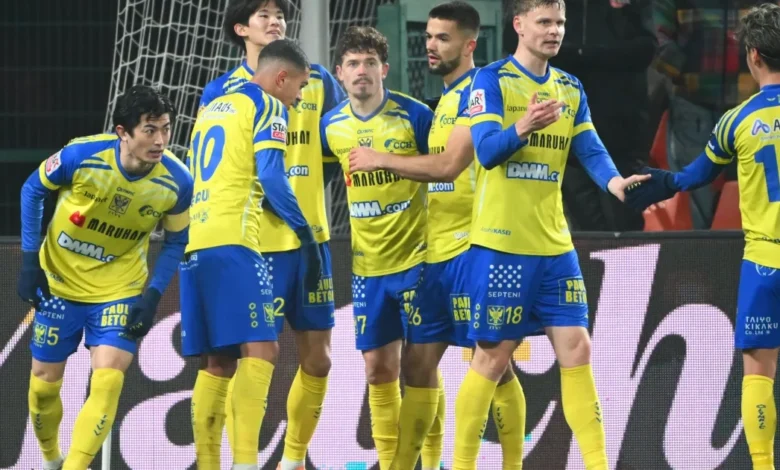
Saint-Trond VV, a club renowned for its strategic player development and increasingly successful integration of Japanese talent, has officially announced the acquisition of Ryotaro Araki, a dynamic attacking midfielder who will don the coveted number ten jersey. This significant signing comes at a pivotal moment for the Belgian Pro League outfit, as they prepare for a demanding Europa League playoff campaign at the close of August and navigate a substantial squad overhaul. The arrival of Araki signals a deliberate effort by the club to inject fresh creativity and attacking prowess into their lineup, aiming to build upon their impressive third-place finish in the previous season.
The departure of several key players from Saint-Trond’s spine has created a considerable void, necessitating strategic reinforcements. Head coach Wouter Vrancken, a pivotal figure in the team’s recent success, has also moved on, leaving a leadership vacuum on the bench. Among the prominent players who have bid farewell to the Stayen stadium are Keisuke Goto and Rihito Yamamoto, both of whom have sought opportunities in the highly competitive German Bundesliga. Their transitions underscore the growing reputation of Saint-Trond as a stepping stone for emerging talent seeking to test their abilities in Europe’s top leagues.
The most significant departure, however, from an attacking perspective, is that of Ryotaro Ito. Ito, who became a talismanic figure for Saint-Trond, delivered an outstanding season, contributing ten goals and six assists. His intelligent playmaking, vision, and ability to unlock defenses made him indispensable. While his next destination remains undisclosed, his performance has undoubtedly positioned him for a significant step up in his career, with many anticipating a move to an even more prominent European league. The task of filling the creative void left by Ito falls squarely on the shoulders of his namesake, Ryotaro Araki.
A New Ryotaro for a New Era
The announcement of Ryotaro Araki’s arrival, made public by Saint-Trond earlier this morning via their official website and social media channels, marks the club’s latest foray into the Japanese football market. The 24-year-old midfielder joins from Kashima Antlers, a storied club in the J1 League, bringing with him a wealth of experience and a reputation for flair. Araki’s transition to Belgium is not entirely uncharted territory, as he is already familiar with several of his new Japanese teammates at Saint-Trond. He shared the dressing room with them during the Paris Olympic Games two years prior, a testament to the strong network of Japanese talent the club has cultivated.
Takayuki Tateishi, the CEO of STVV, expressed considerable enthusiasm about the signing, highlighting Araki’s specific attributes that align with the club’s tactical ambitions. "Ryotaro is a player who is fast, possesses excellent vision, and has a great dribbling ability," Tateishi stated in the official club release. "Thanks to his exceptional passes, he knows how to find spaces and put his teammates in a scoring position. Add to that his sense of goal, and you have the ideal number ten." This endorsement from the club’s leadership underscores the high expectations placed upon the new recruit, positioning him as the creative lynchpin of the team’s offensive strategies.
Bridging the Gap: From Ito’s Legacy to Araki’s Promise
The comparison between Ryotaro Araki and his predecessor, Ryotaro Ito, is inevitable and will likely be a recurring narrative throughout the upcoming season. Ito’s departure represents a significant loss in terms of both statistical output and the intangible impact he had on the team’s attacking fluidity. His ability to dictate the tempo of the game, his precise passing range, and his knack for scoring crucial goals were instrumental in Saint-Trond’s ascent. Ito’s statistical contribution of 10 goals and 6 assists in the previous season placed him among the league’s elite playmakers, a benchmark that Araki will be measured against.
Araki’s background at Kashima Antlers provides a solid foundation for his European adventure. The J.League is recognized for its technical proficiency and tactical discipline, and players graduating from its ranks often possess a well-rounded skill set. His experience in a competitive environment like Kashima Antlers suggests he is well-equipped to adapt to the physical demands and tactical nuances of European football. Furthermore, his familiarity with some of his new colleagues from the Olympic Games could facilitate a smoother integration process, allowing him to contribute effectively from the outset.
The club’s strategic focus on Japanese talent is a well-documented aspect of their recruitment policy. This approach has yielded considerable success, with players like Ito and Yamamoto becoming integral parts of the team. The rationale behind this strategy often involves a shared footballing philosophy that emphasizes technical skill, intelligent movement, and a strong work ethic, qualities that are highly valued in the modern game. By continuing to tap into the Japanese market, Saint-Trond aims to maintain a consistent identity and a pipeline of skilled players capable of elevating their performance.
Araki’s Ambitions: A New Chapter in Belgian Football
Ryotaro Araki himself has expressed palpable excitement and a clear sense of purpose regarding his move to Saint-Trond. In a statement released by the club, he conveyed his eagerness to embark on this new chapter of his career. "I am extremely happy to sign for this wonderful club," Araki stated. "I will do everything in my power to continue to develop here and contribute significantly to the success of STVV. Through my goals and decisive passes, I want to win the hearts of the supporters. Let’s write history together, in the league and in Europe."
His words reflect a player who is not only motivated by personal growth but also by a deep desire to make a tangible impact on his new team’s fortunes. The mention of "writing history together, in the league and in Europe" speaks volumes about his ambition and the high regard he holds for Saint-Trond’s aspirations. The prospect of competing in European club competitions, even through the playoff route, presents a significant opportunity for Araki to showcase his talents on a larger stage and further enhance his burgeoning reputation.
The CEO’s description of Araki as a player who can "find spaces and put his teammates in a scoring position" directly addresses the creative needs of a team that has seen key playmakers depart. His ability to dribble and his goal-scoring instincts further suggest that he is a multifaceted attacking threat, capable of both creating chances for others and finishing them himself. This versatility is crucial for a team looking to maintain its competitive edge and adapt to different tactical approaches from opponents.
The Broader Implications: Europa League and the Future of STVV
The timing of Araki’s signing is particularly significant given Saint-Trond’s upcoming Europa League playoff campaign. The club’s third-place finish in the previous season was a remarkable achievement, and securing a spot in European competition represents a major milestone. However, the challenge of competing against stronger, more established European sides is substantial. The departures of key players, coupled with the need for tactical adjustments under a new head coach, present a complex landscape.
The arrival of Ryotaro Araki, therefore, is not merely a squad addition but a strategic investment aimed at bolstering the team’s attacking potency and creative output precisely when it is needed most. His ability to complement the existing squad and potentially inspire new levels of performance could be a decisive factor in their European aspirations. The club’s leadership will be looking to Araki to provide the spark that can ignite their European dream and ensure they can compete effectively on multiple fronts.
The success of Araki’s transfer will be closely watched, not only by Saint-Trond supporters but also by those in the wider football community who have taken note of the club’s astute recruitment strategies. His performance will serve as a barometer for the club’s continued ability to identify and integrate top-tier talent from international markets. The expectation is that he will seamlessly transition into the team, contributing goals, assists, and the creative impetus required to navigate the challenges ahead.
The journey of Ryotaro Araki at Saint-Trond is poised to be a captivating narrative, one that will unfold over the coming months and seasons. As he steps into the footsteps of his predecessor and embraces the responsibility of the number ten jersey, he carries the hopes of a club aiming to solidify its position as a formidable force in Belgian football and make a lasting impression on the European stage. His performance will undoubtedly be a key factor in determining whether Saint-Trond can build upon its recent successes and achieve its ambitious long-term goals. The coming weeks, particularly the Europa League playoffs, will offer the first crucial insights into the impact of this significant Japanese acquisition.