The Compact Revolution: Firefly and Kia EV2 Challenge the Status Quo of Electric Vehicle Design and Interior Space

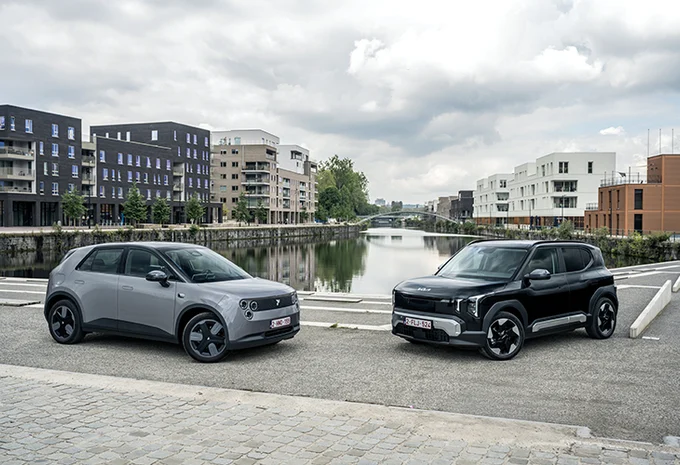
The automotive industry has long promised that the transition to electric mobility would fundamentally rewrite the rules of vehicle architecture and design. In theory, the shift from bulky internal combustion engines and complex transmission tunnels to compact electric motors and floor-mounted battery packs should have ushered in an era where cars become smaller on the outside while offering unprecedented cabin volume. However, the reality of the market has proven more complex, as consumer psychology often links physical size with social status and prestige. While buyers of luxury sedans remain hesitant to trade their imposing road presence for the efficient packaging of an electric mid-sized car, the entry-level segment is witnessing a genuine revolution. In this competitive landscape, two new protagonists—the Nio-backed Firefly and the Kia EV2—are emerging as the primary challengers to the traditional notion that a small footprint must equate to a cramped interior.
The Architectural Promise of Electric Platforms
The core premise of the electric vehicle (EV) revolution was built upon the "skateboard" platform. By placing the heavy battery pack in the floor and moving the wheels to the extreme corners of the chassis, engineers theoretically gained the freedom to maximize the wheelbase. A longer wheelbase relative to the total length of the car directly translates to more legroom and a more airy cabin feel. This is the "Tardis effect" that many early EV proponents championed: a vehicle that is larger on the inside than it appears from the outside.
In the premium segments, this advantage has often been sidelined by the "prestige gap." A buyer accustomed to the five-meter length of a traditional executive saloon often views the shorter overhangs and compact dimensions of a dedicated EV as a step down in perceived value, regardless of the actual interior dimensions. However, in the B-segment and entry-level markets, the priorities shift dramatically. Here, the "wallet speaks," and the ability to offer the utility of a family hatchback within the footprint of a city car represents a significant competitive advantage.
Firefly and Kia EV2: The New Benchmarks
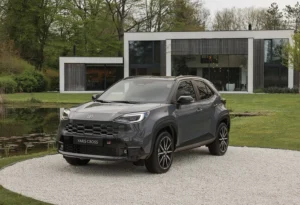
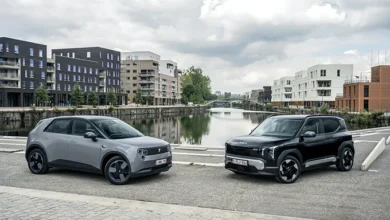
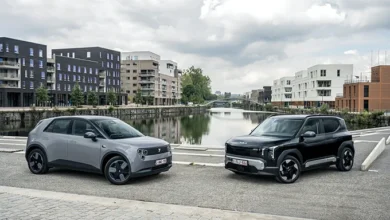
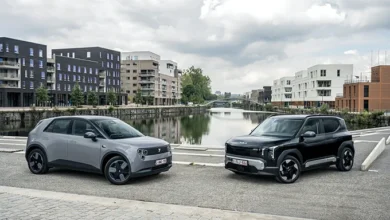
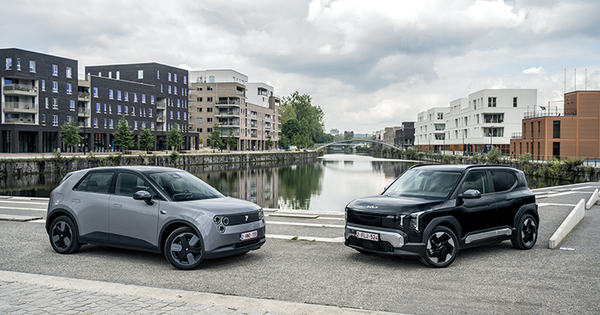
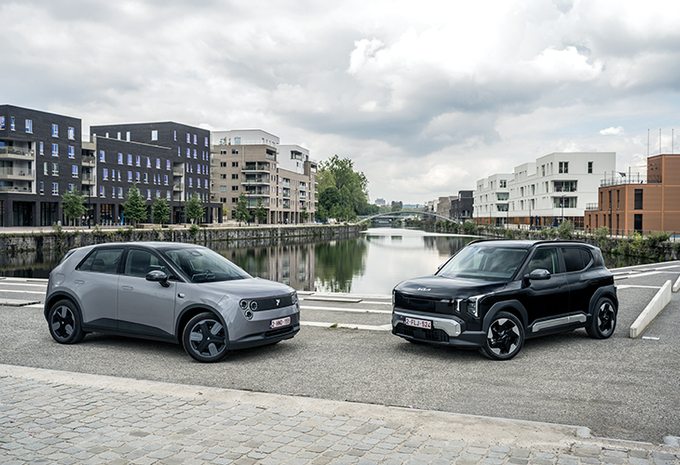
The Firefly—a sub-brand developed by the Chinese EV specialist Nio—and the Kia EV2 represent the cutting edge of this "compact yet cavernous" philosophy. Both vehicles are designed to sit at the lower end of the pricing spectrum, likely targeting the crucial €20,000 to €25,000 bracket, yet they aim to offer interior space that rivals vehicles from the segment above.
On paper, both the Firefly and the Kia EV2 are barely larger than a Renault 5 or a Volkswagen Polo in terms of their exterior dimensions. Yet, early engineering data and prototypes suggest that their interior volume will be comparable to that of a Renault Megane E-Tech or even a Volkswagen ID.3. This achievement is not merely a marketing claim but a result of aggressive "packaging" engineering. By utilizing dedicated electric platforms—Nio’s new small-car architecture and a condensed version of Kia’s E-GMP (Electric Global Modular Platform)—these manufacturers have eliminated the compromises inherent in "multi-energy" platforms that must accommodate both engines and batteries.
A Chronology of the Affordable EV Race
The development of the Firefly and Kia EV2 did not happen in a vacuum. It is the result of a multi-year shift in the global automotive strategy toward democratizing electric mobility.
- 2021-2022: The High-End Phase: Most manufacturers focused on high-margin SUVs and luxury sedans to offset the high costs of early battery technology.
- 2023: The Realization of the Gap: Market data showed a significant "missing middle." While early adopters bought expensive EVs, the mass market remained tethered to internal combustion engines (ICE) due to the lack of affordable, practical electric alternatives.
- Late 2023: The "EV for All" Strategy: Kia officially announced its intention to expand its EV lineup downward, moving from the flagship EV9 and mid-sized EV6 to the more accessible EV3, and eventually the EV2. Simultaneously, Nio confirmed the creation of "Firefly" to tackle the European B-segment.
- 2024: The Competitive Response: The unveiling of the Citroën ë-C3 and the Renault 5 E-Tech set the stage. These cars proved that a sub-€25,000 EV was viable, putting pressure on Kia and Firefly to deliver superior space-to-footprint ratios.
- 2025-2026 (Projected): The market launch of the Kia EV2 and Firefly models in Europe, marking a critical turning point for urban mobility.
Technical Data and Packaging Efficiency
To understand how these vehicles achieve their interior dimensions, one must look at the specific technical trade-offs being made. The Firefly is expected to utilize Lithium Iron Phosphate (LFP) battery technology. While LFP batteries are less energy-dense than traditional Nickel Manganese Cobalt (NMC) cells, they are more durable and significantly cheaper to produce. By integrating these cells directly into the chassis (Cell-to-Pack technology), Firefly engineers can lower the floor of the car, providing more vertical space for passengers.
Kia’s EV2 is expected to follow a similar path. By utilizing a simplified version of the 800-volt architecture found in the EV6, or more likely a cost-effective 400-volt system, Kia can maintain fast-charging capabilities while keeping the powertrain components compact. The removal of the front-mounted combustion engine allows the dashboard to be pushed forward, expanding the "cockpit" area and providing rear-seat passengers with legroom typically found in C-segment vehicles.

Estimated Comparison Table:
| Feature | Traditional B-Segment (ICE) | Kia EV2 / Firefly (Estimated) | Segment C (Reference) |
|---|---|---|---|
| Length | ~4,050 mm | ~4,100 mm | ~4,350 mm |
| Wheelbase | ~2,550 mm | ~2,750 mm | ~2,700 mm |
| Rear Legroom | Standard | Enhanced | Generous |
| Drivetrain | Front Engine | Floor Battery/Rear or Front Motor | Mixed |
Strategic Implications for the European Market
The arrival of the Firefly and Kia EV2 carries heavy implications for European automakers. For decades, the "Big Three" of the European small car market—Volkswagen, Stellantis, and Renault—have dominated based on brand loyalty and manufacturing scale. However, the Firefly represents a direct challenge from China, backed by Nio’s sophisticated software ecosystem and potential battery-swapping infrastructure. If Firefly can deliver a car that is easier to park than a Golf but roomier than a T-Roc, it could bypass the traditional barriers to entry for foreign brands.
Kia, on the other hand, is leveraging its established reputation for reliability and its "Opposites United" design language. The South Korean manufacturer has already proven with the EV6 and EV9 that it can compete at the top of the market. The EV2 is a strategic move to capture the volume market before European competitors can fully scale their own affordable EV platforms.

Official Responses and Industry Sentiment
While official statements from Nio regarding Firefly remain guarded as the brand nears its European debut, Nio’s President, Qin Lihong, has previously emphasized that the sub-brand will meet the highest European safety standards while maintaining a "fun and compact" character. The goal is to provide a "premium experience in a small package," suggesting that Firefly will not merely be a budget brand but a lifestyle choice for urban professionals.
Kia’s leadership has been more vocal about their "EV for all" vision. During the Kia EV Day, executives highlighted that the EV2 is a crucial pillar in reaching their global sales target of one million EVs by 2026. "The EV2 is designed specifically for the European market, where agility and space efficiency are paramount," stated a Kia spokesperson. "It is about bringing the technology and design of our flagship models to a segment that has been underserved by the electric transition."
Analysis: The End of the "Status-Size" Correlation?
The success of the Firefly and Kia EV2 may finally break the link between a vehicle’s external dimensions and its perceived utility. As urban centers become more congested and parking becomes a premium commodity, the value proposition of a car that is "small on the outside, big on the inside" becomes undeniable.

However, a challenge remains in the realm of aesthetics. To achieve such significant interior volume, these cars often adopt a more upright, "boxy" silhouette, which can clash with traditional aerodynamic or sporty design cues. The industry will be watching closely to see if consumers prioritize the pragmatic benefits of a spacious cabin over the sleek, elongated profiles that have historically defined automotive beauty.
Future Outlook
As we move toward the latter half of the decade, the Firefly and Kia EV2 will serve as a litmus test for the industry. If these models succeed, they will likely trigger a wave of "me-too" designs from competitors, leading to a new generation of vehicles that prioritize human-centric packaging over traditional engine-centric silhouettes.
The battle for the "bottom of the market" is, in many ways, more technologically and strategically demanding than the battle for the top. It requires a mastery of cost control, battery chemistry, and architectural efficiency. In the duel between Firefly and Kia, the ultimate winner will be the consumer, who finally gains access to electric vehicles that do not require a sacrifice in comfort or practicality in exchange for a smaller environmental footprint and a more manageable size in the urban jungle. For the first time, the "theory" of the spacious compact EV is becoming a tangible, road-ready reality.
Related posts: