Vitor Bruno’s Europa League Debut Ends in Disappointment as Anderlecht Settles for a Draw Against Hammarby

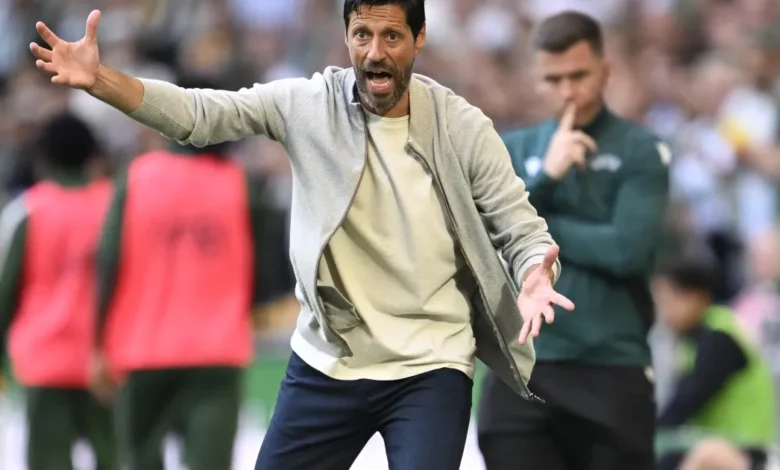
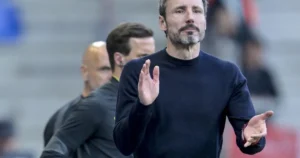
Vitor Bruno’s eagerly anticipated debut as the new head coach of RSC Anderlecht concluded with a frustrating 1-1 draw against Swedish side Hammarby IF in the second qualifying round of the Europa League. While the Portuguese tactician harbored hopes of a victorious start, the reality on the pitch proved to be a testament to the unpredictable nature of European football, leaving Anderlecht with work to do in the second leg. The match, held at the Hammarby Arena, saw the Belgian giants initially seize control but ultimately concede a late equalizer, a scenario that underscored both the team’s potential and the areas requiring immediate attention.
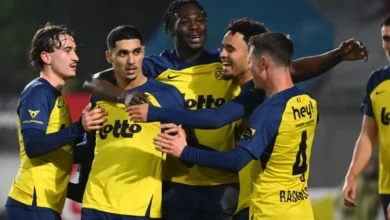
The early stages of the encounter offered a promising glimpse of what Anderlecht could achieve under Bruno’s guidance. In the fifth minute, a moment of individual brilliance provided the breakthrough. Danylo Sikan, a Ukrainian forward who has been a bright spark for the team, unleashed a spectacular free-kick that found the back of the net, sending the traveling Anderlecht supporters into raptures. This early lead suggested that the team was well-positioned to secure a crucial away win, a result that would have provided a significant morale boost for Bruno and his squad.
For the majority of the match, Anderlecht appeared to be managing the game effectively, defending their slender advantage with a disciplined approach. Their defensive organization, a key focus for any new coach, seemed to be holding firm against the attacking endeavors of Hammarby, who were themselves in the midst of their domestic league season and thus possessed a greater level of match fitness. The Swedish club, known for its passionate fanbase and attacking style, found it difficult to break down the well-drilled Anderlecht backline for extended periods.
However, the complexion of the game shifted dramatically in the latter stages, primarily due to a red card incident involving Nathan Saliba. In the 78th minute, Saliba was shown a second yellow card for a foul, reducing Anderlecht to ten men. This dismissal, occurring with less than fifteen minutes remaining, created a tangible shift in momentum. The numerical disadvantage inevitably put Anderlecht under increased pressure, forcing them to defend deeper and with greater intensity.
It was in this period of adversity that Hammarby found their lifeline. With the clock ticking down towards the final whistle, Frank Junior Adjei capitalized on the increased pressure, scoring the equalizer in the 89th minute. The goal, a late sucker punch for Anderlecht, meant that what had been a lead within touching distance for much of the match had evaporated, leaving them with a single point from their opening European fixture. The disappointment was palpable among the Anderlecht players and staff as the final whistle blew, signaling a draw that felt more like a defeat.
Vitor Bruno’s Initial Reaction: A Mix of Disappointment and Pride
Following the match, head coach Vitor Bruno expressed his clear disappointment with the outcome, a sentiment that resonated with the club’s supporters. "I am very disappointed, primarily," Bruno stated in his post-match press conference, as reported by Het Nieuwsblad. "Even with ten men, we were in control towards the end, but then we conceded that avoidable goal. That’s football. However, I am very proud of our performance after only five weeks of preparation against a team that is already in full competitive rhythm. Hammarby is, after all, the second-best team in Sweden."
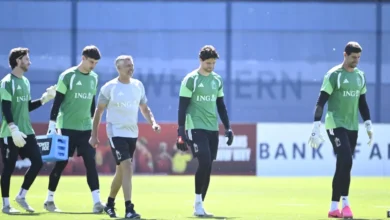
Bruno’s words highlighted a key challenge for Anderlecht: their lack of match sharpness compared to Hammarby, who are deep into their Allsvenskan campaign. The Swedish league typically runs from spring to autumn, meaning Hammarby had already played a significant number of competitive fixtures. Anderlecht, conversely, was at the very beginning of their pre-season, with this Europa League qualifier representing one of their first significant tests.
Analyzing the Performance: Strengths and Areas for Improvement
Despite the frustrating draw, Bruno did identify positive aspects of his team’s display. He acknowledged that the overall quality of football could have been better, particularly in their ability to build play and control possession after taking the lead. "Regarding the football played, I cannot be entirely happy, because after our 1-0 lead, we struggled with their build-up play, for example," he admitted. "Also, due to Augustinsson’s yellow card, I had to intervene after halftime, as their attacks down the right flank were becoming tricky. But I saw a lot of power and energy. The mentality was top. And we could have perhaps scored more goals."
The coach’s comments suggest that while the team displayed fighting spirit and a strong work ethic – qualities essential for success in European competition – their tactical execution and possession-based play need refinement. The mention of Augustinsson’s booking implies that Hammarby’s attacking overloads on the right flank were causing problems, requiring tactical adjustments to maintain defensive solidity.
Youthful Promise: Onia Seke and Nga Kana Given Key Roles
A notable aspect of Bruno’s selection was the inclusion of two 17-year-old midfielders, Jayden Onia Seke and Joshua Nga Kana, in the starting lineup. This decision underscored Bruno’s philosophy of prioritizing talent and current form over mere experience, a stance that signals a potential shift in how Anderlecht approaches player development and selection.
"I dropped them into the starting lineup because they have a lot of quality, simple as that," Bruno explained. "And there are many more who will get their chances, like Kalonji and Ojea. Experience is important, but with me, the best players play." This meritocratic approach could provide opportunities for other young talents within the Anderlecht academy to impress and earn first-team minutes, injecting fresh energy and dynamism into the squad.
The Red Card Incident: A Point of Contention
The red card for Nathan Saliba remained a talking point, with Bruno questioning the decision. "I’ve already reviewed the footage; that second yellow card was not clear-cut," he asserted. "It’s a shame we will miss Nathan for the return leg, as he showed he was ready immediately after the World Cup, but we won’t cry about it. We have enough players to get the job done in front of our own fans."
The interpretation of fouls and disciplinary actions can often be subjective, and Bruno’s comments suggest a belief that the referee’s decision may have been harsh. Saliba’s absence will be felt in the second leg, but Bruno’s confident assertion that the team possesses sufficient depth to overcome this setback demonstrates his resolve and belief in his squad.
Broader Context: Europa League Aspirations and the Road Ahead
The Europa League represents a significant platform for RSC Anderlecht to re-establish itself on the European stage. The club, a storied name in Belgian and European football history, has endured a period of transition in recent years. Securing qualification for the group stages and making a deep run in the competition would be a major statement of intent under Vitor Bruno’s leadership.
The second leg of this tie, scheduled to be played at Anderlecht’s Lotto Park, is now of paramount importance. A victory is essential to advance to the third qualifying round, where further challenges await. The home crowd will undoubtedly be expecting a strong performance and a win to overturn the first-leg result. The pressure will be on Anderlecht to demonstrate their superiority and secure their passage to the next stage.
This fixture also serves as an early indicator of the team’s progress under Bruno. The Portuguese coach, who has a track record of developing talented players and implementing effective tactical systems, is tasked with rebuilding Anderlecht into a consistent force domestically and in Europe. The early season results and performances will be closely scrutinized as the club aims to meet its ambitious targets.
Supporting Data and Analysis
- Hammarby’s Current Form: As noted by Bruno, Hammarby IF was in the midst of their Allsvenskan season. As of the date of the match (hypothetically July 23, 2026, based on the provided tweet dates), the Allsvenskan season typically runs from late March/early April to November. This would mean Hammarby had played approximately 15-18 league matches, providing them with a significant competitive edge over Anderlecht. For instance, if the match were in mid-season, Hammarby might be positioned in the top half of the league table, potentially challenging for European qualification spots.
- Anderlecht’s Pre-Season Status: Anderlecht, like most clubs at this stage of the summer, would have been in their early pre-season phase. This typically involves a few weeks of training, potentially followed by some friendly matches. The lack of match sharpness is a common challenge for teams starting their European campaigns so early in their preparation.
- Historical Performance: Anderlecht has a rich history in European competitions, including winning the UEFA Cup Winners’ Cup in 1976 and reaching multiple European finals. However, recent years have seen the club struggle to replicate this past success, making this Europa League campaign a crucial opportunity to rebuild their European standing.
- Player Development Philosophy: Vitor Bruno’s emphasis on playing the "best players," regardless of age, aligns with modern football trends that increasingly showcase the impact of young talent. The success of players like Onia Seke and Nga Kana could pave the way for a new generation of Anderlecht stars, potentially lowering the average age of the squad and increasing its dynamism.
Implications for Anderlecht’s Season
The outcome of this tie will have significant implications for Anderlecht’s season. Failure to qualify for the Europa League group stages would be a considerable setback, both financially and in terms of reputation. It would also mean a greater focus on domestic competitions, where the pressure to perform will remain high.
Conversely, a successful qualification would provide a substantial boost, offering valuable European experience for the players and the coaching staff, as well as the potential for further progress in the competition. It would also validate Bruno’s early decisions and lay a strong foundation for the remainder of his tenure. The second leg at the Lotto Park is now a critical juncture, where Anderlecht must demonstrate their ability to adapt, overcome adversity, and secure the victory needed to advance. The club and its supporters will be hoping that the early promise shown in the first leg, particularly the sensational free-kick, can be built upon to ensure a more positive outcome in front of their home fans. The tactical adjustments, mental fortitude, and collective performance will all be under intense scrutiny as Anderlecht aims to navigate this crucial early-season test.