Xpeng L03 Debuts as New Entry-Level SUV-Coupé Featuring Range-Extender Technology and Advanced AI Integration

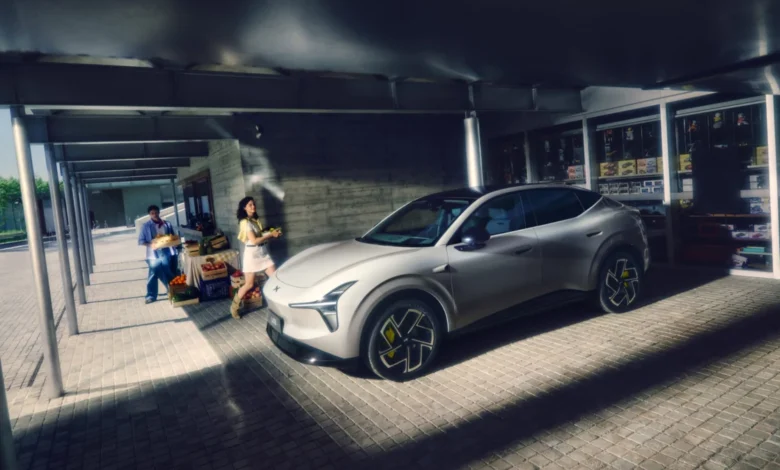
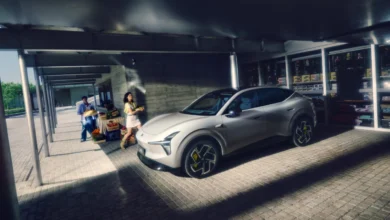
The automotive landscape is witnessing a significant shift as Xpeng, the Chinese technology giant often described as a challenger to established electric vehicle (EV) leaders, officially unveils the L03. Positioned strategically beneath the G6, the L03 serves as the brand’s new entry-level model. However, despite its more accessible price point, the vehicle represents a technological leap forward for the company, introducing several "firsts" for Xpeng in the European market. By blending artificial intelligence with physical engineering, Xpeng is attempting to distance itself from the traditional "carmaker" label, instead branding itself as an AI-driven technology company that happens to produce high-performance mobility solutions.
A Strategic Pivot: Technology Over Traditionalism
The launch of the L03 is not merely an expansion of a product line; it is a manifestation of Xpeng’s "AI for the World" strategy. Unlike previous models that saw staggered releases across different territories, the L03 is the first Xpeng vehicle to be launched globally at the same time. This synchronized rollout underscores the company’s confidence in its ability to meet diverse international regulatory standards and consumer expectations simultaneously.
At the core of the L03’s appeal is a suite of technological advancements that have not yet been seen in its larger siblings, the G6 or the G9. This includes the debut of the XOS 6 infotainment system, an integrated Google Maps navigation suite, and the highly anticipated VLA 2.0 semi-autonomous driving system. Furthermore, the L03 introduces a range-extender variant, a significant departure from Xpeng’s previous commitment to battery-only electric vehicles (BEVs), aimed at capturing a broader demographic of drivers concerned with long-distance travel and charging infrastructure limitations.

Design and Dimensions: The Vital Flow Philosophy
The L03 introduces a refined design language dubbed "Vital Flow." Measuring 4.65 meters in length, the vehicle is approximately 10 centimeters shorter than the G6, providing a more compact and agile footprint suitable for urban environments. Its silhouette is defined by an elegant SUV-coupé roofline that prioritizes aerodynamics without sacrificing a commanding road presence.
Standard models are equipped with 18-inch wheels, though the company acknowledges that the optional 20-inch variants provide a more balanced aesthetic and improved handling dynamics. The interior is designed to accommodate five passengers comfortably, offering a versatile cargo space. The rear trunk provides 367 liters of capacity, while the "frunk" (front trunk) offers between 44 and 89 liters depending on the specific powertrain configuration. For those with utility needs, all variants of the L03 are rated for a towing capacity of up to 1,500 kilograms, making it a competitive option in the compact SUV segment.
Powertrain Diversity: The Introduction of Power X
Perhaps the most notable mechanical update is the introduction of the "Power X" powertrain. While Xpeng built its reputation on pure electric mobility, the Power X marks the brand’s first foray into range-extended electric vehicles (REEVs). This system utilizes a high-capacity 37.25 kWh battery that provides an electric-only range of over 200 kilometers. When the battery is depleted, a gasoline-powered range extender activates to act as a generator, pushing the total driving range to over 1,000 kilometers.
This move is viewed by industry analysts as a pragmatic response to the varied state of charging infrastructure across Europe and North America. By offering a range extender, Xpeng can appeal to "EV-curious" buyers who may be hesitant to rely solely on public charging networks.

For those committed to zero-emission driving, the L03 offers three fully electric configurations:
- RWD Standard Range: Featuring an 180 kW (245 hp) motor and a 58.3 kWh battery, delivering a WLTP-rated range of 445 kilometers.
- RWD Long Range: Utilizing a larger 71.2 kWh battery to achieve a WLTP range of 520 kilometers.
- AWD Performance: The flagship electric variant, boasting 285 kW (388 hp) and a 71.2 kWh battery. This model can accelerate from 0 to 100 km/h in just 4.5 seconds, with a WLTP range of 440 kilometers.
While the L03 does not match the ultra-fast charging speeds of the 800V architecture found in the G9, it remains highly competitive. The vehicle can charge from 10% to 80% in approximately 20 minutes, supporting DC fast charging up to 236 kW and AC charging at 11 kW.
The AI Cockpit and Google Integration
The interior of the L03 serves as a showcase for the XOS 6 operating system. This latest iteration of Xpeng’s software focuses on natural language processing through an AI-powered voice assistant capable of understanding multiple languages simultaneously. This allows for a more intuitive user experience, where drivers can control climate, media, and vehicle settings through conversational commands.
In a move that addresses a common criticism of Chinese automotive software, Xpeng has partnered with Google to integrate Google Maps directly into the vehicle’s native navigation system. This integration includes real-time Point of Interest (POI) data and advanced route planning that allows users to search for specific amenities—such as supermarkets or pharmacies—along their route. This localized approach is expected to significantly improve the user experience for European drivers who are already accustomed to the Google ecosystem.

VLA 2.0: The Path to Autonomous Mobility
Central to Xpeng’s identity as a tech company is its progress in autonomous driving. The L03 is the first model to arrive in Europe with the VLA 2.0 (Vehicle Language Architecture) system. This semi-autonomous technology has been operational in China for over six months, with Xpeng reporting that more than 50% of its domestic users regularly engage the system for highway and urban navigation.
The VLA 2.0 system is powered by Xpeng’s proprietary Turing AI chips. These chips are designed specifically to handle the massive data processing requirements of real-time environmental mapping and decision-making. However, this technological leap creates a hardware divide within the Xpeng lineup; existing models like the G6, G9, and P7+ lack the Turing chips and are therefore incompatible with the VLA 2.0 software.
Xpeng anticipates that the full suite of VLA 2.0 features will be active and legally compliant in Europe by early 2027. In a strategic move to encourage adoption, the company has announced that the service will initially be offered without a subscription fee, though this policy may be reviewed as the technology matures.
Market Positioning and Pricing Strategy
Xpeng has positioned the L03 with aggressive pricing intended to disrupt the European compact SUV market. The entry-level RWD Standard Range starts at €34,990 (including VAT), placing it in direct competition with both traditional internal combustion engine (ICE) vehicles and mass-market EVs from brands like MG and BYD.

The range-extended "Power X" model starts at €38,490, offering a mid-range price point for those seeking maximum versatility. However, customers wishing to access the full spectrum of Xpeng’s technological offerings—including the AWD Performance powertrain, the VLA 2.0 autonomous suite, and a premium audio system—must opt for the AWD Performance Ultra trim, priced at €45,990.
This tiered pricing structure allows Xpeng to market a "headline" low price while steering tech-enthusiast buyers toward higher-margin, feature-rich trims. While the base model is exceptionally competitive, the "Ultra" trim enters the territory of larger, more established premium SUVs, posing a challenge for Xpeng to prove the value of its software over the brand prestige of European competitors.
Chronology and Availability
The unveiling of the L03 marks the beginning of an intensive rollout schedule for Xpeng. The company has confirmed that the first customer deliveries are slated to begin before the end of the current calendar year. This rapid transition from reveal to delivery is part of Xpeng’s effort to maintain momentum in an increasingly crowded EV market.
The timeline for the L03’s features is as follows:

- Late 2024: Commencement of global deliveries for BEV and REEV variants.
- 2025: Full integration of localized AI voice commands for major European languages.
- Early 2027: Expected activation of VLA 2.0 autonomous driving capabilities across European road networks, pending final regulatory approvals.
Broader Implications for the European Auto Industry
The arrival of the L03 represents more than just a new car; it signifies the increasing sophistication of Chinese automotive exports. By integrating Western software standards (Google Maps) with cutting-edge Chinese hardware (Turing AI chips), Xpeng is creating a hybrid product that addresses previous barriers to entry.
Furthermore, the pivot toward range-extender technology suggests a maturation of the industry’s approach to the energy transition. Recognizing that "pure electric" may not yet be viable for every consumer, the L03 Power X provides a bridge that could accelerate the phasing out of traditional ICE vehicles.
As Xpeng continues to expand its footprint, established European manufacturers will face mounting pressure to innovate in the software and AI space—areas where Xpeng currently holds a perceived lead. The L03 stands as a testament to the brand’s ambition to redefine what an entry-level vehicle can be, transforming the "budget" segment into a high-tech battleground.
Related posts: