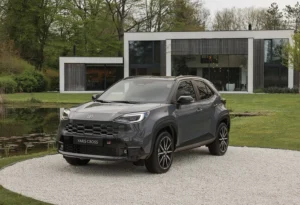
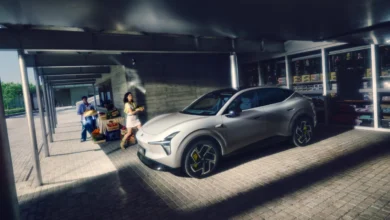
Kia EV2 versus Firefly: Redefining the Compact Electric Vehicle Segment Through Spatial Innovation and Efficiency

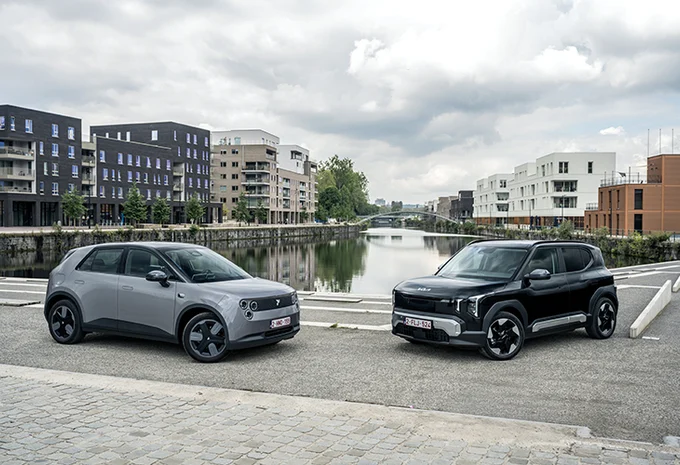
The global automotive landscape is currently undergoing a structural metamorphosis, driven by a paradigm shift that promises to alter both the form and function of personal transportation. For decades, the design of the internal combustion engine (ICE) vehicle was dictated by the bulky requirements of the powertrain—the engine block, transmission tunnel, and exhaust systems—which necessitated a significant portion of the vehicle’s footprint be dedicated to mechanical components. The advent of the electric vehicle (EV) promised to shatter these constraints, offering designers unprecedented freedom through the integration of compact electric motors and floor-mounted battery packs. This "packaging revolution" suggested that the cars of the future could offer the interior volume of a large sedan within the exterior dimensions of a city hatchback.
However, the transition has not been as linear as early prognosticators suggested. In the premium and executive segments, consumers remain tethered to traditional notions of "status," where physical bulk and a long hood signify prestige, regardless of whether that space is utilized efficiently. It is only in the "inferior" or entry-level categories—the A and B segments—where the true potential of EV packaging is being realized as a necessity rather than a luxury. In these segments, the higher manufacturing costs of electric drivetrains must be offset by extreme utility. For a small electric car to be commercially viable against a cheaper ICE counterpart, it must offer more value per square inch. This is the battlefield where the Kia EV2 and the NIO-backed "Firefly" brand are set to compete, promising the interior capacity of a C-segment vehicle like the Renault Mégane within an exterior footprint no larger than the compact Renault 5.
The Architecture of Spatial Efficiency
The core appeal of the Kia EV2 and the Firefly project lies in the exploitation of dedicated electric platforms. Unlike "multi-energy" platforms that must accommodate both fuel tanks and batteries, dedicated EV architectures allow for a stretched wheelbase and minimized overhangs. By pushing the wheels to the absolute corners of the chassis, manufacturers can reclaim the space usually reserved for the engine bay.
In the case of the Kia EV2, the vehicle is expected to utilize a condensed version of the Hyundai Motor Group’s E-GMP (Electric-Global Modular Platform) or the upcoming IMA (Integrated Modular Architecture). This allows for a flat floor, which significantly enhances legroom and creates a sense of "lounge-like" openness that was previously impossible in cars measuring under four meters in length. Similarly, the Firefly brand—NIO’s strategic play for the European mass market—is designed specifically to tackle the narrow streets and high density of European urban centers while maintaining the premium interior feel for which its parent company is known.
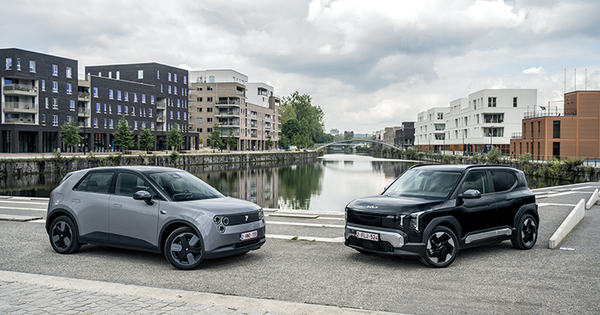
The Kia EV2: A Strategic Pillar for Mass Adoption
Kia has been aggressive in its "Plan S" strategy, aiming for a line-up of 15 fully electric models by 2027. The EV2 represents the most critical entry point in this lineup for the European market. Positioned below the recently launched EV3, the EV2 is targeted at a price point of approximately €25,000 to €30,000.
Technically, the EV2 is expected to prioritize efficiency over raw power. Industry analysts suggest the vehicle will feature a battery capacity ranging from 42 kWh to 58 kWh, likely utilizing Lithium Iron Phosphate (LFP) chemistry to keep costs down while ensuring durability. By adopting a 400V system rather than the expensive 800V architecture found in the EV6 and EV9, Kia can maintain a competitive price while still offering respectable charging speeds. The goal is to provide a range of roughly 300 to 400 kilometers (WLTP), which is more than sufficient for the urban and suburban commuters who make up the primary demographic for B-segment hatchbacks.
Firefly: NIO’s European Vanguard
While Kia builds on its established reputation for reliability and value, the Firefly brand represents a bold new entry from China’s NIO. Firefly is not merely a car but a strategic sub-brand designed to bypass the high price barriers associated with NIO’s flagship models. For Firefly, the challenge is twofold: achieving spatial efficiency and integrating NIO’s signature battery-swapping technology into a smaller frame.
The Firefly model is expected to debut with a design language that is distinct from NIO’s more aggressive, sleek sedans. Instead, it adopts a more "upright" and "boxy" silhouette—a choice driven by the need to maximize headroom and cargo space. Reports indicate that Firefly will also feature advanced software and a digital cockpit that punches far above its weight class, aiming to lure younger, tech-savvy buyers away from traditional European brands like Volkswagen or Stellantis.
Chronology of Development and Market Entry
The race to dominate the affordable EV segment has followed a rapid timeline over the last 24 months:
- Late 2022: Kia confirms the development of small-format EVs (EV2 and EV3) specifically tailored for the European market to replace the aging Rio and Soul EV.
- Early 2023: NIO’s CEO, William Li, officially acknowledges the "Firefly" project, stating that the brand would focus on the European market with cars priced under €30,000.
- October 2023: Kia showcases the EV3 and EV4 concepts, providing the design DNA that will eventually inform the EV2.
- Mid-2024: Spy shots of the Firefly testing in Europe and China reveal a compact, high-riding hatchback profile, confirming the focus on "Megane-level" interior space.
- Late 2024/Early 2025: Expected official world premieres for both the production-ready Kia EV2 and the debut Firefly model.
Supporting Data: The Economic and Physical Shift
To understand why the Kia EV2 and Firefly are significant, one must look at the comparative data of the segments they are disrupting. A traditional B-segment ICE car (like a Ford Fiesta) typically offers approximately 280 to 310 liters of boot space. In contrast, by utilizing an electric-first design, the EV2 and Firefly are targeting boot capacities exceeding 380 liters, effectively matching the C-segment Renault Mégane or Volkswagen Golf.
Furthermore, the economic pressure is mounting. According to BloombergNEF, battery prices have dropped to an average of $139/kWh in 2023, a trend that makes the €25,000 price target for these vehicles increasingly realistic. Kia and Firefly are both betting that by 2026, the Total Cost of Ownership (TCO) for these small EVs will be significantly lower than that of a petrol-powered B-segment car, even without government subsidies.
Official Responses and Market Positioning
While official statements from Kia and NIO remain guarded regarding specific performance figures, both companies have hinted at their strategic intentions. Kia Europe’s leadership has emphasized that "democratizing the EV experience" is central to their brand mission. They acknowledge that while the EV9 showcases their technical prowess, the EV2 will be the "volume driver" that ensures the brand’s longevity in a post-ICE era.
From the NIO side, the Firefly brand is seen as a "flanking maneuver." By creating a separate brand, NIO can maintain its premium status while Firefly competes aggressively on price and utility. "Our goal with Firefly is to provide the best technology and spatial experience in the most compact package possible," William Li noted in a recent investor call. This sentiment reflects a broader Chinese strategy to enter Europe not just with cheap cars, but with technologically superior ones.
Broader Impact and Industry Implications
The success of the Kia EV2 and Firefly could signal the end of the "oversized" car era for urban dwellers. If a vehicle with a four-meter length can comfortably seat five adults and carry their luggage, the justification for larger SUVs begins to erode in high-density areas. This has significant implications for urban planning, as smaller footprints mean less congestion and more efficient use of public charging infrastructure.

Moreover, this competition forces European incumbents—namely Renault, Peugeot, and Volkswagen—to accelerate their own "small EV" programs. The Renault 5 E-Tech and the Volkswagen ID.2all are the direct targets for Kia and Firefly. This four-way battle will likely result in a rapid increase in the quality of affordable EVs, benefiting the consumer through better range, faster charging, and superior interior ergonomics.
Analysis of the "Intelligent Packaging" Goal
The "ambitious objective" mentioned in the original report—achieving the habitability of a larger car in a smaller frame—is the ultimate test of an automaker’s engineering department. It requires a holistic approach to design where the HVAC system is moved to the front trunk area, seats are thinned down using high-strength materials, and the dash is pushed forward.
Kia appears to be winning on the front of "pragmatic utility," leveraging the proven reliability of the E-GMP components. Firefly, however, may have the edge in "digital utility," integrating cloud-based services and autonomous driving hardware that is usually reserved for luxury vehicles. The "winner" in the real world will not necessarily be the car with the fastest 0-100 km/h time, but the one that feels the least like a "small car" when you are sitting inside it.
As the automotive world moves toward 2025, the Kia EV2 and Firefly stand as evidence that the electric revolution is finally reaching the people who need it most: the urban commuters and small families who require maximum function within a minimal form. The transition from "status-based" car buying to "utility-based" EV adoption is well underway, and these two models are leading the charge.
Related posts: