Kia EV2 and Firefly Leading the New Era of Compact Electric Vehicle Innovation and Spatial Efficiency

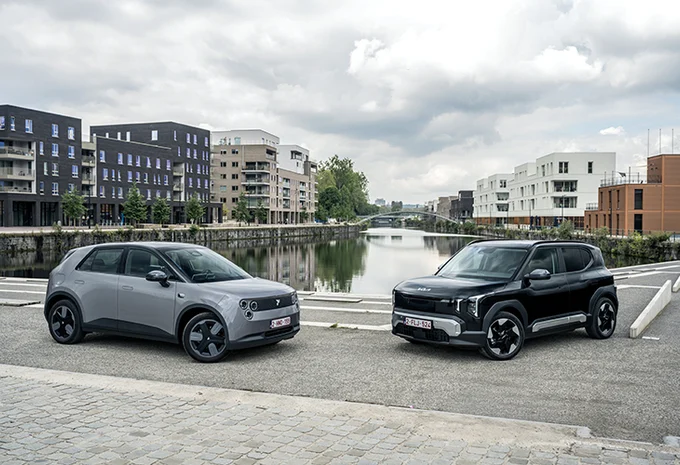
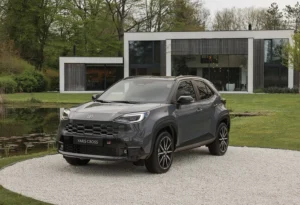
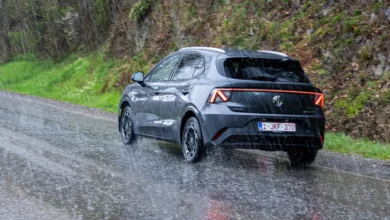
The transition to electric mobility was heralded as a revolutionary shift in the automotive landscape, promising to transform both the form and function of the modern vehicle. This prediction was rooted in the inherent flexibility offered by electric powertrains, which are significantly more compact than their internal combustion engine (ICE) counterparts. By reducing the volume required for mechanical components like engines, transmissions, and exhaust systems, designers have gained unprecedented freedom to maximize cabin space for occupants. While this theory is compelling, its practical application has faced challenges in the premium segments, where buyers often prioritize the "status" and physical presence of a larger vehicle over pure spatial efficiency. However, the narrative changes dramatically when examining the entry-level and compact segments, where the Kia EV2 and the Firefly—a sub-brand of Nio—are now competing to prove that a small footprint does not have to mean a small interior.
The Paradigm Shift in Automotive Packaging
For decades, car design was dictated by the bulky requirements of the internal combustion engine. The necessity of a front-mounted engine, a transmission tunnel running through the center of the cabin, and a fuel tank at the rear created rigid constraints. The advent of the dedicated Electric Vehicle (EV) platform, often referred to as a "skateboard" chassis, has dismantled these barriers. By placing the battery pack flat beneath the floor and positioning electric motors directly on the axles, manufacturers can push the wheels to the extreme corners of the vehicle.
In the higher echelons of the market, such as Segment E luxury sedans, consumers have been slow to embrace the "smaller outside, larger inside" philosophy. A buyer of a large executive car often seeks the visual prestige associated with a long hood and a commanding wheelbase. Consequently, even though a Segment D electric car might offer the interior volume of a Segment E ICE vehicle, the psychological appeal of a larger exterior remains a significant sales driver.
In the "lower" categories, however, the economic and practical realities are different. The cost of producing a small electric car remains high due to battery prices, making it difficult for manufacturers to match the price points of traditional budget hatchbacks. To justify the higher price tag of a compact EV, manufacturers must offer superior utility. This is where the Kia EV2 and Firefly have focused their efforts: delivering the interior roominess and cargo capacity of a mid-sized car like the Renault Mégane within an exterior footprint barely larger than a Renault 5.
The Kia EV2: Democratizing the E-GMP Legacy
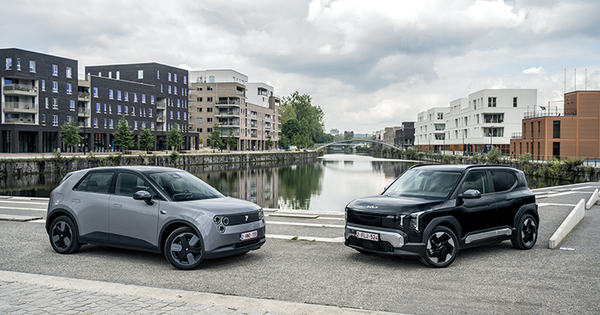
Kia has established itself as a formidable leader in the electric transition, moving from the success of the EV6 and EV9 into more accessible segments. The Kia EV2 represents the entry point of this ambitious roadmap. Built on a modular architecture derived from the Electric Global Modular Platform (E-GMP), the EV2 is designed specifically for the European urban environment.
Early reports and testing indicate that Kia’s engineers have focused heavily on "intelligent packaging." By utilizing a shorter front overhang and an extended wheelbase relative to its total length, the EV2 provides rear-seat legroom that rivals vehicles in the class above. This is a critical development for Kia, as it seeks to capture the market currently dominated by the likes of the Peugeot e-208 and the upcoming Volkswagen ID.2.
The EV2 is expected to utilize Lithium Iron Phosphate (LFP) battery technology to keep costs down while maintaining a competitive range of approximately 300 to 400 kilometers (186 to 248 miles). This strategic choice reflects a broader industry trend toward balancing affordability with the daily needs of urban and suburban commuters.
Firefly: Nio’s Strategic Expansion into the European Mass Market
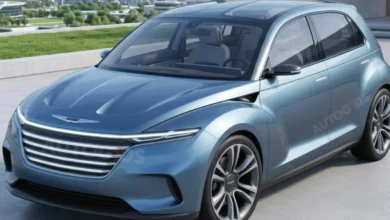
While Kia leverages its established brand presence, the "Firefly" project represents a bold move by the Chinese automaker Nio. Recognizing that its premium Nio-branded vehicles occupy a niche high-end segment, the company launched the Firefly sub-brand specifically to tackle the European small-car market.
The Firefly model is designed to embody the "small on the outside, big on the inside" mantra. Leveraging Nio’s expertise in software-defined vehicles and compact motor integration, the Firefly aims to offer a premium digital experience within a budget-friendly package. One of the most significant advantages for Firefly could be its compatibility with Nio’s battery-swapping technology, which could solve the charging anxiety often associated with small-battery EVs.
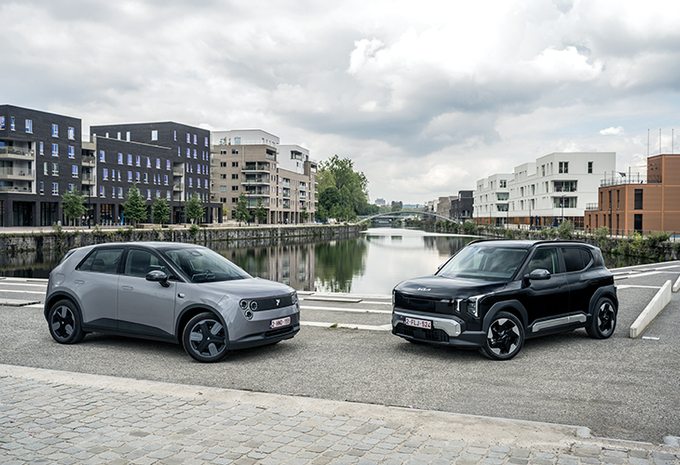
In the head-to-head comparison with the Kia EV2, the Firefly emphasizes a futuristic aesthetic and a minimalist interior that creates an illusion of even greater space. By removing traditional dashboard clutter and utilizing slim-profile seating, Firefly attempts to maximize every cubic centimeter of the cabin.
Chronology of the Compact EV Evolution
The journey toward the Kia EV2 and Firefly has been marked by several key industry milestones:
- 2010–2013: The first wave of modern EVs, such as the Nissan Leaf and BMW i3, introduced the public to electric driving but often featured compromised packaging or polarizing designs.
- 2020: The launch of the Volkswagen ID.3 demonstrated the potential of a dedicated EV platform (MEB) to provide "Golf-sized" exterior dimensions with "Passat-sized" interior space.
- 2022: Kia and Hyundai solidified their market position with the E-GMP platform, focusing on 800V fast charging and superior spatial efficiency.
- 2023: Nio officially confirmed the development of the Firefly sub-brand, signaling a shift in Chinese strategy from luxury exports to mass-market competition in Europe.
- 2024: The unveiling of the Renault 5 E-Tech and the Citroën ë-C3 set a new price benchmark of approximately €25,000, forcing competitors like Kia and Firefly to refine their value propositions.
Supporting Data: The Economic and Technical Challenge
The competition between these two models is set against a backdrop of fluctuating battery prices and shifting consumer expectations. According to industry data from BloombergNEF, the average price of a lithium-ion battery pack has dropped by over 80% since 2013, yet for a vehicle to be profitable at the €25,000 to €30,000 mark, manufacturers must achieve extreme efficiencies in production.
| Feature | Kia EV2 (Estimated) | Firefly Model (Estimated) |
|---|---|---|
| Length | ~4,000 mm | ~3,950 mm |
| Wheelbase | ~2,600 mm | ~2,650 mm |
| Battery Type | LFP (Lithium Iron Phosphate) | LFP / NCM options |
| Cargo Volume | ~380 Liters | ~360 Liters |
| Target Price | €27,000 – €30,000 | €25,000 – €28,000 |
Data suggests that for small EVs, every 100mm of wheelbase extension contributes significantly to passenger comfort ratings. Both Kia and Firefly are pushing their wheelbases to represent nearly 65% of the total vehicle length, compared to roughly 55-58% in traditional ICE vehicles.
Industry Reactions and Market Implications
Automotive analysts suggest that the success of the EV2 and Firefly will depend largely on their ability to convince traditional B-segment buyers that an EV is a "no-compromise" replacement for their gasoline cars.

"The battle for the compact segment is no longer about who has the biggest battery, but who has the smartest cabin," says automotive consultant Marc Vandeynze. "If Kia can deliver a car that feels like a family SUV inside but parks like a city car, they will win. Firefly, on the other hand, is the wild card. If they successfully integrate Nio’s tech at a lower price point, they could disrupt the European giants."
Official statements from Kia Europe have emphasized their commitment to a "full-spectrum" EV lineup, suggesting that the EV2 is not a "cheap" car, but a "concentrated" version of their premium technology. Meanwhile, Nio executives have hinted that Firefly will be "aggressively priced" to gain a foothold in markets like Germany, France, and the Benelux region, where compact hatchbacks remain the top-selling body style.
The Future of Urban Mobility
The implications of this competition extend beyond simple sales figures. As cities worldwide implement stricter emissions zones and reduce parking space sizes, the demand for vehicles that offer high utility within a small footprint will only grow. The Kia EV2 and Firefly are at the forefront of a movement that views the car as a "mobile living space" rather than just a mechanical tool.
By proving that a vehicle can be both compact and spacious, these manufacturers are addressing one of the primary criticisms of early EVs: that they were either too small for families or too expensive for the average consumer. The "packaging miracle" promised by the EV revolution is finally becoming a reality for the mass market.
As these two models prepare for their full commercial launches, the automotive world is watching closely. Whether the winner is the established reliability of Kia or the disruptive innovation of Firefly, the ultimate beneficiary will be the consumer, who finally has access to small cars that do not feel small. The era of the "intelligent compact" has arrived, and it is set to redefine what we expect from our vehicles in the decades to come.
Related posts: