Toyota BMW Bosch and Repsol Launch Major Pilot Project to Test 100 Percent Renewable Gasoline in Existing Vehicle Fleets

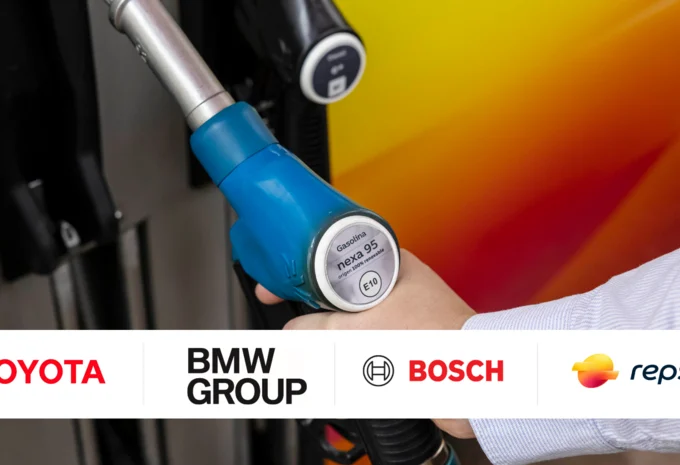
In a coordinated effort to explore decarbonization pathways beyond pure electrification, a consortium of automotive and energy leaders—comprising Toyota, BMW, Bosch, and Repsol—has initiated a large-scale practical trial of 100% renewable gasoline. Launched in Spain in July 2026, this six-month pilot project involves approximately twenty existing internal combustion engine (ICE) vehicles operating exclusively on renewable fuel. The initiative aims to demonstrate that advanced biofuels can serve as a "drop-in" solution to reduce the carbon footprint of the millions of gasoline-powered vehicles already on European roads, without requiring any mechanical modifications or specialized infrastructure.
The project represents a significant pivot in the ongoing European debate regarding the 2035 ban on new internal combustion engines. By utilizing standard production models from Toyota, Lexus, BMW, and Mini, the partners intend to provide empirical evidence that carbon neutrality can be achieved through a multi-pathway approach. While the European Union’s climate strategy remains heavily focused on Battery Electric Vehicles (BEVs), this consortium argues that renewable fuels offer a vital complementary tool for addressing the "legacy fleet"—the hundreds of millions of existing vehicles that will continue to operate long after the 2035 deadline.
Technical Foundations: The Role of Nexa 95 and Drop-in Fuel Technology
At the heart of the trial is Repsol’s Nexa 95, a 100% renewable gasoline produced from organic waste and non-food biomass. Unlike traditional ethanol blends (such as E5 or E10) which often require engine adjustments at higher concentrations, Nexa 95 is engineered to be chemically identical to fossil-based gasoline. This "drop-in" characteristic is crucial; it allows the fuel to be distributed through existing pipelines and sold at conventional gas stations, making it immediately accessible to the general public if commercialized.
Repsol, a Spanish energy giant that has been pivotally shifting toward a multi-energy business model, currently stands as the only provider in Spain offering 100% renewable gasoline at public filling stations. The fuel is produced in compliance with the European Union’s Renewable Energy Directive (RED II), ensuring that the raw materials used do not compete with food crops or contribute to deforestation. According to Repsol’s technical data, renewable fuels like Nexa 95 can reduce greenhouse gas emissions by 60% to 90% over their entire lifecycle—from production to combustion—compared to traditional petroleum-based fuels.
Spain was selected as the testing ground due to its advanced refining infrastructure and Repsol’s early adoption of renewable fuel retail. The trial focuses on real-world conditions, including urban commuting, long-distance highway travel, and varying climatic conditions, to ensure that the fuel performs reliably across all typical driving scenarios.
Digital Monitoring and the Bosch Digital Fuel Twin
A critical challenge in the adoption of renewable fuels is ensuring transparency and preventing "fuel fraud" or the accidental mixing of fossil fuels. To address this, Bosch has introduced its "Digital Fuel Twin" technology for the duration of the 2026 pilot. This sophisticated digital tracking system creates a comprehensive data bridge between the vehicle, the refueling station, and the fuel provider.
The Digital Fuel Twin functions by collecting real-time data from the vehicle’s onboard diagnostics (OBD), the gas station’s pump sensors, and the specific tank cards used by the test drivers. By cross-referencing where, when, and how much fuel was dispensed, Bosch can certify with 100% accuracy that a specific vehicle has been powered solely by renewable energy. This level of traceability is deemed essential for future regulatory frameworks, as it allows for the reliable certification of CO2 savings, which could eventually be used by fleet operators or individual owners to claim tax incentives or comply with low-emission zone requirements.
Beyond certification, the system monitors engine performance and fuel consumption metrics. This data will be analyzed to confirm that the renewable gasoline does not cause premature wear on engine components, such as fuel injectors, seals, or catalytic converters, thereby validating the long-term viability of the technology for older vehicle models.
A Chronology of the 2026 Renewable Fuel Initiative
The project follows a structured timeline designed to provide the European Commission and industry stakeholders with actionable data before key legislative reviews.
- January – June 2026: Preparation phase. Selection of the twenty test vehicles, including high-volume models like the Toyota Corolla and BMW 3 Series, alongside premium offerings from Lexus and Mini. Installation of the Bosch Digital Fuel Twin software across the fleet.
- July 2026: Official launch of the pilot in Madrid and surrounding Spanish regions. The vehicles begin their six-month operational phase, refueling exclusively at designated Repsol stations.
- October 2026: Mid-term review. Initial data on fuel consumption, engine responsiveness, and emission levels are compiled. Preliminary results are shared privately among the consortium partners.
- December 2026: Conclusion of the road testing phase. The vehicles undergo technical inspections to check for any anomalies in the engine or fuel systems.
- Early 2027: Publication of the final report. The findings will be presented to the European Parliament, the European Automobile Manufacturers’ Association (ACEA), and various environmental agencies to advocate for the inclusion of renewable fuels in the EU’s "Fit for 55" legislative package.
Supporting Data: The Environmental and Economic Rationale
The push for renewable gasoline is supported by a growing body of data regarding the "cradle-to-grave" environmental impact of transportation. While electric vehicles produce zero tailpipe emissions, their total carbon footprint includes the energy-intensive mining of battery minerals and the carbon intensity of the local power grid.
In contrast, renewable fuels utilize the existing carbon cycle. The CO2 released during combustion is roughly equivalent to the CO2 absorbed by the organic matter used to create the fuel, creating a near-closed loop. For regions where the electricity grid is still heavily reliant on coal or gas, a car running on 100% renewable gasoline can actually have a lower total lifecycle CO2 impact than a BEV charged with "dirty" electricity.
Furthermore, the economic implications are significant. Transitioning the entire European fleet to electric power requires trillions of euros in infrastructure investment for charging stations and grid upgrades. Renewable gasoline leverages the existing €100+ billion infrastructure of refineries, pipelines, and service stations. For the average consumer, this technology offers a way to participate in the green transition without the high upfront cost of purchasing a new electric vehicle.
Strategic Perspectives: Toyota and BMW’s Multi-Pathway Approach
The participation of Toyota and BMW in this project is a reflection of their long-standing corporate philosophies regarding "technology neutrality." Toyota, the world’s largest automaker, has frequently argued that "the enemy is carbon, not the internal combustion engine." By investing in hybrids, plug-in hybrids (PHEVs), hydrogen fuel cells, and renewable fuels alongside BEVs, Toyota seeks to provide decarbonization solutions that fit different global markets and consumer needs.
BMW Group has maintained a similar stance. While the company is aggressively expanding its "Neue Klasse" electric lineup, it continues to refine its ICE technology. BMW leadership has expressed concerns that a premature, total ban on combustion engines could lead to a shortage of affordable mobility and a loss of industrial competitiveness in Europe. For BMW, the Spanish pilot is a way to prove that the "sheer driving pleasure" associated with their engines can be maintained in a carbon-neutral future.
Both manufacturers emphasize that renewable gasoline is particularly effective when used in hybrid and plug-in hybrid vehicles. By combining an efficient electric motor with a carbon-neutral combustion engine, these vehicles can achieve environmental performance levels that rival or exceed those of pure electric cars, especially in long-distance applications where battery weight and charging times remain hurdles.
Broader Impact and Implications for EU Policy
The results of this 2026 pilot project are expected to reignite the debate over the "e-fuel loophole" and the definition of CO2-neutral vehicles. In 2023, Germany successfully negotiated a provision in the EU’s 2035 mandate that would allow for the sale of new ICE vehicles after the deadline, provided they run exclusively on CO2-neutral fuels. This project in Spain provides the practical proof-of-concept needed to turn that legislative provision into a reality.
If the trial proves successful, it could lead to a shift in how "zero-emission zones" are managed in major European cities. Instead of banning all internal combustion engines, cities might allow access to vehicles certified by systems like Bosch’s Digital Fuel Twin to be running on 100% renewable fuel.
However, challenges remain. The current production capacity for renewable gasoline is a fraction of what would be required to power the global fleet. Critics also point to the high cost of production compared to fossil fuels, though proponents argue that scaling up production and implementing carbon taxes on fossil fuels will eventually close the price gap.
As the pilot progresses through the latter half of 2026, the eyes of the global automotive industry will be on Spain. The collaboration between a fuel provider, a technology giant, and two of the world’s most influential automakers suggests that the internal combustion engine may have a much longer—and greener—future than previously anticipated. The project’s ultimate goal is to ensure that the transition to sustainable mobility is inclusive, practical, and scientifically grounded, utilizing every available technological tool to combat climate change.
Related posts: