The Battle for Compact Efficiency: Comparing the Kia EV2 and Firefly in the New Era of Urban Electric Mobility

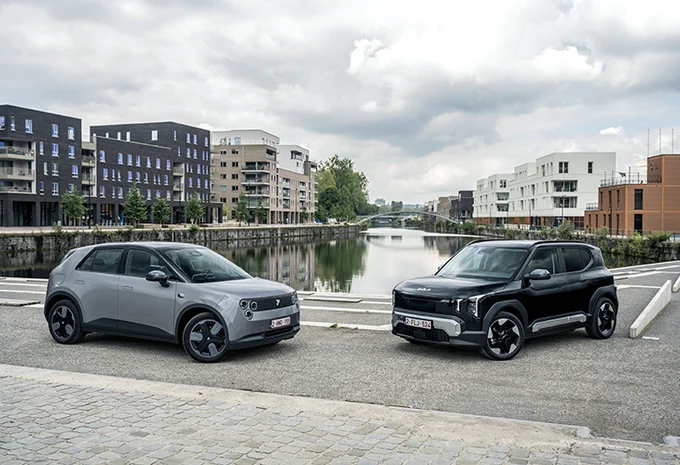
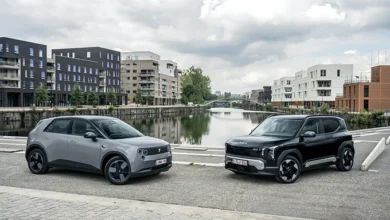
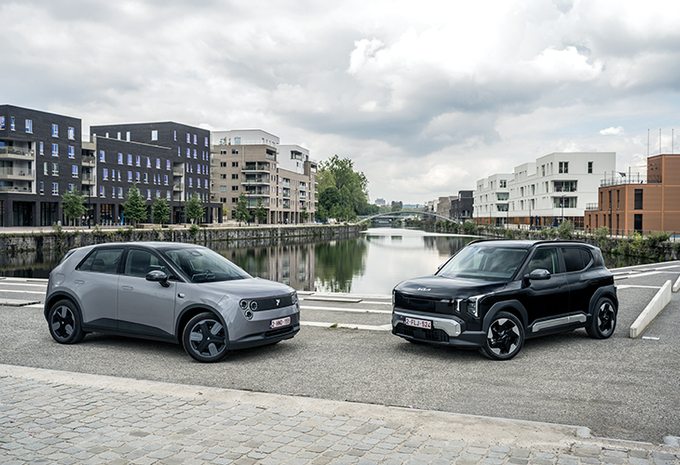
The automotive industry was promised a revolution through electrification, a shift that was supposed to redefine both the form and function of the modern vehicle. This prediction was rooted in the inherent flexibility offered by electric powertrains, which are significantly more compact than their internal combustion engine (ICE) counterparts. By reducing the volume required for mechanical components—eliminating the need for large engine blocks, complex transmissions, and bulky exhaust systems—manufacturers theoretically gained the ability to maximize cabin space. On paper, this concept is transformative; however, in practice, its application has been uneven across different market segments. While buyers of high-end, "Segment E" executive sedans remain focused on external dimensions and the "status" associated with a large footprint, the priorities of the mass market are shifting. For the urban consumer, the allure of a vehicle that offers the interior volume of a mid-sized hatchback within the physical dimensions of a city car is becoming the new gold standard. This is the specific arena where the Kia EV2 and the new "Firefly" brand from Nio are set to compete, promising to deliver the utility of a Renault Mégane within a footprint no larger than a Renault 5.
The Paradigm Shift in Vehicle Packaging
Historically, the size of a car was a direct indicator of its interior comfort and social standing. A larger exterior meant a longer wheelbase, which in turn meant more legroom. However, the "skateboard" architecture of modern electric vehicles (EVs) has disrupted this correlation. By placing batteries flat beneath the floor and pushing the wheels to the extreme corners of the chassis, designers can achieve wheelbases previously reserved for vehicles in two segments above.
In the premium sectors, this advantage is often underutilized because the "prestige" of a long hood and a commanding road presence still dictates consumer choice. A buyer of a large BMW or Mercedes-Benz is often less concerned with the efficiency of the packaging than with the "statutory" silhouette of the car. Conversely, in the "inferior" or entry-level categories, packaging is everything. As EV prices remain higher than ICE equivalents due to battery costs, manufacturers must provide a "value-add" to justify the premium. That value is increasingly found in interior "habitability"—the ability to transport a family and their luggage in a vehicle that is easy to park in dense European city centers.
The Kia EV2: A Strategic Pillar for Global Volume
Kia’s entry into this high-stakes segment is the EV2, a model that represents the brand’s commitment to its "EV for All" strategy. Following the successful launch of the EV6 and the flagship EV9, Kia recognized that long-term market dominance requires a presence in the €25,000 to €30,000 price bracket. The EV2 is designed specifically with the European market in mind, where B-segment hatchbacks and crossovers dominate the sales charts.
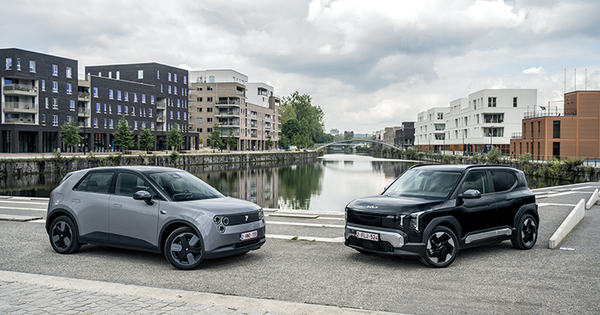
The Kia EV2 is expected to utilize a specialized version of the Hyundai Motor Group’s E-GMP (Electric Global Modular Platform) or the upcoming IMA (Integrated Modular Architecture). By leveraging a dedicated electric platform, Kia aims to achieve a "cab-forward" design. This involves moving the A-pillar further toward the front of the car, a feat made possible by the absence of a bulky petrol engine. The result is a vehicle that, despite its sub-4-meter length, offers a flat floor and rear-seat legroom that rivals traditional C-segment vehicles like the Volkswagen Golf or the Renault Mégane E-Tech.
Kia’s strategy is also industrial. To keep costs down and bypass potential tariffs on Chinese-made vehicles, the EV2 is slated for production at Kia’s Zilina plant in Slovakia. This facility has a long history of producing the Ceed and Sportage, and its transition to EV production is a cornerstone of Kia’s goal to sell 1.6 million EVs annually by 2030.
Firefly: Nio’s European "Boutique" Challenger
While Kia relies on its established dealership network and manufacturing legacy, the "Firefly" project represents a bold offensive from the Chinese premium EV maker, Nio. Recognizing that its main brand occupies a price point too high for the volume-heavy European B-segment, Nio created Firefly (a codename likely to be replaced by a dedicated brand name at launch) to target the €25,000 to €35,000 market.
Firefly’s approach to the "small on the outside, big on the inside" challenge is even more radical. Nio’s leadership, including CEO William Li, has emphasized that Firefly will not be a "budget" brand in the traditional sense. Instead, it aims to be a "boutique" offering, providing high-tech features and superior materials in a compact form factor. One of Firefly’s most significant competitive advantages is its compatibility with Nio’s battery-swapping technology.
Designing a small car that can accommodate a swappable battery is a significant engineering challenge. The mechanism requires a standardized battery footprint, which can be difficult to integrate into a short wheelbase. However, if Firefly succeeds, it will solve the primary hurdle for urban EV adoption: the lack of home charging. A Firefly driver could "refuel" in three minutes at a Power Swap Station, making the compact EV a viable primary car for those living in apartments.
Technical Comparison and Data Analysis
The core of the competition between the Kia EV2 and Firefly lies in their technical specifications. Both manufacturers are targeting a footprint similar to the new Renault 5 E-Tech (approximately 3.9 to 4.0 meters in length). However, their internal goals are focused on "Segment C" utility.
| Feature | Kia EV2 (Projected) | Firefly (Projected) |
|---|---|---|
| Length | ~4,000 mm | ~3,950 mm |
| Wheelbase | ~2,650 mm | ~2,700 mm |
| Target Price | €25,000 – €30,000 | €28,000 – €35,000 |
| Battery Tech | LFP (Lithium Iron Phosphate) | LFP / Swappable |
| Range (WLTP) | 350 – 450 km | 300 – 400 km |
| Primary Market | Europe / South Korea | Europe / China |
The use of Lithium Iron Phosphate (LFP) batteries is a common thread. LFP chemistry is more durable and less expensive than the Nickel Manganese Cobalt (NMC) batteries used in larger EVs. While LFP is less energy-dense, the efficiency of these small vehicles—which are lighter and have better aerodynamics—allows them to maintain a respectable range.
Chronology of the Small EV Revolution
The race to dominate the compact EV segment has accelerated over the last 24 months, driven by shifting regulations and economic pressures.
- October 2021: Kia announces its "Plan S" strategy, detailing a full lineup from EV1 to EV9.
- Early 2023: Rumors of Nio’s "Project Firefly" begin to surface, with prototypes spotted testing in China and Europe.
- October 2023: Kia officially previews the EV3 and EV4, confirming that an EV2 is in development for the European market.
- March 2024: Nio confirms that the Firefly brand will launch in Europe before it launches in China, highlighting the strategic importance of the European compact market.
- Late 2024/Early 2025: Expected world premieres for both the production-ready Kia EV2 and the first Firefly model.
Industrial and Economic Implications
The emergence of the Kia EV2 and Firefly is a direct response to the "threat" posed by the upcoming Volkswagen ID.2 and the already-launched Citroën ë-C3. For decades, European manufacturers have enjoyed a "home-field advantage" in the small car segment. However, the high cost of electrification has left a vacuum that Asian manufacturers are eager to fill.
The economic stakes are high. If Kia can produce the EV2 in Slovakia with a competitive margin, it secures its future in Europe for the next decade. For Firefly, the stakes are existential. Nio is currently investing heavily in infrastructure and R&D; the Firefly brand needs to provide the high-volume sales necessary to offset the costs of its battery-swapping network.
Furthermore, these vehicles represent a challenge to the "second car" status of small hatchbacks. By offering the interior space of a Mégane, the EV2 and Firefly are positioning themselves as "only cars." This could lead to a reduction in multi-car households in urban areas, aligning with broader environmental goals of reducing the total number of vehicles on the road.
Official Responses and Market Analysis
Industry analysts suggest that the success of these models will depend as much on software as on hardware. Kia has recently emphasized its "Software Defined Vehicle" (SDV) approach, which will allow the EV2 to receive over-the-air (OTA) updates for everything from motor efficiency to infotainment features.
"Our goal is to make electric mobility accessible without compromising on the Kia experience," stated Ho-Sung Song, President and CEO of Kia, during a recent investor briefing. "The EV2 will be a crucial entry point for young families and urban dwellers."

From the Nio/Firefly camp, the narrative is one of technological democratization. Nio’s European representatives have indicated that while Firefly is smaller, it will not compromise on safety or autonomous driving capabilities. The goal is to achieve a five-star Euro NCAP rating, a benchmark that has historically been difficult for very small cars to attain.
Conclusion: A New Standard for the Urban Landscape
As the automotive world moves toward the 2035 ban on new internal combustion engine sales in the European Union, the battle between the Kia EV2 and Firefly serves as a blueprint for the future. The "revolution" of the electric car is finally arriving where it matters most: in the affordable, functional, and space-efficient segments that drive daily life.
By successfully cramming the utility of a larger car into a compact, maneuverable frame, Kia and Firefly are not just selling transportation; they are offering a solution to the modern urban dilemma. Whether the consumer chooses the established reliability and manufacturing footprint of Kia or the high-tech, swappable innovation of Firefly, the result is the same: a more efficient use of space, energy, and resources on our increasingly crowded roads. The real winner in this competition will be the consumer, who finally sees the promised "EV revolution" translate into a tangible, practical, and affordable reality.
Related posts: