Xpeng L03 Redefines the Entry-Level Electric SUV Market with Advanced AI and Range-Extender Technology

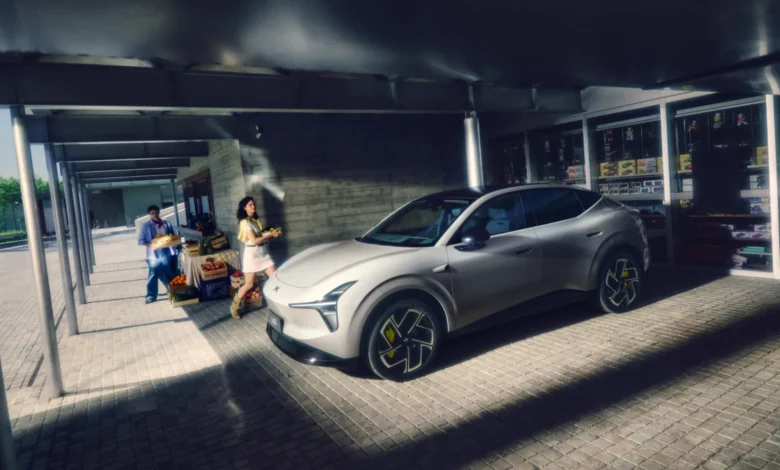
The global automotive landscape is currently witnessing a paradigm shift as Chinese manufacturers transition from being followers to becoming technological pacesetters. Xpeng Motors, a company that has consistently branded itself as a technology firm rather than a traditional automaker, has officially unveiled the L03. Positioned strategically beneath the G6, the L03 serves as the brand’s new entry-level model. However, its "entry-level" designation is deceptive; the vehicle introduces a suite of technological firsts for the brand, particularly for the European market, that challenge the status quo of the premium SUV-coupé segment.
The L03 represents a significant milestone for Xpeng as it is the first model to undergo a simultaneous global launch. This move signals the company’s maturing logistics and confidence in its international appeal. Beyond its global debut, the L03 is notable for being the first Xpeng vehicle to offer a range-extender powertrain, the first to feature the VLA 2.0 semi-autonomous driving system in Europe, and the first to integrate a dedicated AI large language model alongside built-in Google Maps. This technological density at a lower price point suggests a strategic pivot to capture a broader demographic while maintaining a reputation for cutting-edge innovation.
A New Philosophy in Powertrain Versatility
Perhaps the most significant departure from Xpeng’s previous strategy is the introduction of the "Power X" variant. While Xpeng originally established itself as a pure-play electric vehicle (EV) brand, the L03 Power X incorporates a range-extender (REEV) system. This decision is a pragmatic response to varying levels of charging infrastructure maturity across global markets. The Power X utilizes a 37.25 kWh battery that provides over 200 kilometers of pure electric range, which is sufficient for the vast majority of daily commutes. For longer journeys, the gasoline-powered range extender activates, pushing the total combined range beyond the 1,000-kilometer mark.

For the pure electric enthusiasts, Xpeng offers three distinct battery and motor configurations. The RWD Standard Range serves as the base model, equipped with a 180 kW (245 hp) motor and a 58.3 kWh battery, delivering a WLTP-rated range of 445 kilometers. Stepping up to the RWD Long Range increases the battery capacity to 71.2 kWh, extending the WLTP range to 520 kilometers. For those seeking performance, the AWD Performance version utilizes the same 71.2 kWh battery but adds a second motor to produce a combined 285 kW (388 hp). This configuration allows the L03 to sprint from 0 to 100 km/h in just 4.5 seconds, with a WLTP range of 440 kilometers.
Charging performance remains a cornerstone of the Xpeng experience. While the L03 does not reach the record-breaking speeds of its larger siblings, the G6 and G9, it remains highly competitive within its class. The vehicle supports DC fast charging that allows a 10% to 80% state-of-charge transition in approximately 20 minutes, with peak intake reaching up to 236 kW. For home or office charging, an 11 kW AC on-board charger is standard.
Vital Flow: The Evolution of Xpeng Design
The L03 introduces a refined design language dubbed "Vital Flow." Measuring 4.65 meters in length, it is approximately 10 centimeters shorter than the G6, giving it a more compact and athletic stance. The SUV-coupé silhouette is characterized by a sloping roofline and elegant light signatures both at the front and rear, which have become a trademark of the Xpeng aesthetic.
Aerodynamics played a crucial role in the development of the Vital Flow language, as evidenced by the flush door handles and the sculpted side panels designed to minimize drag. While the base models come equipped with 18-inch wheels, automotive analysts note that the 20-inch wheel options significantly enhance the vehicle’s visual proportions. Despite its "coupé" designation, the interior remains functional, offering seating for five adults. Practicality is further bolstered by a 367-liter rear trunk and a front trunk (frunk) that ranges from 44 to 89 liters depending on the powertrain configuration. Furthermore, all variants of the L03 are rated for a towing capacity of up to 1,500 kilograms, making it a viable option for small trailers or bike racks.

The AI-Driven Cockpit and VLA 2.0
Xpeng’s self-identification as an "AI company" is most evident inside the L03. The vehicle debuts the XOS 6 infotainment system, which represents a significant leap forward in human-machine interface (HMI). At the heart of this system is a natural AI voice assistant capable of understanding multiple languages simultaneously and processing complex, multi-step commands.
In a move tailored specifically for the Western market, Xpeng has integrated Google Maps directly into the native UI. This integration includes real-time Points of Interest (POI) and advanced routing capabilities. For instance, a driver can ask the AI to "find a supermarket on the way to my destination," and the system will automatically filter results based on the current route and charging needs.
The most anticipated feature, however, is the VLA 2.0 (Vision-Language-Action) semi-autonomous driving system. This technology has been operational in China for over six months, with data indicating that more than 50% of Xpeng owners actively engage the system during their daily drives. VLA 2.0 is powered by Xpeng’s proprietary Turing AI chips. These chips are designed specifically for the massive parallel processing required for real-time neural network calculations.
A critical detail for potential European buyers is the hardware requirement for this system. Xpeng has confirmed that the Turing chips are essential for VLA 2.0, meaning that current European models like the G6, G9, and P7+ will not be compatible with this specific iteration of autonomous tech. Xpeng plans to roll out VLA 2.0 across Europe by early 2027. Notably, the company has indicated that, at least initially, the system will not require a monthly subscription fee, a stark contrast to the software-as-a-service models adopted by many competitors.

Chronology of Xpeng’s European Expansion
To understand the significance of the L03, one must look at the rapid timeline of Xpeng’s growth:
- 2014: Xpeng Motors is founded in Guangzhou, China, with a focus on smart EVs and autonomous driving.
- 2020: The brand makes its first foray into Europe, starting with the Norwegian market.
- 2022-2023: Xpeng expands into the Netherlands, Denmark, and Sweden, establishing service centers and a retail presence.
- 2024 (Early): The launch of the G6 SUV in Europe marks a turning point, positioning Xpeng as a direct competitor to the Tesla Model Y.
- 2024 (Late): The L03 is unveiled as the global entry-point, introducing the first REEV powertrain and the Turing-powered AI architecture.
- 2025-2027: Planned expansion into additional European territories, including Belgium, and the wide-scale deployment of VLA 2.0.
Market Positioning and Pricing Strategy
Xpeng has positioned the L03 with aggressive pricing intended to disrupt the traditional European C-SUV segment. The entry-level RWD Standard Range starts at €34,990 (including VAT). The Power X range-extender version begins at €38,490, providing a competitive alternative for buyers who are not yet ready to commit to a full battery-electric lifestyle.
However, Xpeng’s strategy also involves incentivizing buyers to opt for higher-trim levels to access the brand’s most touted technologies. The full suite of self-driving capabilities, premium audio systems, and advanced comfort features is reserved for the AWD Performance Ultra, which is priced at €45,990. This pricing structure places the base L03 in competition with the likes of the Renault Megane E-Tech and the MG4, while the top-tier trims challenge the Tesla Model 3 and the Volkswagen ID.4.
Broader Implications for the Automotive Industry
The arrival of the L03 signals several trends that will likely define the next five years of the automotive industry. First is the "AI-first" approach to vehicle development. By developing its own Turing chips, Xpeng is following the vertical integration model pioneered by Tesla, reducing reliance on third-party silicon providers and allowing for tighter integration between hardware and software.

Second is the resurgence of the range-extender. As the initial "early adopter" phase of EV ownership concludes, manufacturers are finding that the "mass market" consumer still harbors significant range anxiety. By offering the Power X, Xpeng is hedging its bets, ensuring it can sell vehicles in regions where the high-speed charging network is still under development.
Finally, the L03 underscores the increasing pressure on European legacy automakers. With a starting price of under €35,000 for a vehicle equipped with advanced AI and a sophisticated electric architecture, Xpeng is setting a high bar for value. As trade tensions and tariffs continue to be a topic of political discussion between the EU and China, the L03 serves as a reminder that the competition is no longer just about manufacturing capacity, but about which companies can most effectively integrate artificial intelligence into the physical world.
The first deliveries of the Xpeng L03 are scheduled to commence before the end of this year, marking a rapid transition from reveal to road. For fleet managers and private buyers alike, the L03 presents a compelling, tech-forward option that bridges the gap between current driving habits and the autonomous future.
Related posts: