The Evolution of Urban Space Efficiency: Kia EV2 and Nios Firefly Challenge the Traditional Boundaries of the Compact Electric Vehicle Market

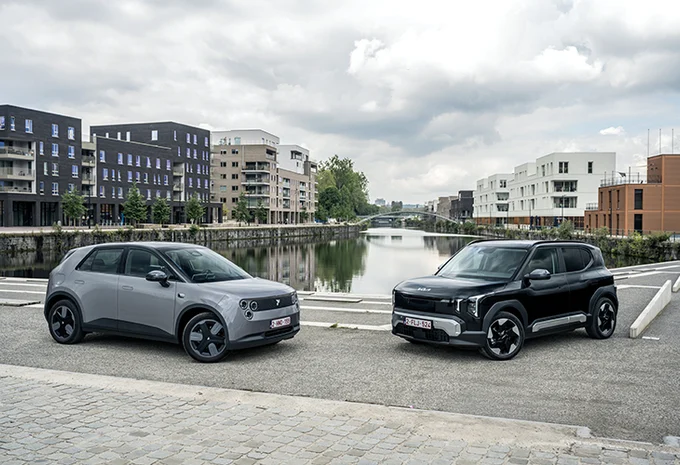
The automotive industry is currently witnessing a paradigm shift that promises to redefine the relationship between a vehicle’s exterior dimensions and its interior utility. For decades, the size of a car was a direct indicator of its status and its internal volume, a constraint dictated largely by the bulky requirements of internal combustion engines, transmissions, and exhaust systems. However, the transition to electric propulsion has unlocked a new era of "packaging" innovation. By utilizing compact electric motors and flat, floor-mounted battery packs, manufacturers are now able to offer the interior space of a mid-sized sedan within the footprint of a city car. This revolution is most visible in the upcoming battle between the Kia EV2 and Nio’s specialized sub-brand, codenamed Firefly. Both vehicles aim to solve the primary dilemma of the modern urban driver: how to obtain maximum practicality and "status" without the logistical burden of a large vehicle.
The Architectural Shift: Function Over Form?
The promise of the electric vehicle (EV) was always centered on liberation—freedom from fossil fuels, certainly, but also freedom from the rigid design constraints of the 20th century. In theory, an electric powertrain occupies significantly less volume than a thermal equivalent. This "saved" space can, in turn, be redistributed to the cabin, providing passengers with legroom and storage capacity that defies the vehicle’s external appearance.
In the premium segments, such as the E-segment (executive cars), this transition has been met with mixed results. High-end buyers often prioritize "status" and "presence," which are frequently equated with a long hood and a commanding physical profile. For these consumers, the fact that a smaller D-segment EV offers the same interior room as a larger gas-powered car is often secondary to the visual prestige of a larger chassis. However, the narrative changes entirely when looking at the "inferior" or entry-level categories. In the B and C segments, where price sensitivity is high and urban maneuverability is essential, the efficiency of space becomes the ultimate selling point.
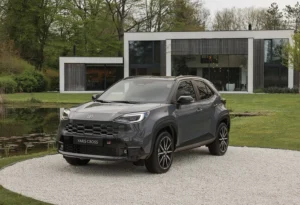
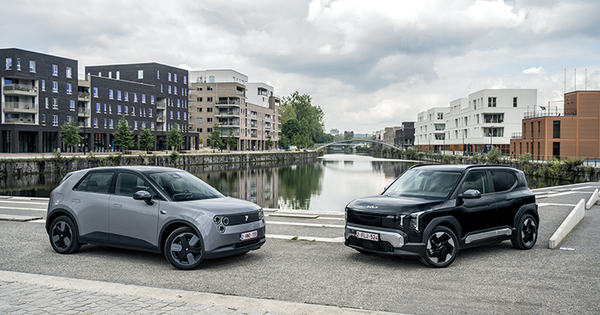
The Kia EV2 and the Firefly are designed to exploit this exact niche. Both vehicles occupy a physical footprint barely larger than a Renault 5 or a Volkswagen Polo, yet they boast the interior volume and cargo capacity of a C-segment vehicle like the Renault Megane E-Tech. This feat of engineering, achieved through intelligent packaging, represents the next frontier in the mass-market adoption of electric mobility.
Kia’s Strategic Play: The EV2 and the "EV for All" Vision
Kia has rapidly transformed from a value-oriented manufacturer into a leader in electric vehicle technology. Following the success of the EV6 and the flagship EV9, the Korean automaker has pivoted toward making electric mobility accessible to the masses. The EV2 is the cornerstone of this strategy, intended to sit below the recently launched EV3 and the upcoming EV4.
While technical specifications remain closely guarded, industry insiders suggest the EV2 will utilize a cost-optimized version of the Hyundai Motor Group’s Integrated Modular Architecture (IMA). Unlike the E-GMP platform used for higher-end models, the architecture for the EV2 is expected to focus on front-wheel-drive configurations to maximize cabin floor flatness and reduce manufacturing complexity.
Anticipated Specifications for the Kia EV2:
- Target Price: Approximately €25,000 to €30,000.
- Battery Technology: Likely to utilize Lithium Iron Phosphate (LFP) cells to keep costs low while maintaining durability.
- Range: Estimated between 300 km and 450 km (WLTP), depending on battery size.
- Market Position: A direct competitor to the Citroën ë-C3 and the Renault 5 E-Tech.
Kia’s approach is rooted in reliability and brand trust. By offering a vehicle that feels "larger than it looks," Kia aims to capture buyers who are downsizing from larger internal combustion vehicles but are unwilling to sacrifice the utility of a family car.
The Firefly Project: Nio’s European Gambit
While Kia leverages its established global presence, the Chinese premium EV maker Nio is taking a more surgical approach with its "Firefly" sub-brand. Recognizing that Nio’s primary brand—known for luxury SUVs and battery-swapping technology—might be too expensive for the European B-segment, the company created Firefly specifically to tackle the compact market.
The Firefly brand is Nio’s answer to the unique demands of European cities: narrow streets, limited parking, and a high demand for hatchback-style utility. However, Firefly is not merely a "budget" brand. It is expected to retain some of Nio’s signature technological edges, such as advanced software integration and potentially a compact version of Nio’s battery-swapping system.
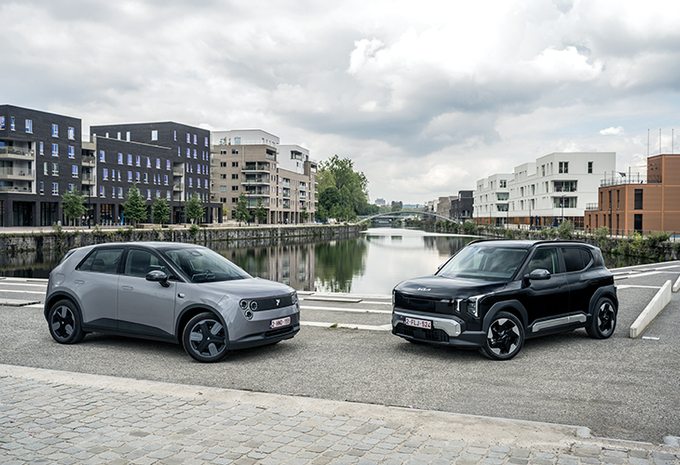
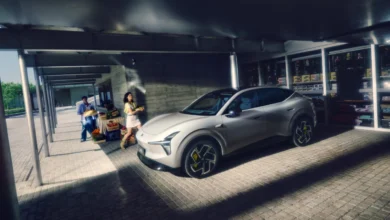
The "packaging" of the Firefly is rumored to be its most radical feature. By pushing the wheels to the absolute corners of the chassis and utilizing a high-roof design, Nio aims to provide a "lounge-like" interior experience in a car that is less than four meters long. This focus on "interior-out" design is a direct challenge to European legacy automakers who have historically struggled to balance EV battery weight with interior space in small cars.
Chronology of the Compact EV Race
The development of the Kia EV2 and the Firefly did not happen in a vacuum. It is the result of a multi-year acceleration in the EV sector:
- 2021–2022: The Luxury Wave. Manufacturers focused on high-margin EVs (Tesla Model S, Porsche Taycan, Kia EV6) to offset the high costs of R&D and battery production.
- 2023: The Affordable Pivot. Announcements of the "€25,000 EV" became the industry standard. Volkswagen teased the ID.2all, and Citroën unveiled the ë-C3.
- Early 2024: The Packaging Breakthrough. Designers began showcasing concepts where the wheelbase-to-length ratio reached record highs. Kia confirmed the expansion of its "EV" numbered lineup to include the EV2.
- Late 2024 – 2025: The Market Entry. Firefly began road testing in Europe, while Kia accelerated the development of its small-car production lines in Slovakia to ensure the EV2 meets European subsidies and tariff requirements.
Supporting Data: The Economic Necessity of Efficiency
The shift toward hyper-efficient compact EVs is driven by more than just design ingenuity; it is an economic necessity. According to data from JATO Dynamics, the B-segment (small cars) remains one of the most popular categories in Europe, yet it has been the slowest to electrify due to thin profit margins.
The cost of a battery pack currently accounts for 30% to 40% of an EV’s total production cost. In a large SUV, this cost can be absorbed into a high retail price. In a small car, the only way to make the vehicle profitable is to maximize the "value-to-size" ratio. If a manufacturer can sell a B-segment car (like the EV2 or Firefly) that performs the duties of a C-segment car (like a Golf or Megane), they can justify a slightly higher price point that covers the cost of the battery while still appearing as a bargain to the consumer.
Furthermore, the European Union’s tightening of CO2 regulations and the looming Euro 7 standards make internal combustion engines in small cars increasingly expensive to produce. This creates a "price parity" window where the Kia EV2 and Firefly become not just alternatives, but the logical financial choice for urban households.

Official Responses and Industry Implications
While official statements from Kia and Nio remain focused on "democratizing technology," industry analysts suggest that the competition will be fierce. A spokesperson for Kia Europe recently noted that "the goal for our small EV lineup is to ensure that the transition to electric does not feel like a compromise in lifestyle." This sentiment is echoed by Nio executives, who have described Firefly as a "boutique" approach to urban mobility.
The implications for the broader market are significant:
- The End of the "Second Car": Traditionally, small cars were "second cars" for families. With the interior space of a Megane, the EV2 and Firefly could realistically serve as a household’s primary vehicle.
- The Threat to Legacy Brands: Volkswagen, Renault, and Stellantis are under immense pressure. If Kia and Nio can deliver superior packaging and software at a lower price point, the traditional European dominance in the hatchback segment could evaporate.
- Infrastructure Stress: Increased adoption of compact EVs in urban centers will place a spotlight on the lack of curbside charging. This may give Nio’s Firefly an advantage if it incorporates battery-swapping, allowing users to "refuel" in three minutes without a home charger.
Conclusion: The New Benchmark for the "Small" Car
The battle between the Kia EV2 and the Firefly is more than a simple product rivalry; it is a test of which philosophy will define the next decade of motoring. Kia represents the pinnacle of the "traditional-turned-innovator" manufacturer, utilizing scale and reliability to bring high-tech packaging to the masses. Nio’s Firefly represents the "disruptor," using a clean-sheet approach to redefine what a car can be when it is no longer built around an engine.
As these vehicles move from the drafting board to the streets of Paris, Berlin, and Brussels, the ultimate winner will be the consumer. The "revolution" promised by the electric car is finally arriving—not in the form of thousand-horsepower supercars, but in the form of small, smart, and incredibly spacious urban companions that prove that, in the world of EVs, size truly is an illusion.
Related posts: