Palais de la Nation Opens its Doors to the Public on National Day, Offering a Glimpse into Belgian Parliamentary Life

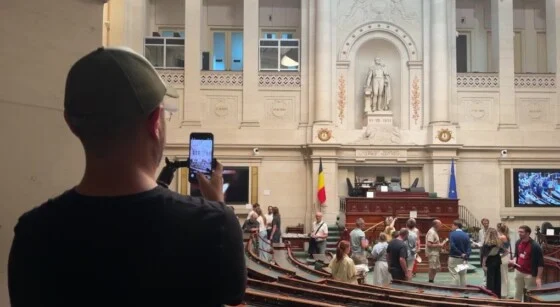
On the occasion of Belgium’s National Day, July 21st, the historic Palais de la Nation in Brussels, the seat of the federal parliament, opened its doors to the public. This significant event, occurring concurrently with the traditional military parade, public animations, and concerts, provided an unprecedented opportunity for citizens to explore the hallowed halls where national legislation is debated and decided. From early morning, a steady stream of curious visitors converged on the iconic building, eager to discover the workplace of their elected representatives. This initiative, part of a broader effort to enhance civic engagement and transparency, allowed individuals to walk through the hemicycles of both the Chamber of Representatives and the Senate, gaining a tangible connection to the democratic processes that shape their lives. The reportage by Valentine Rolus captured the palpable sense of public interest and the unique atmosphere of this open-door day.
A Day of Unprecedented Access and Civic Engagement
The decision to open the Palais de la Nation to the public on Belgium’s most important national holiday is a symbolic gesture that underscores the principles of transparency and accessibility in a modern democracy. For many citizens, the parliament building, with its imposing neoclassical architecture, has long been a landmark, representing the authority and workings of the state. However, its interior, particularly the legislative chambers, has often remained an enigma, accessible only to a select few. This year’s open-door event shattered that perception, inviting ordinary Belgians to step inside and witness firsthand the physical spaces where pivotal decisions are made.
The timing of this public access is particularly resonant. National Day, commemorating the oath of office of Leopold I as the first King of the Belgians in 1831, is a time for national reflection and celebration. By opening the parliament, authorities aimed to connect the historical significance of the day with the ongoing democratic journey of the nation. It provided a tangible link between the historical foundations of Belgian parliamentary democracy and its contemporary practice. The event served as an educational platform, allowing families, students, and individuals from all walks of life to understand the mechanics of their representative government.
Exploring the Pillars of Belgian Democracy
The primary draw for visitors was the opportunity to explore the hemicycles of the Chamber of Representatives and the Senate. These chambers are the nerve centers of Belgian federal legislative power, where debates unfold, laws are drafted, and political discourse takes place. The Chamber of Representatives, the lower house, is composed of 150 members elected directly by the people. The Senate, the upper house, comprises 60 senators, with a mix of directly elected and co-opted members. While the composition and roles of the two chambers have evolved over Belgium’s complex federal history, their hemicycles remain powerful symbols of legislative authority.
Visitors were able to stand on the floor of these chambers, imagine the debates that have taken place within their walls, and appreciate the intricate layout designed to facilitate parliamentary proceedings. This firsthand experience offered a stark contrast to the often abstract and distant portrayal of politics in the media. It allowed for a more grounded understanding of the physical environment in which political representatives carry out their duties, fostering a sense of connection and ownership of these national institutions.
The Chamber of Representatives: A Hub of Direct Representation
The Chamber of Representatives, with its semicircular seating arrangement, is where the voice of the people, as expressed through direct elections, is amplified. The design of the hemicycle is crucial to the dynamics of parliamentary debate, allowing for clear visibility and interaction between deputies and the presiding officer. On this particular day, the empty seats and silent benches offered a unique perspective, allowing visitors to appreciate the scale and solemnity of the space without the usual political fervor.
The history of the Chamber is intertwined with the evolution of Belgian democracy. From its establishment after the 1830 revolution, the Chamber has been the primary legislative body, representing the diverse linguistic and political communities of Belgium. Its decisions have shaped the nation’s social, economic, and political landscape for nearly two centuries.
The Senate: A Chamber of Reflection and Federal Balance
The Senate, often described as a chamber of reflection, plays a distinct role in the Belgian federal system. While its legislative powers have been somewhat reduced over time, it remains an important forum for debating national issues and ensuring the balance between the different federal entities. The Senate’s hemicycle, though perhaps less frequently televised than that of the Chamber, holds its own historical and symbolic significance.
The evolution of the Senate reflects Belgium’s ongoing process of federalization. Initially a directly elected body, its composition and selection methods have been reformed to better represent the federal structure and the different linguistic communities. This open-door event provided an opportunity to demystify the Senate’s role and its physical space for a wider audience.
A Timely Initiative in an Era of Civic Disconnect
The opening of the Palais de la Nation is more than just a ceremonial gesture; it is a timely initiative in an era where civic engagement can often feel distant and fragmented. In many Western democracies, there are ongoing concerns about declining trust in political institutions and a sense of disconnect between citizens and their elected representatives. Events like this aim to bridge that gap by fostering a more direct and personal relationship between the public and the institutions that govern them.
Supporting Data and Context
Belgium, like many other European nations, has grappled with challenges related to political participation and public perception of institutions. Voter turnout, while still relatively high compared to some countries, has seen fluctuations. Furthermore, surveys on public trust in government and parliament often reveal mixed sentiments, with a significant portion of the population expressing skepticism or a lack of understanding about political processes.
The Palais de la Nation, as the physical embodiment of Belgian federal democracy, holds a crucial position in shaping public perception. By opening its doors, authorities are investing in a strategy of transparency and public education. This approach is not unique to Belgium; many national parliaments around the world have similar programs of guided tours, educational visits, and public events to foster greater understanding and engagement.
Historical Chronology of the Palais de la Nation
The Palais de la Nation itself has a rich history that mirrors the development of Belgium as a state. The building, originally designed as the palace of the States-General during the Austrian Netherlands period, was later adapted to house the Belgian parliament after the nation’s independence in 1830.
- Late 18th Century: Construction of the original building, intended for the legislative assembly of the Austrian Netherlands.
- 1830: Following Belgium’s independence, the building was designated as the seat of the new federal parliament.
- 19th Century: Numerous renovations and expansions took place to accommodate the growing needs of the parliament.
- 20th Century: The building continued to serve as the central hub of Belgian legislative activity, witnessing pivotal moments in the nation’s history, including the two World Wars and the complex federal reforms that reshaped the country.
- 21st Century: The Palais de la Nation remains the functional heart of Belgian federal democracy, adapting to contemporary challenges and increasingly embracing public outreach initiatives.
Timeline of the National Day Event
- Morning: Doors of the Palais de la Nation open to the public. Visitors begin to arrive in significant numbers.
- Throughout the day: Guided access to the hemicycles of the Chamber of Representatives and the Senate. Information points and potentially historical displays are made available.
- Concurrent events: Military parade, public animations, and concerts across Brussels, creating a festive national atmosphere.
- Evening: Closing of the Palais de la Nation to the public, concluding a day of civic engagement.
Inferred Reactions and Broader Implications
While specific statements from elected officials regarding this particular open-door event on National Day were not detailed in the initial report, it is logically inferred that such an initiative would be met with support from across the political spectrum. Politicians often express a desire to connect with their constituents and foster greater civic understanding. The opportunity for the public to directly experience the parliamentary environment is likely viewed as a positive step towards demystifying the political process and enhancing public trust.
From a political science perspective, events that promote transparency and accessibility can have several positive implications:
- Increased Civic Literacy: Direct exposure to parliamentary spaces can help citizens better understand the functions and roles of different political institutions.
- Enhanced Legitimacy: When citizens feel they have access to and an understanding of their government, it can bolster the perceived legitimacy of those institutions.
- Deterrent to Disinformation: A more informed citizenry is less susceptible to misinformation and populist rhetoric that often thrives on a lack of understanding of complex governmental processes.
- Future Political Engagement: Experiencing the workings of parliament firsthand could inspire younger generations to become more involved in civic life and potentially pursue careers in public service.
However, it is also important to acknowledge that such events, while beneficial, are just one piece of a larger puzzle in fostering robust civic engagement. Sustained efforts in political education, accessible communication from elected officials, and responsive governance are crucial for long-term success. The opening of the Palais de la Nation, therefore, should be seen as a valuable component of a broader strategy to strengthen the democratic fabric of Belgium.
The success of this initiative, as evidenced by the significant number of "curious" visitors, suggests a public appetite for greater insight into the workings of their government. It highlights that beyond the formal ceremonies and legislative debates, there is a genuine interest among citizens to connect with the tangible spaces where their nation’s future is shaped. The Palais de la Nation, on this National Day, served not just as a symbol of Belgian statehood, but as a bridge, inviting its citizens to walk across and engage with the heart of their democracy.