Belgian Automotive Market Reaches Major Milestones in First Half of 2026 as Private EV Adoption Surges.

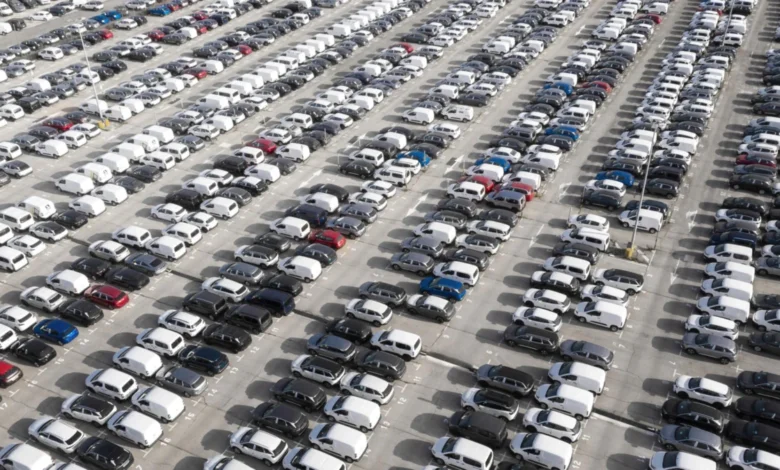
The Belgian automotive landscape has undergone a profound transformation during the first six months of 2026, marked by a significant resurgence in private consumer activity and a historic breakthrough for battery electric vehicles (BEVs). According to the latest quarterly analysis released by Febiac, the Belgian Federation of Automobile and Cycle Industries, the market is currently defined by two converging trends: the stabilization of the private buyer segment and the inexorable rise of electrified powertrains. Total new passenger car registrations reached 230,681 units in the first half of the year, providing a clear indicator of economic resilience and a shifting consumer mindset regarding mobility.
The Return of the Private Buyer
One of the most striking revelations in the H1 2026 data is the robust return of private individuals to the new car market. For several years, the Belgian market was heavily dominated by corporate fleet purchases, largely due to the favorable tax treatment of company cars and the economic uncertainty that deterred households from making large capital investments. However, the tide appears to be turning. In the first half of 2026, the share of private buyers rose to 45.3 percent, a notable increase from 41.7 percent in 2025 and 38.4 percent in 2024.
This upward trajectory suggests that Belgian households have regained the confidence necessary to invest in new technology. Industry analysts attribute this shift to several factors, including a more stable interest rate environment compared to the volatile period of 2023-2024, an aging domestic fleet that necessitates replacement, and the arrival of more affordable electric and hybrid models that cater specifically to the mid-range consumer segment. While professional buyers still represent the majority of the market at 54.7 percent, their dominance is no longer as absolute as it was in the immediate post-pandemic era. In June 2026 alone, companies accounted for 57 percent of registrations, indicating that while the private sector is growing, the corporate sector remains the bedrock of the Belgian automotive economy.
A Decisive Pivot Toward Electrification
The transition away from internal combustion engines (ICE) has reached a critical tipping point. For the first time, more than half of all new cars registered in Belgium—54 percent—feature an electrified powertrain. Within this category, battery electric vehicles (BEVs) are the primary drivers of growth. BEVs now command a 36.1 percent market share, up from 34.7 percent in 2025, solidifying their position as the second most popular propulsion system in the country, trailing only petrol-powered vehicles.
The data also highlights a divergence within the hybrid segment. Full hybrids (HEV), which do not require external charging, continue to gain traction among consumers who are not yet ready to commit to a fully electric lifestyle. HEVs now represent 12.3 percent of the market, compared to 11.5 percent a year ago. Conversely, plug-in hybrids (PHEVs) are witnessing a sharp decline. Their market share plummeted from 9.3 percent to 5.6 percent. This decline is largely a result of revised fiscal regulations that have reduced the tax advantages for PHEVs, particularly for corporate fleets, as the Belgian government prioritizes zero-emission vehicles to meet stringent EU climate targets.
Traditional fuels are experiencing a continued sunset. While petrol remains the leading fuel type with a 42.3 percent share, its lead is narrowing. Diesel, once the dominant fuel in the Belgian market, has effectively been relegated to a niche status, accounting for a mere 2.8 percent of new registrations. This collapse reflects both the regulatory pressure of Low Emission Zones (LEZ) in major cities like Brussels, Antwerp, and Ghent, and the diminishing resale value of diesel vehicles.
Breaking the 10 Percent Barrier for Private EV Adoption
Perhaps the most significant milestone recorded in the Febiac report is the performance of electric vehicles within the private consumer segment. Historically, the adoption of BEVs was almost exclusively a corporate phenomenon, driven by 100 percent tax deductibility for companies. Private individuals remained hesitant due to high purchase prices and concerns over charging infrastructure.
In the first half of 2026, however, the share of BEVs among private buyers crossed the symbolic 10 percent threshold for the first time, reaching 10.1 percent (up from 8.9 percent in 2025). This suggests that the "early adopter" phase for private EVs is transitioning into a "majority" phase. The availability of smaller, more cost-effective EV models from both European and Asian manufacturers has played a pivotal role in this democratization.
In the corporate sector, the shift is even more dramatic. Driven by the 2026 tax deadlines which mandate zero-emission fleets for maximum deductibility, BEVs now represent a staggering 59 percent of new professional registrations. Of the 83,282 new electric cars registered in the first half of the year, nearly seven out of ten were registered by professional users, underscoring the role of the Belgian company car system as a laboratory for national electrification.

The Second-Hand Market: A Reservoir of Opportunity
While the new car market garners most of the headlines, the second-hand market remains the largest component of Belgium’s automotive sector. Despite a slight contraction of 3.6 percent in the first half of 2026, used cars still account for 61 percent of all vehicle registrations in the country. This market is overwhelmingly dominated by private individuals, who make up 91.1 percent of buyers.
The most notable trend in the used sector is the rapid influx of electric vehicles. The number of registered second-hand BEVs surged by 42.5 percent to 21,180 units, achieving a market share of 5.9 percent. This growth is being fueled by the "trickle-down" effect of the leasing industry. As the first generation of mass-adopted corporate EVs reach the end of their four-to-five-year lease contracts, they are entering the second-hand market in significant numbers, providing private buyers with more affordable entry points into electric mobility.
Interestingly, companies and leasing firms are active participants in this space, accounting for 51.4 percent of second-hand BEV registrations. This suggests a robust B2B market for used electric vehicles, where smaller businesses that cannot afford new EVs are opting for recently retired lease vehicles.
Regional Disparities and the Brussels Surge
The transition to electric mobility is not uniform across Belgium’s three regions. Flanders continues to lead the charge in the second-hand EV market, accounting for 69 percent of all used BEV registrations. This is likely due to a combination of higher average household income, a more developed charging network, and previous regional incentives that stimulated early adoption. Wallonia follows with 21.2 percent of the market.
However, the Brussels-Capital Region recorded the most explosive growth. The number of second-hand BEV registrations in Brussels rose by 61.6 percent, pushing the electric market share in the capital to 9.8 percent. This surge is attributed to the strict implementation of the Brussels Low Emission Zone, which has made ICE ownership increasingly difficult and expensive for city dwellers, forcing a faster transition to zero-emission alternatives.
Analysis of Implications and Future Outlook
The data from the first half of 2026 suggests that the Belgian automotive market is successfully navigating a period of unprecedented structural change. The recovery of the private market is a vital sign of economic health, ensuring that the transition to green mobility is not limited to the corporate elite but is beginning to permeate all levels of society.
However, challenges remain. The decline of PHEVs indicates that the "transition technology" phase is ending, placing more pressure on the public and private sectors to accelerate the rollout of high-speed charging infrastructure. While Flanders has made significant strides, the slower pace of infrastructure development in parts of Wallonia could create a "mobility divide" if not addressed.
Furthermore, the surge in used EVs highlights the need for standardized battery health certifications to maintain consumer trust in the second-hand market. As lease-end vehicles flood the market, the ability of buyers to verify the remaining capacity of an EV battery will be crucial for price stability.
In conclusion, the first half of 2026 has set a new benchmark for the Belgian automotive industry. With BEVs becoming a staple of both new and used markets and private buyers returning to showrooms, the path toward the European Union’s 2035 ban on new ICE vehicles appears to be well-paved in Belgium. The focus for the remainder of the year will likely shift from stimulating demand to ensuring that the energy grid and charging networks can keep pace with this rapid influx of electric power.
Related posts: