AMD Expands Embedded AI Portfolio with Ryzen AI Embedded X100-Series, Powering Real-time "Physical AI"

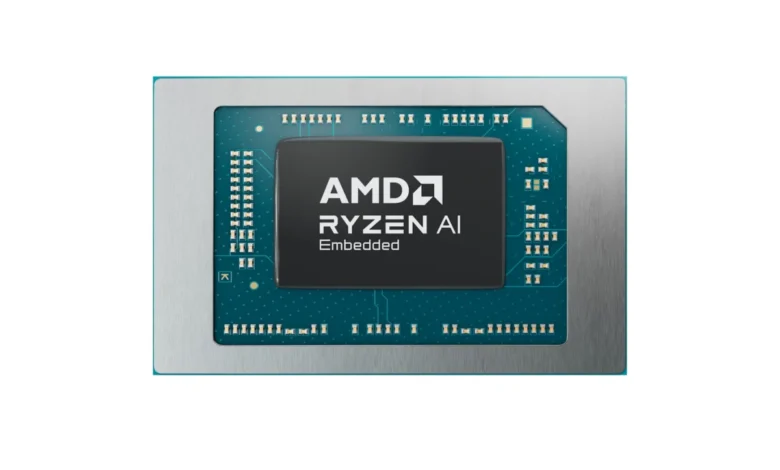
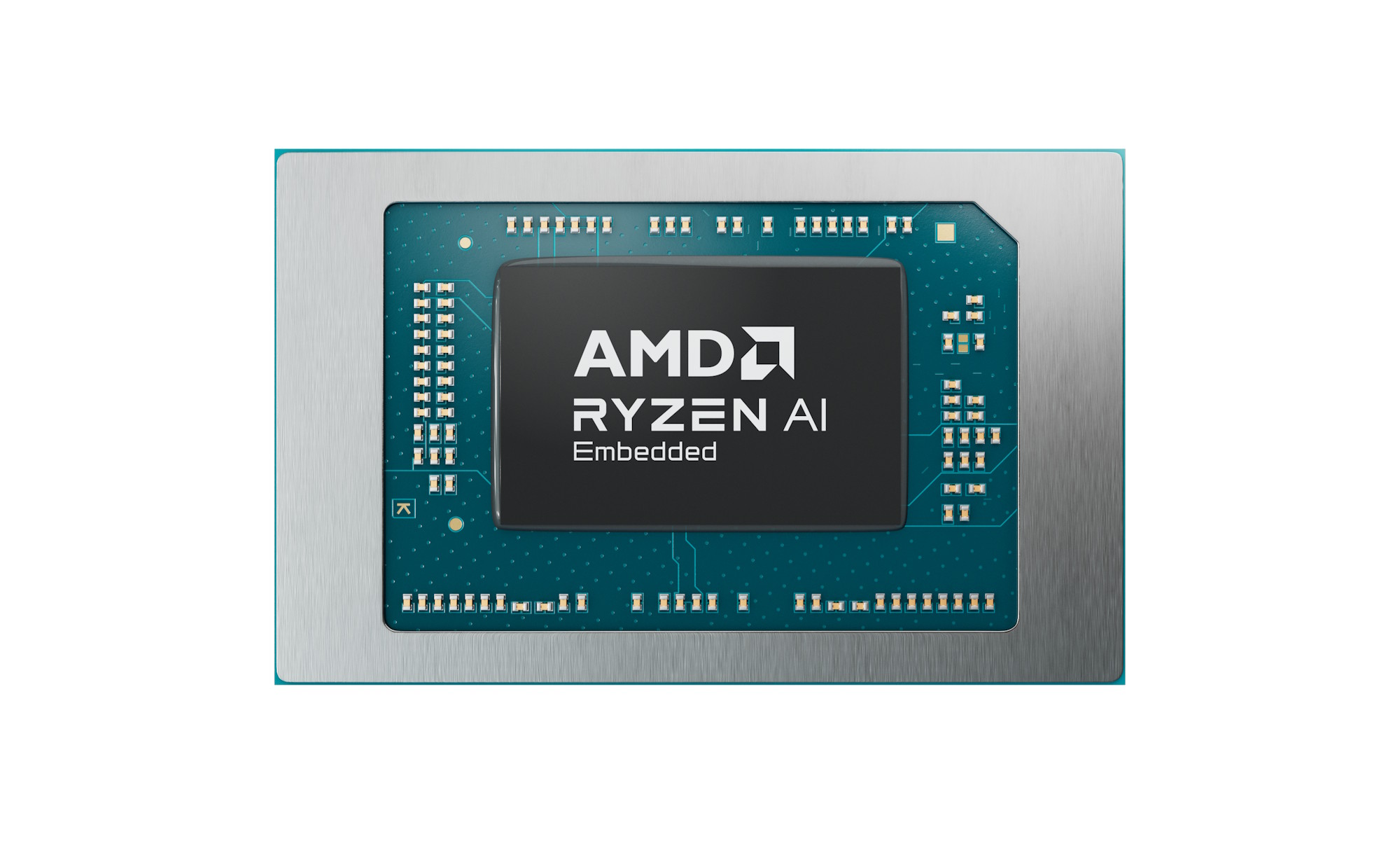
AMD has officially launched its Ryzen AI Embedded X100-series processors, marking a significant advancement in integrated AI solutions for the embedded market. These new processors combine a CPU, GPU, and Neural Processing Unit (NPU) with shared memory on a single chip, specifically engineered to enable "physical AI" in demanding applications such as robotics, industrial automation, and advanced medical devices. The X100-series is designed to empower these systems with real-time perception, reasoning, and action capabilities, addressing the growing need for intelligent edge processing.
Unveiling "Physical AI": A New Paradigm for Edge Intelligence
The introduction of the Ryzen AI Embedded X100-series took center stage at AMD’s "Advancing AI 2026" event, an industry gathering focused on the company’s long-term vision and innovations in artificial intelligence. This series represents the pinnacle of AMD’s embedded AI offerings, building upon the foundation laid by the more modest P100-series, which debuted earlier in January at the Consumer Electronics Show (CES). The X100-series is not merely an incremental update; it signifies a strategic move to consolidate computational power and AI acceleration onto a unified platform, eliminating bottlenecks inherent in multi-chip architectures.
"Physical AI is not just AI; it’s control plus AI," AMD emphasized during a technical briefing. This core philosophy underscores the critical need for deterministic, low-latency processing in environments where real-world interactions demand immediate and precise responses. Traditionally, robot builders and industrial automation specialists have relied on separate x86 CPUs for control logic and dedicated AI accelerators for inference tasks. This decoupled approach often necessitates data copying and complex handshakes between chips, introducing latency and reducing efficiency. By integrating CPU, GPU, and NPU and allowing them to share a common memory space, the X100-series dramatically accelerates the control loop, enabling faster decision-making and more responsive autonomous systems.
Architectural Deep Dive: Powering Real-time Intelligence with Strix Halo
At the heart of the Ryzen AI Embedded X100-series lies a sophisticated architecture heavily derived from AMD’s high-performance consumer processor, Strix Halo, known in the laptop world as Ryzen AI Max. This strategic reuse of proven silicon underscores AMD’s commitment to leveraging its leading-edge consumer technology for specialized industrial applications. The X100 chips boast up to sixteen Zen 5 CPU cores, delivering robust general-purpose computing power essential for complex control algorithms and operating system tasks.
Complementing the CPU is an integrated GPU of "discrete class," featuring up to forty RDNA 3.5 compute units. This powerful graphics engine is crucial for processing high-resolution sensor data, running vision-based AI models, and rendering intricate human-machine interfaces. The RDNA 3.5 architecture provides a significant leap in graphics and compute performance, making it suitable for demanding real-time vision-language-action models that require rapid image analysis and object recognition.
The dedicated XDNA 2 Neural Processing Unit (NPU) is the third pillar of this integrated design. It delivers approximately 50 Tera Operations Per Second (TOPS) for AI inference, all while consuming a remarkably low power of just two watts. This efficiency makes the NPU ideal for "always-on" inferencing tasks, such as continuous camera monitoring, predictive maintenance, and real-time anomaly detection, where sustained AI processing with minimal power draw is paramount.
The unified memory architecture is a cornerstone of the X100’s performance. With support for up to 128 GB of shared memory, providing up to 273 GB/s of bandwidth, all computational units (CPU, GPU, NPU) can access data without the overhead of inter-chip communication. This shared access is critical for achieving the ultra-low latency required for real-time physical AI applications. The chip’s physical layout is identical to its consumer counterpart: two compute chiplets, each housing eight Zen 5 cores and 32 MB of L3 cache, alongside a large I/O die. This I/O die integrates the RDNA 3.5 GPU, the XDNA 2 NPU, a 256-bit wide memory bus, and an additional 32 MB of Infinity Cache specifically dedicated to the GPU, further enhancing graphics performance.
Bridging Consumer and Industrial: The Embedded Advantage
While the X100-series shares its fundamental silicon with AMD’s consumer Ryzen AI Max processors, its value proposition for the embedded market extends far beyond raw performance. The transition from consumer-grade to industrial-grade involves a host of specialized features and assurances critical for long-term deployment in harsh and mission-critical environments.
The embedded advantage lies in:
- Validated Firmware and Hard Real-time Support: Embedded systems often require highly specialized firmware and operating system support to guarantee deterministic performance. The X100-series comes with validated firmware and hard real-time capabilities, ensuring that critical operations execute within strict, predictable timeframes.
- Quality-of-Service (QoS) Stack: A sophisticated QoS stack allows developers to reserve cache and memory bandwidth for critical threads, prioritizing essential tasks and preventing contention that could lead to unpredictable delays.
- Extended Temperature Range: Unlike consumer chips, the X100-series is designed to operate reliably across a wide temperature spectrum, from -40°C to 105°C. This robustness is essential for industrial settings, outdoor deployments, and medical equipment that may experience extreme environmental conditions.
- Guaranteed Lifecycle and Longevity: Industrial and medical applications demand long product lifecycles, often spanning a decade or more, to minimize redesign costs and ensure long-term support. AMD guarantees that the X100-series will remain in production for at least ten years, providing stability and peace of mind for integrators.
- 24/7 Operation and Durability: Engineered for continuous 24/7 operation over a decade, these chips are built to withstand the rigors of constant use in demanding industrial environments, where reliability is paramount.
This strategic approach of adapting high-performance consumer silicon for embedded use is a proven recipe in the semiconductor industry. It allows AMD to offer cutting-edge performance while providing the specialized features and assurances that the embedded market demands, creating a highly competitive solution.
Determinism and Responsiveness: The Heart of Industrial Automation
For applications like robotics and medical devices, determinism is often more critical than peak performance. A robot arm must respond predictably to sensor inputs within milliseconds, not just quickly on average. The X100-series is engineered to meet these stringent requirements. It promises a "firm real-time" mode with interrupt latency below seven microseconds, ensuring that control signals are processed with extreme precision. Furthermore, through the Xen hypervisor, the platform can achieve "hard real-time" capabilities, essential for mission-critical systems where even minor deviations can have severe consequences.
In practical terms, the CPU can manage up to 8,000 control decisions per second, providing the granular command required for complex robotic movements or intricate medical procedures. Concurrently, the integrated GPU can process a vision-language-action model in under 100 milliseconds, allowing robots to quickly interpret visual data, understand commands, and execute actions with minimal delay. This combination of rapid control and swift AI inference enables autonomous systems to perceive, reason, and act in near real-time, significantly enhancing their capabilities and safety.
AMD also presented performance comparisons, claiming up to 2.1 times higher multithread performance compared to Intel’s Core Ultra Series 3. While such self-declared benchmarks serve as an indication of AMD’s performance targets and competitive positioning, they highlight the company’s ambition to lead in the embedded AI space. The X100-series currently comprises three models, expanding AMD’s Ryzen AI Embedded portfolio to a total of eight chips, catering to a diverse range of performance and power requirements.
Robustness and Longevity: Engineered for the Factory Floor and Beyond
The embedded roots of the X100-series are evident in its robust design principles. Beyond the extended temperature range and guaranteed production lifecycle, the chips are built for enduring operation in harsh environments. This includes resistance to shock, vibration, and electromagnetic interference, common challenges in industrial settings. Such durability is non-negotiable for systems deployed in manufacturing plants, remote infrastructure, or critical healthcare equipment.

AMD is also committed to an open software ecosystem, which is crucial for fostering innovation and ease of development in the embedded space. The X100-series supports Linux, a widely adopted operating system for embedded systems, providing a flexible and powerful foundation. For GPU-accelerated workloads, developers can leverage the ROCm (Radeon Open Compute) stack, AMD’s open-source platform for GPU computing. Furthermore, the chips are compatible with standard AI frameworks such as PyTorch, ONNX, and TensorFlow, enabling developers to port existing AI models and develop new applications with familiar tools and workflows. This open approach reduces vendor lock-in and accelerates time-to-market for new solutions.
Open Ecosystem and Developer Support
AMD is not just launching hardware; it’s building an ecosystem around the X100-series to facilitate rapid development and deployment of AI-powered autonomous systems. The X100 chips are set to become the core processing unit for AMD Kria AI, a ready-to-use robotics development platform that AMD announced concurrently with these processors. Kria AI aims to provide developers with a comprehensive toolkit to streamline the design, prototyping, and deployment of robotics applications.
To further support its customers and accelerate innovation, AMD is establishing the AMD Robotics Partner Network. This network comprises thirty validated partners, including leading system-on-module (SoM) providers and integrators like Arbor, Congatec, iBase, IEI, Sapphire, and Seavo. These partners will offer a range of reference platforms and modules based on the X100-series, simplifying integration for system builders and bringing robots and other autonomous systems from prototype to production faster. This collaborative approach fosters a vibrant ecosystem, providing developers with readily available hardware and software solutions.
Market Impact and Future Outlook
The launch of the Ryzen AI Embedded X100-series is poised to have a significant impact on the embedded AI market. By offering a highly integrated, high-performance, and robust solution, AMD is directly addressing critical needs in Industry 4.0, edge computing, and AI at the edge. The ability to perform complex AI inference and control tasks in real-time, directly at the point of data acquisition, reduces reliance on cloud connectivity, enhances data privacy, and improves operational efficiency.
This move positions AMD as a formidable competitor against established players like Intel and NVIDIA in the embedded and industrial segments. The strategic reuse of consumer IP, combined with a strong focus on embedded-specific requirements, offers a compelling value proposition. As the demand for smart factories, autonomous vehicles, advanced medical diagnostics, and intelligent infrastructure continues to grow, the X100-series provides a powerful foundation for the next generation of intelligent machines. The trend of integrating CPU, GPU, and NPU onto a single die is becoming increasingly prevalent across various computing segments, and its adoption in the embedded space is crucial for unlocking new levels of autonomy and responsiveness.
Availability and Executive Insight
Samples of the Ryzen AI Embedded X100-series have been available to select customers since June, allowing early adopters to begin development and integration. Mass production is slated for the fourth quarter of 2026, indicating a focused ramp-up to meet anticipated demand. For customers looking to accelerate their development cycles, AMD offers various reference platforms, and system-on-modules will be available from its launch partners.
Kirk Saban, Corporate Vice President of Product, Software, and Solutions at AMD Embedded, encapsulated the significance of this launch: "The Ryzen AI Embedded X100-series opens a new chapter for physical AI. By combining leadership in CPU, GPU, and NPU performance with embedded-specific features, an open software ecosystem, and industrial reliability, customers will bring their autonomous systems to market faster." His statement underscores AMD’s comprehensive strategy: delivering not just powerful silicon, but a complete ecosystem designed to accelerate innovation and deployment in the rapidly evolving world of physical AI. This strategic move solidifies AMD’s commitment to enabling intelligent, real-time capabilities at the edge, paving the way for more sophisticated and autonomous systems across industries.
Related posts: