Tolu Arokodare’s Refusal to Leave Training Pitch Triggers Extraordinary Security Measures at Wolverhampton Wanderers

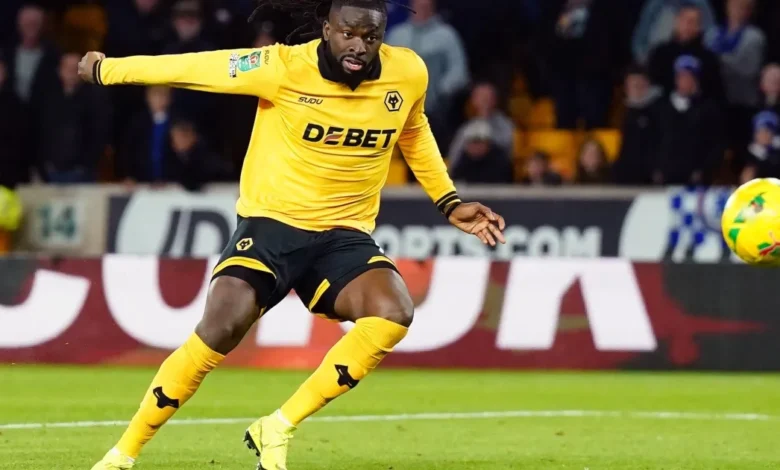
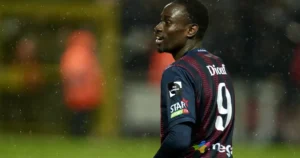
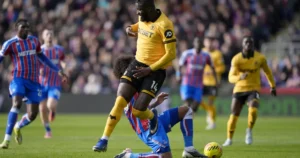
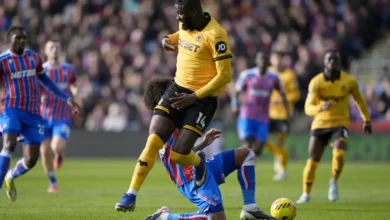
Tolu Arokodare, the Nigerian forward who previously played for KRC Genk, has recently become the focal point of a remarkable and unprecedented incident at Wolverhampton Wanderers, his current club. The situation escalated dramatically when Arokodare reportedly refused to leave the training pitch after being instructed not to participate with the rest of the squad. This defiance has led to extraordinary security measures being implemented to prevent the player from accessing the team’s training facilities, signalling a significant breakdown in relations and potentially paving the way for an imminent departure from Molineux.
The events unfolded on Monday at Compton Park, Wolverhampton’s training ground, where Arokodare’s persistent presence despite explicit instructions not to train with the group caused considerable disruption. According to reports from journalist Nathan Judah, the club’s new head coach, César Peixoto, has adopted a strict disciplinary approach, emphasizing that no player is above the team’s hierarchy. This firm stance appears to be the catalyst for the stringent actions taken concerning Arokodare.
The situation has become so tense that additional security personnel were reportedly deployed on Tuesday to ensure the player did not gain access to the training centre for the morning session. This extreme measure underscores the depth of the rift between the player and the club’s management. As a consequence of this ongoing standoff, Arokodare has been excluded from the squad that will face Maidenhead United in a friendly match scheduled for Wednesday evening at 8:30 PM. This exclusion further solidifies the player’s marginalization within the team.
Background of Tolu Arokodare’s Stint at Wolverhampton
Tolu Arokodare joined Wolverhampton Wanderers last summer from Belgian club KRC Genk, a move that was met with some anticipation given his goal-scoring record in Belgium. He arrived at Molineux with the reputation of a promising young forward, and the initial expectation was that he would contribute to the team’s efforts in the Premier League. However, his tenure with the "Wolves" has not lived up to those early hopes.
During his time at the club, Arokodare has made 38 appearances across all competitions, contributing six goals and two assists. While these statistics are not insignificant, they have not established him as a key figure or a consistent starter in the team’s attacking lineup. The club itself endured a difficult last season, finishing at the bottom of the Premier League table, which ultimately led to their relegation to the Championship. The management’s focus has now shifted towards rebuilding the squad with the aim of immediate promotion back to the top flight. This ambition appears to have influenced their strategic decisions regarding player recruitment and retention, and Arokodare may not be seen as integral to these future plans.
Escalating Tensions and Unprecedented Security Measures
The incident on Monday marks a significant escalation in what appears to be a deteriorating relationship between Arokodare and the club. The fact that a player would refuse to leave a training ground after being told not to train with the group is highly unusual in professional football. It suggests a level of frustration or a misunderstanding of his position within the squad, or perhaps a deliberate attempt to assert himself despite clear directives.
César Peixoto, the new head coach, is reportedly a strong advocate for discipline and team unity. His philosophy, as reported by Nathan Judah, prioritizes collective effort and adherence to rules, leaving no room for individual exemptions. This approach likely stems from the club’s recent struggles and the desire to foster a more cohesive and disciplined environment to achieve their promotion goals. Arokodare’s actions, in this context, could be perceived as undermining the coach’s authority and the team’s collective spirit.
The subsequent implementation of enhanced security measures to prevent Arokodare from entering the training ground is a stark illustration of the severity of the situation. This is not a typical scenario in professional football and suggests that the club is taking extreme steps to manage the player’s presence and prevent further disruptions. The security detail’s role was reportedly to ensure Arokodare did not join the team session at Compton Park on Tuesday. This level of intervention indicates that the club is prepared to take extraordinary steps to enforce its decisions.
Imminent Departure: Fiorentina Leading the Chase
The current turmoil surrounding Tolu Arokodare strongly suggests that his time at Wolverhampton Wanderers is nearing its end. The club has reportedly not included him in their plans for the pre-season, a clear indication that they are looking to move him on. Furthermore, reliable sources, including esteemed football journalist Fabrizio Romano, have reported that Wolverhampton Wanderers are actively in negotiations with Italian Serie A club Fiorentina for the transfer of the Nigerian forward.
While initial reports indicate that a first offer from Fiorentina has been rejected by the English club, the pursuit of Arokodare by the Viola remains persistent. This suggests that Fiorentina sees value in the player and is willing to negotiate to secure his signature. The valuation of Tolu Arokodare, according to Transfermarkt, stands at approximately €20 million. This figure reflects his potential and previous market value, even if his recent performances at Wolves have not fully justified it.
The contract situation is also noteworthy. Arokodare is currently under contract with Wolverhampton Wanderers until June 30, 2029. This long-term commitment, coupled with his perceived market value, means that any transfer would likely involve a substantial fee. The club’s willingness to negotiate his departure, despite the length of his contract, further underlines their decision to part ways with the player.
Other Suitors Emerge
Beyond Fiorentina, other European clubs have also been linked with a move for Tolu Arokodare, indicating that there is a market for his services. Italian clubs Genoa and Turkish giants Trabzonspor have been mentioned as potential suitors. The interest from multiple clubs, particularly from established leagues like Serie A, suggests that Arokodare still possesses qualities that appeal to clubs seeking to strengthen their attacking options. The presence of these other interested parties could create a competitive bidding scenario, potentially driving up the transfer fee and offering Wolverhampton Wanderers a favorable exit.
The Broader Implications for Wolverhampton Wanderers
The situation with Tolu Arokodare, while seemingly an individual player issue, also reflects on the broader management and strategic direction of Wolverhampton Wanderers. The club’s relegation from the Premier League necessitates a significant overhaul and a clear vision for the future. Decisions regarding player retention and recruitment are crucial for their immediate return to the top flight.
The club’s stance on Arokodare, culminating in such drastic measures, signals a clear intent to enforce discipline and a unified team spirit under the new coaching staff. This approach, while potentially controversial in its execution, is often seen as necessary for rebuilding a team that has underperformed. The focus will now be on how effectively Wolverhampton Wanderers can navigate these player departures and acquisitions to assemble a squad capable of competing in the Championship.
The financial implications of Arokodare’s potential sale are also significant. Securing a substantial transfer fee would provide the club with much-needed funds to reinvest in new players, further strengthening the squad for their promotion push. The club’s ability to successfully negotiate these transfers will be a key indicator of their strategic planning and financial management in the upcoming season.
The incident also highlights the challenges faced by clubs in managing player expectations and reintegrating players who may not be part of the long-term plans. The proactive security measures taken by Wolverhampton Wanderers are an extreme example of how clubs are increasingly willing to take decisive action to maintain control and uphold their established protocols, even if it leads to unconventional and highly publicised events. As the transfer window progresses, all eyes will be on the resolution of Tolu Arokodare’s situation and its impact on Wolverhampton Wanderers’ rebuilding efforts.