Study Sees Lower Chances Milky Way Crashing Into Andromeda Galaxy
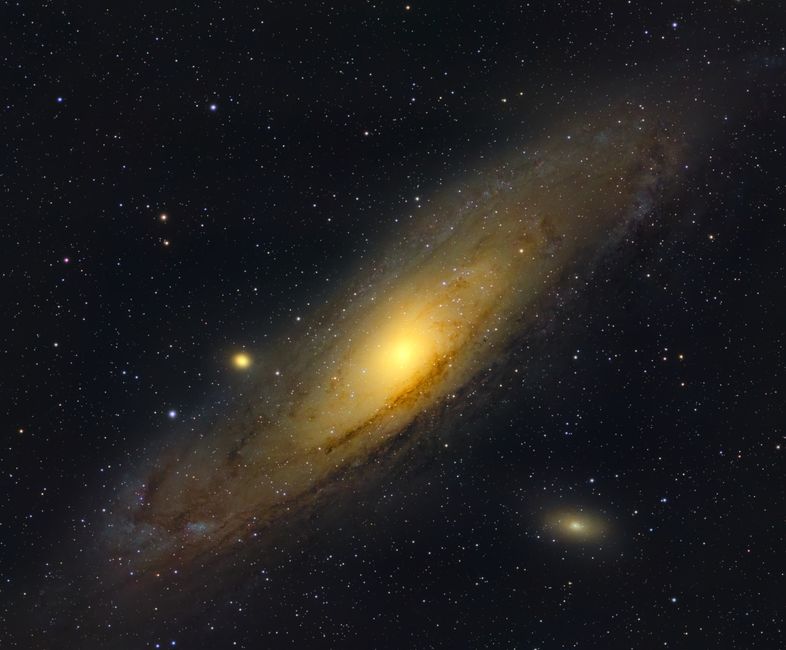
Milky Way-Andromeda Collision Less Certain: New Study Refines Galactic Dance Predictions
Recent astrophysical research, leveraging advanced computational modeling and precise astronomical observations, suggests a revised timeline and probability for the long-anticipated collision between the Milky Way and the Andromeda galaxy. While a galactic merger remains a strong possibility, new data indicates the initial interaction might be less direct and the eventual full merger could occur later than previously estimated, potentially altering the evolutionary path of both spiral behemoths. This recalibration stems from a deeper understanding of the dark matter halos surrounding each galaxy and the precise velocity measurements of Andromeda.
The concept of the Milky Way and Andromeda colliding has been a cornerstone of extragalactic astronomy for decades. Driven by mutual gravitational attraction, these two largest members of the Local Group are on a collision course, destined to merge into a single, larger elliptical galaxy over billions of years. However, the exact timing and nature of this grand cosmic event have been subject to ongoing refinement as our observational capabilities and theoretical models improve. The latest study, published in a prominent astrophysical journal, focuses on two critical factors: the mass and distribution of dark matter within the halos of both galaxies, and more accurate measurements of Andromeda’s radial velocity relative to the Milky Way.
Dark matter, an invisible and enigmatic substance that constitutes a significant portion of the universe’s mass, plays a crucial role in the gravitational dynamics of galaxies. Its gravitational influence dictates how galaxies move and interact with each other. Previous estimates of the Milky Way-Andromeda merger often relied on broader approximations of their dark matter halo masses. The new study incorporates more sophisticated simulations that model the intricate distribution of dark matter within and around these galactic structures. This enhanced precision allows for a more accurate prediction of the gravitational forces at play and, consequently, a refined understanding of their trajectory towards each other.
Furthermore, the study highlights the importance of precise velocity measurements. Andromeda, located approximately 2.537 million light-years away, is not just approaching the Milky Way; it’s also moving tangentially to our line of sight. This lateral motion, often referred to as its "proper motion," has been notoriously difficult to measure accurately. However, recent observations, particularly from missions like the Hubble Space Telescope, have provided unprecedented precision in tracking Andromeda’s movement across the sky. These refined velocity data points are crucial for determining whether the galaxies will simply pass by each other in a close encounter or engage in a head-on collision.
The results of the new study indicate that the tangential motion of Andromeda might be slightly greater than previously thought, or its approach velocity might be marginally slower. This subtle difference, when extrapolated over billions of years, significantly impacts the predicted timeline and the directness of the initial collision. Instead of a catastrophic, head-on smash, the galaxies might experience a series of close passes, with gravitational interactions gradually stripping material and distorting their structures. The full merger, where the two spiral disks are irrevocably blended, could therefore be postponed.
To understand the implications, consider the scale of these celestial bodies. The Milky Way is estimated to contain between 100 billion and 400 billion stars, while Andromeda boasts an even larger population, potentially up to one trillion stars. The combined mass, including their dark matter halos, is immense. Their gravitational interplay is a slow-motion ballet governed by the laws of physics over eons. The initial interaction is not expected to be destructive for the stars themselves. Due to the vast distances between stars, direct stellar collisions are exceedingly rare. Instead, the gravitational forces will primarily affect the gas and dust within the galaxies, triggering bursts of star formation, and the overall shape and structure of the resulting merged galaxy.
The concept of a galactic collision can evoke images of fiery destruction, but in astronomical terms, it’s more akin to a gravitational embrace and transformation. As the galaxies approach, their gravitational pulls will distort each other, drawing out long streams of stars and gas, often referred to as tidal tails. The central supermassive black holes of each galaxy will also spiral towards each other, eventually merging and releasing colossal amounts of energy in the process, though this is a much later stage of the merger. The most dramatic visual event is likely to be the dramatic distortion of the spiral arms and the eventual reshaping of the galaxies into a more spheroidal or elliptical form.
The revised predictions suggest that the first significant close encounter between the Milky Way and Andromeda might occur around 4 to 4.5 billion years from now, rather than the previously estimated 3.8 billion years. This doesn’t fundamentally change the ultimate fate of the Local Group, but it provides a more nuanced understanding of the process. The prolonged period of interaction could lead to a more complex and extended merger process, with multiple passes and gravitational disruptions occurring over hundreds of millions, or even billions, of years.
The study’s methodology involved sophisticated N-body simulations. These simulations model the gravitational interactions of a large number of discrete particles representing stars, gas, and dark matter. By adjusting parameters based on the latest observational data, such as the precise radial velocity and estimated mass of Andromeda’s dark matter halo, the researchers could run numerous scenarios to predict future trajectories. The inclusion of more detailed models for dark matter halo profiles, accounting for its density distribution, proved particularly influential in altering the outcome.
The implications of this revised understanding extend beyond mere temporal adjustments. A more gradual interaction might allow for different evolutionary pathways for the gas and dust within the galaxies. Increased star formation rates could occur in distinct phases rather than a single, massive burst. The eventual morphology of the merged galaxy might also be subtly different. While an elliptical galaxy is still the most likely outcome, the specific distribution of stars and the presence of any remaining gas could be influenced by the less direct initial encounter.
Furthermore, this research contributes to a broader understanding of galaxy evolution and interaction within galaxy clusters. The Local Group, though relatively small, serves as a valuable laboratory for studying these processes. By refining our predictions for the Milky Way-Andromeda merger, we gain insights into the dynamics of countless other galaxy interactions occurring throughout the universe. The role of dark matter in these interactions, particularly the precise nature of its distribution within galactic halos, remains a key area of investigation, and this study offers compelling new evidence.
The accuracy of these simulations is inherently tied to the quality of observational data. As telescopes become more powerful and observational techniques more refined, our models will continue to evolve. Future studies will likely focus on further refining the measurements of Andromeda’s proper motion and better characterizing the dark matter content of both galaxies. The ongoing exploration of gravitational waves might also offer new avenues for understanding the dynamics of massive galactic structures and their mergers.
In conclusion, the prospect of the Milky Way and Andromeda colliding remains a certainty, a testament to the pervasive force of gravity in the cosmos. However, recent scientific endeavors have injected a new level of nuance into the timeline and the directness of this monumental event. The refined understanding of dark matter halos and precise velocity measurements suggests a less immediate, potentially more protracted initial interaction, pushing the ultimate merger further into the future. This recalibration underscores the dynamic and ever-evolving nature of our understanding of the universe and the intricate dance of galaxies within it, offering a revised, yet still awe-inspiring, glimpse into our galactic destiny. The ongoing pursuit of knowledge in astrophysics promises to further refine these predictions, painting an even clearer picture of the cosmic ballet that awaits.
