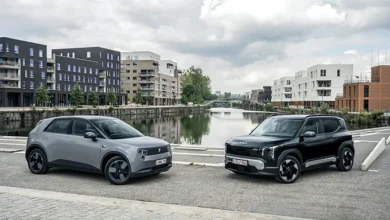
Kia EV2 and Firefly Challenge Traditional Design Paradigms by Maximizing Interior Volume in the Compact Electric Vehicle Segment

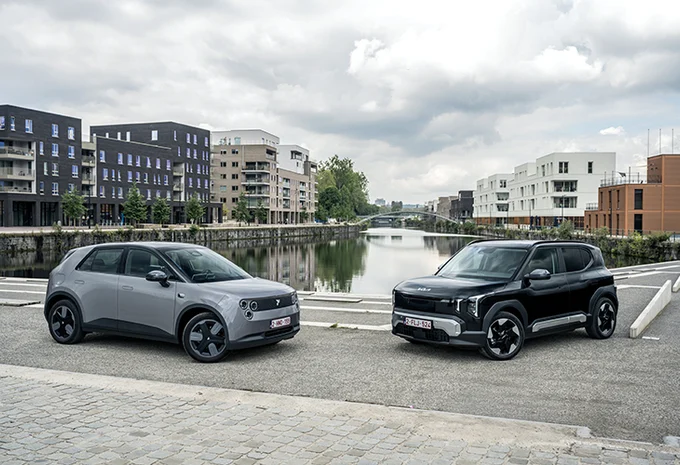
The automotive industry is currently witnessing a fundamental shift in how vehicle architecture is conceived, driven largely by the transition from internal combustion engines to electric propulsion. Historically, the promise of the electric vehicle (EV) was rooted in a total revolution of both form and function. This prediction relied on the inherent flexibility offered by electric powertrains, which are significantly more compact than their thermal counterparts. By reducing the physical footprint of the mechanical components—eliminating the need for large engine bays, multi-speed transmissions, and exhaust tunnels—designers theoretically gained a vast amount of volume to redistribute to the occupants. While this "packaging revolution" has been slow to manifest in the premium sectors, it is now becoming the primary battleground for the next generation of compact electric cars, exemplified by the upcoming Kia EV2 and the highly anticipated Firefly brand from Nio.
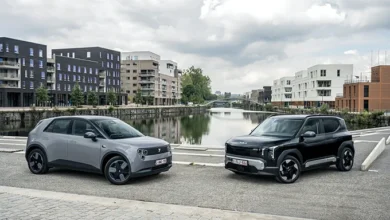
In the higher echelons of the market, such as the E-segment luxury sedans, the spatial advantages of electric platforms have often been secondary to traditional notions of prestige. For a buyer of a high-end executive car, the physical presence and external dimensions of the vehicle serve as a marker of status. Even if a D-segment electric car offers the same interior legroom as an E-segment combustion vehicle, the consumer often remains tethered to the "statuesque" nature of the larger vehicle. However, this dynamic shifts dramatically when examining the entry-level and compact segments. In these categories, where price sensitivity is high and every millimeter of cabin space counts, the ability to offer a vehicle with the exterior dimensions of a small city car but the interior capacity of a family hatchback is a game-changing proposition. This is the specific niche where the Kia EV2 and the Firefly entry aim to disrupt the status quo, promising the habitability of a Renault Mégane or a Volkswagen ID.3 within a footprint no larger than a Renault 5.
The Strategic Chronology of the Compact EV Race
The development of the Kia EV2 and the Firefly project follows a timeline of increasing pressure on manufacturers to produce affordable, space-efficient electric vehicles. Kia first signaled its intent to dominate the entry-level EV market during its "EV Day" in October 2023. At this event, the South Korean manufacturer outlined a comprehensive strategy to expand its electric lineup from the flagship EV9 down to an accessible EV2. The EV2 is slated for a European launch around 2025 or 2026, with production likely centered at Kia’s facility in Žilina, Slovakia, to ensure competitive pricing and avoid import tariffs.
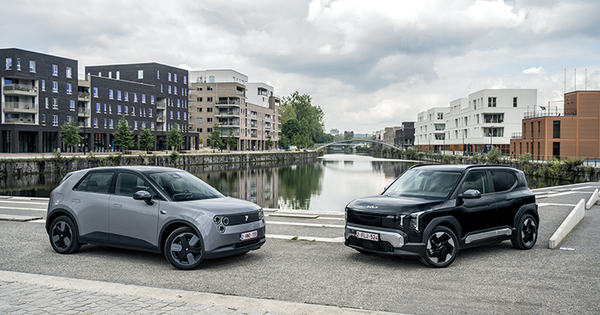
Parallel to this, the Chinese premium EV maker Nio recognized that its high-end, battery-swapping sedans and SUVs were not suited for the mass-market European B-segment. Consequently, Nio initiated the "Firefly" project (a codename for a new sub-brand). The Firefly brand was conceived specifically to address the European demand for agile, compact cars that do not compromise on technology or interior space. Reports indicate that Firefly models will begin appearing in European markets in late 2024 or early 2025, positioned as a direct rival to both established European OEMs and emerging Korean competitors like Kia.
Technical Architecture and Spatial Efficiency
The core of the competition between the Kia EV2 and the Firefly lies in their respective platforms. Kia utilizes a derivative of the Hyundai Motor Group’s E-GMP (Electric Global Modular Platform). While the E-GMP was initially designed for larger vehicles like the EV6 and EV9, it has been scaled down to create a cost-effective, front-wheel-drive-focused architecture for the EV2. By pushing the wheels to the absolute corners of the chassis—a hallmark of dedicated EV design—Kia is able to maximize the wheelbase. A longer wheelbase relative to the total vehicle length directly translates to superior rear-seat legroom, effectively allowing a car that is roughly 4 meters long to offer the knee room typically found in vehicles 4.3 meters or longer.
The Firefly brand, meanwhile, leverages Nio’s expertise in modular battery technology but applies it to a smaller scale. One of the most significant engineering challenges for Firefly is integrating Nio’s signature battery-swapping capability into a compact frame. Battery swapping requires a standardized battery pack size, which can be difficult to package in a short-wheelbase vehicle without sacrificing floor height or trunk space. However, if successful, Firefly will offer a unique value proposition: a compact city car that can "refuel" in under five minutes, solving the range anxiety often associated with small EVs that typically carry smaller, 40-50 kWh batteries.
Supporting Data and Market Positioning
The market for these vehicles is defined by the "€25,000 barrier." For the electric transition to reach the masses, manufacturers must produce vehicles that compete with the price points of the Volkswagen Polo or Ford Fiesta while offering the utility of a Golf.
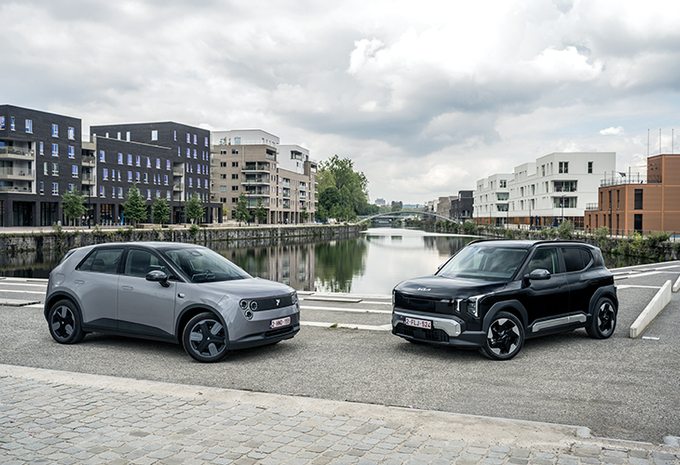
Data from recent market analyses suggests that the B-EV (Battery Electric B-segment) will be the fastest-growing sector in Europe through 2030.
- Kia EV2 Target Price: Estimated between €25,000 and €30,000.
- Firefly Target Price: Aiming for the sub-€30,000 bracket to compete with the Renault 5 and Citroën ë-C3.
- Comparative Dimensions: Both vehicles are expected to measure approximately 3.9 to 4.1 meters in length. In comparison, a traditional C-segment hatchback like the Volkswagen Golf measures around 4.28 meters. By achieving C-segment interior volumes, these cars effectively provide a 15-20% increase in spatial efficiency over traditional ICE layouts.
Furthermore, the use of Lithium Iron Phosphate (LFP) battery chemistry is expected in both models. LFP batteries are less expensive than Nickel Manganese Cobalt (NMC) alternatives and offer greater longevity, which is critical for the value-oriented consumer. While LFP has lower energy density, the compact nature of these cars means they do not require the massive 100 kWh packs found in luxury SUVs, making the trade-off acceptable for urban and suburban commuting.
Official Responses and Industrial Implications
Industry leaders have been vocal about the importance of this segment. Ho-Sung Song, CEO of Kia, has stated that "providing an accessible entry point to our electric brand is essential for achieving our goal of 1.6 million annual EV sales by 2030." Kia’s strategy involves not just selling a car, but an entire ecosystem of charging and connectivity that appeals to younger, tech-savvy urban dwellers who might otherwise opt for public transport or micro-mobility.
On the other side of the ledger, Nio’s President, Qin Lihong, has described the Firefly brand as the "Volkswagen of Nio," emphasizing that while the parent brand remains premium, Firefly will focus on high-volume efficiency. The introduction of Firefly is also a strategic move to navigate the shifting geopolitical landscape. By launching a dedicated small-car brand for Europe, Nio can tailor its designs to European tastes—prioritizing parking ease and hatchback versatility—while potentially exploring local assembly to mitigate the impact of EU anti-subsidy duties on Chinese-made EVs.

Broader Impact on Urban Mobility and Consumer Behavior
The success of the Kia EV2 and Firefly will likely signal the end of the "oversized EV" era as the sole face of electrification. For years, EVs were synonymous with heavy, aerodynamic-priority crossovers. The new wave of compact EVs proves that "smart packaging" is a viable alternative to "bigger batteries." If a manufacturer can provide a car that fits in tight city spaces but can still carry a family of four and their luggage for a weekend trip, the primary barrier to EV adoption—practicality—is removed.
Moreover, these vehicles represent a psychological shift. They challenge the notion that a smaller car is inherently a "lesser" car. By offering high-quality interiors, advanced infotainment systems, and superior spatial ergonomics, Kia and Firefly are repositioning the B-segment as a premium choice for the environmentally conscious and the pragmatically minded.
As 2025 approaches, the automotive world will be watching closely. The "battle of the smalls" between the Kia EV2 and the Firefly project is more than just a product launch; it is a test of whether the efficiency of electric packaging can finally fulfill its promise. If these vehicles can truly deliver Mégane-level space in an R5-sized package, they will not only redefine their respective brands but also provide the necessary blueprint for the survival of the compact car in an increasingly electrified world. The result will be a more diverse, efficient, and accessible automotive landscape, where the "revolution" of the electric car is measured not by the size of its status, but by the intelligence of its design.
Related posts: