Brandon Wen Redefines Creative Leadership at the Antwerp Fashion Academy with the Launch of All Things Equal

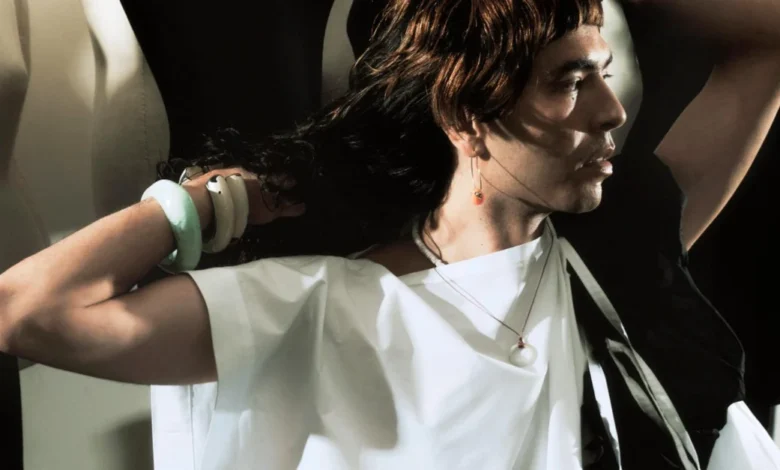
The landscape of global fashion education and avant-garde design is witnessing a significant paradigm shift as Brandon Wen, the Creative Director of the Royal Academy of Fine Arts Antwerp, steps into the spotlight with his debut collection, All things equal. Succeeding the legendary Walter Van Beirendonck in 2022, Wen faced the formidable task of leading one of the world’s most prestigious fashion institutions while establishing his own creative identity. The launch of his first collection, unveiled during the inaugural Antwerp Fashion Festival in June, marks a definitive moment for the 33-year-old designer, signaling a departure from the traditional boundaries of gender and sizing while addressing the systemic challenges currently facing the Belgian fashion capital.
The Artistic Vision of All Things Equal
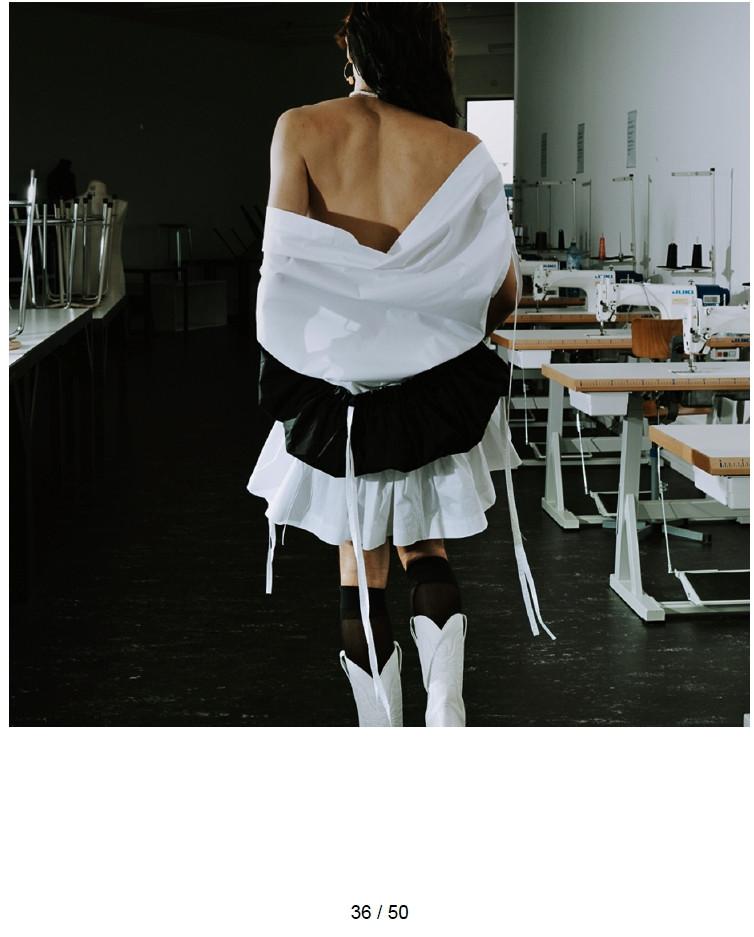
The debut collection consists of sixteen prêt-à-porter pieces and three high-fashion couture looks, unified by a philosophy of accessibility and artistic transformation. Wen’s design language is characterized by a "one size fits all" approach, utilizing adjustable closures and architectural draping to ensure garments adapt to the wearer’s body rather than requiring the body to conform to the garment. This technical choice serves as a practical manifestation of his "All things equal" philosophy, which posits that beauty is inherent in all forms and materials.
Drawing inspiration from the Japanese art of Ikebana—the disciplined practice of floral arrangement—Wen emphasizes minimalism and composition. In his work, this translates to a focus on singular, striking elements rather than excessive ornamentation. The collection also reflects Wen’s diverse heritage, blending the "old-world elegance" of his Spanish roots with the relaxed, coastal aesthetics of his upbringing in Los Angeles. The color palette oscillates between deep blacks and whites, reminiscent of Spanish Catholicism, and vibrant ocean blues and greens that pay homage to California surf culture.
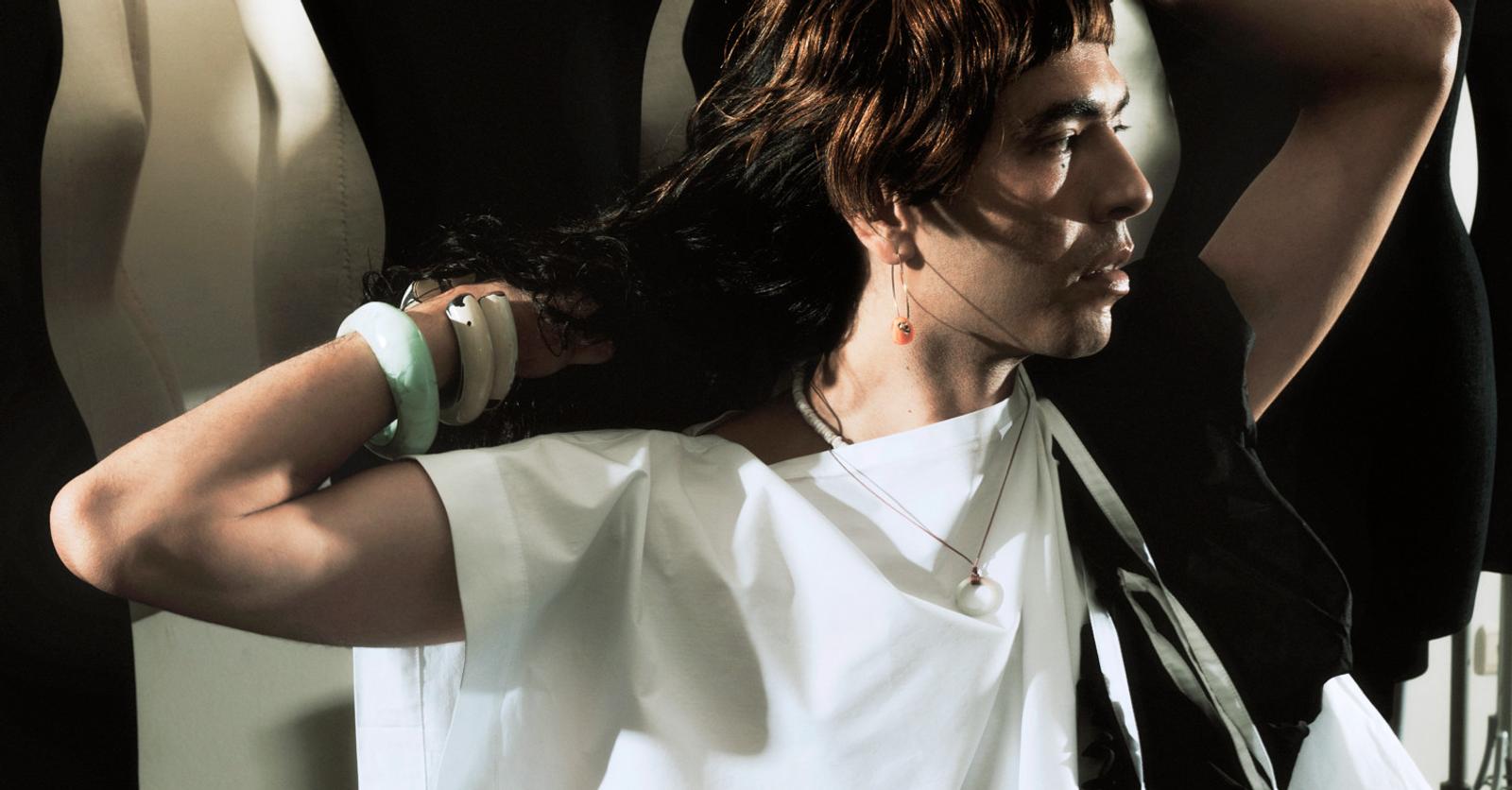
Wen’s decision to present the collection primarily on male models, despite the garments being non-gendered, reflects his personal identity. As a man who frequently wears dresses, Wen views clothing as a medium for self-expression that transcends gender binaries. By focusing on the interaction between fabric and the human form, he challenges the industry’s traditional categorizations, advocating for a "wear what you want" ethos that resonates with a younger, more fluid generation of consumers.
A Chronology of Creative Ascent
Brandon Wen’s journey to the helm of the Antwerp Academy is a testament to the international draw of the "Antwerp Six" legacy. Born and raised in Los Angeles to a Spanish mother and a Chinese father, Wen was encouraged to explore creative outlets from a young age. While his mother worked as an accountant and his father as an architect, the household prioritized sketching and imagination over television.
His formal education began at Cornell University in New York, where he earned a Bachelor of Science in Fiber Science and Apparel Design. Seeking to deepen his technical mastery, Wen moved to Europe, eventually discovering the Royal Academy of Fine Arts Antwerp after seeing a student exhibition at the ModeMuseum (MoMu). He enrolled in the academy and graduated in 2019 under the tutelage of Walter Van Beirendonck.
During his student years, Wen became a fixture in the Antwerp scene under the pseudonym Brandylaa, known for experimental designs and performances. His talent was recognized early; in his third year, he won the Challenge The Fabric Award, and his master’s collection received the Coccodrillo Award. Following graduation, Wen moved to Paris, where he worked for Rick Owens and Michèle Lamy, as well as the prestigious Maison Lemarié, a couture feather and flower atelier owned by Chanel. This period solidified his connection to the industry’s elite, forming a bridge between the avant-garde spirit of Antwerp and the technical rigor of Parisian haute couture.
The Succession and Institutional Reform
When Walter Van Beirendonck announced his retirement in 2022, the search for a successor was watched closely by the global fashion community. Wen, despite his relatively young age, was appointed to lead the fashion department. Since taking office, he has sought to modernize the academy’s culture while preserving the rigorous standards that have placed it consistently in the top ten fashion schools worldwide.
Wen’s leadership style is defined by a move away from the "hard" or "elitist" reputation sometimes associated with the academy’s past. He has prioritized diversifying the faculty and internationalizing the curriculum to create a "safer space" for a variety of creative voices. However, he remains a staunch defender of the school’s demanding nature, arguing that high expectations are necessary to maintain the level of talent that produces designers like Dries Van Noten, Ann Demeulemeester, and Martin Margiela.
A key element of Wen’s pedagogical approach is the encouragement of rebellion. He often urges his students to push back against assignments and find their own voices, a trait he considers essential for any designer hoping to make a lasting impact. This philosophy of "constructive defiance" is rooted in the history of the Antwerp Six, who famously revolted against the conservative teachings of the department’s founder, Mary Prijot.
Economic Challenges and the Tuition Crisis
Despite the creative success of Wen’s tenure, the Royal Academy of Fine Arts Antwerp is currently navigating a period of significant financial and political turbulence. The Flemish government recently enacted a policy to drastically reduce subsidies for students from outside the European Economic Area (EEA). This decision has resulted in a steep increase in tuition fees: current international students saw costs rise from €8,000 to €13,500, while new students from outside the EU now face fees of up to €25,000 per year.
Wen has been vocal about the potential long-term damage this policy could inflict on the Belgian fashion ecosystem. He notes that the academy’s global reputation is built on its ability to attract the world’s best talent, regardless of financial background. With a four-year degree now potentially costing nearly €100,000 in tuition alone, Wen fears that the academy will become accessible only to the wealthy, stifling the socio-economic diversity that often drives innovation. As a former international student himself, Wen has pointed out that such barriers might have prevented him from ever attending the school, potentially depriving the institution of its current leader.
Industry Implications and the Business of Fashion
Wen’s debut collection and his role at the academy also serve as a critique of the broader fashion industry’s shift toward commercialization. During his appearance at the "BoF Voices" conference, Wen observed that the industry’s focus has moved overwhelmingly toward business metrics, marketing, and profit margins at the expense of pure design. He argues that the increasing influence of CEOs and marketers over the creative process is eroding the autonomy of designers.
To combat this, Wen is adopting a non-traditional retail model for his own collection. Eschewing the standard webshop and seasonal cycle, he plans to sell "All things equal" through exclusive pop-up events in cities like Antwerp and Paris. By limiting the release of photos and maintaining a degree of mystery, Wen hopes to re-inject a sense of discovery and surprise into the fashion experience. All pieces are manufactured in Europe—with one producer in Belgium and two ateliers in Spain—ensuring ethical production standards and supporting regional craftsmanship.
Future Outlook and Global Impact
As Brandon Wen continues to balance his responsibilities as an educator and a designer, his influence on the "Antwerp Style" is becoming increasingly clear. He represents a new generation of creative directors who are as concerned with institutional equity and student well-being as they are with aesthetic innovation.
The success of "All things equal" suggests that there is a market for seaso-nless, gender-neutral, and size-inclusive fashion that does not sacrifice artistic integrity. However, the survival of the Antwerp Academy as a global powerhouse will likely depend on its ability to navigate the shifting political landscape of Belgium and ensure that the next generation of "rebel" designers can afford to enter its halls. For now, Wen remains committed to his dual role, using his platform to promote the work of his students while carving out a unique space for his own vision in the competitive world of high fashion. By championing the idea that "all things are equal," Wen is not just launching a collection; he is advocating for a more inclusive and creatively autonomous future for the entire industry.