The Battle of the Compact Titans Kia EV2 and Firefly Redefine Urban Mobility through Intelligent Electric Packaging

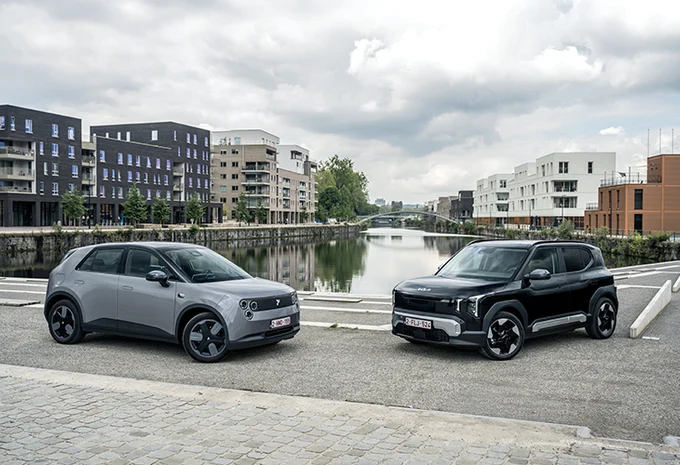
The promise of the electric vehicle (EV) revolution was never merely about a change in fuel source; it was a fundamental pledge to reimagine the architecture of the automobile. For decades, the internal combustion engine (ICE) dictated the proportions of our vehicles, requiring bulky front-mounted blocks, complex transmission tunnels, and intrusive exhaust systems. The transition to electric propulsion, characterized by significantly more compact motors and floor-integrated battery packs, offered a theoretical tabula rasa for designers. This shift promised to maximize interior volume while minimizing the exterior footprint—a concept often referred to as "packaging efficiency." While the premium segment has focused on status and grand proportions, a new front has opened in the "inferior" categories where the Kia EV2 and the Firefly, a specialized sub-brand from China’s Nio, are set to challenge the status quo by offering the cabin space of a C-segment family car within the dimensions of a B-segment city car.
The Architectural Revolution: Form Following Function
The central thesis of modern EV design is the decoupling of exterior size from interior utility. In traditional thermal vehicles, a significant portion of the car’s length is "dead space" dedicated to the engine bay. By contrast, an electric motor is roughly the size of a large watermelon, and the battery is distributed across the chassis floor. This allows engineers to push the wheels to the absolute corners of the vehicle, extending the wheelbase—the distance between the front and rear axles—which is the primary determinant of legroom.
In the luxury market, this advantage has often been overshadowed by the consumer’s desire for "presence." A buyer of an E-segment executive sedan typically expects a long hood and an imposing silhouette as markers of status, even if a smaller D-segment EV offers equivalent interior dimensions. However, in the mass-market segments where price sensitivity is high and urban maneuverability is paramount, the equation changes. Here, the ability to purchase a vehicle with the exterior footprint of a Renault 5 but the interior capacity and luggage volume of a Renault Megane E-Tech represents a significant value proposition. This is the specific niche where the Kia EV2 and the Firefly are positioned to compete.
The Firefly Project: Nio’s Strategic European Entry
The Firefly brand represents a calculated move by the Chinese automotive giant Nio to capture the European entry-level market. While the core Nio brand focuses on the premium segment, competing directly with BMW and Mercedes-Benz, Firefly is designed to tackle the sub-€30,000 price bracket. This strategy mirrors the approach taken by Volkswagen with its ID.2all project or Renault with the R5 E-Tech.
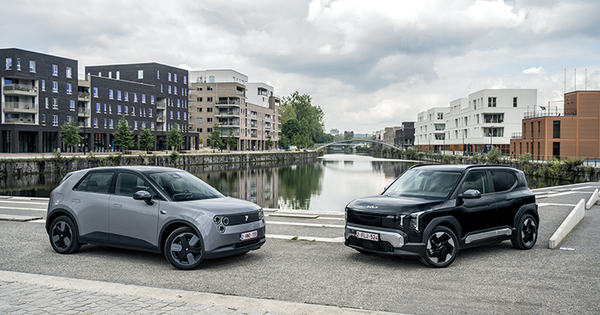
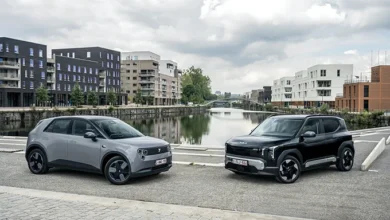
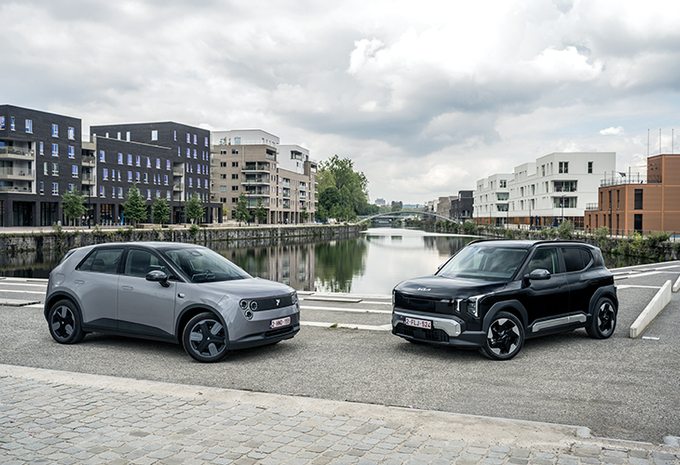
Based on industry data and sightings of prototypes in Europe, the Firefly model is expected to be a compact hatchback with a rugged, slightly elevated stance, blurring the lines between a traditional hatch and a crossover. Despite its compact length, estimated to be around 4.0 meters, the vehicle utilizes Nio’s dedicated electric platform to provide a flat floor and a stretched cabin. Reports suggest that Firefly will also benefit from Nio’s signature battery-swapping technology, though adapted for a smaller battery size, potentially solving the charging anxiety often associated with small-form-factor EVs used for longer journeys.
Kia’s Global Ambition: The EV2 and the Plan S Strategy
Kia’s entry into this specific battle is the EV2, a vehicle that serves as the foundation for the brand’s "Plan S" electrification strategy. Following the successful launches of the EV6 and EV9, and the upcoming EV3, the EV2 is intended to be the high-volume driver for the European and emerging markets.
The Kia EV2 is expected to sit on a simplified version of the E-GMP (Electric-Global Modular Platform) or a new modular architecture designed specifically for small and medium vehicles. By targeting a starting price of approximately €25,000 to €28,000, Kia aims to undercut the current average price of European EVs. The design philosophy of the EV2 emphasizes "Opposites United," a styling language that prioritizes bold, geometric shapes. By utilizing a tall-roof design, Kia engineers have been able to provide upright seating positions, which creates the sensation of a much larger vehicle and provides ample headroom, further enhancing the "small outside, big inside" paradox.
Chronology of the Affordable EV Market Evolution
The journey toward the Kia EV2 and Firefly has been marked by several key industry milestones:
- 2020-2021: The Premium Wave. Manufacturers focused on high-margin luxury EVs (Tesla Model S, Porsche Taycan, Mercedes EQS) to recoup R&D costs. Packaging efficiency was a secondary concern to range and performance.
- 2022: The Infrastructure Realization. As EV adoption grew, the industry realized that urban buyers needed smaller cars that didn’t sacrifice utility, leading to the conceptualization of dedicated small-car platforms.
- 2023: The Chinese Incursion. Brands like MG and BYD began flooding the European market with competitively priced hatchbacks, forcing European and South Korean manufacturers to accelerate their small-EV timelines.
- 2024: The "Compact" Reveal. Announcement of the Renault 5 E-Tech and the Citroën ë-C3 set the benchmark for the €25,000 price point.
- 2025-2026 (Projected): The Showdown. The market launch of the Kia EV2 and the Firefly brand is expected to redefine the segment, moving the conversation from "affordability" to "intelligent space utilization."
Supporting Data: Dimensions and Technical Specifications
To understand the feat these manufacturers are attempting, one must look at the comparative data. A traditional B-segment car like the internal combustion Peugeot 208 has a wheelbase of approximately 2,540 mm. In contrast, EVs in this new "intelligent packaging" class are aiming for wheelbases exceeding 2,700 mm, despite having similar overall lengths.
| Feature | Typical B-Segment (ICE) | Kia EV2 / Firefly (Estimated) | Benefit |
|---|---|---|---|
| Overall Length | 4,050 mm | 4,000 – 4,100 mm | Ease of parking |
| Wheelbase | 2,540 mm | 2,700 – 2,750 mm | Increased legroom |
| Trunk Volume | 280 – 300 Liters | 380 – 410 Liters | Family-car utility |
| Drivetrain Layout | Front Engine/FWD | Rear or Front Motor / Floor Battery | Flat interior floor |
| Turning Circle | 10.5 meters | 9.5 – 10.0 meters | Urban agility |
Furthermore, both Kia and Firefly are expected to utilize Lithium Iron Phosphate (LFP) battery chemistry for their entry-level trims. LFP batteries are less expensive to produce and offer greater longevity, though they are less energy-dense than traditional Nickel Cobalt Manganese (NCM) cells. This choice is critical for maintaining the sub-€30,000 price ceiling while providing a range of approximately 300 to 400 kilometers (WLTP).
Industry Reactions and Strategic Implications
The emergence of these two models has sent ripples through the European automotive sector. Industry analysts suggest that the "packaging war" is the new frontier of competition.
"The era of selling a small car just because it is cheap is ending," says Marcus Thompson, a senior automotive analyst. "The consumer now expects a ‘no-compromise’ vehicle. If Kia and Firefly can truly deliver Megane-level space in a car that is easy to park in Paris or Rome, they will dominate the urban demographic."
Official statements from Kia have emphasized that the EV2 is not a "stripped-back" car but a "right-sized" car. Ho-Sung Song, President and CEO of Kia, has previously noted that the company’s goal is to make EVs accessible to everyone without sacrificing the brand’s design-led identity. Conversely, Nio’s leadership has hinted that Firefly will be essential for the company to achieve the volume necessary to make its battery-swapping infrastructure economically viable in Europe.
Broader Impact on Urban Planning and Sustainability
The success of the Kia EV2 and Firefly could have implications beyond the automotive market. As cities worldwide implement stricter "Low Emission Zones" (LEZ) and reduce parking space sizes to favor pedestrians, the demand for vehicles with a small physical footprint will increase.

If these vehicles can successfully replace larger family SUVs for urban and suburban families, the overall "material intensity" of the transport sector could decrease. A smaller car requires less steel, fewer battery minerals, and less energy to move. By proving that a 4-meter car can serve as a primary family vehicle, Kia and Firefly are inadvertently supporting a more sustainable model of consumption that prioritizes efficiency over excess.
Conclusion: A New Benchmark for the "Small" Car
The comparison between the Kia EV2 and the Firefly highlights a pivotal moment in automotive history. For the first time, the "entry-level" segment is not defined by what is missing, but by what has been gained through clever engineering. By leveraging the unique layout of electric drivetrains, these manufacturers are challenging the traditional hierarchy of the car market.
As they prepare for their respective launches, the focus remains on whether they can translate these theoretical packaging advantages into a seamless user experience. If the Kia EV2 can provide the reliability and dealer network of an established giant, and if Firefly can deliver on Nio’s promise of technological innovation and battery flexibility, the traditional "compact" car may never look the same again. The winner of this duel will likely be the brand that best convinces the public that size is no longer a prerequisite for status or comfort.
Related posts: