Xpeng L03 Redefines the Entry-Level Segment with Advanced AI Integration and Range-Extender Innovation

The automotive landscape is witnessing a significant shift as Xpeng Motors, the Chinese intelligent electric vehicle (EV) manufacturer, unveils its latest offering: the L03. Positioned strategically beneath the G6, the L03 serves as the brand’s new entry-level model, yet it paradoxically serves as a technological flagship, introducing several firsts for the company in the European market. By blending high-end artificial intelligence with a versatile range of powertrains, including a new range-extender variant, Xpeng is signaling its intention to transition from a traditional vehicle manufacturer into a global AI-driven technology powerhouse.
A Strategic Pivot: Technology First, Hardware Second
Xpeng has long maintained that it does not view itself as a conventional car manufacturer. Instead, the company defines itself as a technology firm dedicated to bringing artificial intelligence into the physical realm. This philosophy is most evident in the L03. Despite its "entry-level" status and a starting price significantly lower than the G6, the L03 is the first Xpeng vehicle to be launched globally simultaneously across multiple markets.
This launch marks a pivotal moment for the brand’s European expansion. The L03 is the first model to feature the brand’s new semi-autonomous driving system (VLA 2.0) in Europe, the first to utilize a proprietary AI language model for in-car interaction, and the first to integrate Google Maps natively into its infotainment ecosystem. This move addresses a common criticism of Chinese EVs in the West: the lack of localized, high-quality navigation and software integration. By partnering with Google and focusing on AI, Xpeng is attempting to close the software gap that has historically hindered international adoption.

Diversifying the Powertrain: The Power X Range Extender
Perhaps the most surprising aspect of the L03’s debut is the introduction of the "Power X" variant. Historically, Xpeng has been a "pure" electric brand, championing battery electric vehicles (BEVs) as the only path forward. However, shifting market dynamics and consumer anxiety regarding charging infrastructure—particularly in regions where high-speed charging networks remain sparse—have prompted a tactical adjustment.
The L03 Power X features a range-extender (REEV) system, where a gasoline engine acts as an onboard generator to charge the battery, while the wheels remain driven exclusively by electric motors. This configuration allows for a total range exceeding 1,000 kilometers. The vehicle is equipped with a 37.25 kWh battery that provides a pure electric range of over 200 kilometers, making it ideal for daily commutes without burning fuel, while the range-extender eliminates "range anxiety" for long-distance travel.
For the BEV-focused variants, Xpeng offers three distinct configurations:
- RWD Standard Range: Equipped with a 58.3 kWh battery and an 180 kW (245 hp) motor, offering a WLTP-estimated range of 445 km.
- RWD Long Range: Utilizing a larger 71.2 kWh battery to achieve a WLTP range of 520 km.
- AWD Performance: Featuring dual motors with a combined output of 285 kW (388 hp) and a 71.2 kWh battery, capable of accelerating from 0 to 100 km/h in just 4.5 seconds, with a WLTP range of 440 km.
While the L03 does not match the ultra-fast 800V charging speeds of the larger G9 or G6 models, it remains competitive within its segment. The vehicle can charge from 10% to 80% in approximately 20 minutes, supporting DC fast charging up to 236 kW.

Design Philosophy: The "Vital Flow" Aesthetic
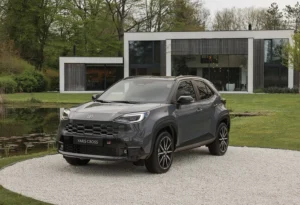
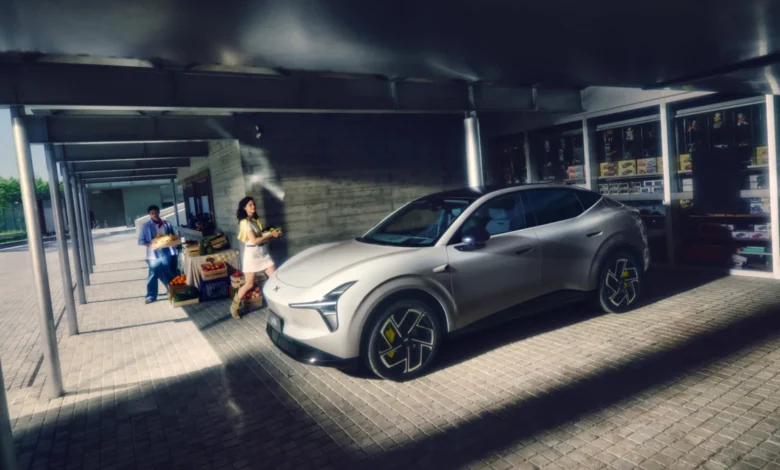
The L03 introduces a new design language for Xpeng termed "Vital Flow." Measuring 4.65 meters in length, the L03 is approximately 10 centimeters shorter than the G6, featuring a more pronounced SUV-coupe silhouette with a lower roofline. The aesthetic is defined by "elegant" curves and distinctive light signatures at both the front and rear, aiming for a more sophisticated, aerodynamic look.
While the base models come equipped with 18-inch wheels, industry observers note that the vehicle’s proportions are better served by the optional 20-inch wheels, which fill the arches more effectively. Inside, the cabin is designed for five passengers, emphasizing a minimalist, tech-forward environment. Practicality remains a priority, with 367 liters of rear trunk space complemented by a "frunk" (front trunk) ranging from 44 to 89 liters depending on the powertrain configuration. Additionally, all variants boast a towing capacity of up to 1,500 kilograms, a crucial metric for the European market.
The AI Revolution: VLA 2.0 and Turing Chips
The true heart of the L03 lies in its silicon. It is the first vehicle to debut Xpeng’s XOS 6 infotainment system, which features a natural AI voice assistant capable of understanding and processing multiple languages simultaneously. The inclusion of Google Maps is a strategic win, providing users with familiar Points of Interest (POIs) and the ability to use complex voice commands, such as asking the navigation to find a specific supermarket chain along a pre-set route.
However, the most significant technological leap is the Vision-Language-Action (VLA) 2.0 system. This semi-autonomous driving suite has been operational in China for six months, where Xpeng reports that over 50% of its users regularly engage the system. VLA 2.0 is powered by Xpeng’s proprietary Turing AI chips. These chips are specifically designed to handle the massive data processing requirements of neural-network-based driving.

A critical point for current Xpeng owners is that the VLA 2.0 system will not be backward compatible with existing models like the G6, G9, or P7+. These earlier vehicles lack the Turing chip architecture required to run the VLA 2.0 software. Xpeng expects to roll out these autonomous features in Europe by early 2027. In a move to disrupt the market further, the company has indicated that, at least initially, the self-driving features will not require a subscription fee, contrasting with the "Software as a Service" (SaaS) models adopted by competitors like Tesla.
Market Positioning and Economic Impact
The pricing of the L03 is clearly intended to put pressure on both European incumbents and other Chinese exporters. The RWD Standard Range starts at 34,990 euros (including VAT), while the range-extender Power X version starts at 38,490 euros.
To access the full suite of "Ultra" features—which includes the VLA 2.0 hardware, a premium audio system with additional speakers, and enhanced comfort features—customers must opt for the AWD Performance Ultra, priced at 45,990 euros. While the base price is exceptionally competitive, the cost of the high-tech features brings the L03 closer to the price bracket of the larger G6.
The timing of the L03’s arrival is significant. As the European Union considers or implements tariffs on Chinese-made EVs, Xpeng’s strategy of offering high-value technology at a lower price point is a direct challenge to the market. By offering a range-extender, Xpeng also bypasses some of the infrastructure hurdles that have slowed EV adoption in southern and eastern Europe.

Chronology and Future Outlook
The development of the L03 follows a rapid trajectory for Xpeng. Following the successful launch of the G6 earlier this year, the L03 was fast-tracked to serve as a volume-driver.
- Early 2024: VLA 2.0 begins testing in mainland China.
- Mid-2024: Xpeng confirms the development of Turing AI chips.
- Late 2024: Official unveiling of the L03 with a global launch strategy.
- Q4 2024: First deliveries scheduled for European customers.
- 2025-2026: Integration of localized AI language models across European regions.
- Early 2027: Full activation of semi-autonomous VLA 2.0 features in Europe.
Industry analysts suggest that the L03 represents a "Trojan Horse" strategy. By pricing the vehicle competitively, Xpeng can gather vast amounts of driving data across European roads, which will be used to train its AI models. This data-centric approach is what Xpeng believes will eventually separate it from traditional manufacturers who are still struggling with software integration.
In conclusion, the Xpeng L03 is more than just a smaller, cheaper version of the G6. It is a showcase of the brand’s future direction. By diversifying its powertrain options and doubling down on proprietary AI hardware, Xpeng is positioning itself as a leader in the "Software-Defined Vehicle" era. Whether European consumers are ready to embrace a Chinese "tech company" over traditional automotive brands remains to be seen, but with a starting price of under 35,000 euros, the L03 is a compelling argument for the transition.
Related posts: