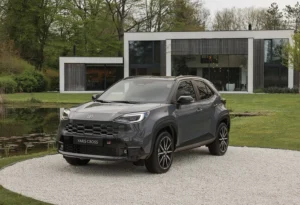
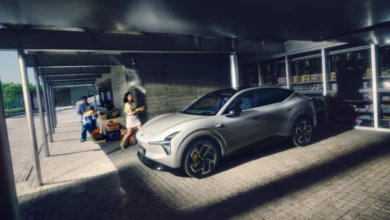
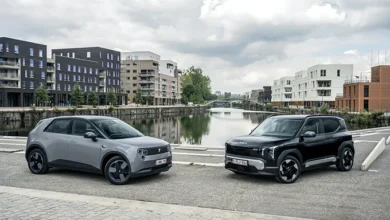
Kia EV2 and Firefly Redefine the Compact Segment Through Advanced Electric Vehicle Packaging and Spatial Efficiency

The transition to electric mobility was long heralded as a catalyst for a radical transformation in automotive design, promising a departure from the constraints of internal combustion engine (ICE) architectures. For decades, the layout of the passenger vehicle was dictated by the bulky requirements of engines, transmissions, exhaust systems, and fuel tanks. The emergence of the electric vehicle (EV) offered a "blank canvas" opportunity, characterized by compact motors and floor-mounted battery packs. This structural shift theoretically allows for a significant reduction in the space dedicated to mechanical components, thereby maximizing the volume available for passengers and cargo. However, while the technical potential for superior spatial efficiency has existed since the first modern EVs arrived, the market’s realization of these benefits has been inconsistent. In the premium and executive segments, buyers often prioritize external dimensions and "road presence"—the visible status of a large vehicle—over the pure efficiency of the interior-to-exterior ratio. The true battlefield for the electric packaging revolution has therefore shifted to the compact and sub-compact segments, where the Kia EV2 and the emerging "Firefly" project from Nio are poised to challenge established norms.
The Evolution of the Small Car Paradigm
Historically, the small car segment—the B and C segments in European parlance—has been a game of compromises. To keep costs low and footprints small, manufacturers often sacrificed rear legroom and trunk capacity. The "big on the inside, small on the outside" mantra was a marketing ideal rarely achieved to its full potential until the advent of dedicated EV platforms. In the current economic climate, where EV production costs remain higher than their ICE counterparts, the value proposition for the consumer has shifted. A buyer today might be willing to pay the price of a mid-sized petrol sedan for a compact electric hatchback, provided that the electric vehicle offers equivalent or superior utility and interior space.
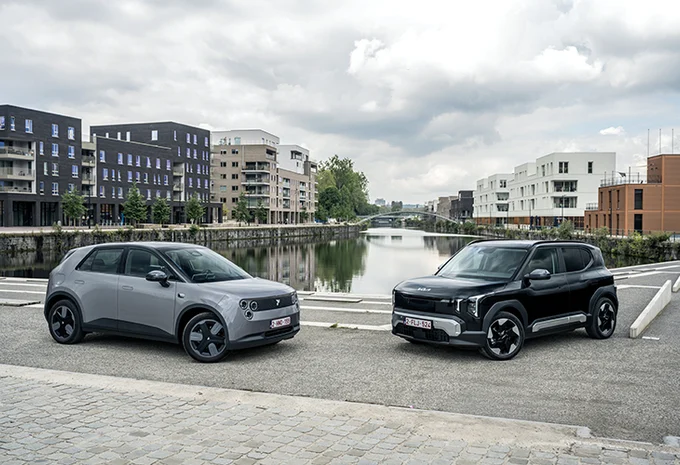
This is the specific niche targeted by the Kia EV2 and the Firefly. Both vehicles aim to provide the interior dimensions of a C-segment vehicle, such as the Renault Mégane or Volkswagen Golf, within an exterior footprint no larger than a B-segment city car like the Renault 5 or the Peugeot e-208. Achieving this requires a mastery of "packaging"—the art of arranging mechanical, electrical, and structural components to optimize human-centric space.
Technical Architecture and the Kia EV2 Strategy
Kia’s entry into the entry-level electric market is a cornerstone of its "Plan S" strategy, which aims for a line-up of 15 electric models by 2027. The EV2 is expected to be the brand’s most affordable offering in Europe, designed specifically to capture the high-volume urban market. While higher-end models like the EV6 and EV9 utilize the 800-volt E-GMP (Electric Global Modular Platform), the EV2 is rumored to utilize a modified, cost-optimized version of this architecture or a new small-car platform capable of supporting 400-volt charging to keep the entry price near the €25,000 mark.
The packaging advantage of the EV2 stems from a significantly lengthened wheelbase relative to its total length. By pushing the wheels to the absolute corners of the vehicle, Kia engineers have minimized front and rear overhangs. This not only improves urban maneuverability but also eliminates the "transmission tunnel" hump, resulting in a completely flat floor. Preliminary data suggests that while the EV2 will measure approximately 4.0 to 4.1 meters in length, its interior volume will rival vehicles measuring 4.4 meters. This is achieved through a high roofline and a "cab-forward" design, where the base of the windshield is moved forward, expanding the perceived and actual space of the cabin.
Firefly: Nio’s Strategic European Offensive
While Kia represents the established automotive guard transitioning to electric, Firefly represents the new wave of specialized EV manufacturers. Firefly is the internal codename for a new sub-brand from the Chinese automaker Nio, specifically tailored for the European market. Nio’s primary brand competes in the premium segment against Tesla, BMW, and Audi. However, recognizing that the European market is dominated by compact hatchbacks, Nio launched Firefly to offer a more accessible entry point without diluting the prestige of its main brand.
The Firefly project is particularly notable for its integration of Nio’s signature battery-swapping technology. Traditionally, battery-swapping hardware adds weight and requires specific structural reinforcements, which can be difficult to package in a small car. However, Firefly engineers have reportedly developed a more compact battery-swapping station and pack design that allows the vehicle to maintain a low floor and high interior volume. Like the Kia EV2, the Firefly model focuses on a "monobox" or "one-box" silhouette, which maximizes the vertical space available to occupants, ensuring that even with a battery pack under the floor, headroom remains comparable to traditional hatchbacks.
Comparative Data and Market Positioning
The competition between the Kia EV2 and Firefly is a microcosm of the broader geopolitical and economic struggle in the automotive industry. On one side, Kia leverages its massive global supply chain and manufacturing efficiency in South Korea and Europe (Slovakia). On the other, Firefly utilizes China’s lead in battery chemistry and software integration.
| Feature | Kia EV2 (Projected) | Firefly (Projected) |
|---|---|---|
| Length | ~4,050 mm | ~3,950 mm |
| Segment | B-Segment (Exterior) | B-Segment (Exterior) |
| Interior Space | C-Segment Equivalent | C-Segment Equivalent |
| Target Price | €25,000 – €30,000 | €20,000 – €28,000 |
| Battery Tech | LFP (Lithium Iron Phosphate) | LFP / Battery Swapping |
| Range (WLTP) | 350 – 450 km | 300 – 400 km |
The use of Lithium Iron Phosphate (LFP) batteries is a critical shared trait. LFP cells are less expensive and more durable than the Nickel Manganese Cobalt (NMC) cells found in high-end EVs. While LFP has a lower energy density, the superior packaging of the EV2 and Firefly allows for a large enough pack to be installed to meet the 400-kilometer range threshold, which is increasingly seen as the "sweet spot" for urban and suburban users.
Chronology of Development and Market Entry
The development cycles for both vehicles have been accelerated to meet tightening emissions regulations in the European Union.
- 2021-2022: Kia announces its intention to expand the "EV" nomenclature downward from the EV6. Nio confirms the development of two sub-brands (codenamed Alps and Firefly) to target mass-market segments.
- 2023: Kia debuts the EV3 and EV4 concepts, signaling the design language that will trickle down to the EV2. Nio begins testing Firefly prototypes on European roads, particularly in Germany and Scandinavia.
- Early 2024: Spy photos of the Kia EV2 in heavy camouflage emerge, confirming a boxy, SUV-adjacent hatchback silhouette designed for maximum interior utility. Nio’s William Li confirms that Firefly will debut in Europe before its full rollout in China, a rare move for a Chinese automaker.
- Late 2024 / Early 2025: Official world premieres are expected. The Kia EV2 is slated for production at the Žilina plant in Slovakia to avoid potential EU tariffs on Chinese-made vehicles.
- 2026: Both models are expected to be in full series production, marking a critical turning point for the affordability of EVs in Europe.
Official Responses and Industry Sentiment
Industry analysts have noted that the success of these "packaging-first" vehicles will depend heavily on consumer education. Kia Europe’s marketing division has hinted that their strategy will focus on "de-segmentation," encouraging buyers to think about interior volume rather than exterior length. "The customer of tomorrow is not buying a ‘small car’ or a ‘large car’; they are buying a ‘space solution’ that fits their urban lifestyle," a Kia spokesperson noted during a recent brand summit.

Similarly, Nio’s leadership has emphasized that Firefly is not merely a "cheap Nio." William Li, founder and CEO of Nio, has stated in investor calls that the Firefly brand will maintain high safety standards and advanced driver-assistance systems (ADAS), despite its smaller size. "The relationship between Firefly and Nio is like that of Mini to BMW," Li explained, suggesting that while the cars are smaller, they will maintain a "premium-utility" feel.
Broader Implications for the Automotive Landscape
The arrival of the Kia EV2 and Firefly signals the end of the era where small cars were viewed as "penalty boxes." By utilizing the unique layout of electric drivetrains, these manufacturers are proving that a vehicle can be easy to park and efficient to drive without sacrificing the comfort of a family car.
This shift has several long-term implications:
- Urban Congestion: Vehicles with smaller footprints that offer high utility can help mitigate urban congestion without forcing families to upgrade to oversized SUVs.
- The Decline of the C-Segment ICE: As B-segment EVs offer C-segment space at a lower total cost of ownership, traditional internal combustion compacts like the VW Golf or Ford Focus (the latter of which is being discontinued) face an existential threat.
- Manufacturing Localization: The need to keep prices low while avoiding tariffs is forcing brands like Kia to produce locally in Europe, while Chinese brands like Nio are exploring European partnerships or factory sites to remain competitive.
In conclusion, the Kia EV2 and the Firefly represent more than just new model entries; they are the realization of the electric vehicle’s original promise. By prioritizing packaging and spatial efficiency over traditional automotive "status," these vehicles are set to redefine what a modern compact car can be. As they move toward their mid-decade launches, the pressure is now on European incumbents to match this level of engineering ingenuity or risk losing the most vital segment of the domestic market.
Related posts: