European car market grows by 5.7 percent as electric vehicles conquer over 20 percent market share

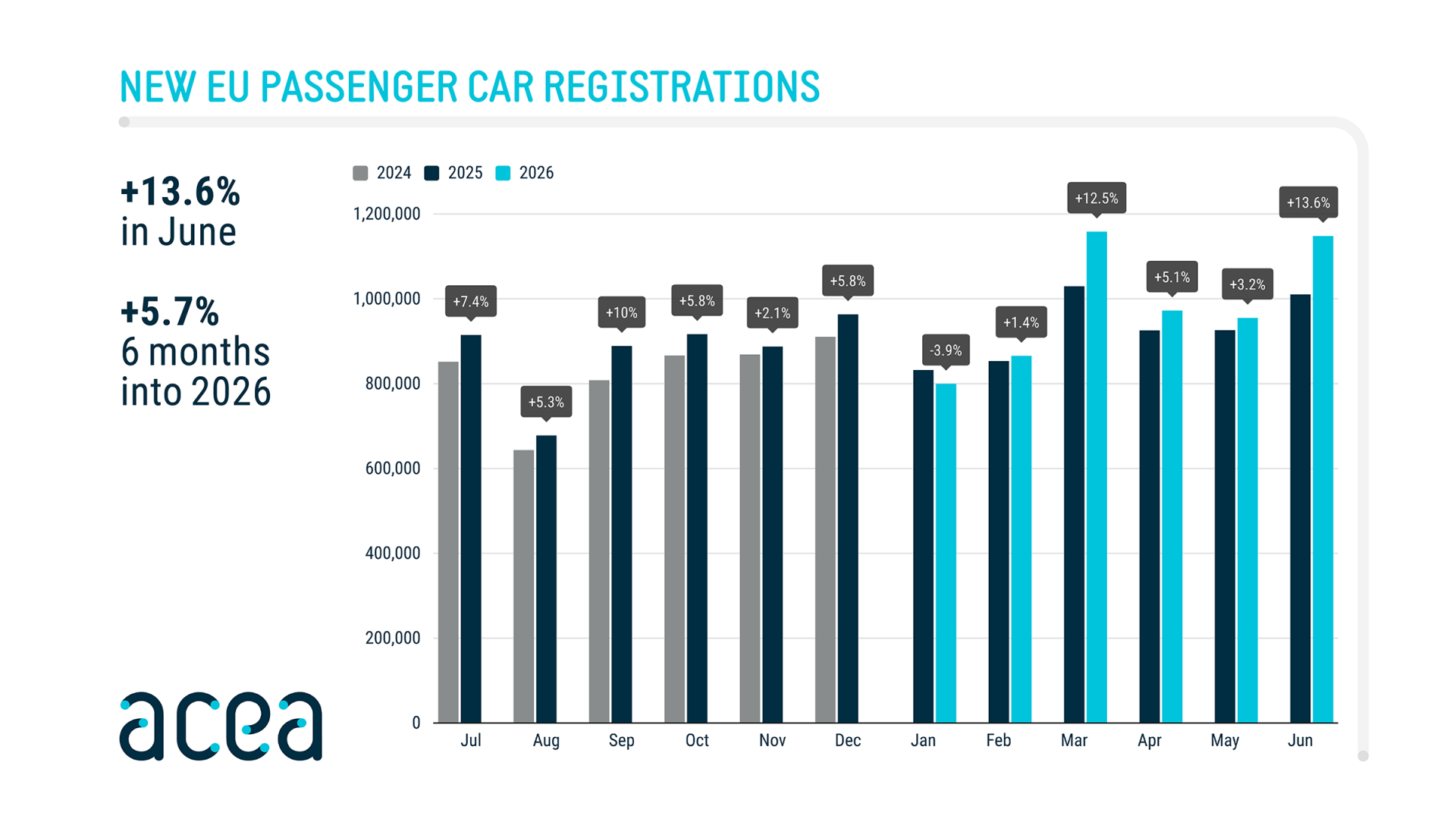
The European automotive landscape underwent a significant transformation during the first half of 2026, characterized by a steady recovery in overall volume and a historic shift in powertrain preference. According to the latest data from the European Automobile Manufacturers’ Association (ACEA), the 27 member states of the European Union saw a combined total of nearly 5.9 million new passenger car registrations. This represents a 5.7% increase compared to the same period in 2025, signaling a robust rebound as supply chain constraints of previous years fade into the background. The momentum was particularly visible in June, which acted as a catalyst for the semester’s positive results, posting a 13.6% year-on-year increase in registrations.
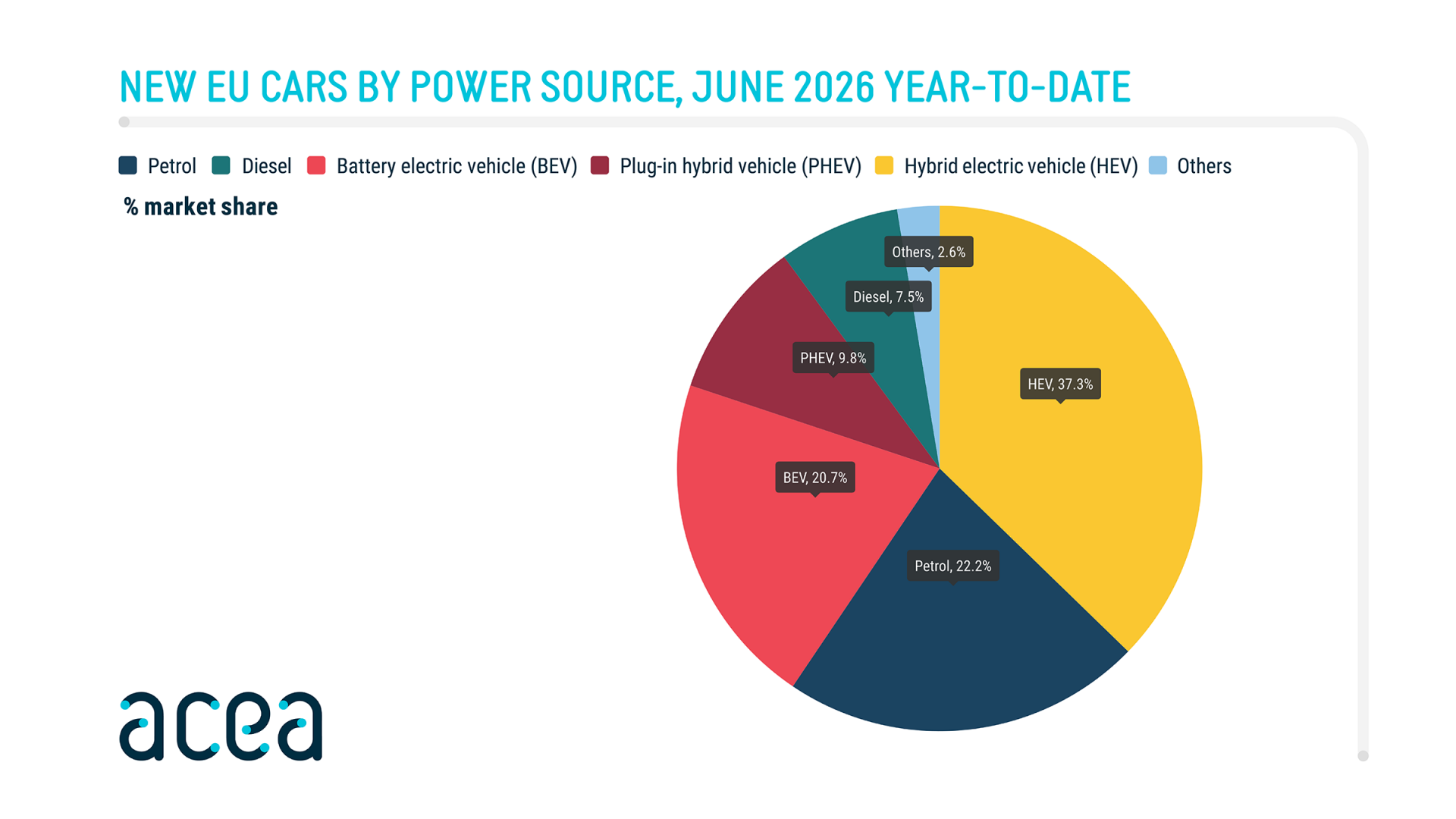
This growth is not merely a recovery in numbers but a fundamental pivot in the types of vehicles consumers are choosing. For the first time in history, battery-electric vehicles (BEVs) have surpassed the 20% market share threshold over a six-month period, firmly establishing themselves as a primary pillar of the European transport sector. As the industry moves toward the 2035 zero-emission mandate, the first half of 2026 serves as a critical benchmark for the speed and scale of the energy transition in mobility.
The Electric Breakthrough: Surpassing the 20 Percent Milestone
The primary narrative of the 2026 half-year report is the explosive growth of fully electric vehicles. Between January and June, 1,220,890 BEVs were registered across the EU, marking a substantial 40.5% increase compared to the first half of 2025. This surge has propelled the BEV market share from 15.6% a year ago to a commanding 20.7%. One in every five new cars sold in the European Union is now powered exclusively by a battery.
Geographical analysis reveals that this growth is being driven by the continent’s largest economies. France has emerged as a frontrunner in this transition, recording a staggering 62.9% increase in electric registrations. This is largely attributed to the maturity of its "social leasing" programs and a stable network of incentives for middle-income buyers. Germany, despite earlier fluctuations in its subsidy landscape, saw a 48% increase, while Denmark reported a 41.2% rise. Belgium, while growing at a more modest rate of 8.2%, remains one of the highest-performing markets in terms of per-capita EV adoption, bolstered by its corporate fleet taxation policies.
Industry analysts suggest that this growth is fueled by a combination of factors: a wider variety of affordable entry-level electric models, improved charging infrastructure along major European corridors, and a growing secondary market for EVs which has helped stabilize residual values.
Hybrid Vehicles Maintain Market Dominance
While electric vehicles are capturing headlines, hybrid-electric vehicles (HEVs)—a category encompassing both full hybrids and mild hybrids—remain the most popular choice for European consumers. With 2,198,148 registrations in the first half of 2026, hybrids account for 37.3% of the total market. The segment grew by 13.2%, demonstrating that a significant portion of the population still views hybridization as the most practical bridge between internal combustion and full electrification.
The growth in the hybrid segment was particularly pronounced in Southern Europe. Italy saw a 23% increase, and Spain followed closely with a 20.8% rise. These markets, which have historically been slower to adopt full BEVs due to infrastructure challenges, are utilizing hybrid technology to meet tightening emission standards. In contrast, more mature EV markets like Germany and France saw more conservative hybrid growth rates of 6.9% and 3.2%, respectively, as consumers there increasingly skip the hybrid step in favor of pure electric options.
Plug-in hybrid electric vehicles (PHEVs) also experienced a resurgence after a period of stagnation. EU registrations for PHEVs rose by 22.5% to 577,735 units, bringing their market share to 9.8%. This suggests that for a specific demographic of long-distance drivers with access to home charging, the PHEV remains a highly relevant solution.
The Accelerating Decline of Petrol and Diesel
The rise of electrified powertrains has come at the direct expense of traditional internal combustion engines (ICE). The first half of 2026 has been particularly difficult for the petrol and diesel segments, which continue to lose relevance in the new car market.
Petrol-powered vehicle registrations fell by 17.2% during the first six months of the year. This decline saw their market share tumble from 28.4% to 22.2%. Diesel, once the dominant fuel type in Europe, continues its downward spiral toward niche status. Diesel registrations dropped by 16.5%, with its market share now sitting at just 7.5%. Collectively, traditional petrol and diesel cars now represent only 29.7% of the EU market, a sharp decline from the 37.8% share they held just one year ago.
This shift is driven by both regulatory pressure and consumer sentiment. Manufacturers are increasingly pruning their ICE portfolios to avoid heavy fines under the EU’s fleet-wide CO2 emission targets. Simultaneously, the implementation of Low Emission Zones (LEZs) in major European cities is discouraging urban buyers from investing in fossil-fuel-dependent technology.
Manufacturer Performance and the Rise of Chinese Competitors
The competitive landscape of the European automotive industry is being redrawn by the entrance of aggressive new players. While established European giants maintain their lead, the rate of growth from Chinese manufacturers is unprecedented.
The Volkswagen Group remains the undisputed market leader in the EU, commanding a 26.5% market share for the first half of 2026. Their multi-brand strategy, spanning from Skoda and SEAT to Audi and Porsche, has allowed them to capture various price points in the EV and hybrid segments. Stellantis follows in second place with a 16.4% share, while the Renault Group holds 10.5%.
However, the most striking figures come from the East. Chinese brands are no longer peripheral players; they are major contenders. BYD saw its European registrations skyrocket by 168.2%, while Chery posted an increase of 268.7%. Most notably, Leapmotor—bolstered by its strategic partnership with Stellantis for European distribution—saw a massive 526.7% increase in registrations, albeit from a lower baseline.
Tesla also remains a formidable force in the European market. The American EV specialist saw a 75.4% increase in registrations compared to the first half of 2025. This growth is largely credited to the continued success of the Model Y and Model 3, supported by localized production at the Giga Berlin facility and aggressive pricing strategies that have forced European incumbents to respond.
Regional Focus: The Belgian Market Dynamics
Belgium provides a unique case study within the European context. The country ended the first half of 2026 with 230,681 new registrations, a slight decrease of 1.7% compared to the previous year. However, this headline figure masks a very strong performance in the month of June, where the market grew by 9.4% with 45,449 units.
The Belgian market is currently navigating a significant transition in its corporate car legislation. This is reflected in the 36.7% collapse of plug-in hybrid registrations over the first half of the year, as tax incentives have shifted heavily toward pure electric vehicles. Consequently, BEV registrations in Belgium rose by 8.2% to 83,282 units.
Hybrids in Belgium saw a massive 40.7% surge in June alone, as private buyers—who do not benefit from the same corporate tax breaks as companies—look for fuel-efficient alternatives to traditional petrol engines. Meanwhile, diesel continues its rapid exit from the Belgian market, falling by 21% in the first semester.
Chronology of Market Evolution: 2024–2026
The current state of the market is the result of a multi-year trajectory influenced by policy and technology.
- 2024: The market was characterized by high interest rates and the phasing out of EV subsidies in Germany, which led to a temporary cooling of the electric market.
- 2025: Manufacturers introduced a wave of "affordable" EVs (priced between €20,000 and €25,000), which began to reach showrooms in late 2025. This year also saw the tightening of EU fleet emission targets, forcing OEMs to prioritize low-emission sales.
- H1 2026: The results we see now are the fruition of those 2025 product launches. The 13.6% jump in June 2026 is viewed by analysts as the "tipping point" where electric vehicles moved from early-adopter status to the mainstream mass market.
Implications and Future Outlook
The data from the first half of 2026 suggests that the European automotive industry is past the point of no return regarding electrification. The fact that ICE vehicles now represent less than 30% of new sales indicates a permanent shift in consumer demand.
However, this transition brings new challenges. The rapid growth of Chinese brands has prompted the European Commission to monitor trade flows closely, leading to ongoing discussions regarding tariffs and local production requirements to ensure a level playing field for European manufacturers. Furthermore, the decline in petrol and diesel sales has significant implications for government tax revenues derived from fuel duties, likely leading to the introduction of new road-pricing schemes across the EU in the coming years.
For the remainder of 2026, the industry expects continued growth, provided that the expansion of the charging grid keeps pace with vehicle sales. The "20 percent milestone" for electric cars is not just a statistic; it is a clear signal that the infrastructure, the products, and the consumers are finally aligning toward a decarbonized future for European mobility.
Related posts: