Toyota CEO Koji Sato Leads Strategic Initiative to Unify Japanese Automotive Industry Against Rising Chinese Competition

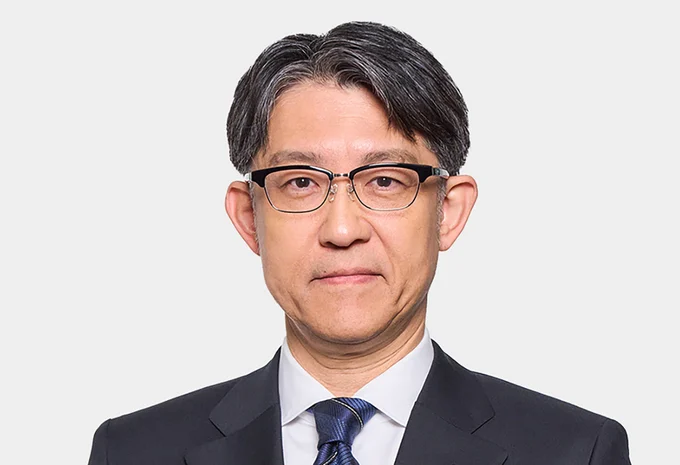
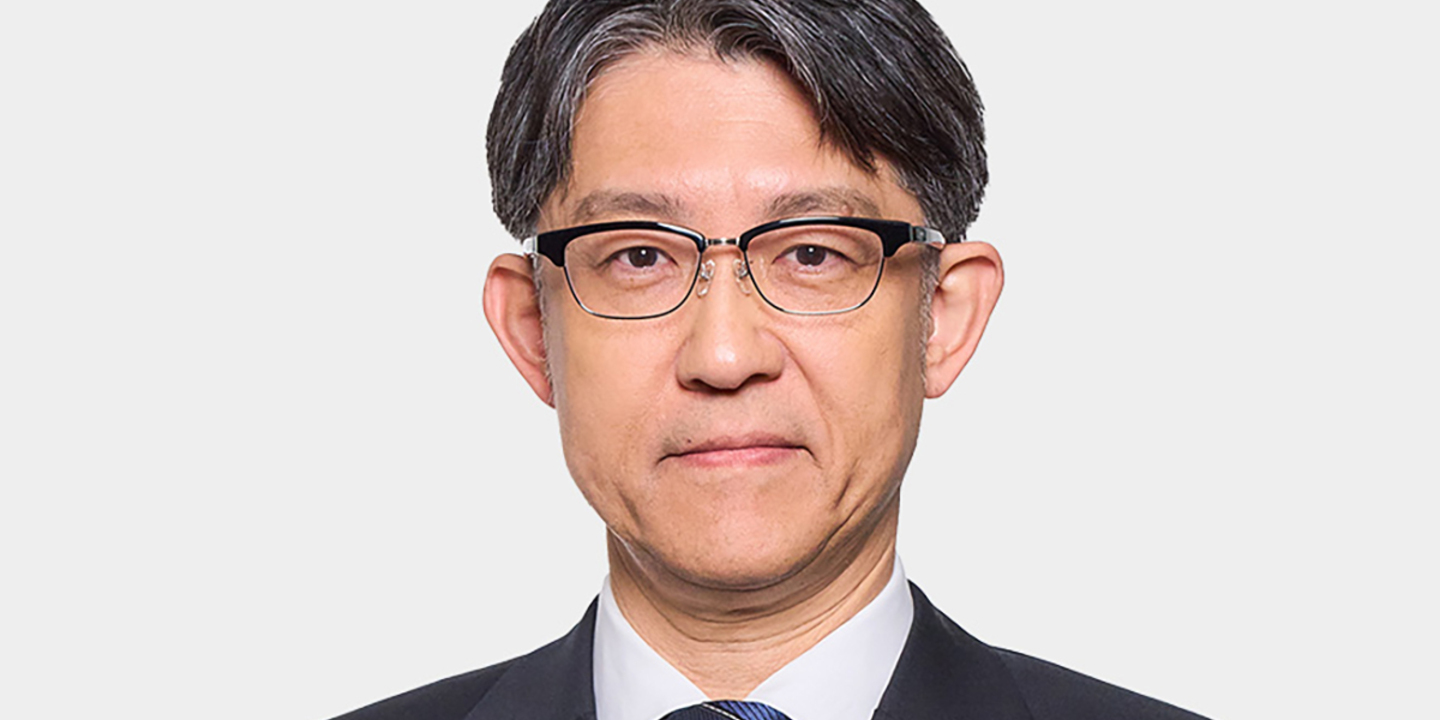
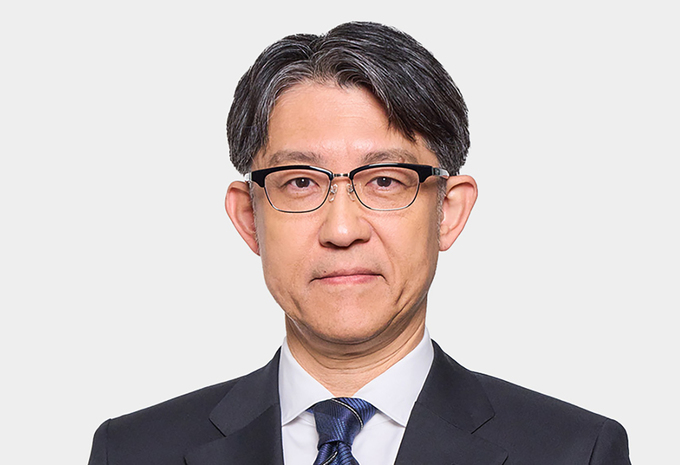
The Japanese automotive industry is entering a period of unprecedented transformation as Koji Sato, the CEO of Toyota Motor Corporation and current Chairman of the Japan Automobile Manufacturers Association (JAMA), issues a stark warning to the nation’s leading industrial players. During a high-level summit with major component suppliers in Nagoya, Sato articulated a sentiment of existential urgency that has begun to permeate the boardrooms of Tokyo and Toyota City. His message was blunt: "If nothing changes, we will not survive." This declaration serves as the foundation for a new, radical strategy of national industrial unification aimed at blunting the rapid global expansion of Chinese electric vehicle (EV) manufacturers. To maintain their global relevance, Sato is calling for the "Seven Giants" of the Japanese archipelago—Toyota, Honda, Nissan, Mazda, Subaru, Mitsubishi, and Suzuki—to cease the fragmentation of their engineering resources on "invisible" components and instead forge a common industrial front.
For decades, the Japanese automotive industry has been defined by fierce internal competition and highly proprietary supply chains. However, the rise of Chinese powerhouses like BYD, Geely, and Xiaomi has fundamentally altered the competitive landscape. These newcomers benefit from massive state subsidies, vertical integration, and a speed of development that traditional manufacturers struggle to match. In response, Sato’s proposal—which has already garnered significant interest from leadership at Nissan and other domestic rivals—revolves around the creation of a "Japan Standard." This initiative does not seek to merge companies or erase brand identities; rather, it aims to standardize the vast array of commodity components that are essential to a vehicle’s function but invisible to the end consumer.
The Architecture of the Japan Standard
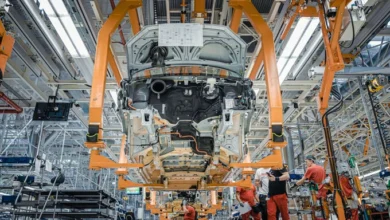
The "Japan Standard" is a pragmatic approach to industrial efficiency. Under this framework, Japanese automakers would collaborate on the development and procurement of "commoditized" parts. These include structural elements such as wire harnesses, electronic connectors, basic cooling systems, and mounting brackets. Historically, each Japanese automaker has designed these components to their own unique specifications, forcing suppliers to maintain thousands of different variations for parts that perform identical tasks. This fragmentation has led to inflated research and development (R&D) costs and complex, fragile supply chains.
By standardizing these invisible components, the industry can achieve massive economies of scale. Sato’s vision is to treat these parts as utility-grade infrastructure rather than competitive advantages. The strategy explicitly protects the "Brand DNA" of each manufacturer. For instance, while a Subaru and a Honda might share the same standardized internal wiring architecture or climate control actuators, they would remain distinct in their engine tuning, suspension geometry, exterior design, and interior user interface. The goal is to eliminate "invisible engineering"—the costly process of reinventing the wheel for components that do not influence a customer’s purchasing decision.
Economic Necessity and the Waste Reduction Mandate
The financial implications of this shift are staggering. Industry analysts estimate that standardizing even a fraction of non-competitive components could save the Japanese automotive sector billions of dollars annually. These savings are not merely intended to bolster profit margins but are earmarked for a massive "war chest" to fund the transition to electric and software-defined vehicles (SDVs).
Beyond R&D, the initiative addresses the "zero-waste" philosophy central to Japanese manufacturing. Currently, many components are discarded or recycled due to minute cosmetic defects or slight deviations from hyper-specific proprietary tolerances that have no impact on safety or performance. By moving toward a unified "Japan Standard," the industry can streamline quality control processes and reduce the rejection rate of parts, further lowering the total cost of production. This efficiency is critical as Japanese brands face a pricing war initiated by Chinese manufacturers, who are often able to undercut Japanese vehicles by 20% to 30% in key markets like Southeast Asia and Europe.
Financing the Digital and Electric Frontier
The urgency behind Sato’s plan is driven by the realization that the automotive industry’s value center is shifting from mechanical hardware to digital software. The "Big Seven" are currently engaged in a high-stakes race to master several capital-intensive technologies:
- Software-Defined Vehicles (SDVs): Modern cars are becoming "smartphones on wheels." Developing proprietary operating systems, over-the-air (OTA) update capabilities, and advanced driver-assistance systems (ADAS) requires tens of billions of dollars in ongoing investment.
- Next-Generation Battery Tech: To compete with China’s dominance in the lithium-iron-phosphate (LFP) battery market, Japanese firms must accelerate the commercialization of solid-state batteries and other high-density chemistries.
- Artificial Intelligence: From autonomous driving algorithms to AI-driven factory floors, the technological requirements of the next decade are beyond the individual R&D budgets of smaller players like Mazda or Subaru.
Sato’s strategy creates "zones of cooperation" for hardware to enable "zones of competition" in software and customer experience. As Sato noted during his address, the intent is to accelerate competition where it truly matters to the customer by being hyper-efficient where it does not.
A Mirror of the European Airbus Model
The Japanese initiative bears a striking resemblance to the "Airbus of the Auto" concept championed by Luca de Meo, CEO of Renault Group and former President of the European Automobile Manufacturers’ Association (ACEA). De Meo has frequently argued that European automakers must form a cross-border coalition to survive the dual pressure of Chinese competition and American protectionism (notably the Inflation Reduction Act). De Meo’s vision included shared battery factories, unified software architectures, and joint purchasing power.
However, while Europe’s efforts have been slowed by national rivalries, complex EU regulations, and diverging corporate interests, Japan may be positioned to move much faster. The Japanese automotive ecosystem is already tightly knit through the JAMA and a web of cross-shareholdings (such as Toyota’s stakes in Mazda, Subaru, and Suzuki). Furthermore, the cultural emphasis on "Monozukuri" (the art of making things) provides a shared philosophical foundation for this industrial pivot. Where De Meo’s proposal was a political and industrial plea to an entire continent, Sato’s initiative is increasingly viewed as an operational roadmap for a unified national industry.
Chronology of a Crisis: The Path to Unification
The shift toward the Japan Standard has been building for several years, following a series of market shocks:

- 2021-2022: The global semiconductor shortage revealed the fragility of fragmented supply chains, as different Japanese automakers struggled to source unique chips for identical functions.
- Early 2023: BYD officially overtook Volkswagen as the best-selling brand in China, sending shockwaves through the Japanese industry, which has long relied on the Chinese market for growth.
- Late 2023: Koji Sato assumed the role of JAMA Chairman, immediately signaling a shift toward "all-Japan" cooperation.
- Mid-2024: Toyota, Mazda, and Subaru held a joint press conference to announce a new generation of engines designed to be integrated into electrified powertrains, marking the first major public sign of this new cooperative era.
- Late 2024: The Nagoya summit with suppliers formalized the "Japan Standard" for invisible components, moving the concept from theory to implementation.
Implications for the Global Consumer
For the average motorist, this industrial consolidation offers several practical benefits. One of the most significant advantages is the improvement in long-term repairability and maintenance. When multiple brands share standardized wiring, sensors, and structural connectors, the availability of spare parts increases while costs decrease. Independent repair shops will find it easier to service a wider range of vehicles, and the "right to repair" becomes more attainable when the underlying hardware is not unnecessarily proprietary.
Furthermore, by pooling resources on invisible components, Japanese automakers can focus their budgets on improving the aspects of the car that drivers actually interact with. This means more responsive infotainment systems, better cabin materials, and more sophisticated safety features. The "Japan Standard" ensures that while the "bones" of the car may be shared, the "soul" of the vehicle—its handling, comfort, and character—remains unique to the brand.
Analysis of the Road Ahead
The success of Sato’s plan depends on the ability of traditional rivals to overcome decades of corporate insularity. While Toyota’s size gives it the most leverage, the cooperation of Nissan and Honda is vital for the "Japan Standard" to achieve true national scale. Recent reports suggest that Nissan and Honda are already exploring a separate partnership for EV components and software, which could eventually be folded into the broader JAMA-led framework.
The stakes could not be higher. The automotive industry accounts for nearly 20% of Japan’s total exports and employs millions of people directly and indirectly. If the Japanese giants fail to adapt to the EV and software era, the economic consequences for the nation would be catastrophic. By unifying the industry’s "invisible" engineering, Koji Sato is not just trying to save Toyota; he is attempting to safeguard the industrial future of Japan. The coming years will determine if this "Japan Standard" can serve as a successful defensive wall against the Chinese offensive or if the era of Japanese automotive dominance is reaching its twilight. For now, the message from Nagoya is clear: the only way to survive the future is to build it together.
Related posts: