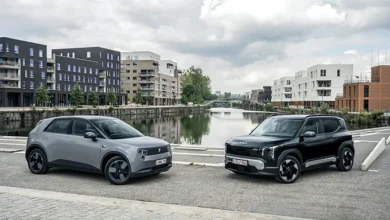
European Car Market Surges in First Half of 2026 as Electric Vehicle Adoption Crosses Landmark 20 Percent Threshold


The European automotive landscape underwent a transformative shift during the first half of 2026, characterized by a robust recovery in total volume and a historic breakthrough for sustainable mobility. According to the latest data released by the European Automobile Manufacturers’ Association (ACEA), the 27 member states of the European Union recorded a total of 5.9 million new passenger car registrations between January and June. This figure represents a significant 5.7% increase compared to the same period in 2025, signaling a period of renewed consumer confidence and a stabilizing supply chain that had previously been hampered by geopolitical tensions and logistical bottlenecks.
The momentum of the market was particularly evident in the closing month of the semester. June 2026 saw a dramatic year-on-year increase of 13.6%, a surge that analysts attribute to a combination of aggressive seasonal promotions, the clearing of long-standing order backlogs, and the introduction of several high-volume entry-level electric models. This late-spring acceleration provided the necessary buoyancy to push the half-year results into comfortably positive territory, setting a bullish tone for the remainder of the calendar year.
The Electric Transition Hits a Major Milestone
For the first time in the history of the European Union’s automotive sector, battery electric vehicles (BEVs) have surpassed the 20% market share threshold over a six-month period. With 1,220,890 units registered, fully electric cars now account for 20.7% of all new vehicle sales, up from 15.6% in the first half of 2025. This 40.5% growth in volume highlights a decisive pivot toward electrification, driven by both regulatory pressure and a diversifying product range that finally addresses the "affordability gap."
The geographical distribution of this growth reveals a multi-speed Europe. France emerged as a primary engine of the electric revolution, posting a staggering 62.9% increase in BEV registrations. This spike is largely credited to the continued success of the national "social leasing" program and a mature charging infrastructure. Germany followed closely with a 48% increase, recovering from a period of stagnation following the sudden withdrawal of certain subsidies in previous years. Denmark also showcased exceptional performance with a 41.2% rise, while Belgium saw a more moderate but steady growth of 8.2%, reflecting a market that had already achieved high corporate fleet electrification in previous cycles.
Industry observers suggest that the crossing of the 20% mark represents a "tipping point." Once a technology reaches one-fifth of the market, it typically moves from the "early adopter" phase into the "early majority" phase. This transition is expected to further incentivize investment in public charging networks, which remains the primary concern for prospective buyers in southern and eastern European regions.
Hybrids Retain the Top Spot Amid Market Diversification
Despite the rapid ascent of pure electric vehicles, hybrid-electric vehicles (HEVs)—a category encompassing both full hybrids and mild hybrids—remain the single most popular powertrain choice for European consumers. In the first half of 2026, 2,198,148 hybrids were registered, securing a dominant 37.3% market share. This represents a 13.2% increase in volume, proving that for a large segment of the population, the hybrid remains the ideal compromise between fuel efficiency and long-range convenience.

The growth in the hybrid segment was bolstered by strong demand in Italy and Spain, where registrations rose by 23% and 20.8%, respectively. These markets have traditionally been slower to adopt pure BEVs due to infrastructure limitations, making hybrids the preferred step toward decarbonization. Germany (+6.9%) and France (+3.2%) also contributed to the hybrid tally, though their growth was more tempered as consumers in those nations increasingly opted for full electrification.
Plug-in hybrid electric vehicles (PHEVs) also enjoyed a resurgence in H1 2026. After a period of declining popularity, PHEV registrations climbed by 22.5% to reach 577,735 units. Their market share rose from 8.5% to 9.8%, suggesting that the latest generation of PHEVs—many of which now offer electric-only ranges exceeding 80 or 100 kilometers—are finding a second life as a viable transition tool for suburban commuters.
The Rapid Erosion of Traditional Combustion Engines
As electrified powertrains gain ground, traditional internal combustion engines (ICE) continue their steady descent into obsolescence. The first half of 2026 marked a painful period for petrol and diesel proponents. Registrations of petrol-powered cars fell by 17.2%, with their market share plummeting from 28.4% to 22.2%.
The decline of diesel was equally pronounced. Once the backbone of the European car market, diesel now finds itself relegated to a niche status, with volumes dropping by 16.5% and market share falling to just 7.5%. When combined, petrol and diesel vehicles now account for only 29.7% of the total EU market. To put this in perspective, just one year ago, these two traditional fuels commanded 37.8% of the market. The contraction of the ICE segment is no longer a gradual drift but an accelerated exodus, as manufacturers prioritize the production and marketing of low-emission alternatives to meet stringent EU fleet emissions targets.
Regional Spotlight: Belgium’s Resilient June Recovery
The Belgian market presented a unique case study during the first half of 2026. On a cumulative basis, the country saw 230,681 new registrations, a slight 1.7% decrease compared to the first half of 2025. This minor contraction is attributed to a high baseline set in the previous year and a shifting tax landscape for corporate vehicles.
However, the month of June painted a much more optimistic picture for Belgium. Registrations jumped by 9.4% in June alone, with 45,449 new cars hitting the road. The breakdown of these figures reveals a radical shift in Belgian consumer preferences. Electric vehicle registrations in June rose by 35.2%, while hybrids surged by 40.7%. Even more striking was the 90.1% increase in "other alternative" powertrains, such as hydrogen and CNG, albeit from a very low base.
Over the full six-month period, Belgium’s BEV registrations reached 83,282 units, an 8.2% increase. Conversely, the Belgian market saw a sharp 36.7% drop in plug-in hybrids, as changes in fiscal deductibility for company cars pushed professional buyers toward pure electric options. Following the broader European trend, petrol (-2.6%) and diesel (-21%) continued to lose favor among Belgian motorists.

The Competitive Landscape: European Giants vs. Chinese Challengers
The first half of 2026 has solidified the dominance of the Volkswagen Group, which maintained its position as the leading automotive manufacturer in the EU. With a 26.5% market share, the German conglomerate has successfully leveraged its multi-brand strategy (including VW, Audi, Skoda, and Seat) to capture demand across all price points and powertrain types. Stellantis followed in second place with a 16.4% share, while the Renault Group held steady in third with 10.5%.
However, the most significant story in the corporate sector is the meteoric rise of Chinese manufacturers. These brands are no longer peripheral players but are now central to the European market’s growth. BYD reported a 168.2% increase in registrations, while Chery saw an astonishing 268.7% growth. Leapmotor, buoyed by new distribution partnerships within Europe, recorded a 526.7% surge.
Tesla also demonstrated remarkable resilience and growth. Despite increasing competition from both legacy European OEMs and new Chinese entrants, the American EV pioneer saw its EU registrations grow by 75.4% compared to H1 2025. This suggests that Tesla’s aggressive pricing strategies and the continued popularity of the Model 3 and Model Y are effectively maintaining its foothold in the premium electric segment.
Analysis of Implications and Future Outlook
The data from the first half of 2026 suggests several critical implications for the European automotive industry. First, the "20% BEV threshold" is likely to trigger a renewed debate among policymakers regarding the pace of infrastructure deployment. While the vehicles are now available and being purchased in record numbers, the ratio of cars to public charging points remains a point of friction in several member states.
Second, the collapse of diesel and the rapid decline of petrol suggest that the "2035 ban" on new combustion engine sales is already being priced in by consumers and fleet managers. The residual value of ICE vehicles is becoming a growing concern, further accelerating the shift toward leasing and subscription models for electrified cars.
Third, the aggressive growth of Chinese brands is expected to heighten trade tensions. The European Commission is likely to face increasing pressure from domestic manufacturers to ensure a "level playing field," potentially leading to further scrutiny of subsidies and import tariffs.
Looking ahead to the second half of 2026, the industry faces several headwinds, including fluctuating energy prices and the potential for economic cooling in major markets. However, with nearly 6 million cars sold in six months and a clear trajectory toward a zero-emission future, the European car market appears more dynamic and resilient than it has been in a decade. The challenge for the coming months will be for manufacturers to maintain this momentum while navigating a increasingly complex geopolitical and regulatory environment.
Related posts: