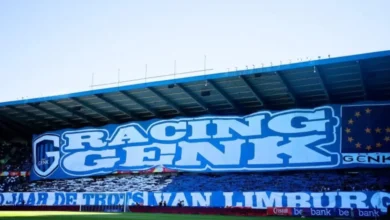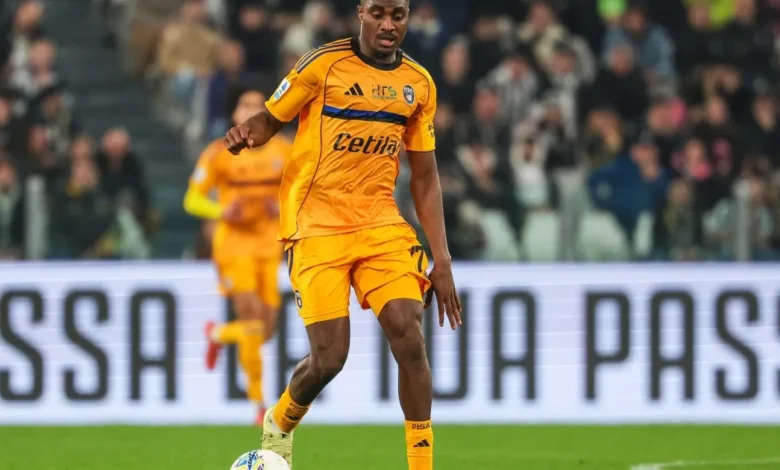
Genk, Belgium – In a significant move to bolster their attacking prowess, Belgian Pro League club KRC Genk has announced the acquisition of Nigerian international striker Rafiu Durosinmi. The 23-year-old forward has penned a long-term contract with the Limburg-based outfit, committing his future to the Cegeka Arena until June 2030. This transfer, reportedly valued at approximately €10.5 million according to various reputable sources, marks Genk’s second major incoming signing of the summer and signals a clear intent to compete at the highest level.
The arrival of Durosinmi is seen as a direct response to the club’s identified need for increased offensive firepower. Genk’s management is optimistic that the Nigerian striker possesses the immediate impact and goal-scoring threat required to integrate seamlessly into the squad and contribute significantly from the outset. This investment underscores Genk’s strategic vision for the upcoming seasons, aiming to rebuild and strengthen the team with dynamic and promising talent.
Durosinmi’s Journey: From Czech Success to Italian Challenges
While Durosinmi officially joins KRC Genk from Italian second-division side Pisa SC, his most impactful and celebrated period as a professional footballer was with Czech Republic club Viktoria Plzeň. It was in the Czech league that the young Nigerian striker truly established himself as a formidable attacking force, consistently demonstrating his ability to find the back of the net and make his mark even on the European stage.
During his tenure at Viktoria Plzeň, Durosinmi made a total of 86 appearances, scoring an impressive 35 goals and providing 10 assists. These statistics highlight his significant contribution to the team’s offensive output and his reputation as a prolific scorer. Across his entire professional career to date, Durosinmi has amassed 150 matches, registering 54 goals and 17 assists, a testament to his consistent performance and development as a forward.
However, Durosinmi’s spell at Pisa SC proved to be a more challenging chapter in his career. The Italian club acquired his services with the hope of replicating his Czech form, but a combination of persistent injuries and limited playing time hindered his ability to establish himself. Consequently, Durosinmi managed only twelve appearances for Pisa, scoring a solitary goal. Compounding this personal struggle, the club also suffered relegation from the Italian top flight during his time there.
Despite the setbacks in Italy, KRC Genk’s decision to invest in Durosinmi suggests a strong belief in his inherent talent and potential. Transfermarkt, a widely respected football statistics and market valuation website, currently places Durosinmi’s market value at €7 million. However, Genk appears to be betting on the Nigerian recapturing the scintillating form he displayed during his highly productive years in the Czech Republic. This valuation gap indicates Genk’s confidence in unlocking his full potential and potentially seeing his market value increase significantly with consistent performance.
A New Striker for Thorup’s System
The addition of Rafiu Durosinmi is expected to provide KRC Genk with a much-needed presence and threat within the opposition’s penalty area. The club’s Head of Football, Dimitri de Condé, emphasized that Durosinmi’s profile aligns perfectly with Genk’s playing philosophy. De Condé highlighted the striker’s blend of physical strength and his adeptness in combination play as key attributes that attracted the club.
"Rafiu is a striker with qualities that align well with the way KRC Genk wants to play football," De Condé stated on the club’s official website. "He is good in the box and also strong on the ball in combination play. A typical number 9 where you can lay off the ball." This description suggests that Durosinmi is not merely a poacher but a versatile forward capable of linking up play, holding up the ball, and bringing teammates into the game. This multifaceted approach is crucial for modern attacking systems.
The recruitment of Durosinmi also aligns with Genk’s overarching ambition to consistently compete at the top of the Belgian league and re-establish themselves as title contenders. His experience extends beyond domestic leagues, as he has already represented the Nigerian national team on three occasions, demonstrating his capability to perform on an international stage. This international exposure can be invaluable in high-pressure club competitions.
After his successful period at Viktoria Plzeň, Durosinmi now has a renewed opportunity to showcase his talents in a competitive European league. KRC Genk is hopeful that the change of environment and a structured playing system will enable him to rediscover his goal-scoring touch and become a pivotal figure in their quest for silverware.
Analyzing the Transfer’s Strategic Implications
The €10.5 million transfer fee for Rafiu Durosinmi positions him as one of KRC Genk’s most significant investments in recent years. This substantial outlay signifies a clear commitment from the club’s ownership and management to reinforce the squad with high-caliber talent. The strategic rationale behind such an investment can be dissected through several lenses:
1. Addressing Attacking Deficiencies: Genk has, at times, struggled with consistent goal scoring from their central strikers. Durosinmi’s proven track record at Viktoria Plzeň, particularly his goal-scoring rate, suggests he can provide the reliable offensive threat that has been missing. His physical attributes also imply he can win aerial duels and hold up play, offering an alternative attacking dimension.
2. Long-Term Vision: The contract extending until 2030 indicates a belief in Durosinmi as a player for the future, not just a short-term solution. This suggests Genk sees him as a cornerstone of their attack for many years to come, capable of developing further and evolving with the team. This approach contrasts with signing older, more established players on shorter deals.
3. Market Positioning: By acquiring a player of Durosinmi’s profile and potential, Genk aims to strengthen its position in the European transfer market. Successful development and performance from Durosinmi could lead to future profitable sales, reinforcing Genk’s reputation as a club that can nurture and develop talent.
4. Competition within the League: The significant investment also sends a message to rival clubs in the Belgian Pro League. It demonstrates Genk’s ambition and financial capacity to compete for top talent, potentially influencing other clubs’ transfer strategies and raising the overall competitiveness of the league.
5. Risk Mitigation: While the fee is substantial, Genk is likely banking on Durosinmi’s potential to outperform his current market valuation. The club’s technical staff and scouting department would have conducted extensive due diligence, identifying the factors that led to his struggles at Pisa and believing they can be overcome. The presence of Head of Football Dimitri de Condé, who has a strong track record in player development and recruitment, further bolsters this confidence.
Historical Context of KRC Genk’s Transfer Policy
KRC Genk has a well-established reputation for shrewd player recruitment and development, often unearthing hidden gems and transforming them into sought-after assets. The club’s transfer policy has historically focused on identifying young talent with high potential, providing them with a platform to succeed, and then cashing in on their development. Examples of this strategy include the sales of players like Kalidou Koulibaly, Wilfred Ndidi, and Sander Berge, who all went on to achieve significant success at larger European clubs.
The signing of Durosinmi, however, represents a slightly different approach in terms of the immediate financial outlay. While Genk has made significant sales, the acquisition of a player for a reported €10.5 million is a considerable investment. This suggests a shift towards acquiring players who are closer to their peak potential but still possess room for growth, rather than solely focusing on raw, unproven talent.
The club’s ability to attract and retain talent is also influenced by its strong infrastructure, including its renowned youth academy and modern training facilities. The Cegeka Arena provides a professional environment, and the club’s history of developing players into international stars offers a compelling narrative for potential recruits.
Durosinmi’s Potential Impact on the Nigerian National Team
Beyond his club career, Rafiu Durosinmi’s transfer to KRC Genk could have positive repercussions for the Nigerian national team. Regular playing time in a competitive European league, coupled with potential success at Genk, could see him become a more prominent figure in the Super Eagles’ plans. His inclusion in the national squad for three caps already indicates that he is on the radar of the coaching staff.
As Nigeria continues to develop its attacking options, a confident and in-form Durosinmi could offer a valuable asset. His physicality and goal-scoring prowess are attributes that national teams often seek. If he can replicate his best form in Belgium, he could emerge as a serious contender for a starting spot or a key impact player in future international tournaments. The Nigerian Football Federation will undoubtedly be monitoring his progress closely.
Looking Ahead: Expectations and Challenges
The expectations surrounding Rafiu Durosinmi at KRC Genk are understandably high, given the transfer fee and the club’s ambitions. Supporters will be eager to see him translate his past successes into consistent performances for the Limburgers. The immediate challenge for Durosinmi will be to adapt to a new league, a new team, and potentially a different tactical approach under manager Wouter Vrancken.
The club’s coaching staff will need to manage his integration carefully, ensuring he receives the support and development needed to overcome any initial hurdles. The historical context of his struggles at Pisa serves as a reminder that success is not guaranteed, and the club’s commitment to his development will be crucial.
Ultimately, the success of this transfer will be measured not only by the number of goals Durosinmi scores but also by his overall contribution to KRC Genk’s team performance and their pursuit of domestic and European objectives. His arrival marks an exciting new chapter for both the player and the club, with the potential for significant rewards if the investment proves fruitful.