BYD a supprimé près de 100.000 postes: la guerre des prix entre dans l’usine | Moniteur Automobile

The data, released through BYD’s official investor relations portal, highlights a paradox in the current electric vehicle (EV) market. While BYD continues to report record-breaking sales volumes and expands its territorial reach into Europe, Southeast Asia, and Latin America, it is simultaneously tightening its belt at home. This strategic pivot suggests that even the industry’s most dominant players are not immune to the brutal "price war" that has come to define the Chinese automotive sector over the last twenty-four months.
The Industrial Logic of Workforce Reduction
To understand why a company experiencing double-digit growth would reduce its headcount by nearly 100,000 people, one must look beyond the surface level of "layoffs." Official communications from BYD do not frame this development as a traditional mass redundancy plan. Instead, the reduction is being interpreted by industry analysts as the culmination of a massive internal rationalization project.
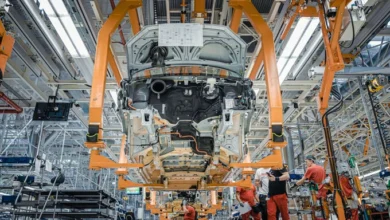
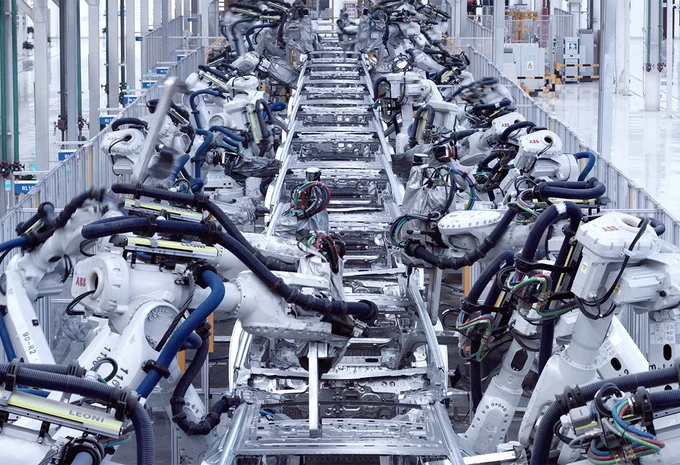
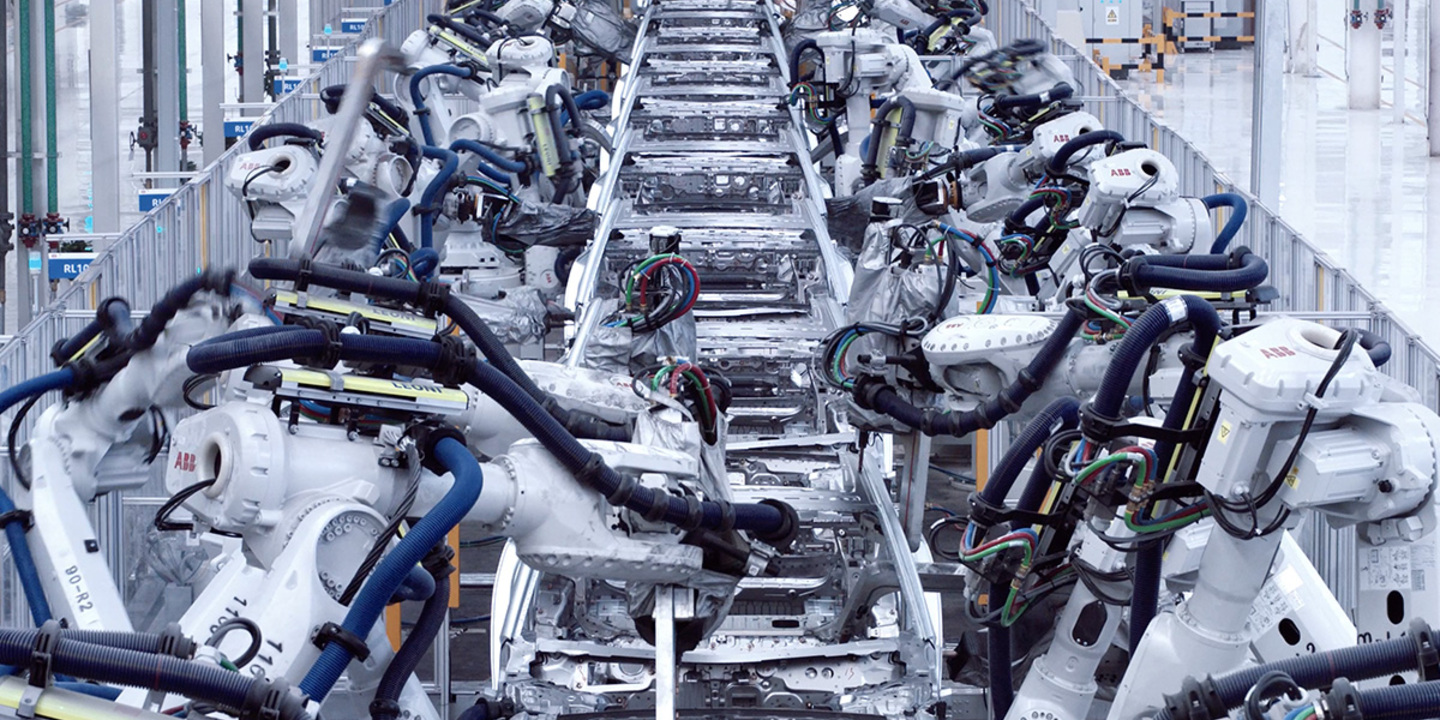
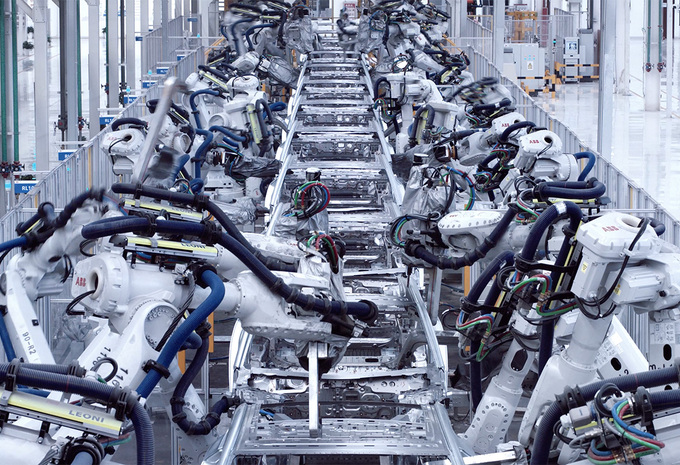
For years, BYD’s competitive advantage was rooted in its vertical integration. By manufacturing almost every component of its vehicles in-house—from batteries and semiconductors to seats and LED lights—the company maintained a level of control that Western legacy automakers could only envy. However, this model required a massive workforce. As the company matures, it is increasingly pivoting toward "Industry 4.0" standards. Enhanced automation, the deployment of advanced robotics on assembly lines, and the integration of artificial intelligence in logistics have allowed the manufacturer to produce more vehicles with fewer human interventions.
The 10.25% reduction in staff is therefore seen as a byproduct of productivity gains. By automating tasks that were previously performed by thousands of entry-level workers, BYD is effectively lowering its "cost per unit," a critical metric in a market where profit margins are being squeezed to the breaking point by aggressive discounting.
Chronology of the Chinese Price War
The roots of this workforce reduction can be traced back to late 2022 and early 2023, when Tesla initiated a series of aggressive price cuts in the Chinese market. This move forced domestic manufacturers to follow suit to maintain market share.
- January 2023: Tesla slashes prices in China by up to 13%, sparking a defensive reaction from domestic brands.
- Mid-2023: BYD launches its "Champion Edition" models, offering updated features at significantly lower entry prices, signaling its intent to dominate the mass market.
- Late 2023: BYD surpasses Tesla in quarterly global battery-electric vehicle (BEV) sales for the first time, proving that its high-volume, low-margin strategy is working in terms of market share.
- Early 2024: The price war intensifies with the "Electricity is cheaper than oil" campaign, where BYD priced its entry-level plug-in hybrids below the cost of equivalent internal combustion engine (ICE) vehicles.
- 2025 Fiscal Report: The financial data reveals the human cost of this strategy, showing a nearly six-figure drop in total employee numbers as the company prioritizes fiscal discipline and industrial efficiency.
This timeline illustrates a shift from a growth-at-all-costs mindset to a survival-of-the-fittest approach. In the Chinese market, the term "involution" (neijuan) is often used to describe this state of hyper-competition where companies are forced to exert maximum effort just to stay in the same place.
Supporting Data: Financial Pressure and Market Realities
Despite the reduction in headcount, BYD’s financial health remains robust, though under pressure. In its most recent filings, the company reported a continued increase in total revenue, driven by the popularity of models like the Seagull (Dolphin Mini) and the Seal. However, the gross profit margin per vehicle has faced headwinds due to the aforementioned price cuts.
To counter these shrinking margins, BYD has shifted its investment focus. While the workforce decreased, R&D spending has remained at record highs. The company is doubling down on its "Blade Battery" technology and its new e-Platform 3.0 Evo, which focuses on higher integration and lower production costs.
Furthermore, the geographical distribution of BYD’s remaining workforce is changing. While assembly positions in mainland China are being automated or phased out, the company is hiring in new regions. BYD is currently constructing or scaling up factories in Thailand, Hungary, Brazil, and Uzbekistan. This suggests that the 99,300-person reduction is a net figure, meaning the actual number of positions eliminated in traditional Chinese manufacturing hubs may be even higher, offset slightly by new hires in international markets and high-tech R&D roles.
Official Responses and Market Sentiment
While BYD has not issued a singular "press release" regarding the 100,000-person shift, executives have frequently alluded to the necessity of "internal optimization." During recent investor calls, management emphasized that the company is entering a "quality over quantity" phase regarding its organizational structure.
Market analysts have generally reacted positively to the news from an investment perspective. Institutional investors often view workforce rationalization in the face of automation as a sign of a "lean" and "agile" management team. "BYD is proving that it can scale down its labor costs while scaling up its output," noted one Hong Kong-based automotive analyst. "This is exactly what is required to win a price war that has become a race to the bottom on costs."
However, labor advocates point to the broader social implications. The Chinese automotive sector has been a primary engine of employment for the last decade. If the industry leader can shed 10% of its workforce while increasing production, it sets a precedent that other manufacturers like Geely, Great Wall Motor, and NIO may feel pressured to follow. This raises questions about the future of blue-collar employment in the age of the "smart factory."
Broader Implications for the Global Auto Industry
The workforce reduction at BYD is a warning shot to the rest of the global automotive industry, particularly legacy manufacturers in Europe and North America. For decades, Western automakers have struggled with high labor costs and complex union agreements. If a company like BYD, which already benefited from a lower-cost labor environment, is aggressively automating to the point of cutting 100,000 jobs, the competitive gap may widen further.
There are three primary implications for the global market:

- The "Efficiency Barrier": To compete with BYD’s pricing, Western manufacturers cannot simply rely on brand prestige or government subsidies. They must achieve a similar level of industrial efficiency. If BYD is cutting "fat" that many Western companies haven’t even begun to address, the price of Chinese EVs on the global market will remain significantly lower than domestic alternatives, even with tariffs factored in.
- The Shift to Software and R&D: The reduction in assembly-line personnel suggests that the value in the EV sector is shifting away from physical manufacturing and toward software, battery chemistry, and autonomous driving systems. BYD’s decision to maintain high R&D staffing while cutting production staff reflects this reality.
- Global Decoupling: As BYD streamlines its domestic operations, its international expansion acts as a hedge against the saturated Chinese market. By establishing factories in Europe and South America, BYD is not just avoiding tariffs; it is exporting its hyper-efficient production model to new regions, forcing local manufacturers to adapt or risk obsolescence.
Conclusion: The Machine of War
BYD’s reduction of nearly 100,000 employees is not a sign of a company in retreat. On the contrary, it is the sign of a company preparing for the next, more brutal phase of the global EV transition. The "price war" has moved from the dealership floor to the factory floor.
In this new era, the winners will not be determined by who can hire the most people, but by who can build the most efficient "machine that builds the machine." For BYD, the message is clear: expansion will continue, but the era of labor-heavy manufacturing is over. As the company transforms into a leaner, more automated entity, it reinforces its position as the primary disruptor of the 21st-century automotive order, leaving its competitors to figure out how to match a level of industrial discipline that shows no signs of wavering.
Related posts: