Xpeng Expands European Footprint with L03 SUV-Coupe Launch Featuring Advanced AI and Range-Extender Technology

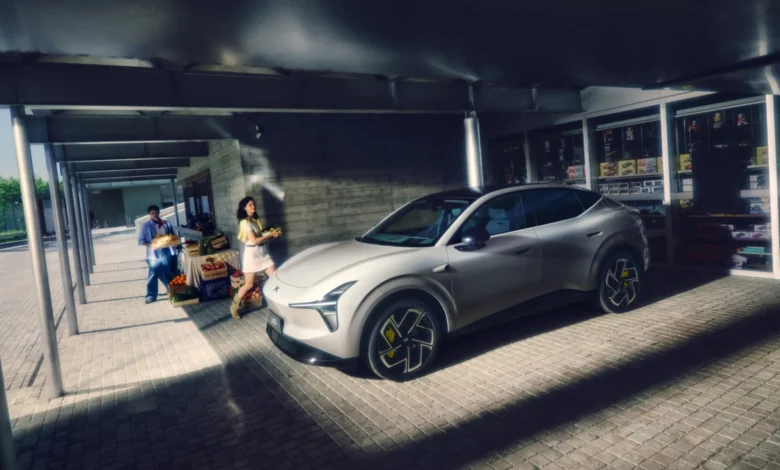
The Chinese technology firm Xpeng has officially unveiled its latest automotive offering, the L03, a compact SUV-coupe positioned strategically beneath the G6 to serve as the brand’s new entry-level model. Despite its more accessible price point, the L03 represents a significant leap forward in the company’s technological integration, introducing several brand-first features to the European market. As Xpeng continues to transition from a traditional vehicle manufacturer to an artificial intelligence-driven technology entity, the L03 serves as a flagship for the brand’s new "Vital Flow" design language and its most sophisticated semi-autonomous driving hardware to date.
The launch of the L03 marks a pivotal moment in Xpeng’s global strategy. It is the first model from the Guangzhou-based company to be launched simultaneously across global markets, signaling a shift toward a more unified international presence. Furthermore, the L03 introduces a diversified powertrain strategy by offering both fully electric variants and a range-extender (EREV) version, a move designed to capture a broader consumer base that may still harbor concerns regarding charging infrastructure.
Technical Specifications and Powertrain Diversity
The Xpeng L03 is built on a versatile platform that accommodates four distinct motorizations. This approach reflects a pragmatic response to the varying levels of electrification readiness across Europe and Asia.

The most notable addition to the lineup is the "Power X" variant. This model features an electric drivetrain supplemented by a gasoline-powered range-extender. While Xpeng initially marketed itself as a purely electric brand, the Power X represents a strategic pivot to address "range anxiety" in regions where high-speed charging networks remain sparse. The Power X is equipped with a 37.25 kWh battery that provides an electric-only range of over 200 kilometers. When the range-extender is engaged, the total range of the vehicle exceeds 1,000 kilometers, placing it at the top of its class for long-distance capability.
For those committed to zero-emission driving, Xpeng offers three Battery Electric Vehicle (BEV) configurations:
- RWD Standard Range: This entry-level electric version features a 180 kW (245 hp) motor paired with a 58.3 kWh battery. It offers a WLTP-certified range of 445 kilometers, making it a competitive option for urban and suburban commuting.
- RWD Long Range: Utilizing a larger 71.2 kWh battery, this variant extends the WLTP range to 520 kilometers, providing more flexibility for inter-city travel.
- AWD Performance: The flagship electric trim utilizes the 71.2 kWh battery but adds a second motor for all-wheel-drive capability. With a total output of 285 kW (388 hp), the Performance version can accelerate from 0 to 100 km/h in just 4.5 seconds. However, the added power results in a slightly reduced WLTP range of 440 kilometers.
Charging performance for the L03 remains robust, though it does not match the ultra-fast 800V architecture found in the larger G6 and G9 models. The L03 supports DC fast charging up to 236 kW, allowing the battery to charge from 10% to 80% in approximately 20 minutes. For home or office charging, the vehicle includes an 11 kW AC onboard charger.
Design and Practicality: The Vital Flow Aesthetic
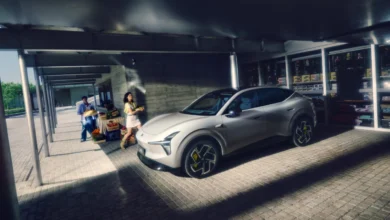
Measuring 4.65 meters in length, the L03 is approximately 10 centimeters shorter than the G6. Its silhouette is defined by the "Vital Flow" design language, which emphasizes aerodynamic efficiency and an elegant, sweeping roofline. The vehicle features distinctive light signatures at both the front and rear, contributing to a modern, tech-forward appearance.

While the base model comes equipped with 18-inch wheels, Xpeng designers have noted that the 20-inch wheel option better complements the vehicle’s proportions. Despite its compact exterior dimensions, the L03 offers a spacious cabin with seating for five adults. Practicality is further enhanced by a 367-liter rear cargo area and a "frunk" (front trunk) that offers between 44 and 89 liters of additional storage, depending on the powertrain configuration. Furthermore, all variants of the L03 are rated for a maximum towing capacity of 1,500 kilograms, a high figure for the compact SUV-coupe segment.
The AI-Centric Interior and Software Integration
Xpeng’s self-identification as a "technology company that happens to make cars" is most evident inside the L03. The vehicle debuts the XOS 6 infotainment system, which is powered by a new AI language model. This system features a natural voice control interface capable of understanding and processing multiple languages simultaneously, a critical feature for the diverse European market.
In a significant departure from proprietary systems, Xpeng has integrated Google Maps technology directly into the vehicle’s navigation suite. This integration provides drivers with real-time traffic data, access to millions of Points of Interest (POIs), and advanced routing capabilities. For instance, drivers can use voice commands to find and add stops at specific supermarket chains or pharmacies along their route, with the AI handling the logistical planning.
Autonomous Driving and the Turing AI Chip
The L03 serves as the European debut for Xpeng’s VLA 2.0 (Vehicle Language Architecture) semi-autonomous driving system. This technology has been active in the Chinese market for six months, where Xpeng reports that over 50% of its owners regularly engage the system for daily driving.

The VLA 2.0 system is powered by Xpeng’s proprietary Turing AI chips. These chips are specifically designed to handle the massive data processing requirements of real-time spatial awareness and predictive driving algorithms. However, this technological advancement creates a rift within the current Xpeng lineup; the existing G6, G9, and P7+ models are not compatible with VLA 2.0 because they lack the necessary Turing hardware.
Xpeng anticipates that the full suite of VLA 2.0 features will be localized and available for European customers by early 2027. In a move to disrupt the market, Xpeng has indicated that the autonomous driving features will not require a subscription fee, at least during the initial rollout phase, providing a significant value proposition compared to competitors who charge monthly fees for similar software.
Market Positioning and Pricing Strategy
The Xpeng L03 is priced to compete aggressively in the European C-SUV segment. The RWD Standard Range starts at €34,990 (including VAT), positioning it as a direct threat to both established European manufacturers and other Chinese imports. The range-extender Power X version starts at €38,490.
However, consumers seeking the full suite of Xpeng’s technological innovations will need to opt for the AWD Performance Ultra trim. Priced at €45,990, this top-tier version includes the Turing AI chips, the full VLA 2.0 hardware suite, a premium multi-speaker audio system, and various comfort enhancements. This tiered pricing suggests that while the L03 has a low barrier to entry, the brand is successfully upselling its "AI-first" experience as a premium add-on.

Chronology and Future Outlook
The introduction of the L03 follows a rapid expansion phase for Xpeng in Europe. After establishing a presence in Norway, Denmark, Sweden, and the Netherlands, the company recently entered the Belgian and German markets. The L03 is expected to reach showrooms and see its first customer deliveries before the end of the current calendar year.
Industry analysts suggest that the L03’s inclusion of a range-extender is a calculated response to the slowing growth of pure BEV sales in certain European regions. By offering a "bridge" technology like the Power X, Xpeng can maintain its volume targets while the continent’s charging infrastructure catches up to the demands of full electrification.
Bart Hamminga, a representative for Xpeng, emphasized the company’s vision during the launch event: "We are not just building cars; we are bringing AI into the physical world. The L03 is the embodiment of that mission—a vehicle that learns, adapts, and ultimately makes the driving experience safer and more intuitive."
Broader Implications for the Automotive Industry
The L03’s launch highlights several emerging trends in the global automotive landscape. First, the shift toward "Software Defined Vehicles" (SDVs) is accelerating, with Xpeng leading the charge in integrating deep-learning AI into entry-level segments. Second, the return of the range-extender suggests that the path to full electrification may be more non-linear than previously predicted by industry experts.

As Xpeng prepares for the 2027 rollout of VLA 2.0 in Europe, the company faces the challenge of navigating complex regulatory environments regarding autonomous driving. If successful, the L03 could set a new benchmark for what consumers expect from an "entry-level" vehicle, forcing legacy automakers to accelerate their own software development cycles to remain competitive.
With a starting price under €35,000 and a suite of technologies usually reserved for luxury flagships, the Xpeng L03 is poised to be a significant disruptor. Its success will likely depend on how well European consumers embrace the brand’s tech-heavy identity and whether the Power X variant can successfully bridge the gap for those not yet ready to go fully electric.
Related posts: