The Evolution of the Smart Kitchen Mauro Porcini on How Samsung Integrates Artificial Intelligence to Enhance Human Well-being and Mental Health

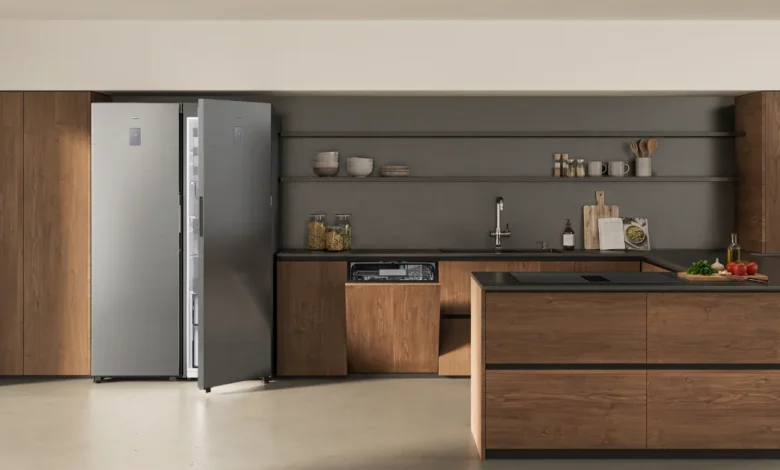
The daily ritual of deciding what to cook for dinner represents a recurring cognitive burden that Mauro Porcini, the Chief Design Officer at Samsung, believes is on the verge of obsolescence. Speaking at a high-level design forum in Milan, the Italian visionary detailed a future where the domestic environment, specifically the kitchen, transforms from a place of labor into a sanctuary of mental relief. Porcini’s insights arrive at a pivotal moment for the consumer electronics industry, as global manufacturers pivot from purely functional hardware toward integrated ecosystems driven by generative artificial intelligence (AI).
The transition is not without its friction. Porcini acknowledges a profound dichotomy in current public sentiment: a simultaneous fascination with and trepidation toward AI. Citing broader trends in consumer behavior and government research, he notes that citizens remain deeply concerned about the erosion of privacy, the displacement of traditional employment, and the potential for technology to diminish the "human" element of daily life. Porcini describes AI in its current state as a "child"—an infant technology that requires responsible stewardship from brands, media outlets, and regulatory bodies to ensure it matures in a direction that serves humanity rather than exploits it.
The Rise of the AI Companion and Personalized Intelligence
Central to Porcini’s vision is the concept of the AI companion, a personalized digital entity that transcends individual devices. In the near future, Porcini suggests that users will no longer interact with abstract algorithms but with a "compagnon" that possesses a name, a visual identity, and a distinct personality tailored to the user’s preference. This entity might manifest as a stylized cloud, a helpful avatar resembling a family member, or even a whimsical character like a cat or a cartoon figure.
The technological infrastructure for this vision relies on seamless continuity. This AI companion is intended to travel with the user, living in augmented reality glasses, earbuds, or wearable pendants while they are on the move. Upon returning home, the intelligence migrates to the domestic infrastructure—inhabiting the refrigerator, the television, smart displays, and even the kitchen table itself. This "ambient intelligence" ensures that the user’s preferences, dietary needs, and schedule are consistently accessible, regardless of which hardware interface they are currently using.
Challenging the Era of Minimalist Homogeneity
For the past fifteen years, the consumer electronics industry has been characterized by what Porcini describes as a "minimalist sea of sameness." A stroll through any major electronics retailer reveals a landscape of nearly identical refrigerators, washing machines, and televisions, all adhering to a sterile, generic aesthetic. Porcini is championing a counter-movement he calls "Expressive Design," a philosophy intended to restore character and emotional resonance to household objects.
This design philosophy is built upon four foundational pillars:
- Functionality: This remains the baseline requirement. An appliance must perform its primary task—be it cooling food or cleaning clothes—with absolute precision. Without technical excellence, any further design considerations are rendered moot.
- Distinctiveness: This pillar addresses the end of the "generic look." Porcini argues that products should have a unique identity that allows consumers to express their own personalities through their choice of appliances.
- Aesthetic Emotion: This refers to the visceral desire an object can provoke. Porcini posits that a beautiful object should touch the user emotionally, creating a sense of attraction even before the user understands the full scope of the device’s capabilities.
- Functional Emotion: Often the most overlooked aspect of design, functional emotion is the sense of relief, peace, or satisfaction a user feels when a device successfully removes a burden from their life.
AI as a Tool for Mental Health and Cognitive Decompression
The integration of AI into home appliances is increasingly being framed as a mental health intervention rather than a mere convenience. Porcini draws from his personal experience to illustrate this shift. When he relocated to Korea, a move that involved significant logistical and emotional stress, he found that his Samsung Bespoke AI-equipped washing machine provided a surprising level of "functional emotion." By automating the selection of cycles and detergent levels, the machine removed a small but cumulative layer of decision-making from his day.
The kitchen, however, remains the primary site for potential cognitive relief. The "mental load" of domestic management—specifically inventory tracking and meal planning—is a significant source of daily stress for many households. Samsung’s Bespoke AI refrigerators now utilize internal cameras and image recognition to suggest recipes based on available ingredients. Porcini argues that by answering the question "What’s for dinner?" the technology eliminates a persistent source of "micro-stress," thereby freeing up "headspace" for more meaningful activities.
Navigating the Complexity of Multi-User Environments
One of the significant hurdles in the development of the smart home is the "shared space" dilemma. A single appliance must often serve multiple users with conflicting needs and preferences. For instance, a novice user may want a washing machine to take full control, while a textile enthusiast may demand granular control over the water temperature and spin cycle for a delicate cashmere garment.
Porcini identifies this as the primary design challenge of the coming years. The solution lies in advanced personalization technologies, including facial recognition via integrated cameras, voice fingerprinting, and account synchronization. This allows a device to recognize exactly who is standing in front of it and adjust its interface and suggestions accordingly. In a communal setting, the AI must balance these individual profiles with a "shared intelligence" that understands the collective needs of the family unit.
Chronology of Development: From IoT to Generative AI
The path to the modern AI-integrated kitchen has evolved through several distinct phases:
- The Pre-Digital Era: Appliances were purely mechanical and required manual operation and constant human oversight.
- The Connected Era (2010–2020): The "Internet of Things" (IoT) introduced basic connectivity, allowing users to control devices via smartphone apps. However, these systems often added complexity rather than reducing it, as users had to navigate multiple apps and menus.
- The Generative AI Era (2023–Present): With the advent of Large Language Models (LLMs) and advanced computer vision, appliances have begun to "understand" context. They no longer just wait for commands; they predict needs.
- The Predictive Era (2026 and Beyond): Porcini predicts that by 2026, the primary application of AI will shift toward mental health and well-being. Technology will move from being a tool for productivity to a tool for "mental preservation."
Supporting Data and Market Trends
The push toward AI-driven domestic relief is supported by broader market data. According to research from Statista and McKinsey, the global smart home market is expected to exceed $200 billion by 2028. However, consumer surveys indicate that "ease of use" and "time-saving" are now higher priorities for buyers than "high-tech features."
Furthermore, psychological studies on "decision fatigue" suggest that the average adult makes approximately 35,000 decisions a day. The cumulative effect of these choices leads to decreased willpower and increased anxiety. By automating mundane domestic decisions, Samsung and its competitors are positioning themselves within the lucrative and growing "wellness" economy.
Official Responses and Industry Implications
The industry’s shift toward AI has prompted responses from both advocates and skeptics. While tech leaders like Porcini emphasize the "act of love" inherent in good design—designing out of care for the user rather than just for a business case—regulatory bodies are moving to ensure these systems are transparent. The European Union’s AI Act, for example, sets strict guidelines on how personal data collected by smart home devices can be used, particularly concerning facial recognition and biometric data.
Samsung’s strategy involves a heavy investment in its "SmartThings" platform, which aims to unify disparate devices into a single, cohesive ecosystem. Industry analysts suggest that the success of this vision depends on interoperability—the ability for a Samsung fridge to talk to a different brand’s oven or smart light system. The adoption of the "Matter" standard is a significant step in this direction, though the seamless "AI companion" Porcini describes will likely remain most effective within a brand’s own hardware ecosystem.
The Broader Impact: Technology in Service of Humanity
Mauro Porcini’s philosophy suggests that the ultimate goal of technological progress is not to make us more productive in the traditional sense, but to allow us to be more human. "Design is an act of love," he repeats, emphasizing that a successful product must start from a place of genuine concern for the user’s quality of life.
In a world characterized by rapid technological change and increasing digital noise, the kitchen of the future is being reimagined as a place of quiet efficiency. By delegating the "mental energy" required for chores to an intelligent, personalized companion, consumers may find themselves with the time and mental clarity to focus on what truly matters: family, creativity, and personal well-being. As we approach 2026, the benchmark for a "smart" home will no longer be how much technology it contains, but how much peace of mind it provides to those who live within it.