The Global Ascent of Faux Freckles How a Former Imperfection Became the Definitive Beauty Accessory of the Modern Era

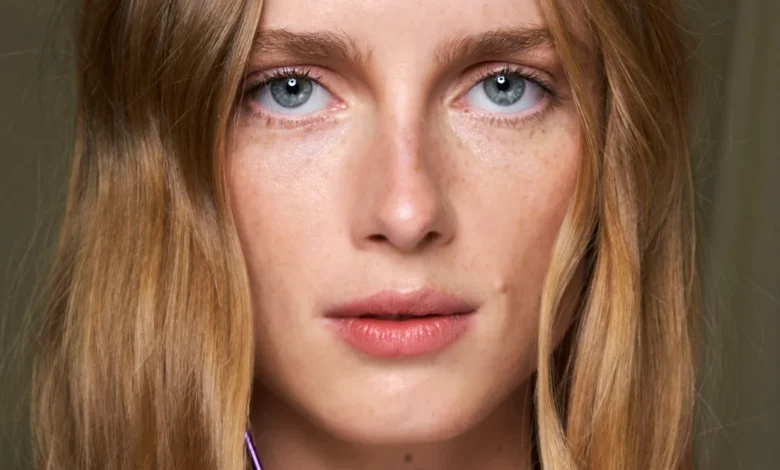
The contemporary beauty landscape is witnessing a significant paradigm shift as "fake freckles" transition from a niche social media experiment into a dominant global trend. Once considered a skin blemish to be concealed under layers of heavy foundation, ephelides—commonly known as freckles—are now being sought after by consumers worldwide. Driven by high-profile fashion icons such as Emily Ratajkowski and Kendall Jenner, the aesthetic has moved from the runways of Paris and Milan to the digital feeds of millions, positioning these artificial spots as the ultimate accessory of the season. This phenomenon reflects a broader cultural movement toward a "natural" yet meticulously curated appearance, where youthfulness and a sun-kissed glow are the primary currencies of style.
The Evolution of the Freckle Aesthetic
Historically, the perception of freckles has fluctuated significantly across different eras and cultures. In many Western societies during the 19th and early 20th centuries, clear, pale skin was a marker of social status, indicating that an individual did not have to perform manual labor outdoors. Freckles were often viewed as "sun spots" or defects that required removal through various, often toxic, concoctions. However, as the 21st century progressed, the beauty industry began to pivot toward "inclusive beauty" and the "no-makeup makeup" look.
The current surge in the popularity of faux freckles can be traced back to the mid-2010s, but it reached a fever pitch during the early 2020s. The primary driver is the psychological association between freckles and a carefree childhood. In the eyes of modern consumers, freckles evoke an image of health and vitality, suggesting a life spent outdoors without the actual dermatological risks associated with prolonged ultraviolet (UV) exposure. By applying artificial spots, individuals can mimic the aesthetic of a beach holiday while maintaining a rigorous skincare routine that prioritizes SPF and skin barrier protection.
Digital Influence and the Viral Proliferation of #FakeFreckles
Social media platforms, particularly TikTok and Instagram, have acted as the primary catalysts for this trend. On TikTok alone, the hashtag #fakefreckles has amassed hundreds of millions of views, creating a feedback loop of tutorials, product reviews, and DIY experiments. This digital explosion has led to a democratization of beauty techniques, but it has also introduced a wave of unconventional and potentially hazardous methods.
Early viral videos showcased users employing high-risk techniques to achieve a semi-permanent look. These included spraying brown hair root touch-up spray across the face, using toothbrushes to splatter wet eyeshadow, and even applying henna—a dye traditionally used for hair and body art—onto the cheeks and nose. While these methods provided the "organic" and irregular look that consumers craved, they also bypassed safety standards established for facial cosmetics. The volatility of these trends highlights a tension between the desire for a specific aesthetic and the safety of the consumer’s skin.
The Risks of Semi-Permanent and DIY Procedures
As the trend matured, some consumers sought more permanent solutions, leading to a rise in "freckle tattooing" or micropigmenting. This process involves a cosmetic tattoo artist using a fine needle to deposit pigment into the upper layers of the dermis. While professional results can be convincing, the rise of "at-home tattoo kits" has alarmed the medical community.
Dermatologists and clinical experts have issued several warnings regarding the long-term implications of these procedures. One primary concern is the stability of the ink used in DIY kits; over time, poor-quality pigments can oxidize, turning a muddy green or slate gray rather than remaining a natural brown. Furthermore, the risk of infection, scarring, and severe allergic reactions is high when procedures are performed in non-sterile environments. Medical professionals emphasize that the skin on the face is thinner and more sensitive than on the rest of the body, making it susceptible to permanent damage if handled incorrectly.
The Cosmetic Industry’s Strategic Pivot
Recognizing the immense market potential, the global beauty industry has responded by developing specialized tools designed to create realistic, temporary freckles. This shift marks a departure from general-purpose pencils to high-tech formulations specifically engineered for skin adherence and color accuracy.
Brands such as Freck Beauty have led the charge with products like "The Original Freckle." This product features a liquid formula delivered via an ultra-thin brush, allowing for precise application. Unlike traditional eyeliners, these formulas are designed to sink slightly into the skin or foundation, creating a blurred edge that mimics the way natural melanin clusters under the epidermis. Other major players, including ColourPop and Jason Wu Beauty, have introduced "Freckle Pens" that utilize neutral and cool-toned pigments. This is a critical technical advancement, as earlier attempts often resulted in orange or reddish spots that appeared obviously artificial under natural lighting.
Market analysis suggests that the "freckle tool" sub-sector is one of the fastest-growing niches in the color cosmetics market. Analysts attribute this to the "Clean Girl" aesthetic—a trend that emphasizes glowing skin, feathered brows, and minimal coverage. In this context, a freckle pen is not just a makeup item but a tool for "skin-fishing," or creating the illusion of having better, more natural skin than one actually does.
Professional Techniques for Realistic Application
Achieving a realistic result requires more than just high-quality products; it requires an understanding of facial anatomy and light distribution. Makeup artists and industry professionals suggest that the most authentic placement follows the "sun-kissed" logic—freckles should appear where the sun naturally hits the face first. This primarily includes the bridge of the nose and the highest points of the cheekbones.
The technical process, as recommended by visagists, follows a specific chronology:
- Base Preparation: Freckles should be applied after foundation or tinted moisturizer but before any setting powder. The product requires a slightly tacky surface to bond effectively.
- Application: To avoid a "polka-dot" effect, artists recommend varying the pressure and the spacing. Asymmetry is essential for realism.
- The Blending Secret: The "secret" to a professional finish is the heat-transfer method. After applying a series of dots, one must wait a few seconds for the pigment to set slightly, then gently tap the spots with a fingertip or a damp beauty sponge. The warmth of the skin softens the edges of the pigment, making it appear as though it is coming from within the skin rather than sitting on top of it.
- Fixation: To ensure longevity without dulling the skin’s natural radiance, a setting spray is used instead of a heavy powder. This maintains the "dewy" look that is central to the faux freckle appeal.
Broader Cultural and Economic Impact
The rise of fake freckles is indicative of a broader shift in beauty standards that celebrates "perfect imperfections." In an era dominated by high-definition cameras and social media filters, there is a growing counter-movement toward "textured" skin. By intentionally adding spots that were once considered flaws, the beauty industry is redefining what constitutes an "ideal" face.
Economically, this trend has opened up new revenue streams for both legacy brands and indie startups. It has also influenced the sun-care market; as more consumers use makeup to achieve a tanned look, there has been a corresponding increase in the sale of high-SPF sunscreens. Consumers are essentially decoupling the "look" of sun exposure from the "act" of sun exposure.
Furthermore, the trend has seen significant adoption across diverse ethnicities. While freckles were historically associated with fair-skinned individuals of Celtic or Northern European descent, the modern "faux freckle" movement is inclusive. Makeup brands are now releasing freckle products in deep ebony and rich cocoa shades to cater to a global audience, proving that the desire for this youthful, sun-dappled aesthetic transcends traditional racial boundaries.
Conclusion and Future Outlook
The faux freckle phenomenon is more than a fleeting fad; it is a manifestation of the modern consumer’s desire for authenticity, even if that authenticity is carefully constructed. As cosmetic technology continues to advance, we can expect to see even more sophisticated delivery systems, perhaps involving "skin stains" that last for several days or formulas that react to the skin’s pH to create a custom shade of brown.
While the trend remains rooted in the pursuit of a youthful and healthy appearance, its success lies in its accessibility. Whether through a high-end designer pen or a repurposed eyebrow pencil, the ability to "design" one’s own skin features represents the ultimate form of self-expression in the 21st-century beauty world. As long as the "natural" look remains the gold standard of the industry, the faux freckle is likely to remain a staple in makeup kits globally, serving as a bridge between the desire for flawless skin and the celebration of individual character.