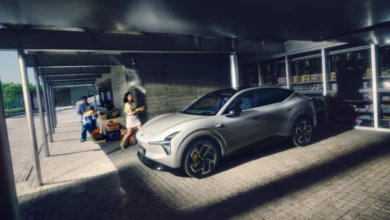
Firefly versus Kia EV2 Redefining the Compact Electric Vehicle Landscape through Spatial Efficiency and Market Accessibility

The automotive industry is currently navigating a transformative era, driven by the dual pressures of electrification and the shifting expectations of global consumers. For years, the prevailing narrative surrounding electric vehicles (EVs) suggested that the transition away from internal combustion engines (ICE) would fundamentally alter car design. Because electric drivetrains—comprising compact motors and floor-mounted battery packs—occupy significantly less volume than traditional engines, transmissions, and exhaust systems, engineers promised a "Tardis-like" revolution. The theory was simple: future cars would feature smaller exterior footprints while offering interior dimensions that rivaled vehicles from the segment above.
However, the market reality has proven more complex. In the premium and executive sectors, "size" remains a primary indicator of status and prestige. A consumer accustomed to the presence and "road authority" of a large luxury sedan is often hesitant to migrate to a compact electric alternative, even if the interior legroom is comparable. In these upper echelons, the exterior dimensions serve as a social signal that many buyers are unwilling to forfeit. Yet, as the industry pivots toward the mass market, this logic is being challenged. In the entry-level segments, where pragmatism and value-for-money dictate purchasing decisions, the promise of a compact car with a spacious interior is not just a novelty—it is a competitive necessity. This is the arena where two upcoming contenders, the Nio-backed "Firefly" sub-brand and the Kia EV2, are set to clash.
The Engineering Philosophy of Spatial Efficiency
The core appeal of both the Firefly and the Kia EV2 lies in their architectural efficiency. Traditional ICE vehicles are constrained by the "three-box" or "two-box" design necessitated by a large engine block in the front (or rear) and a bulky transmission tunnel running through the cabin. Electric vehicles built on dedicated platforms, such as Kia’s E-GMP (Electric-Global Modular Platform) or Nio’s proprietary small-car architecture, eliminate these hurdles.
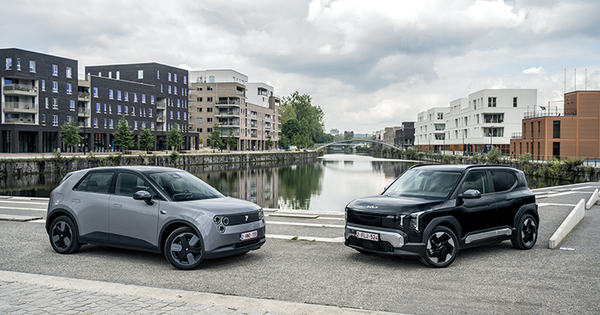
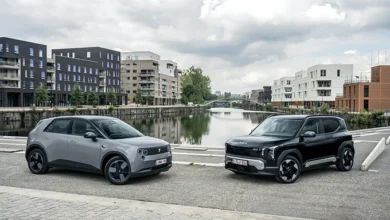
By pushing the wheels to the absolute corners of the vehicle—minimizing front and rear overhangs—and extending the wheelbase, manufacturers can reclaim the space once reserved for mechanical components. The result, as seen in the preliminary designs of the Firefly and the EV2, is a vehicle with the exterior length of a B-segment car (roughly 4 meters, similar to a Renault 5 or a Volkswagen Polo) but with the interior volume and "knee room" of a C-segment vehicle like the Renault Megane E-Tech or a Volkswagen ID.3.
This "segment-blurring" strategy is critical for urban environments where parking space is at a premium, but where families still require the utility of a larger car. For the budget-conscious buyer, the ability to purchase a "small" car for a lower price point without sacrificing the comfort of a "large" car represents a significant shift in the value proposition of the modern automobile.
Firefly: Nio’s Strategic Pivot to Europe
The project codenamed "Firefly" represents a bold move by the Chinese EV powerhouse Nio. While Nio has established itself as a premium brand with battery-swapping technology and high-end SUVs, Firefly is designed specifically to capture the European "supermini" and compact markets.
Initial reports and sightings of Firefly prototypes suggest a hatchback or small crossover profile. Nio’s leadership has indicated that the brand will maintain a distinct identity from the parent company while leveraging Nio’s advanced technological stack. Crucially, the Firefly models are expected to support Nio’s signature battery-swapping technology, albeit likely with a smaller, more compact battery pack design tailored for the smaller chassis.
The timeline for Firefly’s rollout is ambitious. With a planned debut in late 2024 or early 2025, the brand aims to enter the European market at a price point between €25,000 and €30,000. This puts it in direct competition with established European incumbents and other Chinese entrants like BYD and MG. By focusing on high-quality interior materials and a software-heavy user experience, Firefly seeks to prove that "small and affordable" does not have to mean "cheap and basic."
Kia EV2: Completing the Electric Spectrum
Kia has been one of the most aggressive legacy manufacturers in its transition to electric mobility. Following the success of the EV6 and the launch of the flagship EV9, the South Korean automaker is now filling out the lower end of its "EV" numbered lineup. The EV2 is positioned as the entry point into Kia’s dedicated electric range, sitting below the recently revealed EV3 and the upcoming EV4.
The Kia EV2 is expected to be a rugged, compact crossover that embodies Kia’s "Opposites United" design language. By utilizing a simplified version of the E-GMP architecture or the newer integrated modular architecture (IMA), Kia aims to bring the EV2 to market with a starting price close to €20,000 to €25,000.
Kia’s strategy focuses on democratizing technology. The EV2 is rumored to feature the same dual-screen infotainment setup and advanced Driver Assistance Systems (ADAS) found in its larger siblings. For Kia, the EV2 is not just a car; it is a volume driver intended to secure brand loyalty among younger buyers and urban dwellers who have previously been priced out of the dedicated EV market.

Market Context: The Battle for the €25,000 Threshold
The emergence of the Firefly and Kia EV2 is part of a broader industry-wide scramble to produce the "affordable EV." For the past five years, the EV market has been dominated by high-priced luxury models and mid-sized SUVs. However, for mass adoption to occur, manufacturers must address the B-segment, which remains one of the highest-volume categories in Europe and Asia.
The competitive landscape is rapidly becoming crowded:
- Renault 5 E-Tech: A retro-inspired hatchback that has already garnered significant praise for its design and projected €25,000 price tag.
- Volkswagen ID.2all: VW’s promise to return to its "People’s Car" roots with a spacious, affordable electric hatchback due in 2025/2026.
- Citroën ë-C3: Already hitting the market with a sub-€25,000 price, emphasizing comfort and simplicity.
- Tesla "Model 2": While details remain speculative, Tesla’s rumored compact car continues to loom over the segment as a potential disruptor.
The Firefly and Kia EV2 must distinguish themselves in this crowded field. Firefly will likely lean on its "premium-lite" tech and battery-swapping convenience, while Kia will rely on its extensive dealer network, industry-leading warranties, and proven reliability.
Supporting Data: The Economics of Compact EVs
The shift toward smaller EVs is supported by shifting economic data. According to recent market analysis, the average price of an EV in Europe has risen significantly over the last three years, largely due to high battery material costs and a focus on premium models. However, the cost of Lithium Iron Phosphate (LFP) batteries—which are more durable and cheaper than traditional Nickel Manganese Cobalt (NMC) batteries—has stabilized.

Both Nio (Firefly) and Kia are expected to utilize LFP battery chemistry for their entry-level trims. This allows for a 20-30% reduction in battery pack costs, which is the primary factor enabling the €25,000 price target. Furthermore, as European cities implement stricter Low Emission Zones (LEZs), the demand for compact, zero-emission vehicles is projected to grow by 15% annually through 2030.
Chronology of Development
The path to the Firefly vs. Kia EV2 showdown has been several years in the making:
- 2021: Kia announces its "Plan S" strategy, committing to a full lineup of 11 EVs by 2026.
- 2022: Nio confirms the development of a sub-brand (internally called Project Firefly) to tackle the European mass market.
- Late 2023: Kia debuts the EV3 and EV4 concepts, confirming that an EV2 and EV1 are in the pipeline.
- Early 2024: Spy shots of the Firefly hatchback emerge from China and Southern Europe, confirming a production-ready form factor.
- Mid 2024: Industry analysts highlight the "spatial efficiency" of these new platforms, noting that wheelbase-to-length ratios are reaching record highs.
Implications for the Automotive Landscape
The success of these vehicles will have far-reaching implications. If the Firefly and EV2 can truly deliver on the promise of "small outside, big inside," they may finally break the consumer obsession with large SUVs. This shift is vital for environmental sustainability; smaller cars require fewer raw materials for batteries and are more energy-efficient due to lower weight and better aerodynamics.
Moreover, this competition represents a geopolitical "litmus test." Can a Chinese upstart like Nio successfully navigate European trade regulations and consumer preferences? Conversely, can a legacy giant like Kia maintain its momentum against agile, tech-first Chinese competitors?

Conclusion: A New Standard for the "Everyman" Car
As the automotive world looks toward 2025, the focus is shifting away from 0-60 mph times and autonomous driving gimmicks toward the practical realities of daily life. The Firefly and the Kia EV2 represent a return to the core purpose of the automobile: providing efficient, comfortable, and accessible transportation.
By leveraging the unique packaging advantages of electric propulsion, these vehicles are set to prove that size is no longer the sole determinant of utility or comfort. Whether through Nio’s high-tech battery swapping or Kia’s refined manufacturing scale, the "small car" is being reinvented. For the consumer, the result is a win-win: a vehicle that is easier to park, cheaper to run, and—crucially—just as spacious as the larger, more expensive cars of yesterday. The battle for the soul of the electric mass market has begun, and the compact segment is where the most significant victories will be won.
Related posts: